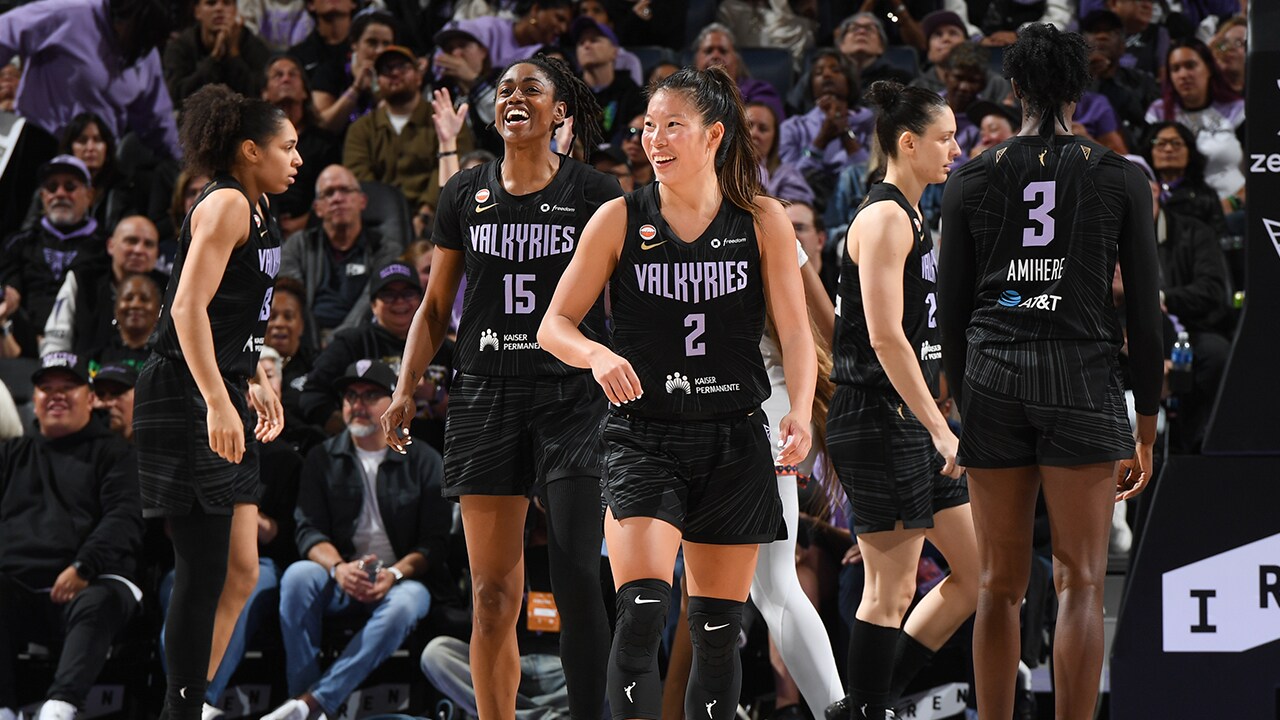
A 17-0 third-quarter run gave Golden State life, late defensive plays forced overtime, and a 16-6 closing period turned a tense Game 3 into an expansion-era milestone.
The Golden State Valkyries beat the Las Vegas Aces 87-77 in overtime Friday at Michelob ULTRA Arena, completing a 3-0 WNBA semifinal sweep and reaching the Finals in only the franchise's second season. Kayla Thornton led Golden State with 18 points, Gabby Williams scored 16—including eight in overtime—and the No. 2 seed turned a late regulation deficit into the fastest trip to the championship round by an expansion team.
How Game 3 turned
A 17-0 run changed the pressure
Las Vegas entered the night needing a win to extend the series, and the defending champions repeatedly looked capable of producing one. Golden State's decisive answer began in the third quarter, when the Valkyries put together a 17-0 run. That burst did more than repair the scoreboard. It shifted the burden back to an Aces team playing with no margin for error and demonstrated that Golden State could create offense without relying on one scorer.
The Aces still recovered. They led by six late in the fourth quarter, putting Golden State within minutes of its first postseason loss. Williams then stole the ball and found the opening that became Thornton's tying layup with 1:50 left, making it 69-69. Veronica Burton's floater put the Valkyries ahead with 1:12 remaining. Las Vegas answered when Chelsea Gray's inbound reached Jackie Young for the tying basket with 27 seconds left, sending the game to overtime at 71-71.
Overtime belonged to Golden State
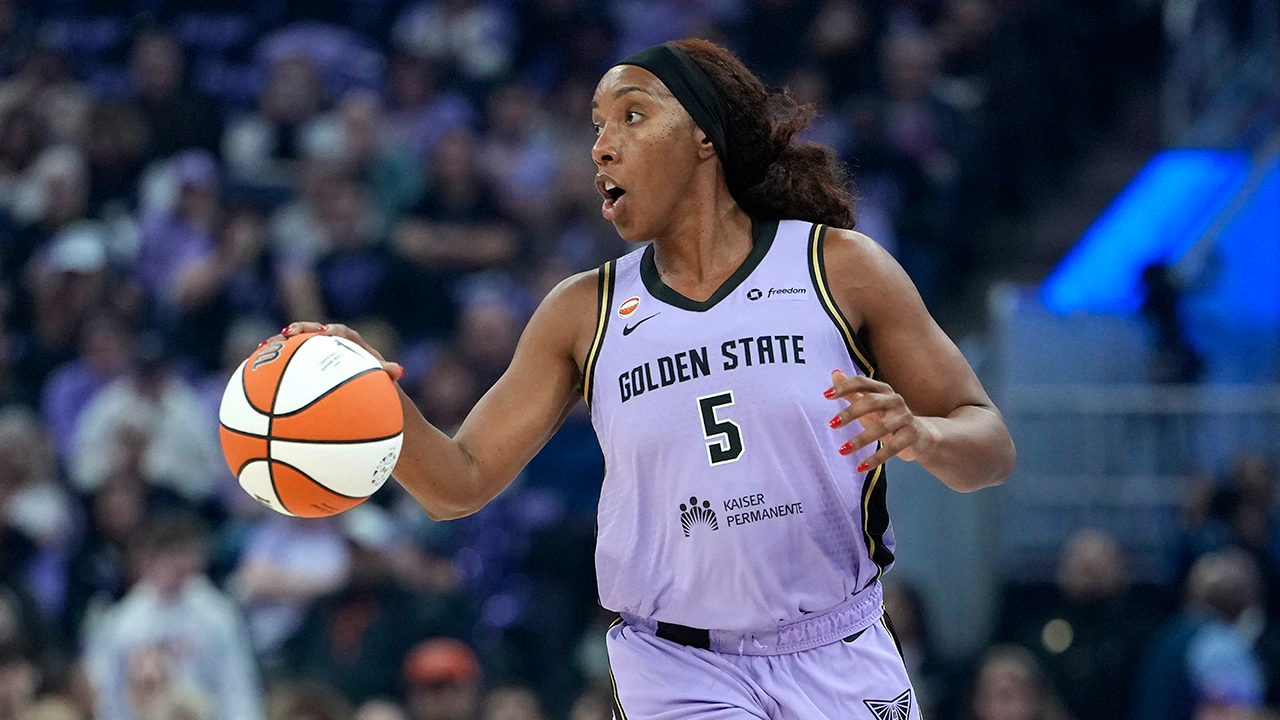
The overtime score—16-6—captures the separation that regulation could not. Williams scored eight of her 16 points in the extra period, matching Las Vegas's entire overtime production by herself. Golden State did not merely survive the Aces' final regulation answer; it turned the extra five minutes into the clearest evidence of the series gap.
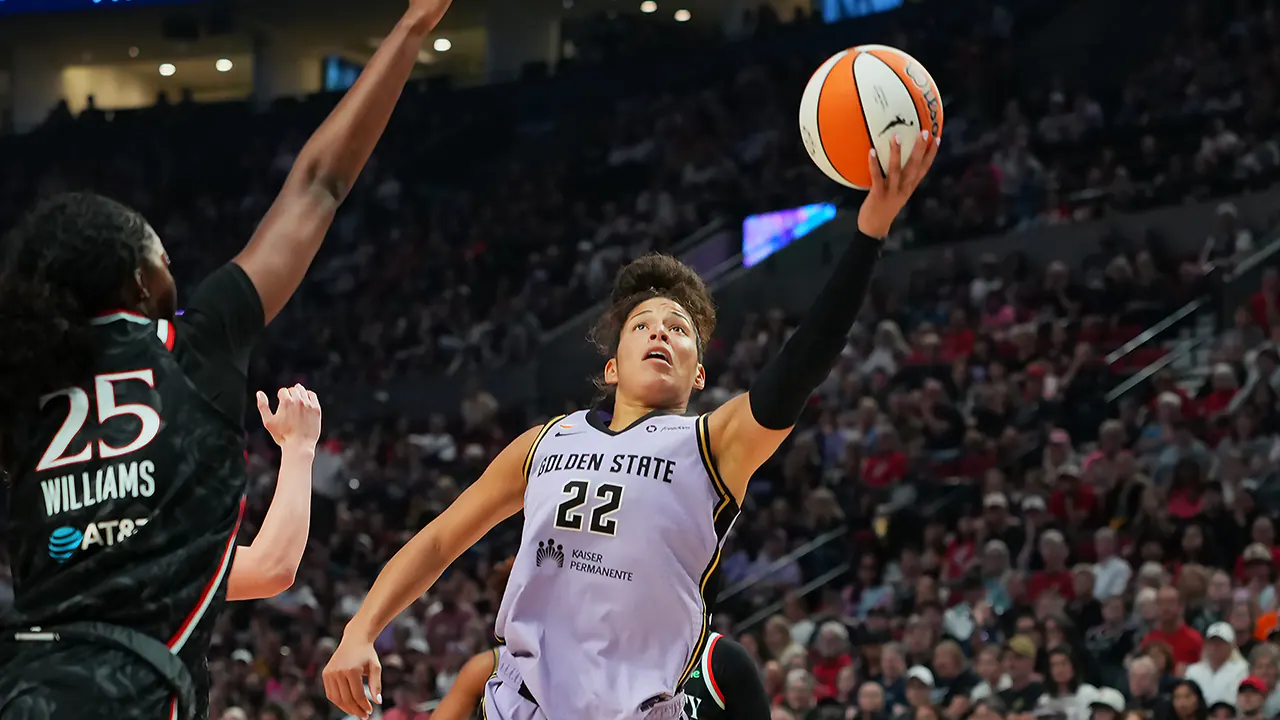
Thornton's 18 points led a balanced attack. Former Aces Kiah Stokes and Tiffany Hayes each scored 11, with Stokes adding 10 rebounds for a double-double. Their contributions sharpened the result: two players familiar with Las Vegas's championship infrastructure helped end its title defense on its home floor.
Why this matters
Expansion teams are normally measured in stages: build a roster, establish a culture, become competitive, reach the playoffs, then contend. Golden State compressed that sequence into two seasons. Becoming the quickest expansion team ever to reach the WNBA Finals is not simply a franchise record; it changes what a new club can plausibly expect from its first roster cycle.
The achievement also matters because of the opponent. Las Vegas had won three of the previous four WNBA championships and entered the playoffs as the No. 3 seed. Sweeping a dynasty is a more consequential statement than slipping past an inexperienced team in a long series. The Valkyries did it without conceding a game, including one in which the Aces had the late lead, the home crowd and a newly crowned five-time MVP.
For the league, the matchup offers a compelling form of competitive turnover. A modern expansion club is advancing at the same moment one of the era's defining champions is forced to reassess. That creates a Finals story that is about more than a trophy: it is a test of whether Golden State's rapid construction can withstand another opponent built around continuity and postseason confidence.
The numbers that explain the sweep
22-0 is the series statistic that mattered most
Teams taking a 2-0 lead are now 22-0 in WNBA playoff series. That record frames Game 3 accurately: Las Vegas was not merely trying to win Friday night; it was trying to become the first team in league playoff history to reverse that position. Golden State's sweep preserved the perfect historical mark and kept the series from becoming a test of whether a 2-0 cushion could survive mounting pressure.
Atlanta's sweep of New York earlier Friday produced the same path on the other side of the bracket. The No. 2 Valkyries and No. 4 Dream both arrive in the Finals without dropping a semifinal game. That gives neither team the rest or momentum excuse; the championship series begins as a direct comparison of two clubs that finished their semifinal work immediately.
Wilson's 21 points came on difficult efficiency
A'ja Wilson was presented with an unprecedented fifth MVP award before the game, then finished with 21 points and 10 rebounds. But Golden State held her to 6-for-19 shooting—31.6% from the field. That is the defensive number beneath the headline. The Valkyries did not remove the league's most decorated current player from the game; they made every possession costly enough that her scoring total could not control it.
Jackie Young added 18 points and Gray scored 17, giving Las Vegas three high-level scorers in double figures. Yet Golden State's collective response proved more durable. The 17-0 run erased control in regulation, and the 16-6 overtime margin decided the game. Across those two segments, the Valkyries outscored Las Vegas 33-6—the kind of concentrated dominance that can outweigh long stretches of evenly played basketball.
Background: an expansion breakthrough and an Aces dynasty interrupted
Golden State accelerated the expansion timeline
The Valkyries' second-season Finals run will become the benchmark for future expansion clubs. The significance is not that every new team should now reach the title series immediately. It is that expansion no longer has to be synonymous with a multiyear competitive waiting period. Golden State has shown that veterans, role clarity and playoff-ready defense can shorten the path dramatically.
That success benefits the franchise and the league. Golden State gains credibility with players who want to compete now rather than wait through a long build. The WNBA gains proof that a new market can enter the league with meaningful stakes almost immediately. Future expansion planning will be compared with this roster—not because its path is easy to copy, but because it established a new ceiling.
Las Vegas reaches a different kind of offseason
The Aces' three championships in four seasons are not erased by one sweep. Dynasty status is earned over multiple seasons, and Wilson's fifth MVP confirms that the central pillar remains elite. But the manner of elimination creates harder questions than a narrow five-game loss would have. Las Vegas lost all three games, surrendered the pivotal run in Game 3 and then produced only six points in overtime.
The issue is not whether Wilson, Young and Gray can still score. Their combined 56 points say they can. The issue is whether the roster around them can generate enough margin when an opponent forces Wilson into an inefficient night and closes harder in high-leverage minutes. Golden State's former Aces—Stokes and Hayes—made that contrast especially visible.
Who benefits—and what it means for the league
Golden State's players and builders benefit first. Thornton and Williams become the faces of a breakthrough, while Stokes and Hayes convert championship experience into leadership for a new contender. Burton's late floater will be remembered even though Young forced overtime, because it showed Golden State had more than one creator willing to attack the deciding possession.
Atlanta benefits from clarity. The Dream know their opponent, and because both semifinals ended in sweeps, neither side enters with a large rest disadvantage. Atlanta also avoids a Finals matchup against a Las Vegas core that had already won three championships in four years. That does not make Golden State easier; it makes the challenge different.
The WNBA benefits from a fresh championship matchup. A Valkyries-Dream Finals expands the league's championship narrative beyond the recent Aces-centered era. It gives viewers an expansion success story on one side and a No. 4 seed that swept the defending New York champion on the other. The result is a series in which either winner changes the league's current hierarchy.
Las Vegas loses the chance to extend its dynasty now, not the value of what it built. The sweep will intensify scrutiny because the Aces had home court Friday and led late. But a dynasty's most revealing season can be the one after elimination: whether the organization treats the loss as proof of decline or as precise information about what must change.
Finals preview: Valkyries vs. Dream
Home court shifts to Golden State
As the No. 2 seed, Golden State will have home-court advantage over No. 4 Atlanta. The WNBA Finals begin October 17, with the championship schedule running through October 31 if the full window is needed. That gap gives both teams time to recover from the semifinal round and prepare for an opponent they did not know until Friday night.
The tactical question for Golden State is whether its defense can impose the same kind of scoring droughts on Atlanta that broke Las Vegas. The Valkyries cannot count on another 17-0 run, but they can carry forward the habits that produced it: connected defense, multiple ball handlers and enough scoring options to survive when the first action fails.
Atlanta arrives with its own sweep and the confidence of eliminating New York earlier Friday. Golden State carries the historical headline and home court; the Dream carry the freedom of a lower seed that has already removed a champion. Neither team needs a narrative boost. Both earned the matchup cleanly.
What happens next
Golden State now has one week to shift from celebrating the quickest expansion climb in league history to preparing for a Finals opponent with equally fresh momentum. The immediate priorities are recovery, scouting and deciding how to use Thornton and Williams against Atlanta's preferred coverages while preserving the balance that made Game 3 difficult to solve.
For Las Vegas, the review begins with the final ten minutes: the lost six-point lead, the turnover that became Thornton's tying layup, and the 16-6 overtime. For Golden State, those same minutes are the blueprint. The Valkyries did not reach the Finals because history opened a shortcut. They reached it because, with a sweep on the line, they were the more composed and more forceful team when every possession became visible.
Sources
- Associated Press via Sportsnet — Valkyries sweep Aces, will play Dream in WNBA Finals
- NBC Sports — Valkyries secure WNBA Finals spot with overtime win over the Aces
- USA Today — A'ja Wilson, Aces vs. Valkyries playoff highlights and score
Game results, player totals and series history were cross-checked against AP, NBC Sports, USA Today and Sportradar reporting available October 9–10, 2026. Analysis and projections are by Signal Post News.