Eight Wounded in Incheon Supermarket Stabbing, One in Cardiac Arrest
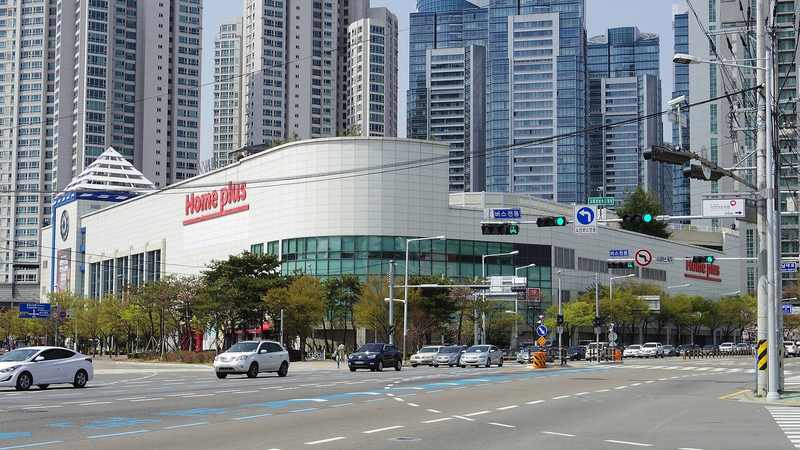
Eight people were wounded in a stabbing attack at a supermarket in the South Korean city of Incheon on Tuesday, with one person suffering cardiac arrest, police said. Officers responding to the scene arrested a male suspect and were investigating the motive and circumstances of the attack, a police spokesperson told Reuters by telephone. The attack happened shortly before 2 p.m. local time inside a commercial complex in Guwol-dong, in Incheon's Namdong-gu district, anchored by a Homeplus hypermarket — one of South Korea's big-box supermarket chains — in the middle of an ordinary weekday shopping afternoon.
The wounded were six women and two men, South Korean media reported, and the person in cardiac arrest was a woman in her 20s. An official from the Central Disaster and Safety Countermeasures Headquarters gave AFP the same picture — one person in cardiac arrest and around seven others injured. All eight victims were taken to hospitals, and fire authorities set up an emergency medical post inside the building in case more casualties were found. As of Tuesday evening in Korea, officials had reported no deaths: the toll stood at eight wounded, one of them fighting for her life.
Knives in both hands, moving floor to floor
A witness cited by Yonhap News Agency said the suspect appeared to have knives tethered to both hands and moved through several floors of the shopping complex, attacking people as he went, before being subdued by bystanders and handed over to police. Korean broadcaster YTN reported that the first emergency calls came in at about 1:49 p.m., initially reporting a stabbing inside the commercial building in Guwol-dong, and that police arrested the suspect — a man in his 60s — at the scene. The Homeplus store occupies the second basement level of the complex; accounts attributed to Namdong Police Station in Korean media described the man moving on an escalator between the basement supermarket and the floors above ground, with victims found on more than one level. Police took him into custody and were questioning him on Tuesday evening.
What police have not yet provided is a reason. Beyond confirming the arrest and the casualty toll, the police statement carried by Reuters said only that the motive and the circumstances — including how the man came to be carrying the weapons — were under investigation. No connection between the suspect and any of the victims had been established publicly, and police had not said whether the shoppers were targeted or attacked at random.
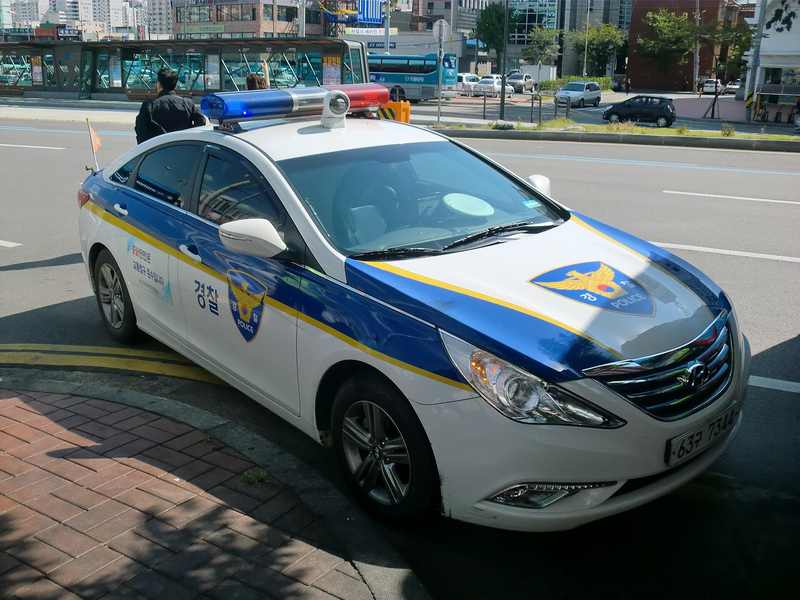
What is being reported about the suspect — and what police have not confirmed
South Korean media reported that the suspect is a man in his 60s who was wearing an electronic monitoring ankle bracelet, a detail Reuters carried from Korean reporting; the authorities had not publicly explained why he might have been under electronic supervision, and police had not confirmed the reports. The news agency Newsis reported further that the man had previously been investigated over alleged knife possession near a hospital in Incheon's Gyeyang district, that he had protested outside the hospital since August over dissatisfaction with his medical treatment, and that more than ten knives were found in his bag after his arrest. Those claims come from local reporting, not from police: at the time of publication, investigators had not confirmed any of them, and had not said whether any dispute involving the suspect is connected to Tuesday's attack. They are included here because they are already shaping the public debate in Korea — but they should be read as allegations under investigation, not established facts.
A familiar nightmare in one of the world's safest countries
South Korea is, by the numbers, an exceptionally safe country. Its homicide rate was 1.3 per 100,000 people in 2021, according to official statistics cited by AFP — well below a global average of about six — and strict firearms laws make gun attacks almost unknown. That is precisely why public stabbing rampages have carved such a deep groove in the national psyche: in a country where violent stranger attacks are rare, each one lands like a breach of the social contract.
The modern wave began in the summer of 2023. In July that year, a man stabbed strangers near Sillim Station in Seoul, killing one person and wounding three. Two weeks later, a second attacker drove into pedestrians and then stabbed shoppers at a department store near Seohyeon Station in Bundang, south of the capital, injuring 14 people. What followed was almost as disturbing as the attacks themselves: a flood of copycat threats posted online — so-called "murder notices" promising attacks at named stations and schools. Police declared special security operations, flooded transit hubs and shopping districts with patrols, and arrested scores of threat posters, many of them teenagers. Parliament later created a new public-intimidation offence aimed squarely at online attack threats.
The attacks, however, never entirely stopped. In April 2025, a man stabbed two women at a supermarket near Mia Station in Seoul, killing a woman in her 60s. In May 2025, a man stabbed three police officers, and that September three people were stabbed to death at a Seoul pizza restaurant, AFP reported. And in May of this year, a 17-year-old girl was fatally stabbed and another teenager hurt in the southwestern city of Gwangju by a man in his 20s, who was later sentenced by a court to life in prison — the case Reuters cited on Tuesday as the most recent entry in a now three-year pattern.
Why this matters
Start with the setting and the hour. A supermarket in the middle of a Tuesday afternoon is about as routine as public space gets — groceries, an escalator, a cinema upstairs. Random attacks do their deepest damage in exactly those places, because the victims are interchangeable with anyone: there is no version of the story in which an ordinary shopper could have seen it coming. That is the quality that made the 2023 attacks a national trauma, and it is why an incident with eight wounded and — so far — no confirmed death can still dominate a country's news agenda within the hour.
The ankle bracelet, if the Korean media reports are confirmed, will become the political centre of the story. Electronic monitoring is supposed to be the state's answer to exactly this fear: a person assessed as a risk is tracked, and tracked visibly. Critics of the system will ask how a monitored man could allegedly prepare and carry out an attack in a crowded store; officials can be expected to answer that monitoring records location, not intent, and that the overwhelming majority of supervised people never offend. Both things can be true, and the investigation will have to establish the basic facts — whether he was monitored at all, by whom, and under what conditions — before the argument means anything. Until police confirm or correct the reporting, the bracelet is a question, not a verdict.
There is also a harder policy problem underneath, and Korea has now had three years to stare at it. The tools built since 2023 are real but narrow: patrol surges deter and reassure for a few weeks; the public-intimidation law punishes people who post threats, which addresses copycats rather than attackers; neither reaches the grievance-carrying loner who never posts anything. The counter-argument, made by police officials after each attack, is equally real: South Korea records only a handful of such rampages a year in a population of 52 million, its streets remain objectively among the safest in the world, and no plausible screening regime for every supermarket entrance would change that arithmetic without changing the character of daily life. Tuesday's attack will restart that argument where it always restarts — not over whether the country is safe, but over what it owes the people for whom, on one afternoon, it was not.
What happens next
Investigators are expected to reconstruct the suspect's movements through the complex from CCTV and witness accounts, test the weapons and the bag reportedly found with him, and apply for a court warrant to extend his detention while they establish a motive — the question police flagged from their first statement. The medical story is the other live thread: the condition of the woman in her 20s who was in cardiac arrest will determine whether this remains an attack with eight wounded or becomes something graver, and officials are expected to update the toll as hospitals report. Incheon, a port city west of Seoul that forms part of the capital's metropolitan area and hosts South Korea's main international airport, is not used to leading the national news; on Tuesday it did so twice over in Korean coverage, on a day when the country was already dominating the region's headlines for a very different reason — the record plunge of its stock market, which we covered in our report on the KOSPI's fall below 6,000. If the pattern of 2023 repeats, the coming days will also bring heightened police patrols around large retail complexes, a sweep for copycat threats online, and the first official answers about the man in custody — starting with whether he was, in fact, wearing the state's own bracelet when he walked into the store.
Sources
Reuters (Oct 13, 2026) on the police statement — eight wounded, one in cardiac arrest, the suspect's arrest and the investigation into motive and circumstances — and on the Yonhap witness account and South Korean media reporting about the suspect and the victims. AFP (Oct 13, 2026), via an official of the Central Disaster and Safety Countermeasures Headquarters, on the casualty toll and South Korea's homicide rate. YTN (Oct 13, 2026) on the Homeplus Guwol location, the timing of the first emergency calls and the arrest at the scene. Details of the suspect's alleged background attributed to Newsis are that outlet's reporting and had not been confirmed by police when this article was staged.