War · Yemen · Saudi Arabia
A Houthi missile attack Riyadh-bound in the early hours of Thursday ended the way so many of these attacks now end: not with a missile reaching its target, but with debris reaching the ground. The Saudi-led coalition said it had dealt with the threat and that falling debris caused material damage still being assessed; a boom rolled across the capital; civil defence warned of danger and then said it had passed; and within the same hours, Saudi aircraft were striking Sanaa and a second missile was being destroyed over the kingdom’s south. No casualties were reported by any source. Almost everything else about the night — where the debris fell, what it damaged, and even what kind of missile flew south — remained, at filing, unconfirmed or disputed.
Track it live: Wars · Middle East
RIYADH, November 19, 2026 — The Houthi missile attack Riyadh faced early on Thursday, November 19, was announced by the Saudi-led coalition in the careful language these announcements now use. The coalition said it had “dealt with a missile threat” launched by Yemen’s Houthi movement toward the Saudi capital, according to Reuters. Its spokesman, Major General Turki al-Maliki, posting at about 02:28 UTC, said an initial assessment pointed to falling debris and material damage that was still being assessed. He did not specify where the debris fell, what it damaged, or whether anyone was hurt — and no source, Saudi or otherwise, reported casualties. A loud boom, described by AFP journalists in the capital as a powerful explosion, was heard across Riyadh, Reuters reported. Saudi Civil Defense first warned residents of potential danger in the capital and then announced that the danger had passed. Europa Press, in its account carried by Demócrata, reported that the same alert protocol was repeated in Wadi al-Dawasir and Sulayyil, with alerts also issued in Khamis Mushait and Abha in the south. The boom came shortly after the Saudi Press Agency reported that Crown Prince Mohammed bin Salman had met the chief of U.S. Central Command, Admiral Brad Cooper, in Riyadh for talks on military relations and regional developments, Reuters said — a coincidence of timing that placed the kingdom’s air defences, and its American partnership, in the same night’s headlines.
What is known, what is claimed, and what is disputed
The verified core of Thursday’s events is thin, and this article keeps it separate from everything built around it. From the coalition, via Reuters: a missile threat toward Riyadh was dealt with; debris fell; material damage was being assessed; civil defence warned and then gave the all-clear. From Houthi-run media, via Reuters: Saudi aircraft struck the Houthi-controlled capital, Sanaa, early on Thursday — the Saba news agency reported the strikes without giving details, and no casualty or damage figures from Sanaa were reported by any source cited here. And from the coalition again: a second missile launched toward the kingdom’s southern region was intercepted and destroyed. Even that second missile carries a discrepancy that honest reporting has to surface rather than smooth over. Reuters described it as a cruise missile; Europa Press, reporting the coalition’s statement, described it as a ballistic missile. The two types fly differently, are intercepted differently and imply different things about the Houthi arsenal — and as of filing, the public record supports both descriptions and settles neither.
The Houthi claim, and the sequence problem
The fullest account of the night from the Houthi side comes from Europa Press, and it is presented here as what it is: a claim. Houthi military spokesman Yahya Saree, in Europa Press’s account, said the movement had launched cruise missiles at Riyadh’s financial centre and at King Khalid International Airport shortly before midnight, ballistic missiles at a “vital target” in Jazan, and a drone at the air base in Khamis Mushait. None of those claimed impacts was confirmed by the coalition, by Reuters, or by any independent source in the reporting available at filing; the coalition’s own statement spoke of one missile threat toward Riyadh, debris, and damage under assessment — not of hits on the financial centre or the airport. The sequence matters too: Reuters, at the time it filed, reported that there had been no immediate Houthi confirmation of the Riyadh launch. The Saree statement reached the public record through Europa Press’s reporting. Readers weighing the night should therefore hold three distinct things at once: the coalition’s account of an intercepted threat and debris damage, the Houthi account of a multi-target operation, and the fact that the overlap between them — a missile was launched toward Riyadh, and something fell — is considerably smaller than either narrative.
Did a Houthi missile hit Riyadh?
It is the question residents asked when the boom woke them, and the honest answer is narrower than either side’s messaging. On the coalition’s account, the missile itself did not reach a target: the threat was dealt with, and what reached the ground was debris, causing material damage of a scale still being assessed, at a location the coalition did not specify. On the Houthi account, missiles were aimed at named targets in the capital. No source reported a missile impact on the financial centre, the airport, or anywhere else in Riyadh, and no source reported casualties. What is documented is an interception over or near a capital city, falling debris, a damage assessment left open, and a city put through the warn-and-all-clear cycle in a single night. That is the record. Everything beyond it, in either direction, is assertion.
Why this matters
Thursday’s attack will be filed in some ledgers as a defensive success: the missile did not arrive, no one was reported killed, and the all-clear followed the warning within the night. That ledger is incomplete, and the debris is the reason. An interception over a capital of millions is not a clean event; it converts one incoming warhead into a rain of metal over streets, roofs and cars, and it did so on Thursday in a city that has now been through the cycle repeatedly in this escalation. The deeper significance is the normalisation the night reveals. Riyadh has a protocol now — boom, warning, assessment, all-clear — and protocols exist for things that recur. Each recurrence also draws on finite stocks of interceptors that cost orders of magnitude more than the missiles they destroy, while the kingdom’s airports, ports and oil facilities remain the declared target set. And the Riyadh attack did not happen in isolation: it came in the same hours as strikes on Sanaa and an interception in the south, in a war whose front lines, far away on the Red Sea coast, are moving.
Air-defence stocks, oil infrastructure, and the Bab el-Mandeb advance
The strategic backdrop, as Reuters set it out, is a conflict that has intensified since the Houthis seized strategic areas of Yemen’s Red Sea coast last month and began advancing toward the Bab el-Mandeb strait, the southern gate of the Red Sea through which a significant share of world trade and energy passes. The renewed fighting has shattered the UN-brokered truce that had held, however imperfectly, since 2022. In parallel, the Houthis have stepped up attacks on Saudi airports, ports and oil facilities amid the wider U.S.-Israeli war on Iran, and Saudi Arabia has answered with airstrikes — most recently the operation this newsroom covered in which Saudi strikes hit 60 targets in Yemen, including in Hodeidah on November 17, two days before Thursday’s missile. Riyadh has been struck repeatedly in this escalation, including, earlier in it, a deadly attack on King Khalid Airport and an incident in which debris damaged an Aramco-owned building — background events, clearly earlier than Thursday, that explain why a debris warning in the capital is not treated by its residents as a formality. Thursday’s exchange fits the pattern analysts of the campaign expect to persist, as Signal Post News reported in its assessment that the Saudi campaign in Yemen could run well into 2027 as the Houthis press toward Aden: missiles and drones northward, airstrikes southward, and a Red Sea front tightening around the strait.
Context: a truce that did not hold, and a war widening on two axes
The 2022 UN truce was never a peace settlement, but it lowered the war’s temperature for years: cross-border missile attacks on Saudi cities, once routine in the war’s earlier phases, largely stopped, and the Saudi-led coalition’s airstrikes inside Yemen fell away. Its collapse has restored both, at a tempo set by two connected escalations. The first is territorial: the Houthi seizure of strategic Red Sea coast areas last month and the advance toward Bab el-Mandeb, where government forces have been giving ground — the movement this newsroom tracked as Yemeni government forces retreated toward Bab el-Mandeb as the Houthis advanced on Aden. Control of the strait’s Yemeni shore would give the Houthis leverage over shipping far beyond Yemen’s borders. The second escalation is regional: the wider U.S.-Israeli war on Iran, in whose shadow the Houthis — aligned with Tehran, though the degree of direction is debated — have widened their target list to Saudi airports, ports and oil infrastructure. Thursday’s missile at Riyadh sits at the intersection of the two: a weapon fired from a movement gaining ground at home, at a capital whose crown prince had spent part of the same evening with the commander of U.S. Central Command.
The tempo in numbers: November 17 to November 19
Numbers discipline the story better than adjectives. On November 17, the coalition struck 60 targets across Yemen in a single operation. In the early hours of November 19 — roughly 48 hours later — at least two missiles were launched toward Saudi Arabia, one at the capital and one at the south, by the coalition’s own account, alongside the Houthi-claimed drone and additional ballistic launches that remain unconfirmed. Saudi jets were over Sanaa within the same night. Alerts were issued, on Europa Press’s reporting, in at least five Saudi locations: Riyadh, Wadi al-Dawasir, Sulayyil, Khamis Mushait and Abha. And the confirmed human cost of the entire exchange, across all sources, was zero reported casualties — a figure that says as much about the role of interception and luck as it does about restraint, and one that the still-open damage assessment in Riyadh may yet revise in material, if not human, terms. Set against the repeated Riyadh alerts of recent weeks, the pattern is one of a campaign settling into rhythm: launch, intercept, strike, claim, counter-claim — on a cycle now measured in days.
What happens next
The watch list from Thursday is concrete. First, the coalition’s completed damage assessment: where the debris fell in Riyadh, what it damaged, and whether the open-ended “material damage” of the first statement acquires a location and a scale — or quietly closes. Second, Sanaa: whether Saba or other Houthi outlets publish details of the Saudi strikes, and whether the coalition describes its targets, as it did for the 60-target operation on November 17. Third, the southern front and the strait: whether the Houthi advance toward Bab el-Mandeb continues, and whether shipping through the strait — the war’s most consequential economic variable — is interrupted again. Fourth, the claims gap: whether evidence emerges that reconciles the cruise-versus-ballistic discrepancy over the southern missile, or substantiates any element of the Saree claim about the financial centre and King Khalid Airport. And fifth, the diplomacy that the boom interrupted in spirit if not in fact: the Mohammed bin Salman–Cooper meeting was about military relations and regional developments, and Thursday night supplied, in real time, the agenda. The scenarios branch from there — a managed exchange of strikes that both sides price in, an escalation if a future debris field or a future missile finds people rather than property, or a revived truce effort of the kind that produced 2022. Nothing in Thursday’s record, on any side’s account, points yet to the third. What it points to is a war that has found its tempo again — and a capital learning, boom by boom, to live inside it.
Sources
- Reuters, November 19, 2026 — Houthi missile threat towards Riyadh causes damage, Saudi-led coalition says: the coalition “dealt with a missile threat” toward Riyadh; spokesman Maj. Gen. Turki al-Maliki’s post at about 02:28 UTC reporting falling debris and material damage under assessment, without location or casualties; the loud boom heard in Riyadh; Saudi Civil Defense’s warning and subsequent all-clear; the interception and destruction of a second missile — described by Reuters as a cruise missile — toward the southern region; Saudi airstrikes on Sanaa as reported by Houthi-run Saba; no immediate Houthi confirmation at filing; the Mohammed bin Salman–Adm. Brad Cooper meeting reported by SPA shortly before the boom; and the context of intensified fighting since the Houthi seizure of Red Sea coast areas and advance toward Bab el-Mandeb, the shattered 2022 UN truce, stepped-up Houthi attacks on Saudi airports, ports and oil facilities amid the wider U.S.-Israeli war on Iran, and earlier attacks on Riyadh in this escalation including the deadly King Khalid Airport attack and debris damage to an Aramco-owned building.
- Europa Press via Demócrata, November 19, 2026 — The Saudi coalition reports the impact of debris from a Houthi missile launched at Riyadh: the alert protocol repeated in Wadi al-Dawasir and Sulayyil and alerts in Khamis Mushait and Abha; the coalition statement’s description of the southern missile as a ballistic missile (where Reuters described a cruise missile — the discrepancy is reported in the article); and Houthi spokesman Yahya Saree’s claims — cruise missiles at Riyadh’s financial centre and King Khalid International Airport shortly before midnight, ballistic missiles at a “vital target” in Jazan, and a drone at Khamis Mushait air base — which are presented in this article as claims, unconfirmed by the coalition or independent sources.
- Agence France-Presse, November 19, 2026, via the Middle East Eye live timeline — AFP journalists in Riyadh reporting the powerful explosion heard in the capital.
- Signal Post News, related coverage: Saudi Strikes on 60 Targets in Yemen, Including Hodeidah; Saudi Campaign in Yemen Could Run Well Into 2027; Yemeni Government Forces Retreat Toward Bab el-Mandeb.
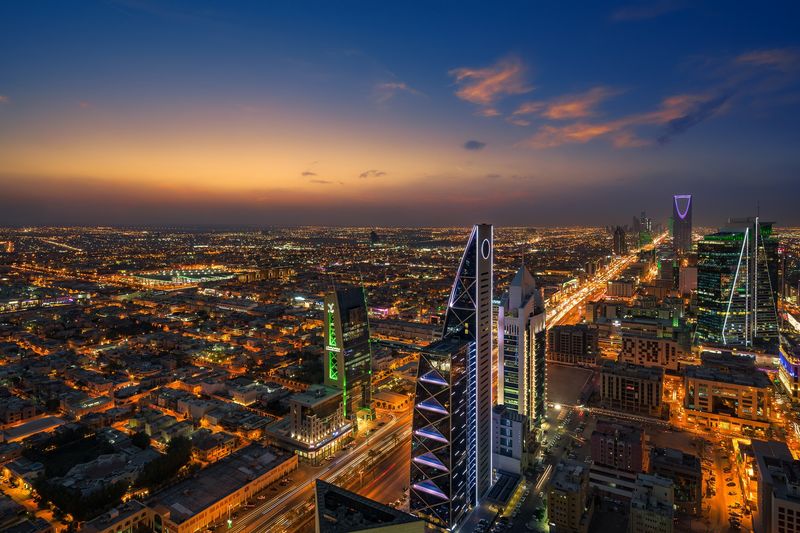
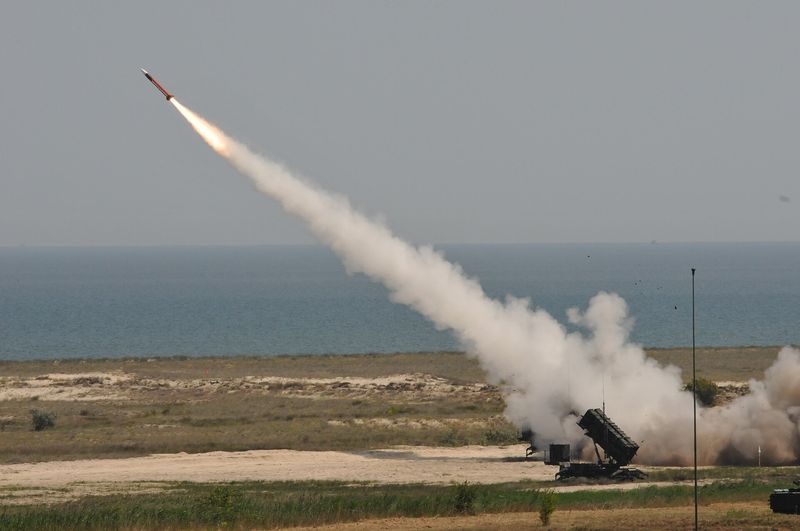
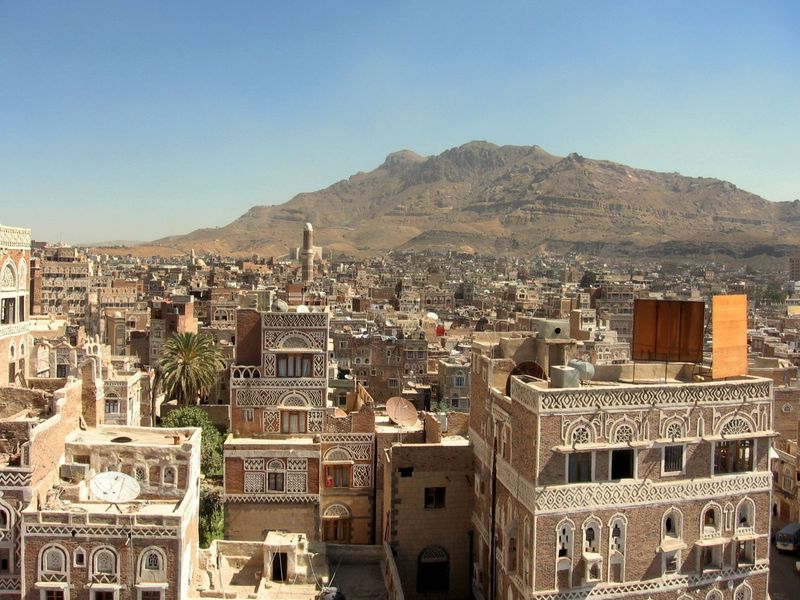
- Photos: file photos, none depicting November 19, 2026 — Riyadh skyline at night, 2017, Rafic Mufid (public domain); a Patriot missile system firing at a live-fire range near Capu Midia, Romania, June 19, 2019, U.S. Army photo by Capt. Aaron Smith (public domain) via Wikimedia Commons; Sanaa’s old city from a rooftop, 2007, ai@ce (CC BY 2.0) via Wikimedia Commons.