War · Politics · Pentagon · Iran
Defense Secretary Pete Hegseth has fired Army Lt. Gen. Brett Sylvia, the Joint Staff’s director for strategy, plans and policy — the J5, the Pentagon’s top military planning post — after roughly 11 months in the job. A War Department official says Sylvia was removed for “severe misconduct” and is under investigation for allegedly leaking classified information about the Iran war and the Russia-Ukraine war, allegations that have not been proven, on which no charges have been reported, and on which Sylvia himself has not commented. President Trump, asked about the firing on Thursday, said Sylvia is “going to have big problems.”
Track it live: https://signalpostnews.com/tracker/iran-war and https://signalpostnews.com/tracker/wars
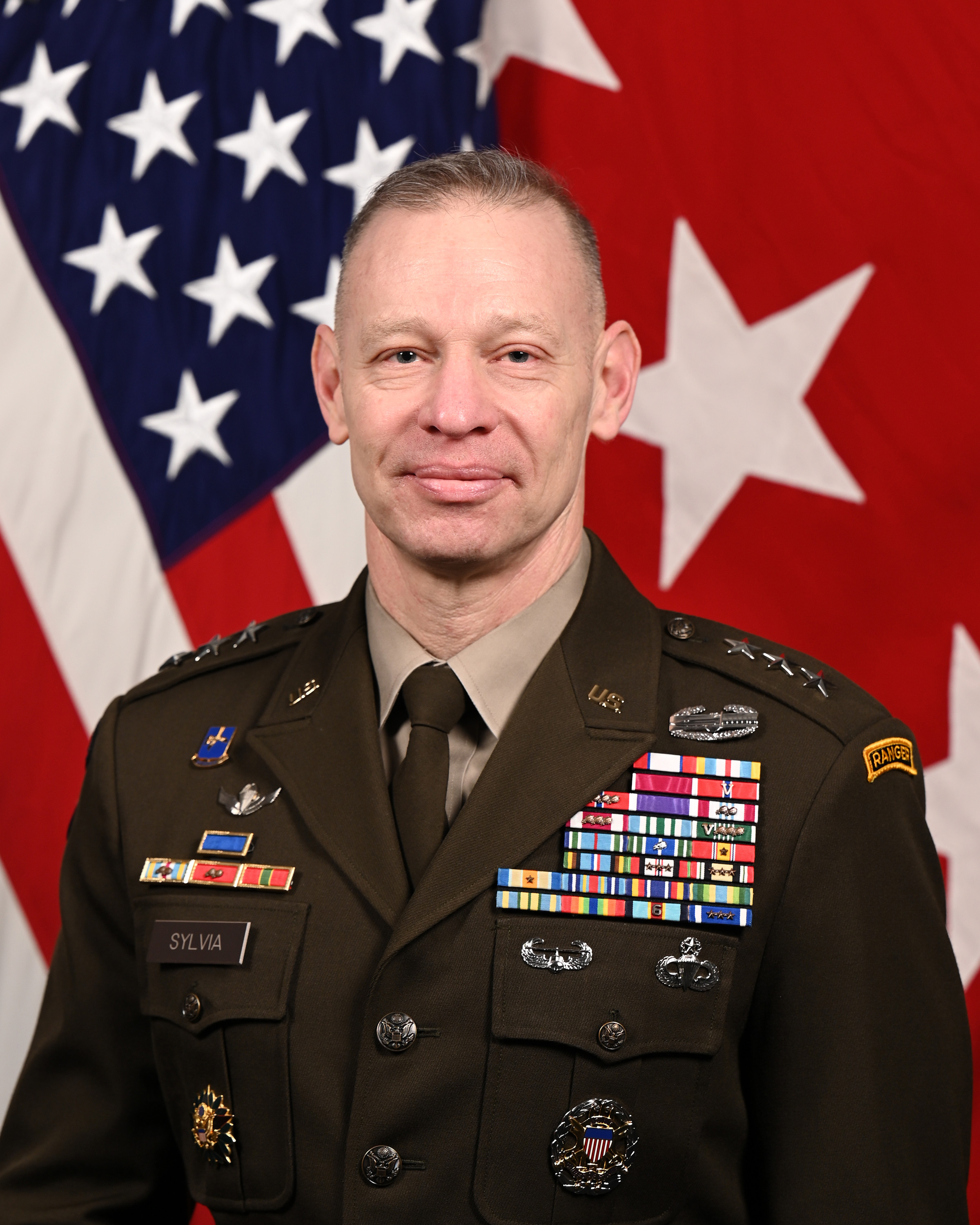
The firing was first reported by The Atlantic on Wednesday, October 28, and has since been confirmed by the Associated Press, CNN and CBS News. Sylvia’s removal makes him the second consecutive holder of the J5 post to be forced out under Hegseth: his predecessor, Lt. Gen. Joseph McGee, was pushed into retirement in October 2025. No replacement has been named. The timing is what elevates a personnel action into a strategic story: the Pentagon’s top planner has been removed days before the November 3 midterm elections, after which President Trump is weighing renewed strikes on Iran in a war now eight months old — the very contingency the J5 directorate exists to plan.
Trump addressed the firing directly on Thursday. Sylvia is “going to have big problems,” the president told reporters. “Long-term problems.” He added: “We’re very much looking for leakers.” The New York Post noted that Trump used “she/her” pronouns for the male general in his remarks. The president’s comments are the only on-the-record characterization of the case from the top of the administration so far, and they go considerably further than the Pentagon’s own carefully limited public statement, set out below.
What the J5 actually does: the Pentagon’s top military planning post
To understand what has been vacated, start with the job. The director for strategy, plans and policy — the Joint Staff J5 director — is the senior uniformed planner advising the Chairman of the Joint Chiefs of Staff. The directorate develops the military’s strategic plans, shapes the options put in front of the president, coordinates planning with combatant commands and allies, and works the policy questions that sit between diplomacy and operations: basing, force posture, campaign design and the sequencing of strikes, movements and messaging across theaters. When a president asks what striking Iran again would actually involve — which targets, which forces, what retaliation to expect, what happens on day thirty — the J5 is the office that turns that question into costed, war-gamed options.
Sylvia was, by résumé, an orthodox choice for the post. Born September 12, 1972, in Missouri and raised partly in South Carolina, he graduated from West Point in the class of 1994 and served 32 years, with combat deployments to Iraq and Afghanistan, where he was wounded in combat. He commanded the 101st Airborne Division at Fort Campbell, Kentucky, from 2023 to 2025, and — unusually for a J5 — he already knew the directorate from inside, having previously served as its vice director. He had held the top job for about 11 months. That combination, deep operational command plus prior time in the plans shop itself, is precisely the profile the post is designed to attract, which makes the manner of his exit, examined next, all the more striking.
The official leak allegations: attributed, detailed — and unproven
Everything in this section is allegation, attributed to the officials making it. No criminal charges against Sylvia have been reported. He has not been convicted of anything, and polygraph results are not evidence that any court would admit. Readers should hold those three facts alongside every claim that follows.
A War Department official, speaking to the New York Post, CBS News and other outlets, said Sylvia was “fired by Secretary Hegseth for severe misconduct” and is under investigation for allegedly leaking classified information about the Iran war, the Russia-Ukraine war “and more.” According to the same official, Sylvia allegedly met journalists outside the Pentagon because the Pentagon’s escort policy for reporters made meetings inside the building difficult, allegedly failed three polygraph examinations, and the case has been referred to the Department of Justice. A failed polygraph, it bears repeating, is an investigator’s tool and an administrative trigger; it is not a finding of fact, and examiners’ conclusions are contested even within the security community.
The same official who laid out the allegations also drew a line around them, stressing that Sylvia was not the central planner for the Iran war. That role, the official said, sits with U.S. Central Command and its commander, Adm. Brad Cooper. The distinction matters for assessing what any leak from the J5’s office could and could not have contained: the J5 shapes strategy and options at the Joint Staff level in Washington, while CENTCOM builds and executes the theater campaign plan in the region. Signal Post News’s coverage of U.S. military preparations to resume Iran strikes sets out how that planning burden is distributed as the post-midterm decision approaches.
The Pentagon’s only on-record statement: Sean Parnell on X
The department’s formal public position is far narrower than the anonymous official’s account. Chief Pentagon spokesman Sean Parnell posted on X on Thursday morning, without naming Sylvia: “Following an extensive Air Force OSI investigation, the Department took necessary personnel action to protect sensitive information. To protect the integrity of the investigation, no further comment will be made regarding the individual or the circumstances of this action.” The statement confirms that an Air Force Office of Special Investigations inquiry preceded the removal and that the department frames the action as protective. It does not confirm the polygraph claims, the meetings claim or the DOJ referral, all of which rest so far on anonymous sourcing.
The revised Joint Staff statement — and silence from Sylvia
The Joint Staff’s handling of the departure added its own signal. A spokesman for Joint Chiefs Chairman Gen. Dan Caine initially thanked Sylvia for 32 years of service and wished him and his family well — the standard courtesy extended to a departing senior officer. The spokesman then revised the statement, saying the original “did not appropriately reflect the full circumstances” of Sylvia’s departure. A valediction issued and then withdrawn is a small thing with a large meaning: the institution first treated the exit as a retirement, then corrected itself to make clear it was not one.
One detail of the departure remains less settled than the removal itself. Some reports — including an ABC News summary of the Associated Press reporting and the Washington Sun — say Sylvia retired from the Army after being removed from the J5 post. That framing sits alongside the confirmed record: the firing itself has been reported by the Associated Press, CNN and CBS News, and President Trump referred to the episode in his October 29 remarks about a fired general facing “big problems,” so the removal is not in dispute — only whether it ended in retirement, and on what terms, which the public sourcing does not yet fully settle.
From Sylvia himself, there has been nothing. CNN reached out to him directly; he has not commented. Silence from an officer under investigation, on counsel’s advice or otherwise, is expected and proves nothing in either direction. What can be said is narrower: as of publication, the public record contains detailed anonymous allegations, one terse on-record Pentagon statement, one revised Joint Staff statement, and presidential remarks predicting “big problems” — and no charges, no court filing and no word from the man at the center of it.
Why this matters
Removing the top planner days before a possible new Iran campaign
The operational question is continuity. The J5 directorate does not stop working because its director is removed — deputies, division chiefs and years of contingency work remain — but a change at the top, with no successor named, lands at the worst point in the decision cycle. Trump has vowed to “finish the job” in Iran, U.S. officials have told Middle East allies to prepare for possible renewed action after the midterms and for Iranian retaliation in response, according to the Associated Press reporting on diplomats briefed on those warnings, and the naval picture in the Gulf remains volatile, as Thursday’s Strait of Hormuz ship fire and Iran’s mine claims underscored hours before the Sylvia story moved. A president weighing a new strike campaign would normally lean hardest on his top planner in exactly these days. Whoever now carries that briefing burden does so as an acting official, under the shadow of a leak investigation into the office itself.
The chilling effect of polygraph-driven leak hunts
The method matters as much as the outcome. A leak investigation built on polygraphs reaches beyond its target: every officer and official who has spoken to a journalist, attended a background briefing or handled the documents in question can expect to be examined, and everyone watching learns the lesson the process teaches whether or not it is intended — that contact with the press is treated as presumptive evidence of misconduct. Defenders of aggressive leak enforcement answer that classified information about two active wars is not ordinary Washington gossip, that unauthorized disclosure can endanger operations and lives, and that a secretary of defense who does not enforce classification discipline will not long have any. Both things can be true at once: leaks of genuine operational detail are serious, and a hunt conducted through anonymous accusation and polygraph claims, with no charges laid publicly, will chill the legitimate flow of information to Congress, to allies and inside the building itself. The Sylvia case will be cited in both arguments for years, which is one reason the facts of it deserve more care than a headline.
The precedent of the uncharged 2025 aides
There is a recent pattern against which this case will be judged. In 2025, three senior Hegseth aides — Dan Caldwell, Darin Selnick and Colin Carroll — were fired amid leak claims. All three denied wrongdoing. None was ever charged. All three said they were never even told what, precisely, they were alleged to have leaked or to whom. That precedent does not prove anything about Sylvia: different people, different evidence, a uniformed officer rather than political appointees, and an investigation the Pentagon says was extensive. But it establishes the burden the department now carries. If the Sylvia case ends the same way — a career ended on allegations that are never tested in any forum where the accused can answer them — the conclusion drawn inside the officer corps will not be about one general. It will be about the process itself.
Background: Hegseth’s reshaping of the officer corps
Sylvia’s removal is also one entry in a much longer ledger. Since taking office, Hegseth has overseen the departure of roughly two dozen generals, admirals and senior leaders — fired, forced to retire or otherwise removed, in nearly all cases without a public explanation as detailed as even the anonymous account offered in this case. Layered on top of the individual removals is a structural cut: a 20 percent reduction in general and flag officer positions by January 1, 2027, which on the current establishment of roughly 800 such positions means eliminating about 160 of them. Hegseth unveiled the scale of that ambition at Marine Corps Base Quantico on September 30, in the address covered in Signal Post News’s report on Hegseth’s Quantico command announcement and general-officer cuts, and has defended the program as “accountability and long overdue.”
Within that program, the J5 chair now stands out. Offices turn over; messages are sent through budgets and billets. But the same post losing two consecutive directors in about a year — McGee forced to retire in October 2025, Sylvia fired in October 2026 — suggests a friction specific to the planning function itself: the office whose job is to tell the secretary and the president what their preferred course of action will cost, how long it will take and how it might fail. A plans directorate that anticipates punishment for unwelcome analysis will, over time, stop producing it. That institutional risk is the deepest stake in this story, deeper than any single leak allegation, and it is the one neither side’s talking points address.
The numbers in context
Set the case’s figures side by side, because each frames the others. Twenty percent: the share of general and flag officer positions Hegseth has ordered cut by January 1, 2027. Roughly 800: the current number of those positions across the armed services, making the cut about 160 billets. Roughly two dozen: the generals, admirals and senior leaders already ousted under Hegseth before Sylvia. Two: the consecutive J5 directors removed in about a year, from a post normally held for a full tour. Three: the polygraph examinations Sylvia allegedly failed, according to the anonymous War Department official — a claim, not a courtroom fact. Eleven months: Sylvia’s tenure in the job. Thirty-two years: the service the Joint Staff first thanked him for, in the statement it then revised. Zero: the number of criminal charges reported against him, and the number of public comments he has made.
Who benefits, who loses — and what critics say
The administration’s case writes itself, and its supporters make it plainly. A secretary who believes war plans are reaching newspapers is obliged to act; a president who says “we’re very much looking for leakers” is signaling to every holder of a clearance that the era of consequence-free disclosure is over. If the investigation substantiates even part of the anonymous account, the removal will be defended as the system working: an extensive OSI inquiry, a personnel action, a referral to the Justice Department rather than a purely internal punishment. On that reading, Sylvia’s seniority is the point — accountability that stops below the three-star level is not accountability.
Critics, including Sen. Mark Kelly, a former Navy combat pilot, describe the wider program of removals and cuts as a purge that will take a generation to repair. Their argument is institutional rather than personal: general officers are a decade-deep investment, the J5’s expertise is scarcer still, and a corps that watches two successive top planners removed amid anonymous accusations will optimize for safety rather than candor. Congressional Democrats can be expected to press for briefings on both the investigation and the vacancy; Republicans who have supported Hegseth’s overhaul will point to the DOJ referral as evidence the process is evidentiary rather than political. Sylvia himself, on the current record, loses the most and says the least: a 32-year career, ended between an anonymous briefing and a presidential prediction of “long-term problems,” with his side of the story still unheard.
What happens next
Three tracks now run in parallel. The first is legal: a DOJ referral can end in charges, in a declination, or in the long silence that followed the 2025 aides’ cases, and each outcome rewrites this story’s meaning. Charges would put the allegations into a forum where they must be proven and can be answered. A declination, or indefinite quiet, would leave a three-star general’s reputation resting permanently on claims no one had to defend in public. The second track is institutional: a replacement J5 must be named, confirmed through the Joint Staff’s processes, and read into two wars’ worth of planning at a moment when one of those wars may be about to expand. The speed and seniority of that appointment will say much about how disruptive the department believes the vacancy to be. The third track is political: the November 3 midterms sit between this firing and any renewed Iran strikes, and Congress — in hearings, in letters, in the confirmation fights to come — will decide whether the Sylvia case is treated as a leak prosecution, a readiness problem, or one more exhibit in the argument over what Hegseth is doing to the officer corps.
Signal Post News will update this story when the Pentagon names a successor, when the Justice Department acts or declines to act on the referral, or when Sylvia or his representatives comment on the record.
Sources
- Associated Press (via Reflector) — confirmation of Sylvia’s removal; Sylvia as the second J5 forced out after Lt. Gen. Joseph McGee; no replacement named; Trump weighing renewed strikes on Iran in the eight-month war after the November 3 midterms, with U.S. officials warning Middle East allies to prepare for possible renewed action and Iranian retaliation.
- CNN (October 29, 2026) — confirmation of the firing; the War Department official’s account of alleged classified leaks concerning the Iran and Russia-Ukraine wars; the Joint Chiefs spokesman’s initial statement of thanks for 32 years of service and its subsequent revision; CNN’s outreach to Sylvia, who has not commented.
- CBS News (October 29, 2026) — the official’s allegation that Sylvia failed three polygraph examinations regarding sharing classified information with the media and that the case has been referred to the Department of Justice.
- Military.com (October 29, 2026) — Hegseth’s firing of the Pentagon’s top military planner over alleged classified leaks to media, including the U.S. Army photographs of Sylvia’s May 30, 2025 Fort Campbell change of command (U.S. Army photo by Staff Sgt. Kaden D. Pitt).
- New York Post (October 29, 2026) — the War Department official’s “severe misconduct” characterization, the allegation that Sylvia met journalists outside the Pentagon because of the reporter escort policy, and President Trump’s October 29 remarks that Sylvia faces “big problems” and “long-term problems.”
- Sean Parnell, chief Pentagon spokesman, statement on X (October 29, 2026) — “Following an extensive Air Force OSI investigation, the Department took necessary personnel action to protect sensitive information.”
- Wikipedia: Brett Sylvia — service biography: born September 12, 1972, in Missouri; West Point class of 1994; commanding general of the 101st Airborne Division and Fort Campbell, 2023–2025; vice director and then director for strategy, plans and policy (J5) of the Joint Staff.