Politics / Kingston, New Hampshire — Heating oil prices above $6 a gallon have moved from household budgets into Senate races that could decide control of the chamber.
Track it live: Oil price tracker · Markets tracker
In Kingston, New Hampshire, the phrase heating oil prices $6 Senate races sounds like search shorthand, but for Rick Russman it is a household calculation. Russman, 80, has been a Republican for five decades. This year he will vote for Democrat Chris Pappas in New Hampshire's closely watched Senate race, according to Reuters reporting from Kingston on October 24, based on interviews with 15 voters, candidates and strategists. The reason he gave sits in his yard as much as in his politics: he will lean on a wood stove this winter rather than rely on heating oil alone. "Fuel that costs more than $6 a gallon is a huge expense," he told Reuters.
Russman is one voter, and this article does not treat one voter as a forecast. But his reasoning is the kind campaigns fear most, because it is not ideological and cannot be answered with a slogan. A tank of heating oil is a bill that arrives before the coldest weeks, in states where winter is not a metaphor. When that bill rises by more than two-thirds in a year, it becomes a political fact whether either party mentions it or not.
The numbers: from $3.50 to above $6
The Energy Information Administration puts heating oil above $6 a gallon nationally, up from about $3.50 a year ago. The arithmetic deserves to be done plainly, because percentages are how a household actually experiences the change. A rise from $3.50 to $6.00 is an increase of $2.50 a gallon. Divided by the starting price of $3.50, that is an increase of about 71 percent in a single year.
Apply it to a tank and the abstraction disappears. A household taking a 200-gallon delivery at $3.50 paid about $700 last year; the same delivery above $6 costs more than $1,200. That is over $500 extra for the same heat, before a second or third delivery later in the winter. Households that fill a larger tank, or refill more often in a cold snap, face proportionally larger gaps. For a retiree on a fixed income, or a family already choosing how far to stretch a pay cheque, that difference is not a statistic about energy markets. It is the winter budget.
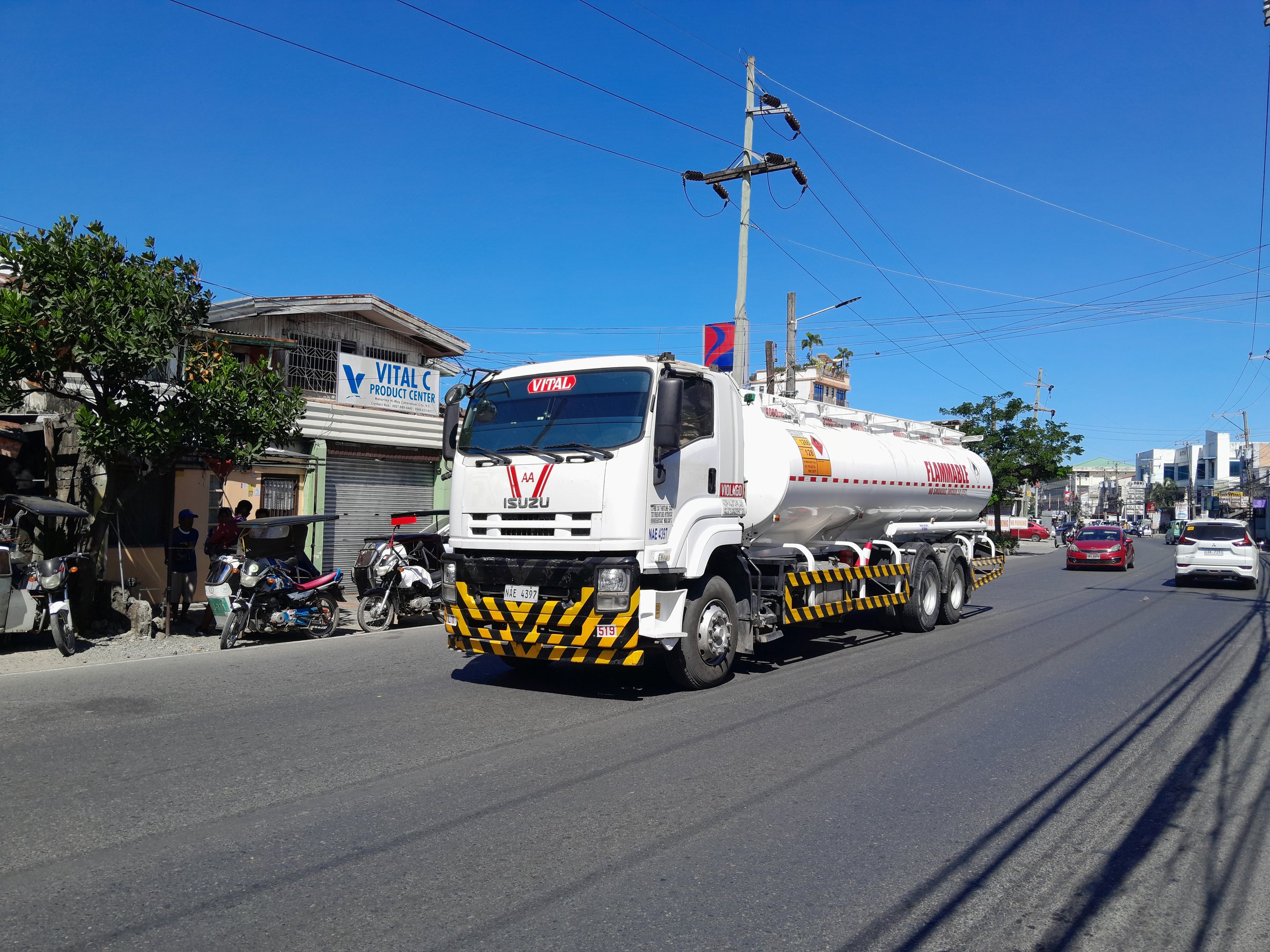
The pressure does not stop at the furnace. Diesel, which is chemically similar to heating oil and drawn from the same part of the refining barrel, has hit a record above $6.50 a gallon. Diesel moves the trucks that move groceries and household staples, so its price is threaded through food and goods prices in ways that are real but harder to isolate on a receipt. Reuters reported voters and strategists connecting the two directly: heating oil is the bill a family sees, diesel is part of why the other bills rose too.
Two campaigns, two explanations
Democrats tie the rise to President Donald Trump's war with Iran and its disruption of global diesel supplies. That argument has a clear political logic: a war the president chose, in their telling, tightened the supply of the exact fuels the Northeast depends on in winter, and the cost landed on households far from the conflict. It is the argument behind Pappas's opportunity in New Hampshire, and behind Democratic messaging in Maine and Alaska, the other states in this story.
The White House points to a different fact: the Energy Department's release of heating oil from Northeast reserves, which Reuters first reported this week. A reserve release is a concrete action, and the administration can fairly say it used a tool built for exactly this kind of supply squeeze. The question dividing analysts is not whether the release happened, but whether it will matter at the price sign. One analyst cited by Reuters said the release is unlikely to move prices — reserves are finite, releases are temporary, and a global diesel market sets the underlying price that a regional stockpile can only soften at the edges.
Between those positions sits the blunt assessment of Lance Dutson, a Republican strategist in Maine, quoted by Reuters: "The party in power is held responsible for things like that, and it's so clearly Trump's fault because of this Iran war." A Republican strategist saying that on the record is significant not because strategists are neutral — they are not — but because it reveals how professionals inside the president's own party expect voters to assign blame. Pocketbook issues rarely wait for a technical verdict on causation; they attach to whoever holds power when the bill arrives.
The polling points the same way. A Reuters/Ipsos poll in October found nearly 80 percent of Americans blame Trump policies for higher costs, including energy — a finding about blame for higher costs broadly, attributed precisely as Reuters reported it. The administration makes its wider case in the economic pitch at Trump's midterm rallies.

The limits of blaming one policy for a global price
Balance requires saying what both campaigns' arguments leave out. Heating oil is a globally traded product, refined from crude oil and priced through a chain that includes Middle East supply, refinery capacity, shipping, the dollar, seasonal demand and the weather itself. A war can tighten diesel supply without being the only reason prices rose, and a reserve release can be both a genuine intervention and too small to reverse a global move. Economists routinely warn against assigning a commodity price to a single decision, and this article follows that warning: the Reuters reporting establishes what voters, candidates and strategists say is driving the politics, not a settled econometric verdict on every dollar of the increase.
Why this matters
This matters because Senate control may turn on a handful of races on November 3, and Maine, New Hampshire and Alaska are among the states whose results could decide it. In a closely divided chamber, a few thousand voters in cold states weighing a $500 increase on a single fuel delivery are not a sidebar to the election; they are a mechanism by which it could be decided. Energy prices have shaped American elections before — the oil shocks of the 1970s restructured politics for a decade, and fuel costs have shadowed midterm campaigns repeatedly since — but heating oil is a particularly intimate version of the issue. It is not paid at a pump in public, in small amounts, week by week. It arrives as one large bill, at home, at the start of the season a family is preparing to endure.
The strategic consequences are already visible. Democrats gain a cost-of-living argument that does not depend on persuading voters about an abstraction; they can point to a tank, a price and a date. Republicans must argue either that the cause lies elsewhere or that the remedy — the reserve release and the administration's wider energy policy — will work in time. The Federal Reserve's own position, holding rates while oil sat far above its recent range, forms part of that backdrop, as examined in our report on the Fed decision and $114 oil: high energy prices constrain what monetary policy can do about the cost of living, leaving the argument squarely with the campaigns.
Critics of the Democratic framing note, correctly, that a party promising relief from a global commodity price is making a promise it may not be able to keep either; winning a Senate seat does not lower the world diesel price. Critics of the Republican position answer that the reserve release, if analysts are right that it will not move prices, functions more as a message than a remedy. Both criticisms can be true at once, and voters like Russman are left judging not who can command the oil market — neither party can — but who acknowledges the bill in front of them and who they trust when the next one arrives.
What households can actually do
Beyond the campaign, practical options are narrower than the rhetoric. State heating assistance can help eligible households with part of a bill, and reserve releases can ease a local shortage, but neither resets a global price. Households respond as Russman is responding — burning wood alongside oil, lowering thermostats and sealing drafts — coping strategies, not solutions, in states where the cold is deep and the season long.
What happens next
The immediate test is the calendar. Election Day is November 3, early enough that most voters will cast ballots before the deepest winter bills arrive, but late enough that the first big delivery of the season is already a memory in much of New England. If prices stay above $6 into the new year, the issue will outlive the campaign: whichever party controls the Senate will face the same households in January, with less patience and colder weather.
Rick Russman's wood stove will not decide the Senate. But thousands of households making the same calculation, in the same three states, in the same ten days, might. That is how a fuel price becomes a political force: not through ideology, but through a bill large enough, arriving at exactly the wrong moment, that even fifty years of party loyalty has to stop and do the maths.