Economy / Washington — The Federal Reserve decision October 28 2026 is expected to leave rates unchanged for now, even as every economist in a major poll says a hike is coming in December.
Track it live: Live markets tracker
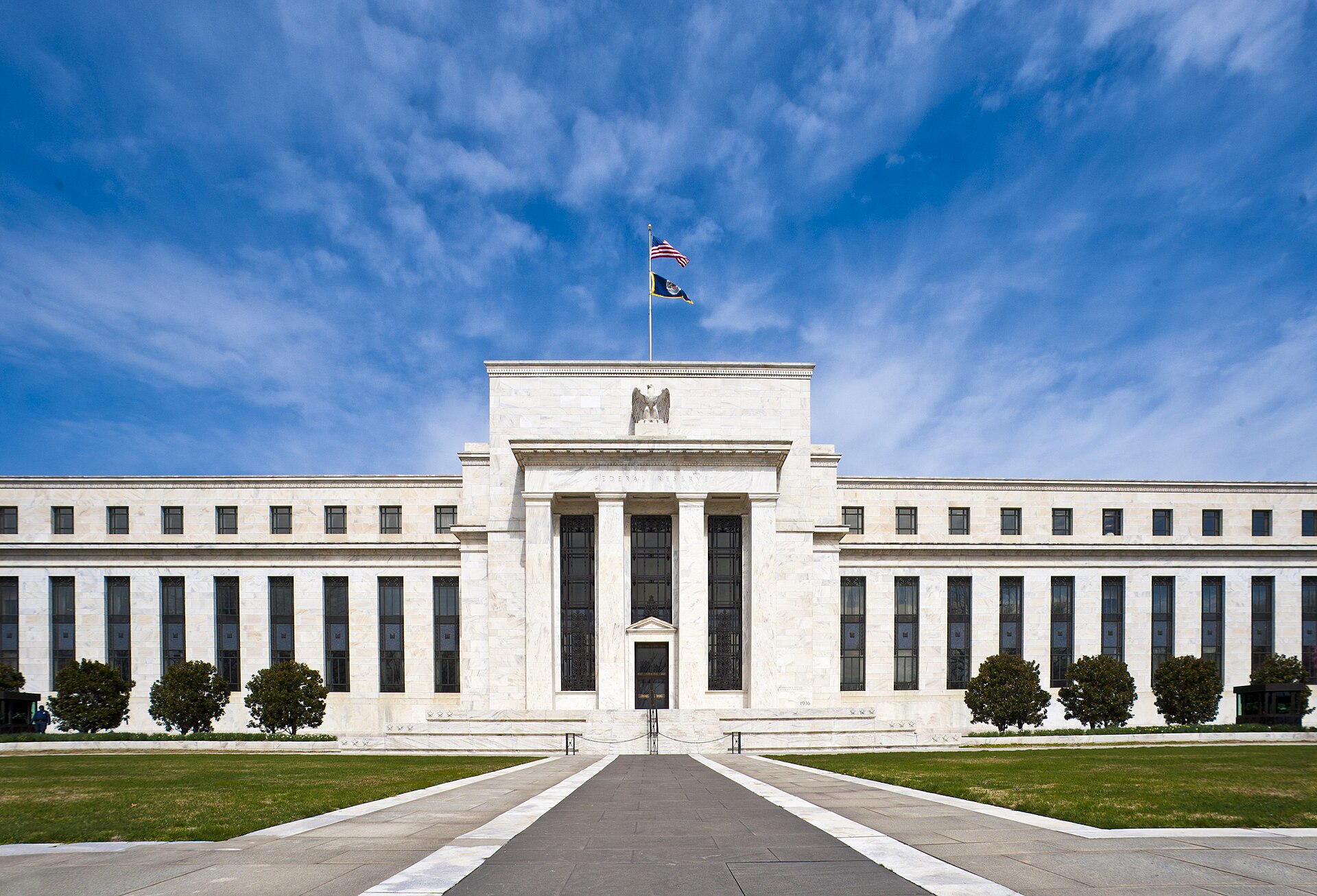
The Federal Reserve decision October 28 2026 will be watched less for what the central bank does that day than for what it promises, hints at, or refuses to say about December. In a Reuters poll conducted October 16 to 20, 94 of 100 economists said they expect the Federal Open Market Committee to hold the federal funds rate at 3.75 percent to 4.00 percent when it concludes its meeting on October 28. All 100, however, said they expect a rate increase in December — a striking shift from the previous month, when fewer than half of those surveyed expected another hike before year-end.
That combination — pause now, tighten soon — is the consensus heading into a meeting days before the November 3 midterms, one day before third-quarter GDP data, and amid an oil shock that has pushed Brent to $114.32. CME FedWatch on October 20 put a hold at roughly 83 percent and a hike at about 17 percent, per Reuters. The question for Chair Kevin Warsh is whether he can validate the December expectation without reigniting the sell-off that has carried the 10-year yield to about 4.98 percent.
A unanimous September hike, and inflation that will not settle
The path to October runs through September. The FOMC raised rates unanimously by 25 basis points that month, a move that by itself signalled unusual unity on a committee that has often been divided between officials worried about jobs and officials worried about prices. Since then, the data have given the hawks more material. September consumer prices rose 0.6 percent on the headline measure, with core inflation up 0.3 percent month on month, according to figures cited by Reuters. Core PCE inflation — the Fed's preferred gauge — is seen rising 0.3 percent in the next reading, lifting the year-on-year rate to 3.1 percent from 3.0 percent.
Those are not dramatic numbers in isolation. Their meaning comes from direction and persistence. Inflation at 3.1 percent is more than a full percentage point above the Fed's 2 percent target, and it is moving away from the target rather than toward it at a moment when the economy is still growing firmly — third-quarter GDP, due October 29, is expected at around 3 percent. On Friday, the flash purchasing managers' data added to the discomfort: output prices in the survey reached 59.8, the highest reading since August 2022, suggesting businesses are passing costs on rather than absorbing them. That picture connects directly to this week's broader business data, covered in our report on U.S. business activity and price pressures in October, where activity cooled even as the prices firms charge accelerated.
Governor Christopher Waller, in Istanbul on October 8, said more hikes were likely needed but stressed "flexibility" on pace. Cleveland Fed President Beth Hammack and others at NABE pointed to the AI investment boom; Warsh, at an IMF meeting in Thailand, called AI investment a "shock" to prices and demand. Former Chicago Fed President Charles Evans has questioned Warsh's suggestion that there is no conflict in the current stance.
Why this matters
Why this matters is that the Fed is trying to solve an inflation problem that interest rates are poorly designed to fix, while using the one tool it has. Reuters has estimated AI-related capital spending at roughly $1 trillion next year, equivalent to about 3 percent of GDP. Data centres need power, cooling, chips, land, construction labour and grid connections. Each of those inputs is in limited supply, so a surge in spending bids up prices in exactly the sectors least able to expand quickly. A rate hike does not build a substation or train an electrician. It works, if it works, by making the whole programme more expensive to finance and by slowing everything else enough to offset it.
That creates the hardest path in central banking: hold now to avoid shocking markets and an economy still absorbing an energy spike, but signal clearly enough that December is live, so that financial conditions do not loosen on the pause itself. If Warsh says too little, traders may read the hold as the end of the hiking cycle, yields fall, credit eases, and inflation gets a second wind — forcing a larger move later. If he says too much, he repeats the problem he has criticised in others. Warsh dislikes forward guidance, the practice of steering markets with words about future policy. Yet this meeting's entire effect may rest on guidance, because the decision itself is so widely expected.
Oil, bonds and a nervous stock market
No Fed meeting happens in a vacuum, and this one happens with oil at the centre of the inflation story. Brent at $114.32 and West Texas Intermediate at $101.03, as markets closed the week, reflect supply fears linked to Houthi attacks and Libyan disruption, detailed in our coverage of Brent crude at $114 and the supply squeeze behind it. Energy at those levels feeds directly into transport, food and manufacturing costs within weeks, and into inflation expectations within days. Continuum Economics, in analysis dated October 20, was among the firms arguing that the energy and AI pressures together leave the Fed little room to sound relaxed.
Equity markets have already voted with their feet. The Nasdaq fell 2.6 percent on Thursday, and the semiconductor index dropped 6.7 percent, according to market reporting cited by Reuters on October 19 and in Friday's market wrap. The chip sell-off matters doubly: the AI trade lifting investment and prices is also the most rate-sensitive part of the market, and a 10-year yield near 4.98 percent compresses its valuations mechanically.
For households, the transmission is direct. Mortgage rates track long-term yields more than the fed funds rate, so a hold does not mean cheaper borrowing if bonds keep pricing December. Warsh himself noted over the summer that housing and agriculture were already strained — farmers face high fuel, fertiliser and finance costs, and homebuyers face borrowing costs that keep them locked out. The people who pay for an AI-and-oil shock are often furthest from either cause.
Who gains, who loses, and what critics on both sides say
If the Fed holds and hikes in December, savers gain — money-market yields stay high and the dollar is supported — while indebted companies, commercial real estate and rate-sensitive sectors lose as refinancing costs stay elevated into 2027. Emerging markets lose twice, through a stronger dollar and the oil price itself.
Critics of the expected path split into two camps that agree on little else. One camp, echoing Evans's scepticism, argues the Fed is understating a genuine trade-off: if AI investment is a supply-expanding force in the long run — raising productivity, and therefore the economy's speed limit — then tightening hard against its short-run price effects could strangle the very investment that would eventually lower costs. The other camp argues the opposite: that a pause in October, days before an election, with core inflation rising, risks looking political and risks letting expectations drift. Fed officials reject both charges in public, pointing to the September unanimity as evidence the committee follows data, not calendars. The midterm timing is unavoidable — the FOMC schedule is set long in advance — but perception matters for an institution whose power rests on being believed.
What happens next
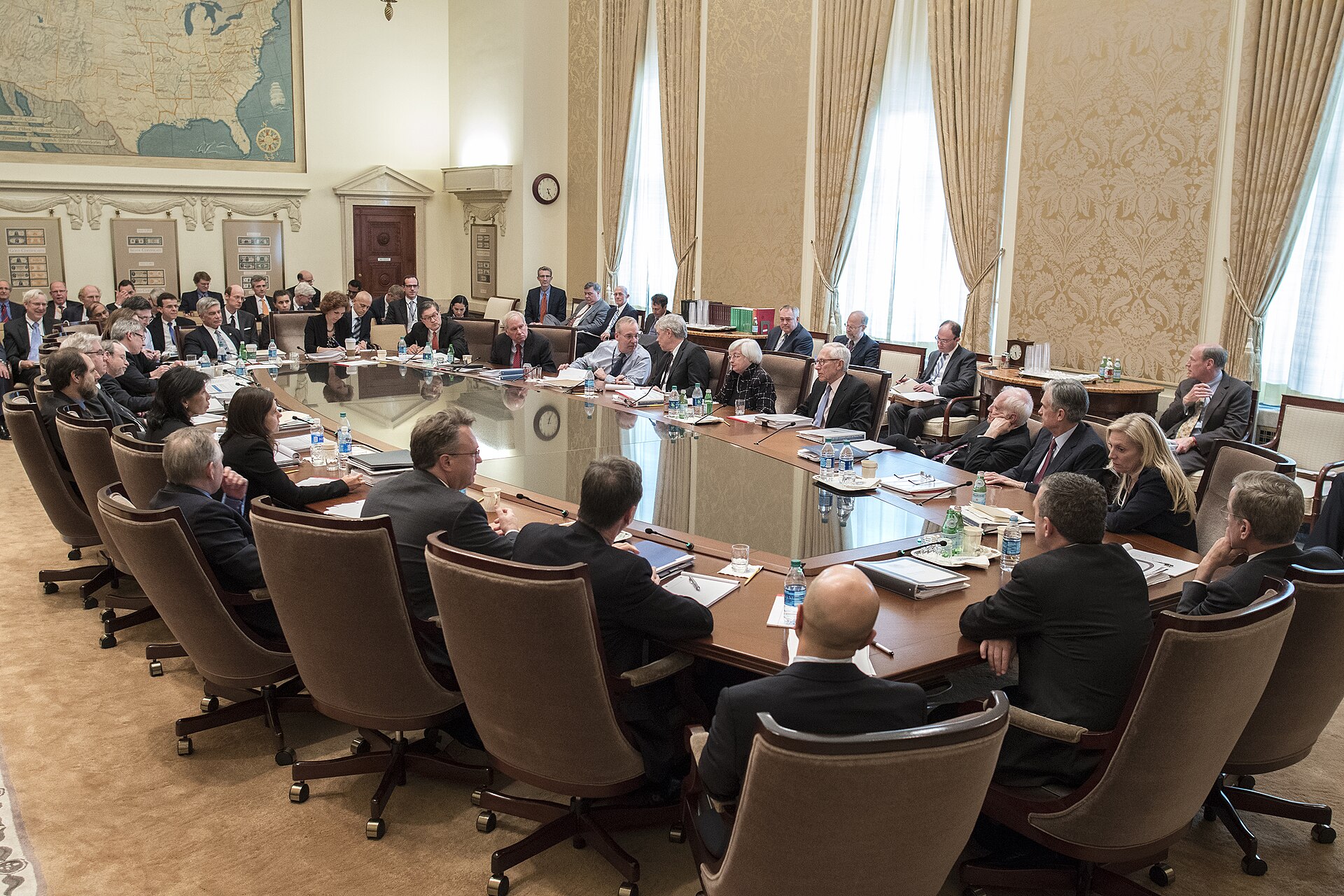
What happens next comes in quick sequence. The statement lands on October 28, followed by Warsh's press conference, where the key test is whether he keeps December open without committing to it. GDP follows on October 29, expected firm at around 3 percent; a much stronger print would strengthen the December case, a weak one would complicate it, because the Fed would then be hiking into a slowdown. Inflation and labour data through November will decide whether the unanimous December expectation in the Reuters poll becomes a unanimous vote in the room.
Three scenarios cover the range. Base case — hold in October, hike in December — markets get the priced path and the argument shifts to 2027. A hawkish surprise hike in October would likely lift yields and deepen the chip sell-off. A dovish signal that December is unsettled would rally stocks but risk forcing the committee to re-tighten its message within weeks. For now: the pause is the forecast, the hike is the story, and the words in between will move more money than the decision itself.
Sources: Reuters poll Oct 16-20, 2026, via Kitco/Reuters Oct 20 (94/100 hold at 3.75%-4.00% Oct 27-28; 100/100 December hike; CME FedWatch Oct 20 ~83% hold / ~17% hike); Continuum Economics, Oct 20; Reuters, Oct 19 (CPI +0.6%, core +0.3% m/m; core PCE seen +0.3%, y/y 3.1% from 3.0%; unanimous 25bp September hike; Q3 GDP due Oct 29, ~3%); Reuters, Oct 8 (Waller, Istanbul); Hammack and others at NABE; Warsh at IMF, Thailand; Evans comments; Friday data: 10-year ~4.98%, Brent $114.32, WTI $101.03, Nasdaq -2.6%, chips -6.7%, flash PMI output prices 59.8; Reuters AI capex estimate ~$1T (~3% of GDP).