U.S. · Politics · Midterms 2026
The Democrat who lost Michigan's Senate primary by less than a point stood beside the Republican nominee at a Detroit church on Sunday, recorded a video endorsing him over her own party's candidate, and watched her own staff begin to resign — 48 hours before a vote that could decide control of the U.S. Senate.
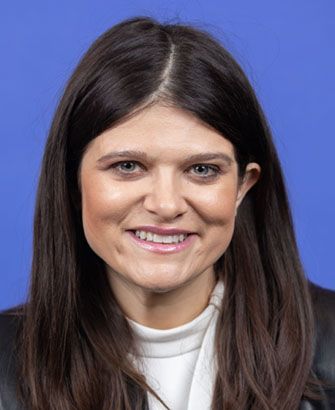
Representative Haley Stevens, a Michigan Democrat, endorsed Republican Mike Rogers for the United States Senate on Sunday, November 1 — two days before Election Day — breaking publicly with Abdul El-Sayed, the Democratic nominee who defeated her in the August primary and whom she had endorsed at the time. The Haley Stevens endorses Mike Rogers moment, delivered first beside Rogers at a Detroit church and then in a video posted to social media, is the most dramatic cross-party defection of the 2026 midterms and lands in one of the handful of races that will decide whether Republicans keep their 53–47 Senate majority.
Stevens appeared with Rogers at a Sunday service at Perfecting Church in Detroit, sitting beside the former congressman and his wife, Kristi Rogers, according to the Detroit Free Press and USA Today. Outside the church afterward, she left nothing to interpretation: "I am endorsing Mike Rogers for the United States Senate. I am one vote in this state. Michigan is a swing state, and I have a divided household, as some of you have heard, up until last night, but even my own mother cast her vote for Mike Rogers, as my own father cast his vote for Abdul," she said, adding that 90 percent of the rest of her ballot would still go to Democrats but that she "can't stand with hate." In the video posted the same day, she said: "I don't belong in Abdul's campaign," called herself "a very proud Democrat," and framed the race as "the conscience of the Senate right now and our Michigan moment." She also told reporters, with Rogers beside her: "I stood with my party, and I was booed off the stage."
Her stated reasons, in her own telling, are twofold. El-Sayed's campaign had told her she was no longer welcome in his campaign — "Our Democratic nominee for US Senate, Abdul, said that I was no longer welcome in his campaign and that I should stay away. And he's right," she said in the video. And she objects to El-Sayed's campaigning with the streamer Hasan Piker: "I do not stand with Hasan Piker, who gets trafficked on our college campuses." Days earlier, on October 30, Stevens had issued an extensive statement calling on El-Sayed to condemn an ad produced by an outside political action committee — a group independent of his campaign — and El-Sayed's campaign responded by asking her not to attend the final weekend's campaigning, including what had been planned as a joint church appearance on Sunday with Representative James Clyburn of South Carolina. El-Sayed appeared at his own event with Clyburn; Stevens appeared with Rogers instead.
Why this matters
Endorsements rarely move many votes on their own, and nobody serious claims a single congresswoman's conversion will, by itself, flip a Senate race in a state of ten million people. What a defection like this one moves is permission. Rogers has spent the autumn courting exactly the voters Stevens represents — suburban, college-educated, Democratic-leaning Michiganders, under a "Democrats for Rogers" banner the Free Press noted at the church — and a sitting Democratic congresswoman saying, on camera, that she is voting for him hands those voters a credential no advertising buy can manufacture: one of their own, making the same choice, for stated reasons of conscience rather than party advantage. That is why the timing matters more than the act. Delivered in September, this would have been a bad week for El-Sayed. Delivered on the last Sunday, it becomes the closing image of the campaign — the final thing undecided and late-deciding voters see before Tuesday, in the race both parties agree is among the two or three most likely to decide Senate control.
The cost to Stevens is immediate and visible, which is part of what makes the signal credible to the voters she is trying to reach. The Wall Street Journal reported that her chief of staff said he and several other staffers in her House office are resigning over the endorsement, and that a request for comment to her communications director, Logan Basch, drew an auto-reply stating he was no longer with the office as of November 1. Senate Minority Leader Chuck Schumer decried the move and said Senate Democrats were "united" in support of El-Sayed. A politician does not absorb that kind of institutional damage for a stunt. Whatever else it is, the endorsement reads — to voters inclined to trust her and to voters inclined to punish her — as sincerely held. In a race the RealClearPolitics average put at El-Sayed by 3.5 points on Sunday, sincerity aimed at the persuadable middle is the whole ballgame.
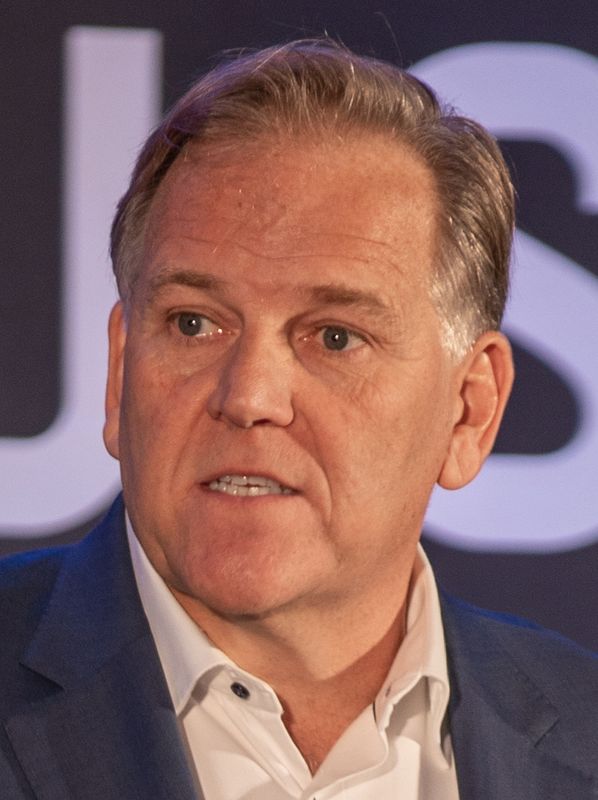
How a one-point primary became a public breakup
To understand Sunday, you have to go back to August. Michigan's open Senate seat — Gary Peters is retiring — drew a Democratic primary that mapped every fault line in the party: Stevens, the establishment-backed congresswoman from the Detroit suburbs, against El-Sayed, the former public-health official from Ann Arbor running as the party's insurgent. El-Sayed won by less than one percentage point. Stevens endorsed him immediately, as party norms demand, and then, by all accounts including CNN's, the two barely functioned as allies: months without campaigning together, a unity breakfast in August that proved to be the last joint appearance, and a widening dispute over Israel, over an outside group's advertising, and over El-Sayed's association with Piker — a figure Stevens has attacked over his comments about Israel and Jewish Americans, and who is himself now a litigant in a $72 million defamation suit against a CNN commentator, as Signal Post News has reported.
The final week's choreography tells the story in miniature. Stevens' fiancé, Jason Turkish, said last week that he would vote for Rogers; Stevens told CNN they were "a household divided" and that she was voting the Democratic ticket. On Thursday she issued her statement demanding El-Sayed condemn the outside ad. On Friday, Rogers was publicly praising her as a courageous leader. On Saturday, El-Sayed largely dismissed her concerns, and his campaign asked her to stay away from Sunday's events. On Sunday she walked into a Detroit church with the Republican. Campaigns plan closing arguments for months; Michigan's Democratic Senate campaign spent its closing weekend watching its own runner-up become the other side's closing argument.
Who gains, who loses, and what the numbers can and cannot say
Start with the arithmetic, because it disciplines everything else. Republicans hold the Senate 53–47. Michigan is an open seat the GOP must flip, or come close to flipping, to feel safe about the map — and Rogers, who lost the 2024 race to Elissa Slotkin by less than half a percentage point (roughly 19,000 votes), is the kind of candidate who runs close in Michigan by default. An average lead of 3.5 points for El-Sayed, two days out, with more than 51 million Americans already having voted early nationwide, means a large share of Michigan's electorate has already locked in — the persuadable remainder is small, disproportionately late-deciding, and exactly the audience a local, personal, conscience-framed endorsement is built for. Stevens does not need to move Michigan. She needs to move a few tens of thousands of Oakland County-style voters — her own constituents — and the endorsement is precision-targeted at them in a way a national surrogate's never could be.
The counter-argument, made implicitly by Schumer's rapid response, is that defections at the buzzer mostly rally the base they betray. El-Sayed's campaign can now run the simplest message in politics — the party is united, one sore loser is not — and progressive voters who were lukewarm about a nominee they saw as insufficiently loyal to their own primary's winner may hear Stevens' move as confirmation that El-Sayed is genuinely independent of the establishment that opposed him. Both things can be true at once: the endorsement can cost El-Sayed votes in the suburbs and win him intensity in Ann Arbor and Detroit's progressive precincts. Net effects of late endorsements are, historically, small and hard to measure. What is not hard to measure is the coverage: on the final Sunday, every major outlet in Michigan led with the Republican's new supporter rather than the Democrat's closing message. In a 3.5-point race, owning the last news cycle is itself a result.

What happens next
There is no time for this story to develop slowly — that is its defining feature. Monday is the final full day of campaigning; Tuesday, November 3, Michigan votes. Watch three things. First, whether El-Sayed addresses the endorsement directly or starves it: any response larger than a dismissal extends the story into Monday's cycle, which is Rogers' terrain now, but silence lets the video stand as the weekend's last word. Second, whether any other Michigan Democrat follows Stevens or, more likely, whether the state party produces a visible unity show — Clyburn's presence in the state gives them a credible national validator, and Schumer's statement suggests the national party will spend Monday closing ranks loudly. Third, and decisive, the late deciders themselves: Michigan's result will be read, whichever way it goes, as a verdict on whether a conscience defection moves real voters in a polarized era — and if Rogers wins a race he trailed on Sunday, every future primary loser in America will be handed a script for what to do with their grievance.
For now, the verified record is stark enough without embellishment. A Democratic congresswoman who lost a primary by less than a point, who endorsed the winner, who was then told to stay away from his campaign, walked into a Detroit church on the last Sunday beside the Republican nominee and said, on camera, "I am endorsing Mike Rogers for the United States Senate today." Her staff began resigning within hours. Her party's Senate leader condemned her the same afternoon. And Michigan — the swing state she invoked in her own defense — votes on Tuesday.
Related reading: Trump weighs in as Rogers and El-Sayed clash in the Michigan debate · More than 51 million Americans have already voted ahead of the November 3 midterms · Hasan Piker's $72 million defamation lawsuit, explained
Sources
USA Today, "Dem Haley Stevens endorses Republican in critical Michigan Senate race" (November 1, 2026) — the endorsement and video, Stevens' quotes ("I don't belong in Abdul's campaign"; "the conscience of the Senate"; the Piker line), the Clyburn church-event background and the El-Sayed campaign's stay-away request, and the 53–47 Senate context; USA Today live midterm coverage (November 1, 2026) — Schumer decried the move and said Senate Democrats are united behind El-Sayed; the 3.5-point RealClearPolitics average; Wall Street Journal midterm live coverage (November 1, 2026) — "Democrat Haley Stevens Endorses GOP's Mike Rogers in Michigan Senate Race": the video posted shortly after the church appearance, "I stood with my party, and I was booed off the stage," the chief of staff's statement that he and several other staffers are resigning, and Logan Basch's auto-reply; the Journal's earlier card on the church attendance, El-Sayed's Saturday dismissal of Stevens' concerns, and the October 30 statement on the outside PAC ad; Detroit Free Press, "Stevens appears with Rogers at Detroit church service" (November 1, 2026) — the Perfecting Church service, Stevens seated beside Rogers and his wife, her post-service remarks in full ("I am endorsing Mike Rogers… even my own mother cast her vote for Mike Rogers"; 90 percent of her ballot Democratic; "can't stand with hate"), the "Democrats for Rogers" banner and Clyburn's introduction of El-Sayed; New York Post (November 1, 2026) — corroboration of the endorsement video and the primary margin. Background on the August primary, the months-long rift and the planned Clyburn appearance: Reuters and CNN reporting, October 28–31, 2026, as summarized in Signal Post News' earlier Michigan coverage. The October 30–31 stay-away dispute is the subject of a banked Signal Post News draft whose premise Sunday's endorsement superseded; it is not being published in its earlier form.