US Politics
Twitch streamer Hasan Piker has filed a 38-page federal defamation complaint against CNN commentator Scott Jennings, seeking $72.5 million and alleging Jennings aired a manipulated 42-second clip, invented a quotation, and falsely told a national audience Piker was calling for Black voters to be lynched. The claims are allegations in a complaint, not court findings; Jennings declined or did not respond to requests for comment.
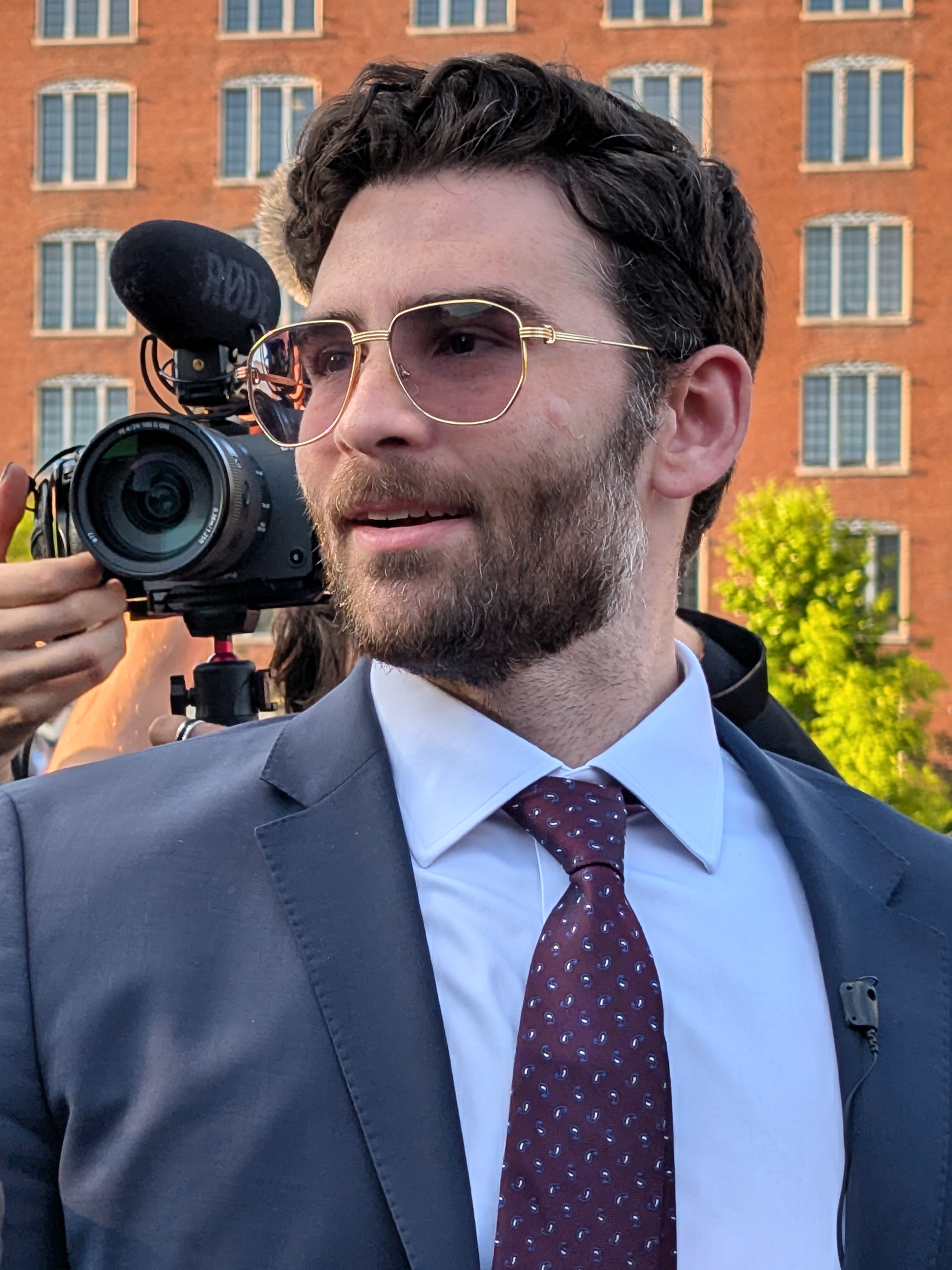
The Hasan Piker sues Scott Jennings case is, at bottom, a fight over 42 seconds of video. On Tuesday, October 27, 2026, lawyers for Hasan Piker — the left-wing Twitch streamer known to his 3.1 million followers as HasanAbi — filed a 38-page complaint in the U.S. District Court for the District of Columbia against Scott Jennings, the conservative CNN commentator and host of The Scott Jennings Show on Salem radio and podcast platforms. The case, Piker v. Jennings, No. 1:26-cv-03770, brings claims of defamation per se, defamation by implication and false light, and seeks at least $27.5 million in compensatory damages and $45 million in punitive damages — $72.5 million in all. Piker is represented by Meier Watkins Phillips Pusch LLP.
The complaint’s central allegation is stark. Piker alleges that Jennings, on an August episode of his show, played a heavily edited 42-second compilation spliced together from separate Twitch broadcasts, presented an invented quotation as Piker’s own words, and told a national audience that Piker was calling for Black voters to be lynched. In the complaint’s own summary: “Mr. Jennings did not merely mischaracterize something Mr. Piker said. He took a false, fabricated, and manipulated video of Mr. Piker, added a made-up quotation that Mr. Piker never uttered, and then made accusations that went beyond even what the manipulated footage purported to show.”
Those are allegations in a pleading, not findings. Nothing in the Hasan Piker defamation lawsuit has been tested in court, Jennings has not been found liable for anything, and he has not yet filed any response. Jennings declined to comment to the New York Post and did not immediately respond to requests for comment from USA Today, Bloomberg Law and the Kentucky Lantern. What follows, therefore, is an account of what the complaint alleges, what the underlying broadcasts appear to show according to the complaint and to fact-checkers who reviewed them, and why the case matters well beyond two very different corners of the political media world.
What the complaint says happened in August
The Scott Jennings Show August clip at the centre of the case aired on August 11, 2026. According to the complaint, Jennings played a 42-second compilation assembled from separate broadcasts on Piker’s Twitch channel and told his listeners that Piker was “out there calling for Black voters to be lynched” and had a “plan of returning our country to lynchings.” The complaint alleges that the compilation was presented as though it were a straightforward excerpt of Piker speaking his own views, when in fact — again, according to the complaint — it stitched together fragments of different streams, stripped of the context that made their meaning plain.
The segment did not stay on the radio. The complaint says the clip was shared on X, where it was reported to have drawn roughly 2.7 million views, and that on August 12 Jennings posted about it himself, writing: “Abdul El-Sayed’s best pal and campaign partner says the USA should resume lynchings against black people.” That sentence matters to the complaint’s theory of motive. Piker is a prominent backer and campaign partner of Abdul El-Sayed, the Democratic nominee for U.S. Senate in Michigan, and the complaint alleges that Jennings framed the clip as a window into what “the socialists have in store for the black community” — that is, not as media criticism of a streamer, but as an attack on a Senate candidate through his most famous surrogate.
The complaint further alleges that Piker’s side sent Jennings a retraction demand in August, after the broadcast, and that the demand was ignored and the content left publicly available. That allegation is not a footnote. As discussed below, it goes directly to the hardest element a public figure like Piker must prove in an American defamation case: that the defendant published a false statement knowing it was false, or with reckless disregard for whether it was true.
What Piker actually said, according to the complaint
To understand the Piker v Jennings case, a reader has to go back almost two years before the August broadcast, to an October 29, 2024 Twitch stream. On that stream, according to the complaint, Piker was reacting live to a debate between two Black political commentators. When one of them blamed “woke DAs” — progressive district attorneys — for crime, Piker responded, the complaint says, by sarcastically ventriloquising the position he was mocking. The passage began: “He said, ‘We need more Klansmen, OK? Can we go back to a better time when lynchings were happening?’” On the complaint’s account, Piker was performing an exaggerated version of the other commentator’s argument in order to ridicule it — laughing as he delivered the lines, with the debate footage on screen, the audience reacting in chat, and his own explanation following immediately after.
The two words the edit allegedly removed
The complaint alleges that the Jennings compilation removed the framing that made the sarcasm unmistakable: the words “He said” at the start, Piker’s laughter, the underlying debate footage, the audience reactions, and the explanation that followed. In their place, the complaint alleges, the edit added an on-screen caption presenting the words “Let’s go back to a better time when lynchings were happening” as a direct quotation of Piker himself, and added an “@HasanAbi” tag implying the clip was a straight excerpt from his channel. The Hasan Piker lynching clip lawsuit thus turns on a distinction defamation law cares about a great deal: the difference between characterising what someone said, however harshly, and attributing to them words presented as their own statement of belief that they never made in that sense at all.
Piker’s account is not the only one on record. A Snopes review published in August 2026 likewise concluded that Piker had been sarcastically mimicking the commentators he was reacting to, and that the circulating clips were heavily edited and stripped of context. Snopes is a fact-checker, not a court, and its finding is not evidence; but it is part of the public record the complaint cites in arguing the attribution’s falsity was knowable when Jennings amplified it.
Jennings has not answered in court
Fairness requires saying plainly what has not happened. Jennings has filed no answer, no motion and no public legal defence; no judge has weighed the authenticity of the edit, the context of the 2024 stream, or the truth of anything either man has said. Jennings declined to comment when the New York Post sought his response, and he did not immediately respond to requests for comment from USA Today, Bloomberg Law and the Kentucky Lantern. Silence at the pleading stage is a litigation posture, not an admission, and readers should treat the complaint for what it is: one side’s sworn narrative, drafted by advocates, awaiting an adversary’s reply.
Jennings is not an obscure target of convenience. He has been a CNN contributor since 2017, served as a special assistant and deputy director of political affairs to President George W. Bush, advised Senator Mitch McConnell, and is a founding partner of RunSwitch PR in Kentucky. The complaint’s theory requires Piker’s lawyers to prove not merely that the August segment was unfair, but that a figure of Jennings’s experience published it with a culpable state of mind — a demanding standard, examined below.
Piker, for his part, explained the suit on his own stream after the filing. “This is not just about Scott Jennings, although he certainly messed up,” he said. “This is about truth in the media. I don’t think you should be able to get away with lying like this.” That framing — a case about the rules of the clip economy rather than about one broadcast — is precisely how his lawyers have drawn the complaint, and it is the frame in which the case will be fought in public long before it is fought in court.
Why this matters
A doctored video defamation case for the short-video era
Every era of American media produces its characteristic defamation fight. Print produced suits over the misquote; television, over the misleading edit; the short-video era was always going to produce a suit over the splice. The structural problem is asymmetry of scale and speed. Piker broadcasts for hours a day, generating an effectively unlimited archive of raw material. A 42-second compilation cut from that archive can reach 2.7 million people on X alone, while the hours-long original — the only place the context lives — will be watched in full by almost no one. The correction, when it comes, travels at a fraction of the speed of the accusation. This is the second time in a single week that video made for the internet has become the centrepiece of a legal fight over political speech: in Minnesota, prosecutors have charged James O’Keefe and Cam Higby over a polling-place stunt filmed for online audiences, a case that likewise turns on the gap between what cameras were shown and what the full record contains.
The complaint’s strongest conceptual move, as analysis, is its focus on the fabricated quotation. American courts give wide protection to opinion, hyperbole and even unfair characterisation. But a made-up quotation attributed to a named person is a different category of speech in defamation doctrine: it purports to be a verifiable fact about what someone said, provable against a recording. Piker’s lawyers have built the case on that distinction — alleging not that Jennings interpreted him unkindly, but that words were manufactured and then condemned. Whether the evidence supports that theory is for the litigation to establish.
Piker Jennings actual malice: the bar a public figure must clear
Piker is a public figure, and that status raises the bar he must clear. Under the actual-malice standard, he must prove Jennings knew the lynching attribution was false or acted with reckless disregard for its truth. That is why the complaint lingers on details that might look incidental: the alleged removal of “He said,” the added caption, the publicly available Snopes review, and above all the retraction demand Piker says was sent in August and ignored while the segment stayed online. In the complaint’s telling, each fact is a brick in the actual-malice wall — evidence that Jennings had the means to know the clip was doctored and proceeded anyway. Jennings can be expected to contest every step of that chain. That contest over editing decisions and internal communications is where cases like this are usually won and lost.
Abdul El-Sayed, Hasan Piker, Jennings and the surrogate problem
The case also exposes a new vulnerability in modern campaigns. Candidates increasingly rely on influencer surrogates who reach young voters no television buy can find, and Piker is among the most valuable of them — which is exactly why, the complaint alleges, Jennings aimed at him in the language he used: not “a streamer said something outrageous,” but “Abdul El-Sayed’s best pal and campaign partner says the USA should resume lynchings.” The allegation, in other words, is that the streamer was the attack surface and the Michigan Senate race was the target. Piker’s drawing power has made him a recurring flashpoint on the trail and on campus — his appearance at Cornell in September, where he joined a chant at Sage Chapel, drew national attention of its own. For the El-Sayed campaign, the lawsuit cuts both ways: it pushes back against the ugliest possible attribution a week before the election, but it also guarantees the clip another news cycle, now attached to a $72.5 million figure that ensures coverage far beyond Salem’s audience.
What happens next in the Piker v Jennings case
Procedurally, Jennings’s first move will be an answer or, more likely, a motion to dismiss arguing that the complaint fails to state a claim — that the statements were opinion, that the clip’s gist was fair, or that actual malice has not been plausibly alleged. One tool familiar from state-court media cases will largely be unavailable in the same form: anti-SLAPP statutes, which let defendants strike speech-related suits early in many state courts, do not operate the same way in federal court in the District of Columbia, so the case is more likely to turn on ordinary federal pleading standards. That is analysis, not prediction; judges vary, and motions to dismiss defamation claims by public figures succeed and fail on the specifics of the pleading.
If the case survives dismissal, discovery becomes the real battleground: the unedited broadcasts, the production files for the August 11 segment, and the communications around the retraction demand — an uncomfortable prospect for both sides. For Jennings, his show’s editorial process would face hostile scrutiny; for Piker, a defence team could trawl years of his streams for anything complicating his account. Most cases of this profile settle, often quietly, because both sides fear that phase. A trial would put a jury in the position of watching a 2024 livestream and a 42-second edit side by side and deciding where commentary ended and fabrication began. On the numbers alone — $27.5 million claimed in compensation, $45 million sought in punishment, 42 seconds against thousands of hours of tape, 3.1 million followers against 2.7 million views — the HasanAbi lawsuit against Scott Jennings may be remembered as an early landmark of the clip era, whichever way it ends. For now, it remains what it was on the day it was filed: an allegation, a denial yet to be entered, and a question no court has answered.
Sources
- Bloomberg Law, October 28, 2026 — the filing of the complaint, the $72.5 million sought and the claims brought; Jennings did not immediately respond to a request for comment.
- USA Today, October 28, 2026 — the lawsuit, the August segment and the parties’ backgrounds; Jennings did not immediately respond to a request for comment.
- CourtListener — Piker v. Jennings, No. 1:26-cv-03770 (D.D.C.), Document 1 — the 38-page complaint, including the allegation that Jennings “took a false, fabricated, and manipulated video of Mr. Piker, added a made-up quotation that Mr. Piker never uttered.”
- Kentucky Lantern, October 28, 2026 — the $72.5 million case against Jennings, his Kentucky background and RunSwitch PR; Jennings did not immediately respond to a request for comment.
- New York Post, October 28, 2026 — the suit and the pro-lynching characterisation Piker disputes; Jennings declined to comment. The allegations described in this article are claims in a complaint and have not been tested in court.