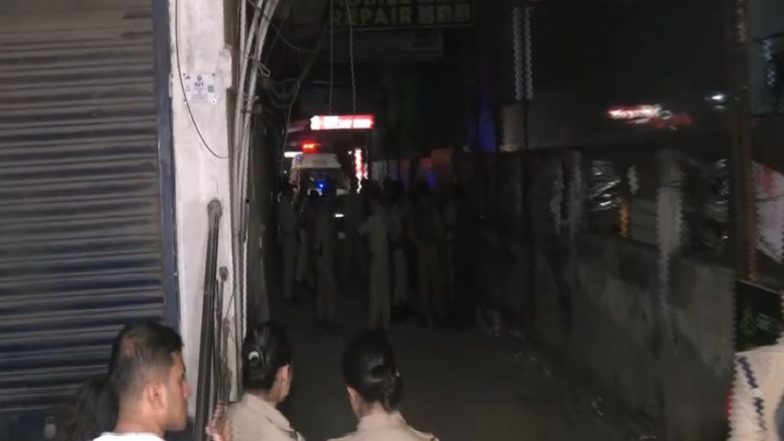
The Guwahati hotel shooting that killed five people on Monday night took less time than a dinner service. At about 9 p.m. local time, gunfire broke out at Hotel Bilas Inn in the Bora Service area of Guwahati, the largest city in India's northeastern state of Assam. Six people were shot. Five of them died of their injuries, and one is being treated in hospital, Guwahati Commissioner of Police Partha Sarathi Mahanta told the ANI news agency. Within an hour, police had apprehended the accused — identified by the commissioner as Ghanakanta Gogoi, the man who had taken the hotel on lease — and seized the weapon used in the shooting. Four of the five people killed belonged to the hotel owner's family, Mahanta said; the fifth victim and the injured man were from the family's village.
What happened at Hotel Bilas Inn
The sequence, as investigators have pieced it together so far, is short and brutal. According to DY365, an Assam news outlet reporting from the city, the gunman fired seven rounds before 9 p.m.; two of the wounded were taken to Gauhati Medical College and Hospital (GMCH), where 48-year-old Narayan Das — shot in the face, the bullet lodged in his mouth, the hospital reported — later died. DY365 reported that the dead include the hotel's owner, Helena Bharali, and her son, Devarshi Bharali. Preliminary accounts reported by the outlet suggest the gunman may have targeted one person first and shot others as they tried to intervene — a detail investigators are still working to confirm, and one that would explain how a dispute involving a handful of people became a mass killing in a matter of moments.
The hospital gave the clearest picture of the survivor. Prof. Babul Kumar Bezbaruah, the principal-cum-chief superintendent (in charge) of GMCH, told ANI the hospital was alerted between 9:00 and 9:30 p.m. and that one man, Narayan Das, had been brought in dead with a lip injury and no exit wound. A second man, Satyendra Pathak, 42, had a through-and-through injury with both entry and exit wounds and was stable under treatment in the orthopaedics and surgery departments. DY365 described Pathak as a resident of Barpeta who worked as a driver at the hotel. Mahanta's first statement on the night confirmed four bodies sent for post-mortem; the toll rose to five as another of the wounded died, which is why early reports from the scene understated the final count.
The arrest: an hour, a seized pistol, an interrogation
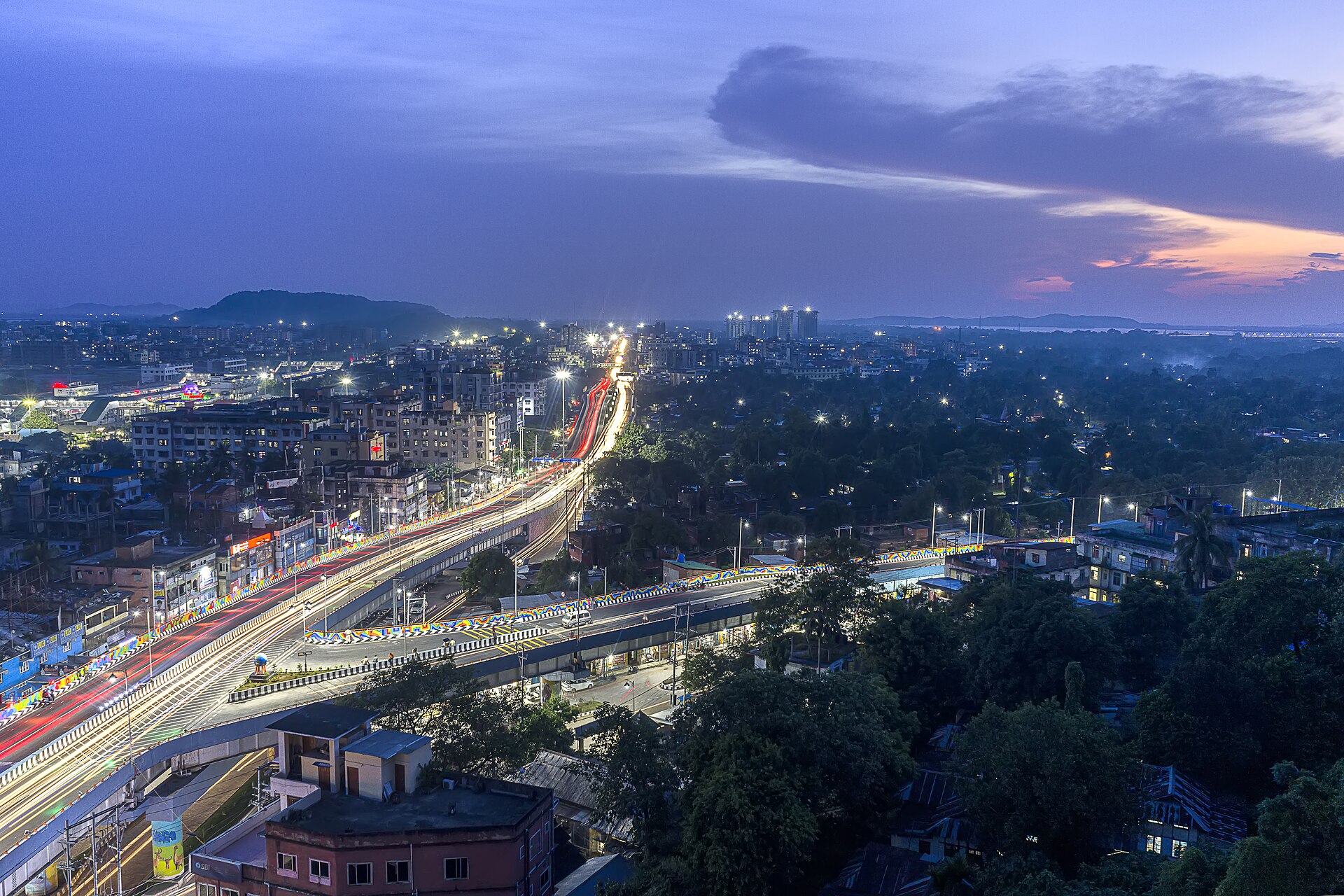
Police moved quickly, and the speed matters to how this case will be read. "The accused named Ghanakanta Gogoi was apprehended within an hour of the incident," Mahanta said, adding that the weapon had been seized and interrogation was under way. DY365 reported the weapon as a licensed .32-bore pistol — a detail police will have to verify against the licence record, and one that raises its own questions, examined below. A forensic team was later filmed arriving at the hotel to collect evidence, and Mahanta promised "a scientific and thorough investigation" to bring the case "to its logical conclusion," with updates as more information becomes available. The hotel sits in Ulubari, in the commercial heart of the city — not a remote outpost where help arrives slowly, but a dense, busy district where a shooting at 9 p.m. happens in front of a city that is still awake.
Why this matters: a property dispute is a civil case — until it isn't
Strip the story to its official skeleton and it is this: a disagreement over who controls a leased hotel, of the kind India's courts process by the tens of thousands, allegedly ended with the leaseholder shooting the owner's family. That is the deeper significance of Monday night, and it is why the story travels beyond Assam. Lease and tenancy disputes are among the most common civil conflicts in India; they clog district courts for years, they involve exactly this cast — an owner family, a leaseholder who has sunk money into a property, a business whose value sits in its location — and they almost never end in gunfire. When one does, the question is not only what happened in the lane beside Bilas Inn, but what failed earlier: whether the dispute had been litigated, mediated, complained about to police, or left to harden between two sides who knew each other, worked in the same building, and came, in part, from the same village.
Mahanta was careful, and the care should be preserved in any account of this case: "Based on the preliminary investigation, we suspect that the incident stemmed from a property dispute related to the lease agreement of Hotel Bilas Inn. The investigation is still at a preliminary stage." A suspected motive at hour one is a hypothesis, not a finding. Gogoi is an accused man in interrogation, not a convicted one, and the forensic work — the seized pistol, the seven rounds DY365 reported, the CCTV and witness accounts investigators are gathering — is what will test whether the lease-dispute theory holds, partly holds, or collapses. What can be said now is narrower and still damning of the circumstances: five people are dead, four of them from one family, and the only explanation the police have offered the public is an argument over a lease.
The licensed-pistol question, and who wins and loses from here
If the DY365 report of a licensed .32-bore pistol is confirmed, the case will land in the middle of India's long argument about legal firearms. India has some of the world's stricter gun laws on paper — licences are discretionary, locally issued, and meant to be hard to get — yet licensed weapons surface in dispute killings often enough that each one renews the same criticism: that licensing screens paperwork better than it screens temperament, and that a weapon lawfully held for protection becomes, in a heated commercial dispute, the fastest way to turn an argument into five funerals. Defenders of the licensing system answer that illegal weapons drive the overwhelming share of India's gun crime and that a licensed, traceable pistol — seized within the hour, its owner identified immediately — is precisely what made this arrest fast. Both readings will be argued in Assam this week; the evidence in this case, unusually, may actually be able to judge between them, because the weapon and its paperwork are already in police hands.
The losers are clearer. A family that owned a small hotel on GS Road has lost four of its members, by the commissioner's account, including — on DY365's reporting — the owner herself and her son. A village that sent its people to work in the city has a fifth dead and a sixth, Satyendra Pathak, in a surgical ward. The city's hospitality strip has a crime scene where its evening trade should be. And the accused, whatever the interrogation establishes, faces a case in which the state's chief city police officer named him on camera within hours. What happens next is procedural but not minor: a formal arrest and charges, the post-mortem and forensic reports, the licence verification, and a first court appearance at which the lease documents themselves — who owed what, who was ordered to leave, what was said in the weeks before Monday — will start to become evidence rather than background.
What happens next
Three things will decide what this story becomes. First, the charges: whether prosecutors frame the night as a targeted killing with intervening victims — the sequence DY365's preliminary account suggests — or as something broader, and whether anyone else is alleged to have helped or known. Second, the paper trail: the lease agreement, any court or police record of the dispute, and the pistol's licence file will either corroborate the commissioner's early theory or complicate it, and they will do so in documents, not statements. Third, the survivor: Satyendra Pathak, stable in GMCH, is the one living witness from inside the owner's circle, and his account — when he can give it — is likely to be the spine of the prosecution case. Assam has seen worse nights in its history; Guwahati's own past includes the serial blasts of October 2008. But those were attacks by strangers on a city. Monday's killing, on the police's own early telling, was the opposite — a known man, a known building, a known dispute, and a city left to ask why a disagreement over rent and rights was allowed to end the way arguments are never supposed to end. For broader coverage of the country the shooting happened in, see our reporting on India's factories and hiring and the India–New Zealand trade deal.
Sources
ANI (Asian News International), October 26–27, 2026, read in full via LatestLY (Commissioner of Police Partha Sarathi Mahanta on record: shooting at about 9 p.m. at Hotel Bilas Inn, Bora Service area; six people shot, five dead, one injured and under treatment; accused Ghanakanta Gogoi apprehended within an hour; weapon seized; interrogation under way; four of the five deceased from the owner's family, the fifth and the injured man from their village; suspected property dispute over the hotel's lease agreement, investigation at a preliminary stage; GMCH chief Prof. Babul Kumar Bezbaruah: Narayan Das, about 48, brought dead with a lip injury and no exit wound; Satyendra Pathak, 42, through-and-through injury, stable under orthopaedics and surgery); DY365, October 26, 2026, two reports read in full (five dead and one under treatment; licensed .32-bore pistol seized; seven rounds fired before 9 p.m.; hotel owner Helena Bharali and her son Devarshi Bharali among the deceased; Narayan Das, 48, died at GMCH; Satyendra Pathak, 42, a Barpeta resident working as a driver at the hotel, survived; preliminary account that the gunman targeted one person and shot others who intervened; the toll's rise from an initial four confirmed bodies); The Daily Jagran, October 26–27, 2026 (hotel opposite Bora Service, about two kilometres from Assam Police headquarters; Northeast Live's identification of Narayan Das — one further name in that report conflicts with the hospital's account and is not used here); ANI video reports, October 26, 2026 (forensic team at Hotel Bilas Inn).