Guardians Beat Rays 7-3 in ALCS Game 1 as Lowe and DeLauter Spark a Late Comeback
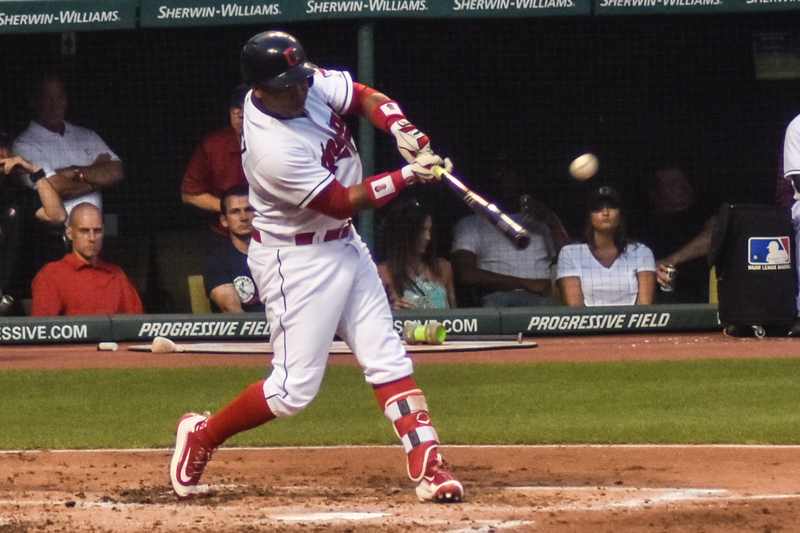
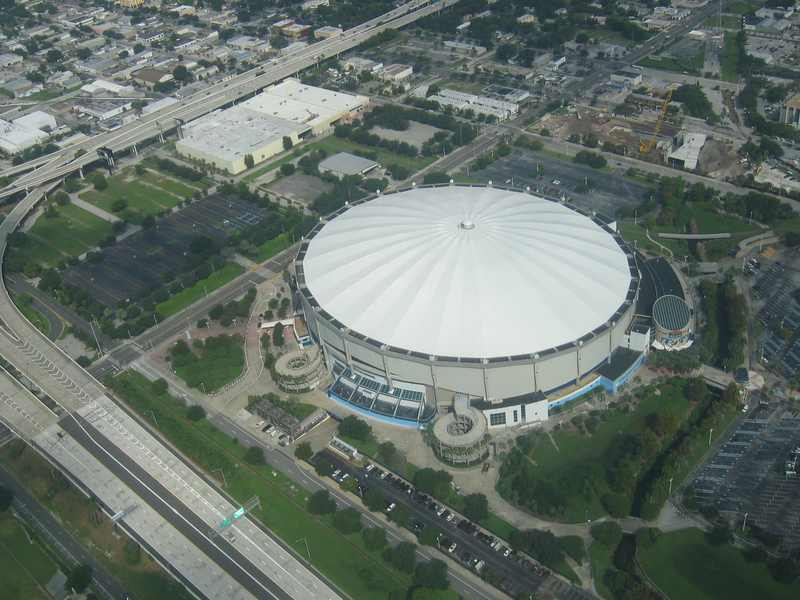
The Guardians Rays Game 1 score — Cleveland 7, Tampa Bay 3 — does not begin to describe how Monday night at Tropicana Field actually felt for the first five innings. The Rays scored twice in the first, their starter cruised, and the Guardians looked like a team running on the fumes of an emotional Division Series comeback. Then Cleveland scored in the sixth, the seventh, the eighth and the ninth, piled up 14 hits, and walked out of St. Petersburg with a 1-0 lead in the American League Championship Series and a fourth straight win since their season was one loss from ending.
Tampa Bay's start was everything the home crowd could have asked for. Yandy Díaz opened the bottom of the first with a double off Cleveland starter Foster Griffin, and RBI singles from Junior Caminero and Jonny DeLuca made it 2-0 before the Guardians had recorded three outs. This is what Tampa Bay does in October: score early, hand the game to its pitching, and squeeze. It is what the Rays did to the Yankees in an ALDS sweep in which their staff allowed only 12 hits across the entire series.
How the comeback built: one run at a time, then all at once
For five innings, Drew Rasmussen held the line. The turn came in the sixth, when rookie Chase DeLauter drove a solo home run off Rasmussen — the first postseason homer of his young career — to cut the lead to 2-1. An inning later, Patrick Bailey led off the seventh with a solo shot of his own, estimated at 436 feet, that tied the game 2-2 and finished Rasmussen's night. The Rays' early grip was gone, and the game had become a bullpen contest — which, this October, is exactly the contest Cleveland wants.
The eighth inning decided it. José Ramírez started the rally with an infield single off Tyler Wells, who would take the loss, and DeLauter followed with a double. That brought up Nathaniel Lowe, and the moment carried a scriptwriter's symmetry: Lowe was drafted by the Rays and spent the first two years of his career in Tampa Bay, and now, down to an 0-2 count against reliever Ian Seymour, he lined a pitch up the middle for a tiebreaking two-run single and a 4-2 Cleveland lead — the go-ahead hit of the ALCS opener, delivered against his original club.
Tampa Bay answered once. Cedric Mullins homered in the bottom of the eighth to make it 4-3 and give the building one more surge of belief. But Cleveland closed the door in the ninth: Ramírez singled in a run, Jo Adell followed with a two-run double, and the lead was 7-3. Cade Smith then pitched a perfect ninth to end it, and a series the Rays were favoured to control had its first plot twist.
DeLauter announces himself, Ramírez keeps doing Ramírez things
Every October produces a name that casual fans learn all at once. Through one game of this ALCS, that name is Chase DeLauter. The Cleveland rookie finished a triple shy of the cycle, collected three hits, scored three runs, and hit the home run that started the comeback in the sixth. Rookies are supposed to shrink as the stage grows; DeLauter instead took the at-bats that changed the game, following his homer with the eighth-inning double that put the go-ahead runs in scoring position.
Next to him, the familiar engine kept running. Ramírez also had three hits, and his ninth-inning RBI single gave him an RBI in four straight playoff games, tying a franchise postseason record held by Sandy Alomar (1997) and Jim Thome (1998-99). That is the company Ramírez keeps now — the two most decorated Cleveland hitters of the modern era — and it is why pitchers cannot pitch around the middle of this order. DeLauter's emergence lengthens the lineup behind Ramírez; Ramírez's consistency means the rookie keeps batting with traffic on the bases. It is a partnership Tampa Bay's staff has to solve by Tuesday, because Game 1's plan — hold the middle innings and protect a small lead — failed precisely where those two hitters bat.
The bullpen gap: five innings, one run
Griffin's early trouble could have sunk Cleveland. Instead, the Guardians' bullpen produced the kind of line that wins pennants: five innings, one run — the Mullins homer — with Hunter Gaddis earning the win and Smith slamming the ninth. Tampa Bay's relievers, by contrast, could not hold a 2-0 lead built for them over the first five innings: Wells took the loss, and Seymour surrendered the hit that broke the tie.
The contrast in the hit column tells the same story. Tampa Bay allowed 12 hits in its entire ALDS sweep of New York. Cleveland recorded 14 hits in this one game, against that same staff, in that same ballpark. Some of that is October randomness, and the Rays will say so. But 14 hits is not a bloop here and a bounce there — it is sustained contact up and down a lineup, on a night when Cleveland's runs came in four consecutive innings. A pitching staff does not game-plan its way out of that in 24 hours; it has to execute its way out, starting with length from its Game 2 starter.
Why this matters
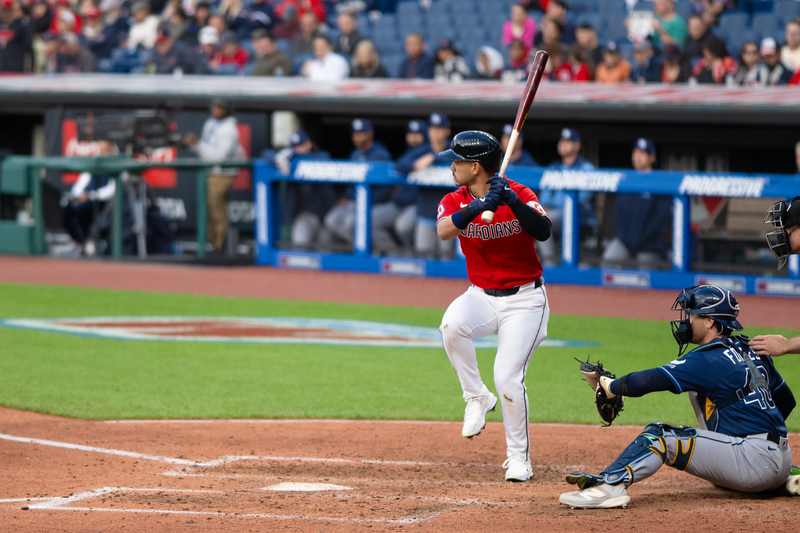
Start with the identity Cleveland is building. Eight days ago the Guardians trailed the Chicago White Sox 0-2 in the ALDS, one defeat from winter. They have now won four straight elimination-pressure games and become only the 11th team ever to climb out of an 0-2 hole in a best-of-five series — and instead of exhaling after that escape, they have carried the same late-inning relentlessness straight into the next round. All seven runs on Monday came in the final four innings. This is no longer a hot week; it is a pattern, and patterns are what opponents have to plan against.
Then there is the history hanging over the franchise. Cleveland's World Series championship drought dates to 1948 — the longest active drought of any club that has won one before. Every deep October run in the decades since has ended in heartbreak, which is why a fan base that has seen this film before will not exhale at 1-0. But road wins in Game 1 change the mathematics of a series in a way home wins cannot: Cleveland has taken home-field advantage in a single night, and the Guardians now need to win three of the remaining six games — with the series eventually moving to their park — while Tampa Bay must win four of six, including at least one in Cleveland, just to reach the World Series. Teams that win Game 1 on the road do not always advance, and nobody should pretend one game settles a best-of-seven. It does, however, flip who is playing from in front, and on Monday the flip was total: the Rays arrived having not lost since September 27 — fittingly, also by a 7-3 score, to Philadelphia — and left having surrendered more hits in nine innings than in their whole previous series.
For Tampa Bay, the honest reading cuts both ways, and the Rays know it. One loss at home in a long series is a problem, not a catastrophe: this is a deep, well-run club that swept the Yankees a week ago, its season does not hinge on any single reliever's bad inning, and the mystique of inevitability that surrounded its pitching staff was always partly an illusion built on a short series. But illusions matter in October. Opponents who believe a staff is untouchable at-bat differently than opponents who have just put up 14 hits on it. Cleveland now believes. That belief, plus the schedule pressure of a Game 2 they suddenly cannot afford to lose at home, is the real damage from Monday night — bigger than the 1-0 scoreline.
What happens next
Game 2 is Tuesday at Tropicana Field, and the matchup is a study in contrasts: Cleveland sends rookie left-hander Parker Messick, riding the same wave of youthful nerve that DeLauter embodied on Monday, against Tampa Bay's Freddy Peralta, the veteran the Rays will lean on to restore order and give their bullpen a quieter night. Rays manager Kevin Cash said afterward that his team would come back and respond in Game 2 — the standard October message, but one his club has the depth to back up, with a home crowd, the better-rested rotation arm, and a lineup that scored in the first inning on Monday before going quiet.
The workload question sits on Cleveland's side. Cade Smith, who closed Game 1 with a perfect ninth, pitched in all five games of the ALDS; a bullpen that wins games in bulk can also wear down in bulk, and how Cleveland manages Gaddis, Smith and the rest across a potential seven-game series is the strategic thread to watch. One win from stealing the first two on the road, though, the Guardians will happily spend arms now and worry later. The series opened with our ALCS Game 1 preview, and Cleveland's road here ran through its winner-take-all ALDS Game 5 against the White Sox. A week ago, this team was done. On Monday night in St. Petersburg, it looked like the team nobody left in the bracket wants to play.
Sources
Reuters (Oct 12-13, 2026) and the Associated Press (via NBC Sports and TSN, Oct 12, 2026) on the Game 1 result, the inning-by-inning scoring, the pitching decisions and José Ramírez's franchise-record RBI streak; USA Today (Oct 12, 2026) on the series context, Cleveland's comeback from an 0-2 ALDS deficit and the championship drought history. Statistics are as reported by those outlets on the night of the game.