IDF kills Islamic Jihad commanders Gaza
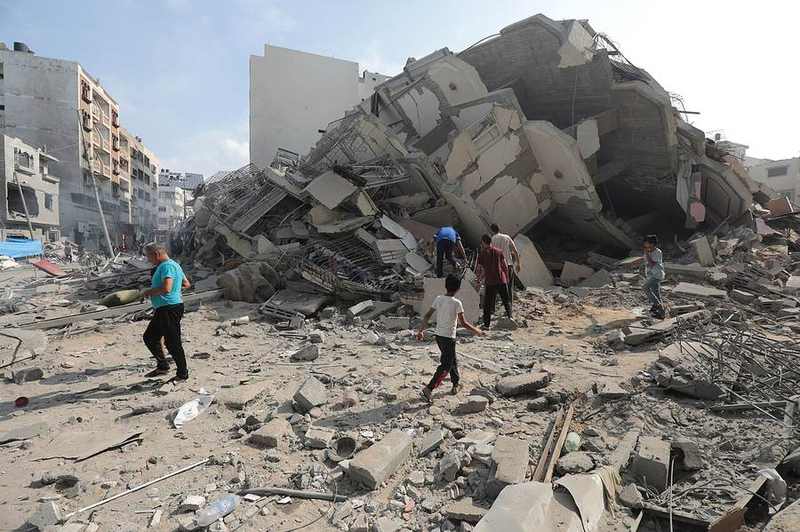
IDF kills Islamic Jihad commanders Gaza — that was Israel's account on Saturday, October 3, 2026, after two separate strikes in Gaza City. The Israel Defense Forces named Ahmed Mahmoud Harb Ramlawi, a commander in the rocket array of the Shejaiya Battalion in Palestinian Islamic Jihad's armed wing, and Munir Ibrahim Masr, the head of an anti-tank missile cell.
The army said both men had “of late” been working to restore the group's capabilities in “systematic violation of the ceasefire agreement.” The wording matters. Israel is not describing these as battlefield encounters in a renewed general war. It is presenting them as enforcement actions inside a truce: tightly selected targets, intelligence-led timing and a legal-political argument that rearmament itself constitutes an immediate threat.
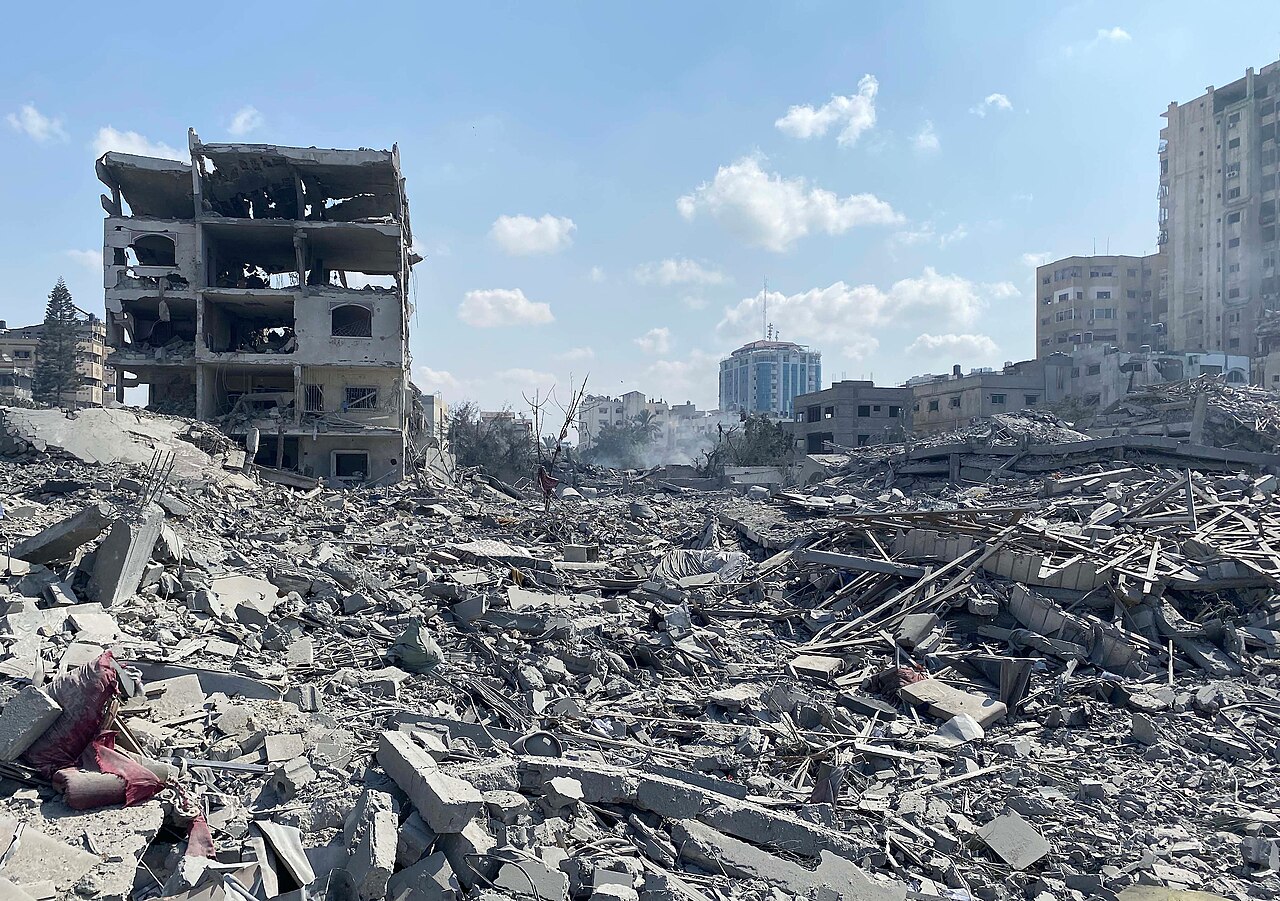
That distinction does not make the strikes bloodless or uncontested. Gaza City remains densely populated, its civilian infrastructure already shattered, and every airstrike carries a risk beyond the intended target. Nor does Israel's claim establish by itself that the men were actively preparing imminent attacks. What it does establish is the framework the Israeli government wants the world to accept: the ceasefire pauses broad combat, not Israel's campaign against commanders it says are rebuilding armed capacity.
The week's toll: five named targets in a compressed campaign
Saturday's two deaths capped a week in which Israeli forces named five targeted figures. On Thursday night, the Israeli Air Force and Shin Bet killed Hamas sniper Tamer Hamaida near Khan Younis in southern Gaza. The security agencies said Hamaida had advanced plans for shooting attacks and other operations against Israeli troops and civilians.
Earlier in the week, the IDF and Shin Bet killed Izz al-Din Bikh, commander of Hamas's Northern Gaza Brigade. Israeli officials said Bikh oversaw the captivity of hostages including Hisham al-Sayed and Mia Schem, as well as Amit Buskila, Shani Louk, Tamir Nimrodi and Michel Nisenbaum — a group whose fates differed, including people killed in captivity and others whose bodies were held in Gaza.
The IDF also confirmed strikes that killed two men it identified as participants in the October 7 attack: Muhammad Jamal Mahmoud Abu al-Shaar, a Hamas squad commander tied to the abduction of six hostages from Kibbutz Be'eri, and PIJ commander Musab Abd al-Jalil Sakab Balbisi, whom Israel said entered its territory during the massacre. The military's closing formula was blunt: Israeli forces remain deployed under the ceasefire agreement and “will continue to act to eliminate any immediate threat.”
Five names in one week is not a statistical universe, but it is a signal. The targets span two armed groups and several operational functions — brigade command, hostage custody, sniping, rocket operations and anti-tank warfare. That profile looks less like random fire than a leadership-removal campaign aimed at the people who turn weapons, intelligence and local networks into renewed military capacity.
Why this matters: a ceasefire enforced from the air
The deepest significance is not that Israel can find and kill mid-level commanders. It is that it is doing so while the ceasefire formally survives. A signed agreement and an enforced peace are not the same thing. The document can remain intact even as each side tests how much military activity can occur beneath the threshold of a declared return to war.
Israel's choice of targeted killings rather than a broad ground operation is itself a message. To Hamas and PIJ, it says reconstitution will be punished person by person. To Washington and other mediators, it says Israel is attempting to contain its response. To the Israeli public, it says the army will not wait for a rebuilt rocket unit to fire before acting. Yet the same precision narrative can obscure the strategic danger: repeated “limited” strikes can accumulate into a pattern that the other side treats as open hostilities.
This is the uncomfortable truth of the Gaza ceasefire violations in October 2026. The truce is functioning less as a prohibition on force than as a set of contested rules for force. Israel asserts a continuing right of preemption; armed groups retain networks and weapons; civilians live under the consequences of both. The ceasefire's real status is therefore measured not only by whether mass combat resumes, but by whether its enforcement mechanisms can prevent one side's targeted action from becoming the other's justification for retaliation.
Background: PIJ, Shejaiya and the machinery of rearmament
Palestinian Islamic Jihad is not simply a smaller version of Hamas. Hamas has governed Gaza, administered institutions and carried the political burden of rule. PIJ is narrower, more overtly military and historically closer to Iran, with fewer governing responsibilities and more freedom to define itself through armed resistance. That distinction matters during a ceasefire: Hamas can have institutional reasons to restrain escalation, while PIJ hardliners may see military rebuilding as both survival and leverage.
Ramlawi's alleged role as a Palestinian Islamic Jihad rocket commander in the Shejaiya Battalion places him inside a neighborhood with a long military memory. Shejaiya, east of Gaza City's center and close to the Israeli boundary, has repeatedly been a battleground. The 2014 battle there produced heavy Israeli and Palestinian casualties and became one of the war's defining episodes. A rocket-array commander in that district is not merely a technician. The job can connect launch crews, storage sites, logistics, targeting knowledge and local command chains.
The phrase “restoring capabilities” is also doing substantial work. Armed organizations rarely reappear all at once after a ceasefire. They repair tunnels, move launchers, recruit replacements, re-establish observation posts and rebuild communications. Israel's preemptive doctrine is designed to interrupt that process before capability becomes attack. The danger is that restoration can be broadly defined, making almost any militant organizational activity a potential target and leaving the ceasefire agreement in Gaza in 2026 dependent on unilateral intelligence assessments outsiders cannot fully examine.
Who benefits, who loses and why both narratives matter
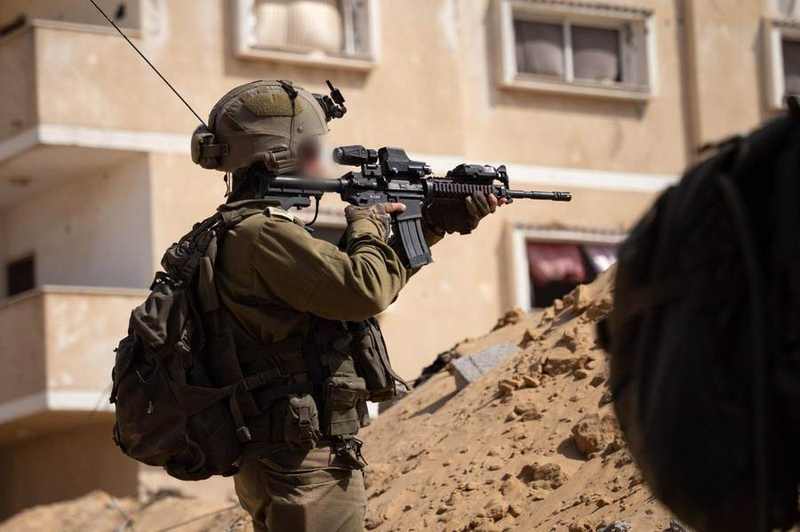
Israel gains the most immediate military benefit. Removing commanders can slow rearmament, force networks to change routines and compel successors to operate more cautiously. It also allows the government to argue that it is addressing threats without sending large formations back into Gaza City. If the intelligence is sound and the campaign remains contained, this is the logic of targeted enforcement.
PIJ hardliners can still extract political value. Each strike supplies grievance currency: funerals, martyrdom narratives, recruitment appeals and evidence for the claim that Israel never intended to honor the truce. That does not replace killed expertise, but insurgent organizations do not measure outcomes only in equipment destroyed. They measure whether anger sustains their social and military base.
The clearest losers are Gazan civilians living inside the strike zones and the ceasefire's credibility. Civilians absorb the risk of blast, displacement and another round of uncertainty. The agreement loses authority each time military action occurs without a transparent joint process that can establish what happened, what rule was breached and what remedy follows.
Critics will frame the strikes as ceasefire violations: a truce that permits recurring air attacks, they argue, is not meaningful protection. Israel will frame them as self-defense against active rebuilding and planned attacks. Both frames point to the same missing institution — a credible mechanism for investigating allegations and constraining responses before military intelligence becomes the sole judge of compliance.
The regional clock: US midterms and the Iran escalation
The Gaza strikes are occurring under a widening regional shadow. Associated Press reporting says a third United States naval group — centered on the Theodore Roosevelt and Makin Island and carrying roughly 9,000 sailors and Marines — is heading toward the region. Donald Trump has tied any decision on new bombing to the period after the November 3 midterm elections.
That calendar creates incentives for every actor to shape the battlefield before Washington's next choice. Israel may seek to reduce immediate threats in Gaza while preserving freedom of action against Iran and its partners. Tehran-aligned groups may want to demonstrate that they can still impose costs. The risk is linkage: a PIJ rocket response in Gaza could be interpreted through the larger Iran confrontation, making a local exchange harder to contain.
Data and comparison: names and ranks reveal the strategy
The useful data point is not simply five deaths; it is five named, described roles in a single week. Bikh was presented as a brigade commander and hostage-custody authority. Abu al-Shaar was described as a Hamas squad commander. Balbisi was a PIJ commander and October 7 attacker. Hamaida was identified as a sniper advancing attack plans. Ramlawi and Masr were linked to rocket and anti-tank capabilities. This is leadership-targeting, not evidence of indiscriminate fire — though targeted intent does not by itself answer questions about civilian harm or proportionality.
The week's tempo also continues a pattern visible in September, when Israeli enforcement strikes inside Gaza were justified as responses to immediate threats or ceasefire breaches. The comparison shows continuity rather than a sudden return to mass operations: limited strikes, named targets and public claims of imminent danger. But the current cluster is notable because of its compression and because it reaches across command functions. The campaign appears to be moving from reactive defense toward systematic disruption of rearmament.
There is still a data gap that responsible analysis should not hide. Israel has published identities and allegations, but there is no independently audited ceasefire ledger that sets out every strike, every militant action, civilian casualties and adjudicated violations since the truce began. Without that, claims about the exact strike tempo must remain qualitative. The observable pattern is persistent enforcement fire; the unproven question is whether it is reducing attacks or merely deferring a larger confrontation.
What happens next: three paths toward winter
Targeted enforcement continues. The likeliest near-term scenario is more of the same: intelligence-led strikes on individuals Israel says are rebuilding capabilities, paired with public assurances that the ceasefire remains in force. This path can persist if Hamas and PIJ absorb losses without a major response and mediators keep channels open.
PIJ retaliates with rockets. A limited volley could be intended to restore deterrence without inviting war. The problem is the cycle question: Israel would almost certainly strike launch crews and command sites, PIJ would face pressure to answer again, and the line between calibrated exchange and renewed campaign could disappear within hours.
A miscalculation collapses the truce. A strike that kills many civilians, a rocket that causes mass casualties in Israel, or an incorrect intelligence assessment could overwhelm the political space for restraint. As winter approaches, that outcome would be catastrophic for displaced Gazans and costly for Israel, while pulling US attention away from deterrence against Iran and back into emergency crisis management.
The test is no longer whether the ceasefire is perfect. It is whether the parties and mediators can keep enforcement from becoming escalation. Saturday's strikes show that the truce still has a name, but they also show how much violence can occur beneath it. A ceasefire that survives only by redefining repeated attacks as exceptions is not stable; it is a pause living on borrowed judgment.
Sources
- New York Post, via JNS — IDF account of the October 3 strikes and the roles attributed to Ramlawi and Masr.
- NewsBeep, JNS report — names, units and ceasefire-violation allegation.
- Israel RealTime — additional Israeli reporting on the two PIJ commanders.
- The State of Israel — report on Abu al-Shaar and Balbisi.
Reported identities and operational roles are attributed to the IDF and Shin Bet. Signal Post News has not independently verified the agencies' intelligence claims.