Florida Ole Miss football score
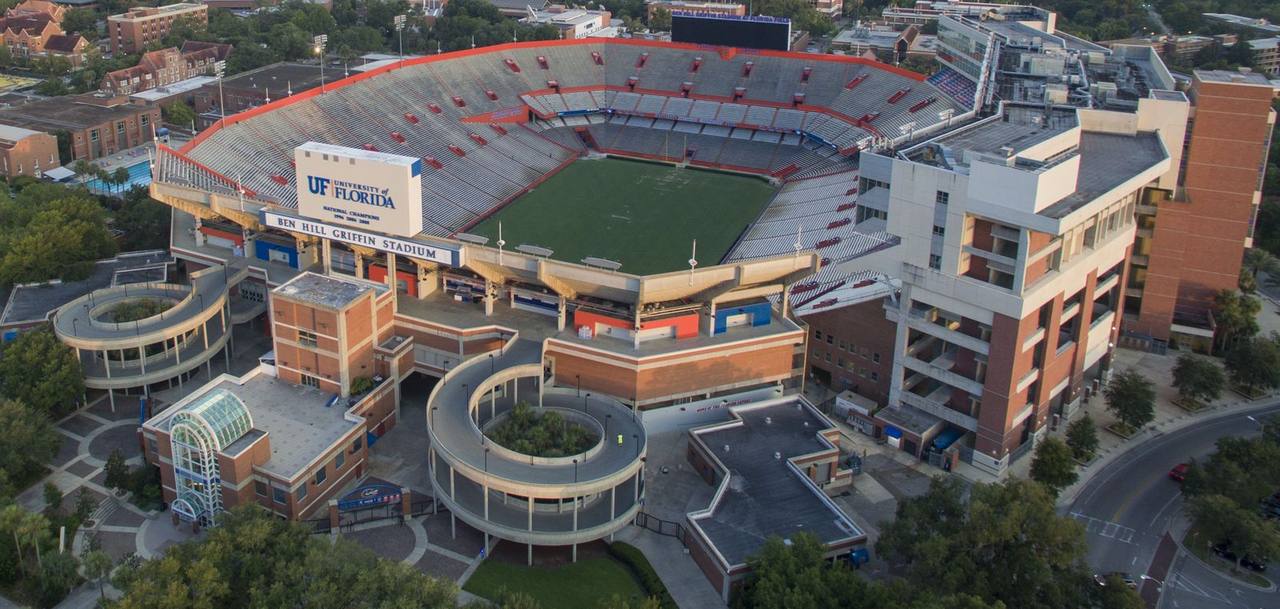
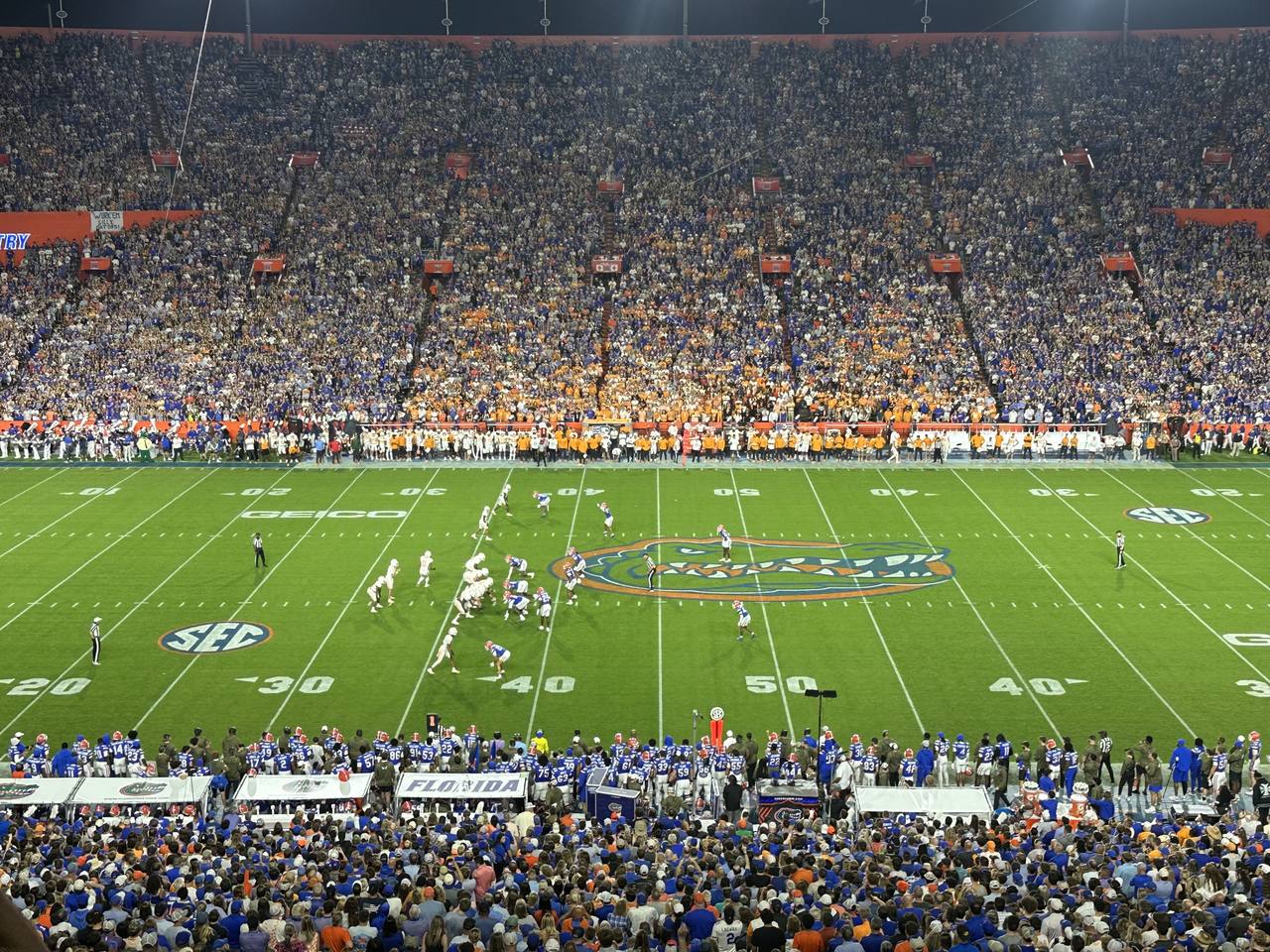
GAINESVILLE, Fla. — The Florida Ole Miss football score was emphatic: No. 22 Florida 52, No. 6 Ole Miss 28. Before 90,683 at Ben Hill Griffin Stadium on Saturday, September 26, the Gators turned a Week 4 test into the first defining result of Jon Sumrall's tenure. Florida reached 4-0 for the first time since 2019, improved to 2-0 in the SEC and gave its first-year coach his first victory over a ranked opponent in Gainesville.
The result mattered beyond the arithmetic. Florida had not beaten an opponent carrying a top-five-level ranking since its 44-28 win over No. 5 Georgia on November 7, 2020; the polls themselves varied this week, with Sports Illustrated listing Ole Miss fourth and Florida 21st while USA Today-linked coverage used No. 6 and No. 22. What did not vary was the scale of the beating. The Gators ran for 302 yards, scored six rushing touchdowns and won by 24 despite entering as only a 3.5-point favorite.
Early reports framed the 52-point output as a modern SEC benchmark for Florida. The Gainesville Sun's postgame account called it the program's highest total against a conference opponent since 2020, rather than 2008; that distinction matters because historical comparisons depend on which schedules and classifications are being counted. The larger point survives the bookkeeping: an offense that had spent recent seasons searching for an identity overwhelmed an unbeaten, highly ranked league opponent.
How the rout happened
Florida announced its plan on the opening possession. Jadan Baugh finished the drive with a four-yard touchdown run, and Patrick Durkin's 49-yard field goal stretched the first-quarter lead to 10-0. The Gators were not chasing explosive novelty. They were testing whether Ole Miss could keep its front intact against repeated downhill runs, then using the pressure created by that question to simplify Aaron Philo's reads.
Baugh scored again from two yards late in the second quarter, sending Florida to halftime ahead 17-6. The margin was useful but not decisive. Ole Miss quarterback Trinidad Chambliss kept finding answers after the break, and the teams combined for 57 second-half points. Florida's advantage was that every Rebel response met another controlled Gators drive: the home side outscored Ole Miss 35-22 after halftime without surrendering the pace of the game.
The hinge came late in the third quarter. Edge rusher Jayden Woods stripped Chambliss, and linebacker Myles Graham recovered the fumble. The turnover did more than remove one Ole Miss possession; it allowed Florida to convert a competitive shootout into a two-score game and forced the Rebels to play against both the clock and the Gators' pass rush.
Ole Miss still drew within ten in the fourth, but Philo answered with a five-yard touchdown pass to tight end Amir Jackson for a 45-28 lead with 9:19 remaining. Duke Clark's 44-yard burst had broken the drive open. Baugh then consumed the next decisive possession and scored his third touchdown, a two-yard run with about four minutes left, to make it 52-28. Bryce Thornton's late interception ended one comeback attempt; DJ Coleman intercepted Chambliss at the Florida 5 with 2:36 remaining to close the last one.
Why this matters: Florida enters the College Football Playoff conversation
A September win cannot secure a playoff place, but it can change the set of questions around a team. Florida is no longer merely an interesting rebuild with a favorable start. The Gators now own a ranked SEC win, a 4-0 record and an offense that has scored at least 40 points in all four games under coordinator Buster Faulkner. That résumé puts Florida College Football Playoff chances into the national conversation; it does not settle them.
For Sumrall, the victory supplies evidence that his first-year project is moving faster than a typical transition. Asked afterward what made him proud, he pointed to “their belief, their buy-in.” He also rejected the idea of waiting politely for a distant window: “We came here to win championships,” he said, adding, “I'm not real patient.” The quotes are useful because the performance matched the ambition. Florida did not steal the game with one turnover or survive on variance. It controlled the line of scrimmage and kept scoring after Ole Miss adjusted.
That carries recruiting value. Prospects can be sold facilities and future roles anywhere; a packed Swamp, a national opponent and a backfield imposing its will provide a more persuasive picture of what the program wants to become. The win also contained a personal revenge angle. Ole Miss went 2-0 against Sumrall's Tulane team in 2025, including a College Football Playoff meeting. His first Florida roster answered not with a schematic curiosity but with the most transferable commodity in the sport: depth and force at the point of attack.
From the 2025 reset to Sumrall's first ranked win
Florida entered this season carrying the weight of a 2025 campaign that had made another reset unavoidable. Sumrall arrived from Tulane with a reputation for demanding, fast-building teams, and he brought Faulkner to give the offense a coherent identity. Four games do not establish a dynasty, but four consecutive 40-point performances do establish that the change is visible rather than theoretical.
Ole Miss arrived with momentum of its own. Pete Golding's Rebels had beaten LSU in an emotional Week 3 game and entered Gainesville unbeaten. They also played without injured star running back Kewan Lacy, a caveat that belongs in any fair reading of the result. His absence narrowed the offense and made Chambliss responsible for too much of the comeback.
Chambliss nevertheless produced a big individual night: 342 total yards and three touchdowns, including 298 passing yards and 44 on the ground. The loss was not his fault. He repeatedly created points after Florida threatened to separate, and his late interceptions came only after the game state demanded increasingly aggressive throws. Judging a quarterback solely by a final margin would miss the harder truth for Ole Miss: its offense did enough to remain dangerous, while its defense could not get the ball back.
Who benefits, who loses — and the caveats
Florida benefits first in the playoff ledger. A decisive victory over an opponent ranked in the top six is the kind of result that retains value when committees compare one-loss teams later in the season. Sumrall benefits because his credibility is now attached to a result, not merely a reputation. The SEC benefits in a more unruly way: another credible contender deepens the league while increasing the chance that its best teams hand one another damaging losses.
Ole Miss loses control of its playoff seeding and should expect a meaningful poll drop. USA Today's early rankings analysis projected a fall to around No. 13, though the exact movement depends on the rest of Week 4. The Rebels' path is bruised, not closed. A road defeat to an ascending conference opponent can be repaired; a defensive performance that allowed six rushing touchdowns must be corrected.
The cautions are real. Lacy's injury removed Ole Miss's most dangerous running back. One September game does not make Florida a champion, just as one road loss does not make Ole Miss fraudulent. Rankings also differ by outlet, which is why “top-five win” and “No. 6 upset” both appeared in immediate coverage. The responsible conclusion is narrower: Florida beat an elite-caliber opponent decisively, and the quality of its rushing attack gives the result a chance to travel.
What the numbers actually imply
The defining statistic is 302 rushing yards with six scores on the ground. That is not simply volume accumulated after the game was decided. Florida used the run to build the lead, protect it and answer every Ole Miss surge. The distribution makes the performance harder to dismiss: Baugh carried 29 times for 142 yards and three touchdowns, while Duke Clark set a career high with 126 yards.
Baugh has now produced five straight 100-yard, multi-touchdown games dating to last season. Through four games in 2026, he has 600 rushing yards and 11 touchdowns. That is why Jadan Baugh Heisman 2026 talk is no longer decorative September promotion. His workload, red-zone value and consistency give voters a clear statistical case; his challenge will be sustaining it as opponents devote more defenders to the box.
Clark's contribution prevents defenses from treating Florida as a one-back offense. Baugh and Clark became the Gators' first pair of 100-yard rushers in one game since Trevor Etienne and Montrell Johnson Jr. did it in 2022. Their combined 268 yards forced Ole Miss to commit resources inside, which in turn let Philo operate efficiently rather than spectacularly.
Philo completed 16 of 23 passes for 196 yards, one touchdown and no interception, and he added a rushing score. Those numbers are less gaudy than the backs' totals and more important than they look. An offense with this running game does not need its quarterback to manufacture difficulty. It needs him to punish loaded boxes, protect possessions and finish drives. Philo did all three.
The betting line sharpens the interpretation. Florida was favored by 3.5 points — a number that surprised even Sumrall — and won by 24. That gap is not proof that every power rating was wrong; home field, injuries and early-season uncertainty all influence a line. It is evidence that the game moved well beyond the plausible close contest the market expected.
What happens next
Florida's playoff case will be decided by whether this style survives the next layer of the SEC schedule. Opponents will force Philo to win more downs outside the structure of the run game, test the Gators' depth and see whether a defense that allowed Chambliss 342 total yards can close games without needing late takeaways. If the line continues to travel and Baugh remains healthy, Florida has the foundation of a contender rather than the silhouette of one.
Ole Miss can recover because the season is still young and the league will offer chances to add ranked wins. The urgent work is defensive: gap integrity, tackling and the ability to get off the field after an opponent answers. Chambliss's performance provides a reason for confidence, while Lacy's eventual return should restore balance.
Baugh's Heisman candidacy now has a signature result. What it needs next is durability and another stage. For broader sports context, Signal Post News also has analysis of Spain's 3-2 comeback over England at Wembley and the earlier England–Spain Nations League preview. For Florida, the next ranked road test and the first game in which the running lanes close will tell us whether 52-28 was a championship statement or a September mirage.