World · Europe · Germany · Protests
Frankfurt protests shops looted, a gun store smashed and Molotov cocktails thrown at emergency services — that is how Saturday ended in Frankfurt, after a day in which the youth alliance Gen Z regelt marched in 34 German cities demanding money for schools and health, relief from living costs, and no return to compulsory military service. By late evening, a large section of the Zeil, the city’s main shopping street, was closed off, and the argument had already begun over who the night belonged to.
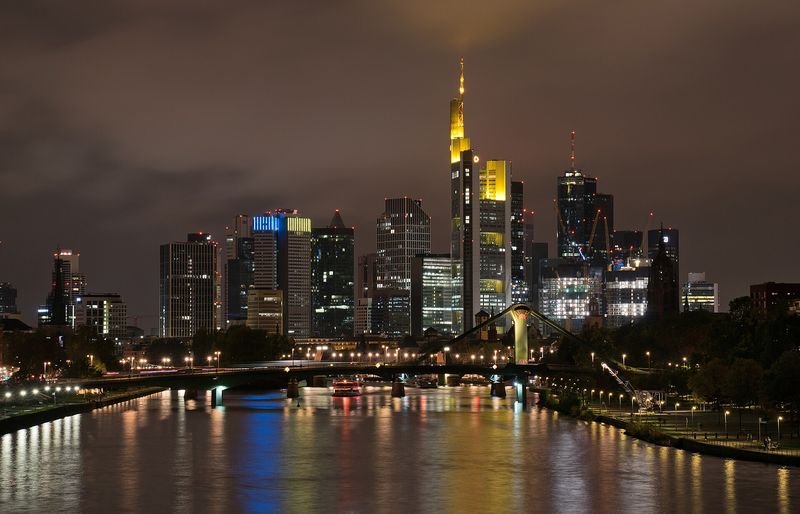
FRANKFURT — The looting began after the marching ended. Late on Saturday, October 31, hooded and masked rioters moved through Frankfurt’s city centre, smashing shop windows and looting stores, hours after the youth alliance Gen Z regelt — roughly, “Gen Z takes charge” — had brought its first nationwide day of protest to 34 German cities, including Berlin, Frankfurt and Munich. A Reuters witness in Frankfurt saw at least two stores looted and several more damaged, with police still trying to get the situation under control as the night wore on.
Frankfurt police, posting on X as the disturbances continued, described a city centre sliding out of their hands: “Violent disturbances are continuing. In the city centre, windows have been smashed at several shops. Molotov cocktails are also being thrown at the emergency services. We urge all bystanders to avoid the city centre or to leave the area.” It is a remarkable sentence for a German police force to have to publish on a Saturday night — and it was published while the events it described were still under way.
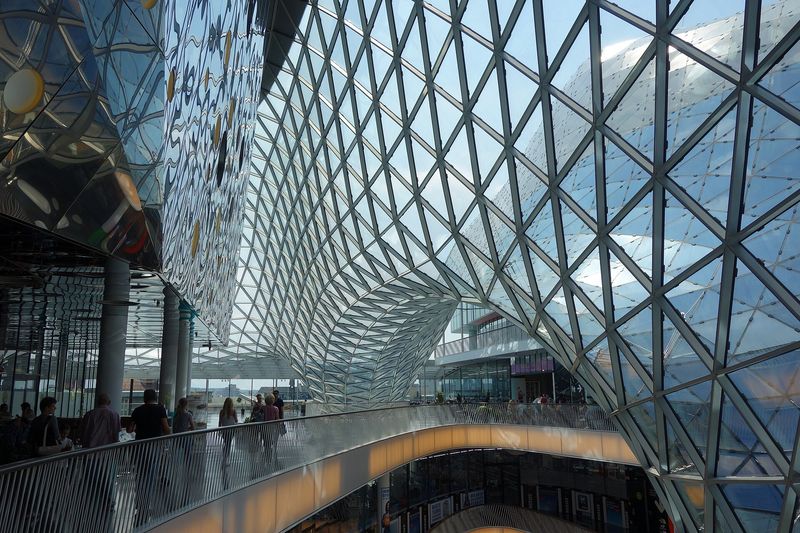
Among the shops targeted, according to AFP, was a gun store, its windows smashed. Police arrested a suspect in connection with that break-in and seized two weapons. A trainer shop and a perfume store were also targeted, according to reporting by Bild cited by AFP. A large section of the Zeil — Frankfurt’s principal shopping street, home to the MyZeil complex and the city’s flagship department stores — was closed off. Police in Frankfurt used water cannon and pepper spray. Several police officers were injured; police confirmed that arrests were made, without giving a total. No verified count of arrests or injuries had been published by late Saturday, and any figure circulating beyond that should be treated as unconfirmed.
Frankfurt was the worst of it — it was not the only place
The violence was concentrated in Frankfurt, but the pattern repeated, at lower intensity, in other cities where the day’s marches had been largest. In Hamburg, barricades were set on fire, Reuters reported. Police used water cannon in Hamburg and in Cologne after demonstrators targeted emergency workers with fireworks, stones and bottles, according to AFP. The sequence will be familiar to anyone who has followed this autumn in Europe: a large, organised, largely peaceful daytime demonstration, and then, after dark, a smaller and harder crowd that the organisers do not control and cannot credibly disown in the eyes of a public watching the same streets burn.
German authorities were careful, even on Saturday night, to keep the two halves of the day separate. The demonstrations overall, they said, were largely peaceful. But they paired that judgement with the warning they had issued before the marches began: that extremist groups could exploit the movement. The federal interior ministry said parts of Germany’s far-left extremist scene, and some groups linked to foreign extremist movements, had joined efforts to mobilise support for the protests. In Hesse, the state that contains Frankfurt, interior minister Roman Poseck said around 100 clearly identified left-wing extremists had joined the Frankfurt protest. “It is shameful how this event here in Frankfurt has ended,” Poseck said.
Poseck had, in effect, written his Saturday-night quote in advance. Earlier, as Reuters reported, he had warned against exactly the script Frankfurt followed: “We all have those images from France in our minds — looting, burning houses, burning police vehicles, and attacks on police officers. France must not be held up as a model in this regard.” The warning was meant as deterrence. By Sunday it will read, depending on who is quoting it, either as prophecy or as a frame placed around the movement before it had marched a step.
What the day was supposed to be about
Strip away Saturday night and the demands Gen Z regelt carried into 34 cities were strikingly concrete for a movement accused, already, of being a mood. Its organisers asked for better investment in education and in the health system, for action on the cost of living that has made rents and basics the defining anxiety of young Germans starting out, and against the return of compulsory military service — the Wehrpflicht debate that has followed Germany’s rearmament and that reaches, as few issues do, into every household with a teenage son. As Signal Post News reported earlier on Saturday, the alliance deliberately timed its debut to Halloween, borrowing the date, the Saturday rhythm and much of the repertoire from the Gen Z protest wave that reached Germany as France braced for another Halloween night of its own.
The movement’s own voice, heard in Berlin, was not the voice of Saturday night in Frankfurt. “We are here today to fight for peace and freedom, rather than for war and coercion,” said spokesperson Lina Friedrich. “What matters most to us is better support for the health and education systems. We are against compulsory military service and we are in favour of a fairer distribution of the burden.” In Munich, an 18-year-old named Steve, due to speak at a rally there, addressed Chancellor Friedrich Merz directly, in remarks reported by Reuters: the government, he said, had offered no response to young people’s grievances other than cuts and further burdens. “We will continue to exercise our fundamental right to assemble until you stop ignoring us.”
And in Berlin, a student at the Technical University, Sean Baker, gave Reuters the quote that explains why school and university funding sits at the top of the movement’s list rather than as decoration on it. On his own campus buildings, he said: “When you go inside and enter the rooms, it looks like an abandoned building. Yet this is where we’re expected to study on a regular basis.” It is worth holding that sentence next to the Frankfurt police statement from the same day. A movement can contain both a student describing a crumbling lecture hall at noon and a masked figure throwing a Molotov cocktail at midnight. The political fight of the coming weeks is over which of the two Germany decides the movement is.
The numbers war
Before anyone argues about the violence, they will argue about the size — because in a movement built on momentum, the crowd count is the claim to legitimacy. The figures, kept separate as they must be, describe three different events. The organisers initially expected about 182,000 participants across the 34 cities. Gen Z regelt itself said, afterwards, that some 120,000 people had taken part, according to AFP. Police in Frankfurt, Munich and Berlin, by contrast, reported as many as 18,000 protesters combined in those three cities — about half the roughly 36,000 the organisers’ website had listed for them, Reuters reported.
Each side gains something from its number, and readers should price that in. For the organisers, six figures nationwide turns a first outing into a force the coalition in Berlin must answer; a movement of 120,000 cannot be waved away as a student weekend. For police and the governments they answer to, the lower city counts restore proportion: three flagship cities producing 18,000 between them is a respectable protest, not an uprising, and it makes the official line — largely peaceful, exploited at the margins — easier to hold. Neither figure is a counted national total, because no such count exists. What exists is a gap, and the gap itself is now part of the story: a movement whose real size is contested is a movement whose mandate is contested, and both the alliance and the interior ministries know it.
A movement already splitting, carefully
One fact from before Saturday may matter as much as anything that happened during it. Germany’s national school student umbrella organisation, the BSK, distanced itself from the Gen Z regelt initiative and plans a separate day of protest on November 20. That is not a rejection of the grievances — schools, costs, conscription are the BSK’s home ground — but a judgement about vehicle and discipline, made before a single window broke in Frankfurt. After Saturday night, that judgement looks less like bureaucracy and more like foresight; it also hands the government a preferred interlocutor and hands Gen Z regelt a problem: the part of the youth movement that insists on order has announced it will march on a different day, under different management.
The wider context explains why Berlin is watching all of this so closely. The German protests follow a wave of Gen Z-led demonstrations across Europe this year — student activism in Serbia, and in France a protest movement that has repeatedly descended into rioting and looting, in Reuters’ framing. Some Berlin shops along the luxury Kurfürstendamm boarded up their windows and planned early closures ahead of Saturday’s demonstrations, a small, telling act of imported expectation: retailers in the capital were pricing in a French Saturday. Underneath the tactics sits a harder German reality. The country has struggled to revive economic growth, and it faces mounting pension and public-service pressure as baby boomers retire and the working-age population shrinks — which is precisely why the burdens the young protesters describe, and the conscription they refuse, are not accidents of one budget but the shape of German politics for a generation.
Why this matters
Start with the gun store, because it changes the category of the story. Looted trainers and smashed perfume counters are disorder; a broken-into gun store, a suspect arrested and two weapons seized by police is a security event, and it will be treated as one — in the investigation, in the Bundestag, and in the coverage. It gives the hardest reading of Saturday night its hardest fact, and it is the detail most likely to outlast the weekend in the political argument. A movement that marched against war and coercion now has to answer for a night in which weapons were, briefly, loose in a crowd. It did not choose that fact. It owns it anyway.
Second, the Frankfurt violence was, by every account including the police’s own framing, the work of a small minority on a day officials themselves called largely peaceful — and it now threatens to define the whole movement. That is not fair, and it is also how protest politics works. Images outrank communiqués. Gen Z regelt’s daytime demands — school buildings that are not crumbling, rents a first salary can carry, no conscription — are popular well beyond its own constituency, which is exactly why the alliance’s opponents benefit when the conversation becomes Zeil, water cannon and Molotov cocktails instead. The winners of Saturday night are those who wanted the movement discussed as a public-order problem. The losers are the organisers who spent the day discussing lecture halls, and the retailers of the Zeil who spent it behind closing shutters.
Third, the extremist question will not stay rhetorical. Poseck’s figure — around 100 clearly identified left-wing extremists in Frankfurt — and the interior ministry’s account of far-left and foreign-linked groups joining the mobilisation are claims that can, in principle, be tested against arrests, identifications and prosecutions in the coming days. If the evidence bears them out, the story becomes one of infiltration, and the organisers’ failure becomes a failure of stewardship. If it does not, the claims become something else: a standing permission to dismiss genuine, plainly articulated grievances — a decaying university building is not an extremist talking point — as somebody else’s plot. France hangs over both readings, as inspiration to the marchers and as warning to the ministers; the same country, the same footage, two opposite lessons, and Saturday suggests Germany is determined to learn the second one.
What happens next
The immediate test is investigative: who was arrested in Frankfurt, what the gun-store break-in yields, and whether police publish the verified arrest and injury totals that Saturday night lacked. Numbers, when they come, will either discipline the argument or inflame it. The second test is November 20, when the BSK’s separate protest day will show whether Germany’s students prefer the umbrella’s discipline to Gen Z regelt’s energy — and whether a youth protest can now be held in a major German city without its night shift. The third test is the conscription debate itself, which Saturday has not settled but has certainly heated: a government asking young Germans to serve will now negotiate that ask with a generation that has demonstrated it can fill 34 cities in a day.
And the deepest question is the one Lina Friedrich’s Berlin quotes pose to her own movement. Gen Z regelt says it is fighting for peace, freedom and a fairer distribution of the burden. To keep that claim, it has to solve the problem every European youth movement this year has failed to solve: how to stay open enough to grow, and organised enough that the worst hour of its worst night is not the thing it is remembered for. Frankfurt has given it until the next Saturday to find an answer. Our earlier coverage of the day the movement arrived — and of how Germany’s Halloween cost-of-living protests were organised — sets out what was at stake before the first window broke.
Related coverage: Gen Z protests reach Germany as France braces again for Halloween night · Cost-of-living protests spread to Germany on Halloween as ‘Gen Z regelt’ marches in 34 cities
Sources
Sources: Reuters reporting, via The Business Standard, “Rioters loot stores in Frankfurt as Gen Z-led protests in Germany turn violent,” October 31, 2026 — tbsnews.net; AFP reporting, via EuropeSays, October 31, 2026 — europesays.com; Frankfurt police statement on X, October 31, 2026, as quoted by Reuters and AFP.