flydubai co-pilot planned attack
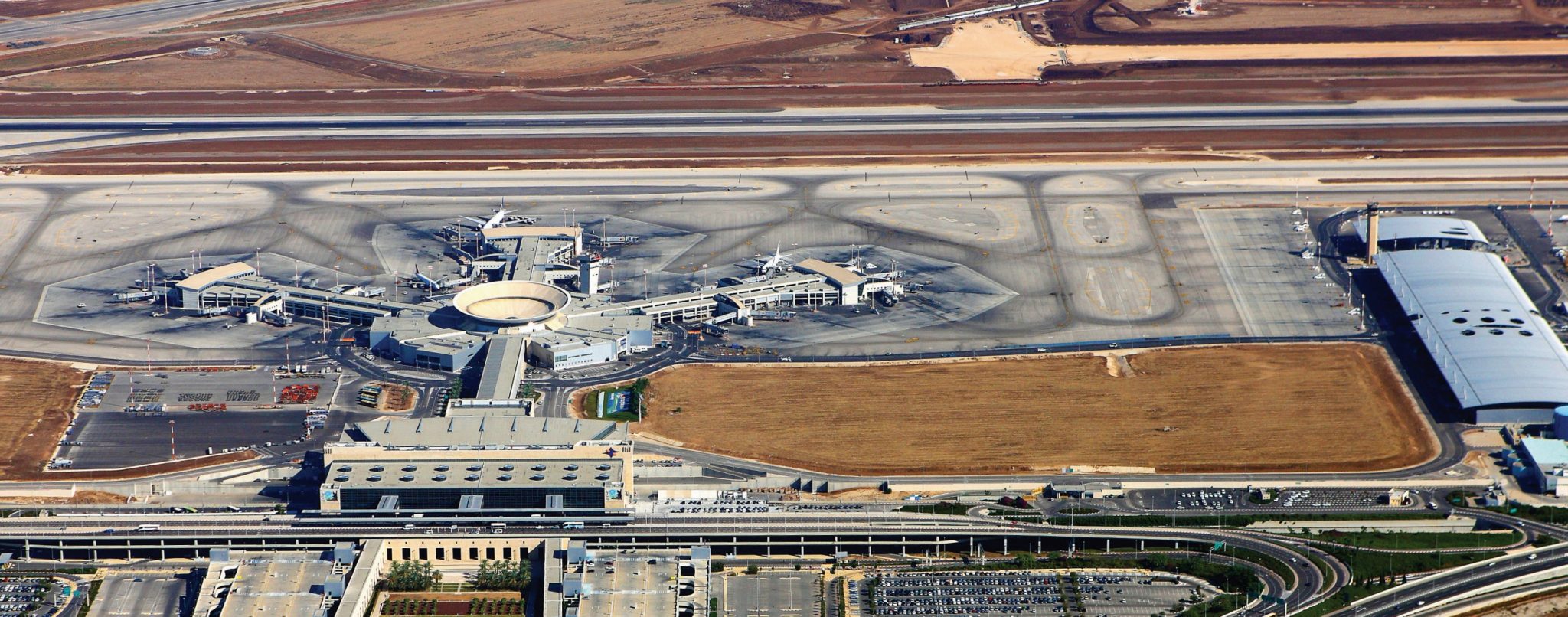
The FlyDubai co-pilot planned attack began, according to officials briefed on his interrogation, before FlyDubai issued him a uniform, an employee badge or a seat in one of its cockpits. Two Israeli officials with knowledge of the UAE investigation told Reuters that the co-pilot said he had formed the plan before the airline hired him. A third source briefed on the UAE probe said he searched for carriers serving Tel Aviv, then applied to FlyDubai.
Another report, citing accounts of the interrogation, gave the ambition in the suspect's own alleged words: “The dream was to crash into Ben-Gurion Airport.” That sentence changes the center of the story. The September 30 violence aboard flight FZ1073 was not, on this account, a sudden breakdown or an improvised attempt that began during the Dubai-to-Tel Aviv flight. It was the visible end of a project that may have started with career selection.
That account is grave, but it must be handled with discipline. The detailed interrogation material comes through anonymous officials and people briefed on the UAE investigation. The UAE attorney general has called the incident a “terrorist attack,” but the UAE, Israel and FlyDubai have not publicly confirmed the reported pre-hiring plan in detail. The man remains in UAE custody and, according to Reuters, has not been formally charged. The available reporting does not identify a lawyer speaking for him. Oman has not commented.
The plot, in his own reported words
One aircraft, two reported targets
The accounts describe two potential end points. Channel 12, as summarized by The Times, reported that the plan was to make what looked like a normal approach to Ben Gurion, then divert into the passenger terminal during the final seconds. The Times also reported that investigators considered him a “lone-wolf” extremist who had contemplated a 9/11-style strike on the Azrieli Towers beside the Kirya, Israel's military headquarters in Tel Aviv.
The terminal scenario provides one reported explanation for timing. FZ1073 was roughly ten minutes from arrival and over Jordan when the cockpit attack began. If a final-seconds strike at Ben Gurion had become impossible, the reported account suggests the co-pilot may have acted before the aircraft entered the final approach. That remains an interpretation attributed to the Channel 12 reporting, not a publicly released finding by investigators.
A report carried by The Media Line and drawing on Jerusalem Post coverage quoted the suspect as telling interrogators: “I tried to get hired by all the airlines. I planned the operation even before I was accepted by the company.” The same report carried the “dream” quotation about Ben Gurion and said he made reconnaissance trips in preceding months, including intelligence-gathering journeys in June and July.
There is a tension between the formulations, and it should not be tidied away. Reuters' source said he searched for airlines that flew to Tel Aviv before applying to FlyDubai. The Jerusalem Post account quoted him as saying he tried to join “all the airlines.” Both may describe different parts of the same search, or one may be imprecise. The public reporting does not resolve that difference, so neither does this analysis.
Reuters also reported that he had operated a Tel Aviv flight earlier in the year with the intention of hijacking and crashing it, but did not proceed because he was thought to have known someone onboard. The Media Line account placed an aborted attempt in July and said a friend was working as a member of the cabin crew. The details converge on a crucial point — an earlier opportunity was allegedly abandoned for a personal reason — while differing in how the event is dated and described.
Corriere Della Sera, cited in the Media Line report, added another alleged step: the co-pilot considered killing the captain first, behind the locked cockpit door, before taking control. It also reported that Tel Aviv high-rises were considered as a target. These are reported interrogation claims, not facts established in court. Their significance lies in the planning sequence they describe: access, isolation of the captain, command of the aircraft and a target selected to maximize casualties and symbolic impact.

Who he is — and what remains unproven
Two sources cited by Reuters identified the co-pilot as Hamam al-Hammami, an Omani citizen. The Times reported that he is 29, with an Omani father and Syrian mother, and lived in Syria during the country's civil war. It also reported that he had posted support for al-Qaeda. Those biographical and social-media claims have not been tested in an open judicial process.
The Times said he completed a distance-learning degree in aviation management from Buckinghamshire New University in 2023 and was hired by FlyDubai about eight months before the attack. If the reporting is accurate, his route into the cockpit was not a hurried or informal one. It passed through education, licensing and employment systems that are supposed to create multiple opportunities to identify risk.
The sharpest unanswered vetting question comes from the Wall Street Journal. The Journal reported that Oman had previously banned him from flying because of radical ideological views. The public record available in these reports does not explain when that ban was imposed, what evidence supported it, whether it remained active, how it was recorded, or what FlyDubai knew when it hired him.
Those gaps matter. A national ban can be decisive only if another regulator or employer can discover it, understand its basis and lawfully act on it. If the information was never transmitted, that is a cross-border intelligence failure. If it was transmitted but not incorporated into hiring, that is a procedural failure. If it was considered and discounted, investigators must determine why. The present reporting does not establish which scenario occurred.
What is known is narrower. He is in UAE custody. No formal charge has been announced. Oman has remained silent. No defense account has entered the public record. That makes careful attribution more than a stylistic requirement: the most explosive details are prosecution-side claims at an early investigative stage.
Why this matters: the insider threat was allegedly the career plan
Commercial aviation security is built around layers. Passengers are screened, access is controlled, cockpit doors are reinforced and crews are trained to manage threats. But a licensed pilot is granted what an outside attacker is denied: routine access to the flight deck, knowledge of procedures and authority that other crew members initially trust. The reported plan weaponized the system's most necessary assumption — that the person hired to help command the aircraft is there to protect it.
That is why the pre-hiring allegation is more consequential than a conventional account of radicalization after employment. If the job application itself was part of the plot, the airline did not merely fail to detect a change in an employee. It may have admitted a person who was seeking the cockpit by design. Every credential that normally reduces risk would then have moved him closer to his objective.
The reported Omani flying ban turns that theoretical weakness into a concrete regulatory question. FlyDubai is a state-owned Dubai carrier. Oman and the UAE are neighboring Gulf states with extensive aviation ties. If a prohibition based on ideological concerns did not prevent employment at a major carrier next door, investigators will have to establish whether the obstacle was legal, technical, bureaucratic or human.
The answer will shape the remedy. Better recurrent screening would address radicalization after hiring. A regional watch-list exchange would address information trapped at a border. Stronger verification of prior licensing decisions would address incomplete employment checks. None of those tools is interchangeable, and sweeping surveillance of pilots would create its own risks to fairness and due process. The case demands a precise diagnosis, not a theatrical security response.
The attack itself: ten minutes that exposed the stakes
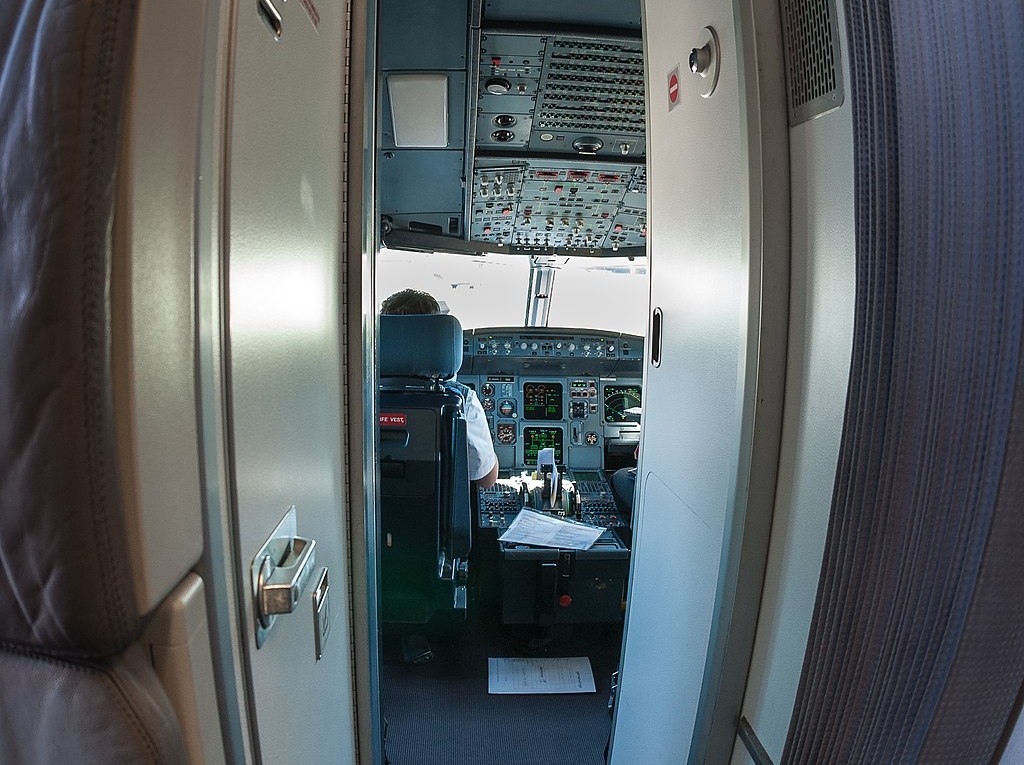
Flight FZ1073 left Dubai for Tel Aviv on September 30 with about 182 people aboard a Boeing 737 MAX 8. According to the accounts already assembled in our initial report on the cockpit fight, the co-pilot attacked Captain Smit Machchhar, an Indian national, with an emergency axe.
The aircraft plunged roughly 14,000 to 16,000 feet. Machchhar, wounded, got the cockpit door open. Passengers and crew restrained the attacker, while off-duty pilots helped stabilize the flight and bring it to an emergency landing in Tabuk, Saudi Arabia. Everyone survived. Our reconstruction of the FZ1073 rescue details the roles of the captain, cabin crew, passengers and off-duty pilots.
India's Prime Minister Narendra Modi praised Machchhar. FlyDubai suspended all Tel Aviv flights, and the Emirates codeshare on the route was suspended. Israel organized repatriation flights by El Al, Arkia and Israir beginning October 2 for roughly 1,800 travelers left stranded by the disruption.
The survival of everyone aboard should not blur the narrowness of the escape. A locked cockpit door could not solve a threat that began inside it. The decisive security layer became human intervention: a wounded captain reaching the cabin, people restraining the attacker and qualified pilots being present off duty. Those acts prevented a catastrophe. They are not a substitute for discovering how the alleged plan reached the cockpit in the first place.
Who loses: Dubai's aviation brand and a suspended corridor
Dubai sells aviation as infrastructure, not merely transportation. Its carriers, airport and tourism economy depend on the confidence that a passenger can connect through the emirate safely and predictably. The Wall Street Journal argued that the attack adds a new risk to Dubai's war-battered economy. The reputational damage therefore extends beyond one route and one airline.
Kristian Coates Ulrichsen of Rice University's Baker Institute put the issue plainly to the Journal: “Any questioning of security arrangements concerning flights out of Dubai could be a blow to confidence in the emirate, especially after the shocks of the Iran war.” The risk is not that every passenger will abandon Dubai. It is that airlines, insurers, corporate travel managers and regulators begin pricing uncertainty into decisions that had treated the hub as dependable.
The immediate losers are easier to identify. Travelers on the Dubai–Tel Aviv corridor lost a direct service. FlyDubai lost revenue and faces questions about recruitment, background checks and crew monitoring. Emirates lost its codeshare connection on the suspended route. Israel and its airlines had to organize an airlift for stranded passengers. Dubai's broader tourism and business sectors now wait to see whether a single shocking case remains isolated or becomes a lasting confidence problem.
The airline and UAE authorities also face a communications test. Silence may protect an active investigation, but an information vacuum invites speculation. A credible public account eventually needs to distinguish what was known before hiring, what was known during employment, what Oman shared, and what changed after the September 30 flight. Without those answers, reassurance will sound procedural rather than evidentiary.
What happens next
The UAE investigation comes first
The immediate legal question is what charge, if any, UAE prosecutors bring. The attorney general's description of the incident as a terrorist attack signals the frame of the investigation, but it is not a conviction and does not settle the reported interrogation claims. Investigators will need to corroborate statements with travel records, job applications, training history, electronic communications and any evidence connected to the earlier aborted flight.
Israeli officials have sought broader questioning, according to the reporting around the probe. Their interest is obvious: the alleged targets were in Israel, and the reported reconnaissance involved repeated travel to Tel Aviv. Cooperation will test how the UAE balances its custody of the suspect and control of the case with Israel's need to assess threats to Ben Gurion and central Tel Aviv.
For regulators, the case should trigger a narrow but urgent review of cross-border pilot screening. The key question is not whether every jurisdiction holds the same ideological threshold. It is whether a serious flying restriction in one country follows a pilot into another country's licensing and employment process, and whether the receiving carrier can see enough of the underlying basis to make a defensible decision.
Insurers and airline risk managers are likely to ask the same questions in financial language: what controls failed, how broadly must they be repaired, and what evidence shows the repair works? A targeted response could include verification of all prior licensing actions and faster sharing of disqualifying findings. A broad, indefinite dragnet would be easier to announce but harder to justify and less likely to isolate the actual failure.
Three paths from the investigation
In the first scenario, evidence confirms the reported pre-hiring plan and shows that Oman's ban was available but missed. That would be the clearest vetting failure and the most damaging outcome for FlyDubai and UAE aviation oversight. It would invite demands for accountability at the points where the warning should have been received and acted upon.
In the second, the ban or its rationale was never shared in a usable form. The emphasis would shift from one airline's hiring file to a regional information-sharing gap. That is less personally damaging to a recruiter but no less serious for the system: a safety decision that stops at a border cannot protect an international network.
In the third, parts of the interrogation narrative prove incomplete or unreliable. Anonymous-source reporting can move faster than a formal case, and discrepancies about airline applications, timing and the earlier aborted attempt already require care. That outcome would not erase the violence aboard FZ1073, but it would change the assessment of motive, preparation and institutional failure.
The question aviation cannot postpone
The September 30 story was first understood as an extraordinary fight for an aircraft. The October 5 reporting makes it a story about the gate that opened long before takeoff. If a man sought airline employment in order to reach Tel Aviv from the cockpit, then the attack was not simply a breach of flight-deck security. The flight deck was the objective of the hiring strategy.
Captain Machchhar, the cabin crew, passengers and off-duty pilots answered the emergency in minutes. Regulators and airlines now face the slower, harder task: reconstructing years of education, licensing, travel, restrictions and employment without skipping the point at which warning became access.
That reckoning should remain factual. The suspect has not been charged. The interrogation account has not been published by the UAE. Israel and FlyDubai have not publicly verified its details. But the reported question is already precise enough to demand an answer: how did a man allegedly barred from flying over radical views become the co-pilot of a state carrier on the route he was said to have targeted?
Until that is answered, the phrase “the dream was to crash into Ben-Gurion Airport” is more than a description of intent. It is an indictment of a screening chain that may have treated the final cockpit check as the first line of defense, when the decisive security failure had allegedly happened eight months earlier.
Sources and attribution
This analysis relies on Reuters for the pre-hiring plan, Tel Aviv airline search, earlier aborted flight, custody and charging status; The Times for the reported targets and biographical details; The Media Line for attributed interrogation quotations and reconnaissance reporting; and the Wall Street Journal for the reported Omani flying ban and economic analysis. The detailed interrogation claims are attributed to anonymous officials and sources briefed on the UAE probe. Signal Post News has not independently verified them.
Related coverage: the Australian counterterrorism inquiry into the co-pilot's earlier years.