World · U.S. · Haiti
The Florida pastor convicted in the Haiti assassination was, on the prosecution’s telling, the plot’s first choice to replace the man who was killed. On Wednesday a Miami jury convicted Christian Emmanuel Sanon on every charge — closing one of the strangest chapters of the Jovenel Moïse case, and opening the question of what a verdict in Florida can, and cannot, settle for Haiti.
MIAMI, November 18, 2026 — A Florida pastor with dual Haitian-American citizenship was convicted on Wednesday of U.S. charges arising from the 2021 assassination of Haitian President Jovenel Moïse, after a nearly eight-week trial in federal court in Miami. Christian Emmanuel Sanon, 68, was found guilty on all eight charges, including conspiracy to kidnap or kill a person outside the United States — the gravest count in the indictment, and the one that ties a South Florida defendant directly to a killing carried out in a bedroom in Port-au-Prince on July 7, 2021. Sanon showed little reaction as the verdict was announced. He faces up to life in prison, remains in federal custody, and is due to be sentenced on February 10. His lawyer said the defence was disappointed and would appeal.
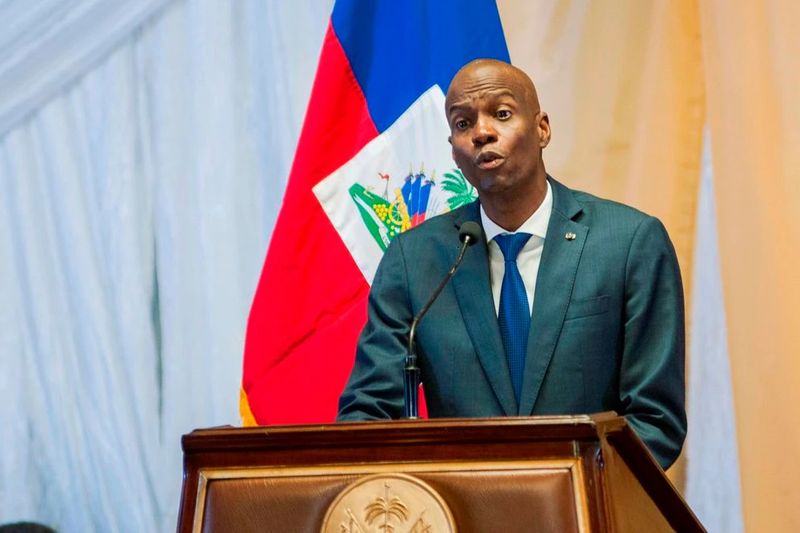
What the jury decided: Christian Sanon convicted on all eight charges
The verdict was total. After a trial that ran for nearly eight weeks — long enough for the jury to hear the architecture of the alleged conspiracy piece by piece, from South Florida meetings to the night the gunmen entered the president’s home — the jurors convicted Sanon on every one of the eight charges he faced. The lead count, conspiracy to kidnap or kill a person outside the United States, is the legal spine of the wider American prosecution of the Moïse assassination: it is how U.S. law reaches a murder committed on Haitian soil when prosecutors say the plot was planned and financed, in substantial part, on American soil. The jury’s answer, on that theory, was unanimous in effect: guilty, across the board.
That completeness matters for what comes next. A split verdict — guilty on lesser counts, acquitted on the conspiracy to kill — would have left the government’s central claim about Sanon unresolved. Instead the jury accepted the prosecution’s framing whole: that Sanon was not a bystander to a plot that drifted past him, but a participant in a conspiracy whose object was the violent removal of a sitting president. Whether that finding survives appeal is a separate question, addressed below. As a trial outcome, it is unambiguous.
Sanon faces life in prison, with sentencing set for February 10
Sanon faces up to life in prison. Sentencing is set for February 10, and he remains in federal custody in the meantime; he was taken back to a detention centre after the trial concluded. The gap between conviction and sentence — nearly three months — is where the case now moves: pre-sentence reports, defence motions, and the first filings of the promised appeal will all land in that window. A life sentence is the ceiling, not a foregone conclusion; the court will set the actual term in February. But the range of outcomes has narrowed sharply. Before Wednesday, Sanon was a defendant maintaining his innocence with a trial to win. After Wednesday, he is a convicted man arguing about how much of the rest of his life — he is 68 — will be spent in federal prison, and whether an appellate court can be persuaded that the trial itself went wrong.
A disappointed defence — and an appeal promised
Sanon’s attorney, Zeljka Bozanic, said the defence was disappointed with the verdict and would appeal. That is the expected statement on a day like this, but in this case it carries a specific weight, because the defence at trial was not a technicality — it was a competing narrative, delivered in part by Sanon himself from the witness stand. He testified in his own defence, an uncommon and risky choice, and told the jury a version of events in which he was guilty, at most, of talking to the wrong people about a political ambition. An appeal cannot simply re-run that argument; it must find legal error. But the length and complexity of an eight-week, multi-layered conspiracy trial — much of it built on cooperating witnesses and translated, cross-border evidence — is exactly the terrain on which appellate challenges are typically constructed. The verdict is final as a jury matter. As a legal matter, the fight continues.
How the South Florida plot reached Port-au-Prince
Federal prosecutors said at trial that South Florida was a hub for planning and financing the plot to oust Moïse and install a president of the conspirators’ choosing. That sentence is the whole case in miniature, and it explains why this trial happened in Miami at all. The killing was Haitian; the conspiracy, prosecutors argued, was substantially Floridian — hatched in meetings, money and companies within reach of U.S. subpoenas, U.S. bank records and U.S. courts. The Moïse assassination Miami trial is, in that sense, two stories at once: a Haitian political murder, and an American story about how much of it was assembled inside the United States.
CTU, the Colombian mercenaries and the DEA impersonation
According to prosecutors, the plot ran through U.S. companies — Counter Terrorist Unit Federal Academy and Counter Terrorist Unit Security, known as CTU — which hired about two dozen Colombian mercenaries, most of them retired soldiers. On the night of July 7, 2021, those men impersonated agents of the U.S. Drug Enforcement Administration and stormed Moïse’s home. The DEA disguise was not decoration; it was the mechanism. A raid announced as an American drug-enforcement operation was meant to freeze resistance — guards, household staff, anyone who might otherwise have fought or fled — long enough for the team to reach the president. Moïse was shot dead in his bedroom. His wife, Martine Moïse, was wounded, flown to Florida for treatment, and later became a key witness at the trial — the person in the room that night who survived to describe it to the jury.
Pause on what that means for the verdict’s meaning. The jury was not asked to decide whether Sanon pulled a trigger, entered the house, or was even in Haiti that night. Conspiracy law does not require any of that. It requires agreement and participation in a plan whose foreseeable outcome was the crime. The prosecution’s chain — Florida planning, CTU hiring, Colombian gunmen, a faked DEA raid — is the context the jury was given for judging the man prosecutors say was, for a time, the plan’s intended beneficiary.
COVID-19 relief money in the mercenaries’ pay chain
One detail from the court record deserves to be stated plainly, because it captures the plot’s improbable financing: the mercenaries were paid with money drawn from U.S. COVID-19 business-relief programs, according to court records. Pandemic aid — money appropriated to keep American businesses alive through an emergency — was, on the prosecution’s account, recycled into the payroll of a private army assembled to overthrow a foreign government. It is a fact that belongs in any honest account of this case, not as colour but as evidence of how the conspiracy actually functioned: not as a state operation with a treasury behind it, but as a privately financed venture, stitched together from companies, loans and relief funds within the U.S. financial system. That is also why the American prosecution has been able to proceed at all — money leaves records, and records can be tried in Miami in a way that events in Port-au-Prince, amid Haiti’s institutional collapse, could not.
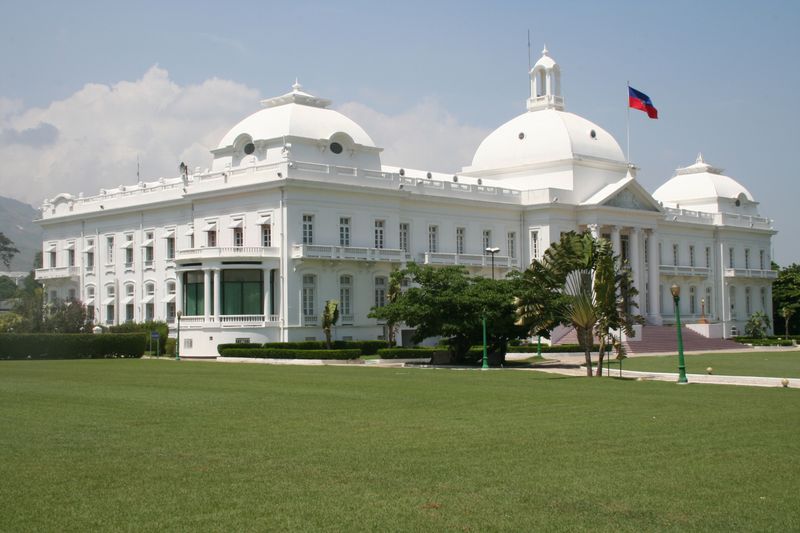
The man who wanted to be president: who is Christian Emmanuel Sanon?
Who is Christian Emmanuel Sanon? He was born in Haiti and moved to the United States as a teenager. He built a life in Florida as a pastor — a man of the pulpit, not of any army or party machine — and he held dual Haitian-American citizenship, a legal fact that placed him on both sides of this case at once: American enough to be tried in Miami, Haitian enough, prosecutors said, to imagine himself in the National Palace. That doubleness is the key to his role in the alleged conspiracy. The plotters, on the prosecution’s account, needed a Haitian face for the succession — someone who could be presented as a legitimate, civilian, even pastoral alternative to Moïse. For a time, prosecutors said, the conspirators planned to replace Moïse with Sanon himself. Later, he was sidelined in favour of another candidate.
That arc — chosen, then discarded — is where prosecution and defence tell the same facts to opposite conclusions. For prosecutors, being the plot’s first-choice successor is proof of centrality: you do not offer the presidency to a peripheral figure. For the defence, the sidelining is the exculpation: whatever Sanon was part of ended, for him, long before anyone was killed.
“The group moved on” — Sanon’s defence in his own words
Sanon has maintained his innocence throughout, and he took the stand to say so. He testified that he communicated with people who were trying to replace Moïse — that much, he did not deny — but that the group moved on to another candidate long before the killing, and that he did not know of a plan to kill the president. The distinction he drew was between regime change as politics and assassination as murder: conversations about replacing a president, he argued, are not a conspiracy to shoot one in his bedroom.
The jury rejected that distinction as a defence to these charges — or, more precisely, it found the prosecution’s evidence of agreement and intent stronger than Sanon’s account of his own distance from the plan. Both readings were available on the testimony; the jury chose. It is worth recording, for balance, what the defence position actually was, because the appeal will be built on the trial record, and the trial record includes a defendant who looked the jury in the eye and denied knowing of any kill plan. Twelve jurors did not believe that denial was enough. An appellate court will not re-weigh their credibility judgment — which is why the appeal, when it comes, will be about law and procedure rather than a second opinion on Sanon’s sincerity.
One procedural fact also belongs in his biography of this case: Sanon was originally scheduled to be tried alongside four other men, who were convicted earlier this year. His case was separated from theirs and delayed for health reasons. The delay shaped the trial the jury just decided — Sanon alone at the defence table, his alleged co-conspirators already convicted, their verdicts part of the background hum of the proceedings even where they were not evidence against him.
Why this matters
Why does a verdict in Miami matter, five years after the shots in Port-au-Prince? Three reasons, in ascending order of importance. First, accountability: a president was murdered, and until the American prosecutions, almost no one had been convicted of it anywhere. Second, jurisdiction as precedent: the United States has asserted — and now repeatedly sustained before juries — the right to try a foreign presidential assassination in its own courts because the plot touched its soil, its companies and its money. Third, and most uncomfortable: the distance between what a Miami courtroom can settle and what Haiti still needs settled.
A U.S. courtroom, a Haitian presidency, five years on
Consider the strangeness of the venue without flinching from it. The assassination of Haiti’s president is being adjudicated, defendant by defendant, in the U.S. District Court for the Southern District of Florida — because Haiti’s own institutions, shattered by the killing itself and by the gang crisis that consumed the country afterwards, have not been able to carry a prosecution of this scale to verdict. There are two honest ways to read that. One is as a backstop: when a plot is financed in Florida, Florida courts are a legitimate — arguably the only functioning — forum, and a conviction there is better than impunity everywhere. The other is as a symptom: sovereignty means little if the defining political crime of a generation can only be tried abroad. Both readings are true at once, and the Sanon verdict strengthens each of them. It proves the American process works. It also underlines, again, that the Haitian process has yet to deliver a comparable judgment of its own.
The names not yet tried — and one not yet arrested
Sanon’s conviction is a milestone in the wider case, not its end. U.S. prosecutors have charged more than 40 people in connection with the assassination; about a dozen have now been convicted, including five who are serving life sentences. Still to face trial are Joseph Felix Badio — a former government anti-corruption official whom other suspects’ defence lawyers have accused of masterminding the operation — and 17 Colombian former soldiers, flown from Haiti to the United States in September. Seven more people have been charged over allegedly funding the plot and helping those responsible evade justice afterwards, including the gang leader Vitel’homme Innocent, who has yet to be arrested. A further indictment unsealed in September included four people whose names remain redacted — a reminder, in the court’s own paperwork, that parts of this story are still officially unnamed.
That unfinished roster is the strongest argument against treating Wednesday as closure. The man convicted this week was, on the prosecution’s own account, sidelined before the killing. The man defence lawyers in the wider case have pointed to as a mastermind has not yet had his trial. The alleged financier-side defendants include a gang leader still at large. And four names are still blacked out. The Sanon verdict answers the question of Sanon’s guilt. It does not answer the question Haitians have asked since 2021 — whose plan, ultimately, was this? — and the honest reporting of this verdict has to hold both facts at once.
Haiti since July 7, 2021: a presidency still empty
The context in which this verdict lands is a country still living inside the event. Haiti has had no president since Moïse was killed — the office he was murdered in has remained vacant for more than five years, through transitional arrangements, a collapsing security situation and a gang crisis that has displaced hundreds of thousands and left much of Port-au-Prince outside effective state control. Signal Post News has covered the international response as it has evolved, including the UN’s renewal of the Haiti Gang Suppression Force mandate — a measure of how far the security emergency has run ahead of the country’s politics.
A presidential election is scheduled for next year. If it happens, it will be the first real opportunity since 2021 for Haiti to fill the office by vote rather than by the kind of succession the Sanon plot allegedly tried to impose by force. That is the backdrop against which a Miami jury’s work should be measured. Verdicts assign individual guilt; they do not rebuild a presidency, a police force or a court system. The trial just concluded was meticulous, public and — by the standards of the case’s Haitian dimension — remarkably complete. It also took place a thousand miles from the country whose future it concerns, in a language and a legal tradition not Haiti’s own. Holding both of those truths is not fence-sitting; it is the story.
The case in numbers
Eight charges, all sustained. Nearly eight weeks of trial. About two dozen Colombian mercenaries hired through U.S. companies, most of them retired soldiers. More than 40 people charged in the wider American case; a dozen convicted; five already serving life sentences. Eighteen defendants — Badio and the 17 Colombians — still awaiting trial, seven more charged over funding and evasion, one prominent fugitive, and four names still redacted. One president killed, one first lady wounded and flown to Florida, and one presidency vacant for over five years, with an election scheduled for next year. Numbers like these do not explain the case, but they discipline the telling of it: this was never a lone-gunman story, and Wednesday’s verdict, however decisive for Sanon, resolves one defendant’s part in a machine that prosecutors say had dozens of parts.
What happens next
February 10 is the next fixed point: Sanon’s sentencing, at which the court will decide how close to the life maximum his term will run, and at which the promised appeal will begin to take formal shape. Expect the defence to argue, in sentencing and on appeal, the same distance it argued at trial — that Sanon was a sidelined aspirant, not a knowing party to murder — recast now as mitigation and as grounds for legal challenge. Beyond Sanon, the wider docket moves toward the trials of Badio and the 17 Colombian former soldiers, proceedings that may test the mastermind question more directly than this trial did, and toward the unresolved hunt for Vitel’homme Innocent and the unsealing, someday, of four redacted names. And beyond the courtroom, Haiti’s scheduled presidential election next year will ask the question no jury can: whether the office at the centre of this case can be filled by ballots again. The Miami verdict is a genuine landmark — a Florida pastor convicted in the Haiti assassination, on all counts, facing life. It is also, on the evidence of the still-open docket, a middle chapter.
Related coverage
UN Renews Haiti Gang Suppression Force Mandate for Six More Months
Dominican Republic Bans Haiti Stadiums After Nations League Crowd Chaos
Sources
- Reuters, November 18, 2026 — “Miami court convicts US-Haitian pastor over plot to assassinate president” (reuters.com): Christian Emmanuel Sanon, 68, convicted of all charges linked to the murder of President Jovenel Moïse; up to life in prison; prosecutors say the conspirators for a time planned to replace Moïse with Sanon before sidelining him for another candidate; the CTU companies, the Colombian mercenaries’ DEA impersonation and the July 7, 2021 killing; Martine Moïse wounded, flown to Florida, a key trial witness; Badio and 17 Colombian former soldiers still to face trial; seven more charged over funding and evasion including Vitel’homme Innocent, not yet arrested; the September indictment’s four redacted names.
- Associated Press, November 18, 2026 — “Florida pastor convicted of US charges related to assassination of Haitian President Jovenel Moïse” (wcia.com): guilty on all eight charges including conspiracy to kidnap or kill a person outside the United States, after a nearly eight-week trial; Sanon showed little reaction; sentencing set for February 10; remains in federal custody; South Florida as the planning and financing hub; more than 40 charged, a dozen convicted including five serving life sentences; Haiti without a president since the killing, with a presidential election scheduled for next year.
- CNN, November 18, 2026 — “A Florida pastor has been convicted of US charges related to the 2021 assassination of Haitian President Jovenel Moïse” (cnn.com): dual Haitian-American citizenship; Sanon born in Haiti, moved to the U.S. as a teenager; his case separated from four men convicted earlier this year and delayed for health reasons; attorney Zeljka Bozanic said the defence was disappointed and would appeal; Sanon’s testimony that he communicated with people seeking to replace Moïse but denied knowing of a kill plan.
- U.S. District Court for the Southern District of Florida — indictments and court records in the Moïse assassination prosecutions, as reported in the coverage above: the CTU Federal Academy and CTU Security hiring of the Colombian team, and court records describing the mercenaries’ payment with funds drawn from U.S. COVID-19 business-relief programs.
- Photos: President Jovenel Moïse at a podium — NBC News / AP file. The National Palace, Port-au-Prince — iStock file photo. Both credited in place.