FIFA suspends Egypt coach Hossam Hassan for three matches and forward Mostafa Zico for five, more than three months after Egypt’s 3-2 World Cup defeat by Argentina, after both men criticised the referee — and Hassan’s first response was to call the ban an honour.
Sports / Football — the bans land in October for words spoken in July, and they will follow Egypt into the Africa Cup of Nations qualifiers that matter most
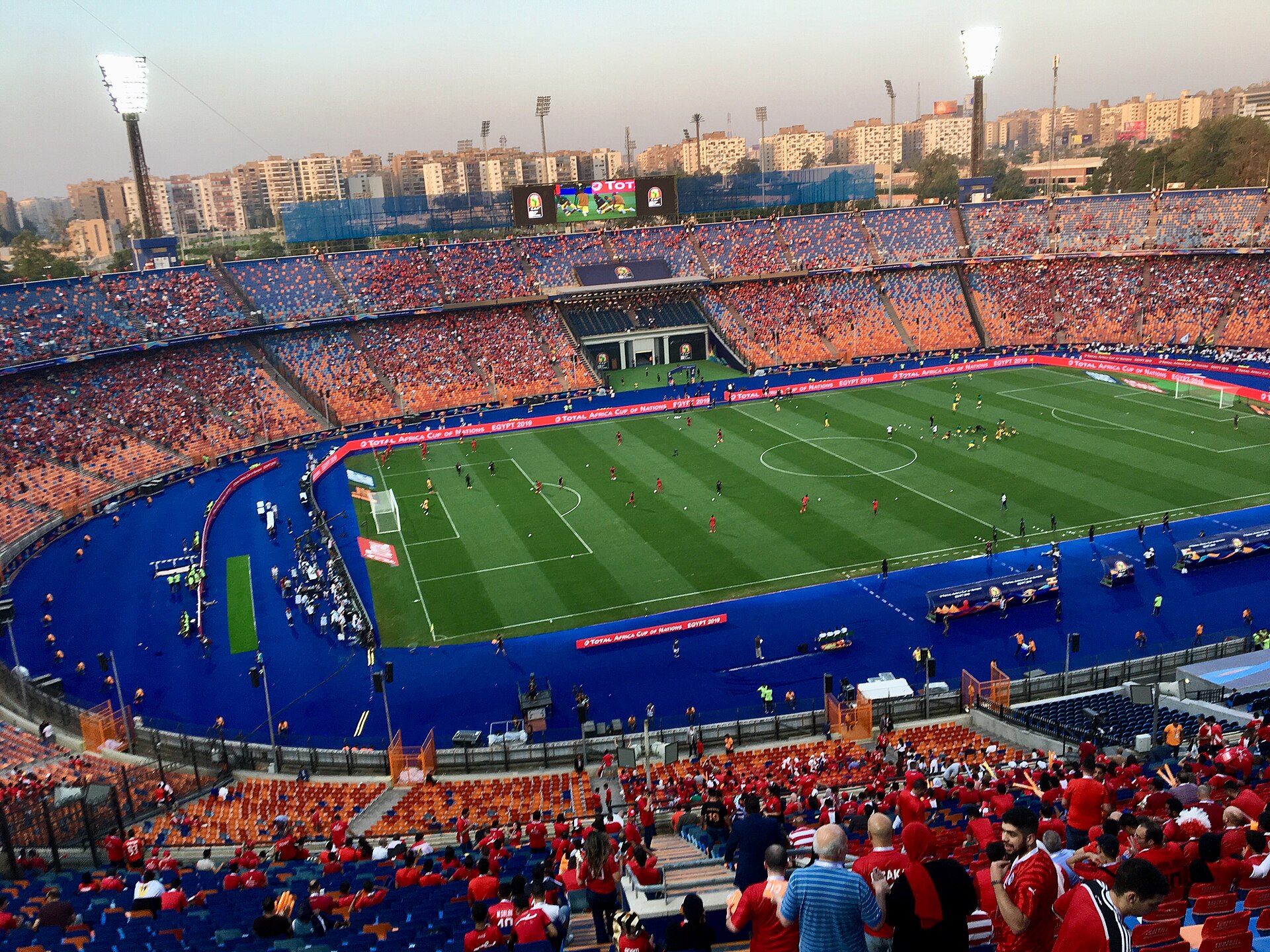
What FIFA decided, and who it covers
The decisions, as the EFA summarised them, are simple in arithmetic and severe in effect. “The decisions include the suspension of Hossam Hassan and Ibrahim Hassan for three matches each, while Zico has been suspended for five matches,” the association said in its statement, published on its official account on October 19. Three people are banned, not two: the head coach, the team director who is also his identical twin, and the forward whose disallowed goal started the argument in the first place.
The 60-year-old Hassan was sanctioned after blaming refereeing errors for his country’s elimination from the tournament in the last 16, while Zico insulted the referee in a post-match interview, Reuters reported. The distinction matters for the lengths. Hassan’s offence, in FIFA’s reading, was public accusation — saying, in effect, that the match had not been fairly officiated. Zico’s was direct personal insult aimed at the official himself, and it drew the longest ban of the three: five matches, two more than either Hassan brother.
The EFA’s response was procedural, not emotional. It has requested the detailed grounds for the decision from FIFA’s Disciplinary Committee — the written reasoning, not just the verdict — in order to study them, evaluate the legal position, and prepare appeal steps in accordance with the applicable regulations. Until those grounds arrive and are read, nobody in Cairo can say with precision which words crossed which line of the FIFA Disciplinary Code, and that uncertainty is itself part of the story: Egypt is being asked to plan a qualifying campaign around bans whose full reasoning it has not yet seen.
The match that started it: two goals up, then 3-2
None of this is understandable without the ninety minutes in Atlanta on July 6 (some reports date the tie to July 7 local coverage). Egypt, in the World Cup knockout rounds for the first time in their history, led Argentina — the defending champions — 2-0 in a round-of-16 match and stood within reach of one of the great World Cup upsets. Argentina came back to win 3-2, completing a late turnaround after Egypt had surrendered the two-goal lead, and the manner of the comeback is what Egypt has never accepted as clean.
Two decisions sit at the centre of the grievance. Zico had a goal ruled out for a foul in the build-up — the video assistant referee intervened to spot a foul on Lisandro Martínez much earlier in the move, according to Complete Sports’ account of the Al Jazeera reporting — at a moment when Egypt led 1-0 and a second goal would have changed the entire shape of the tie. Then, late in the match with the score at 2-2, Egypt’s players appealed for a penalty that was not awarded. A member of Egypt’s coaching staff was also shown a red card after Argentina scored the winning goal.
Hassan’s post-match words, reported by Al Jazeera and carried by Kick Off and Complete Sports, were not the language of a man choosing his phrases for a disciplinary hearing. “I do not want to put it nicely and talk about hard luck. We have been cheated unfairly today; we have suffered injustice,” he said. “We haven’t seen respect or Fair Play. There has not been respect or fair play.” He added, of the penalty appeal: “A penalty was ruled out; it was not even checked by VAR. A second goal was remarkably disallowed. There has not even been a VAR check when we have all seen the image of the [shirt] being pulled back.” In another reported version of his remarks, he asked whether the officials had wanted to keep the world champions — and Lionel Messi — in the competition. Those are the sentences FIFA has now priced: three matches for the coach who said them.

The other side: Collina, and why FIFA treats words as a safety issue
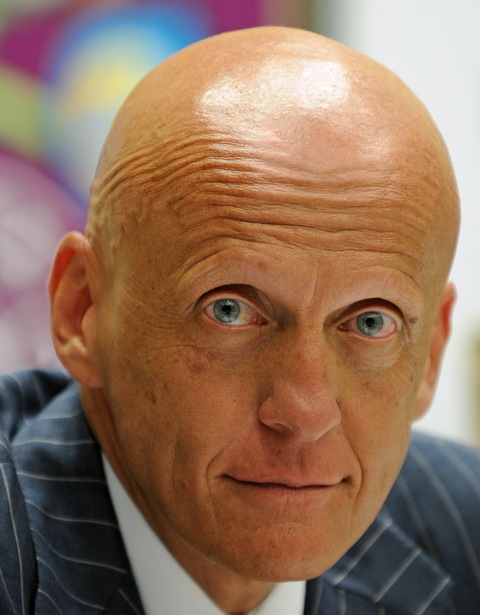
FIFA’s refereeing chief Pierluigi Collina defended the officiating in the match, Reuters reported, saying such allegations could provoke threats against referees and their families. That sentence is the whole of FIFA’s case in miniature, and it deserves to be taken seriously rather than dismissed as institutional self-protection. Collina — himself the most recognisable referee of his generation, the official in charge of the 2002 World Cup final — now chairs the committee responsible for the officials Egypt accused. His argument is not that the decisions were beyond criticism; it is that accusing officials of cheating, of deliberately favouring a famous team, moves the conversation from error to corruption, and corruption allegations are the ones that follow referees home.
There is a genuine tension here, and an honest account has to hold both ends of it. Coaches who believe a VAR intervention erased a legitimate goal and a penalty check never happened will say that silence would be a betrayal of their players. Governing bodies will answer that the right to appeal decisions inside the system is not the same as a public claim that the system was rigged, and that the second kind of speech is what disciplinary codes exist to punish. Egypt’s own federation has, notably, chosen the first route: paperwork, grounds, legal assessment, appeal. Hassan, personally, has chosen defiance. The team now contains both strategies at once.
What the bans actually cost: Malawi, March, and June
A three-match ban sounds abstract until it is laid over a fixture list. The suspensions could rule Hossam and Ibrahim Hassan out of Egypt’s upcoming matches against Malawi in the next rounds of Africa Cup of Nations qualifying in November, as well as the first match of the March international window, Reuters reported. Zico will be unavailable until June — a five-match absence that, on the timelines reported by African outlets, runs through the remaining qualifiers and into the summer. In other words, the punishment for a World Cup played in July 2026 will still be shaping Egypt’s team selection in the middle of 2027’s qualifying calendar.
Put the numbers in context. Egypt are the most successful nation in African football history, with seven Africa Cup of Nations titles — and they have not won one since 2010. The 2027 tournament, in East Africa, is the project this qualifying campaign serves. Hassan was hired in 2024 precisely as the domestic, totemic choice: Egypt’s most-capped player of his era, a striker who scored 69 goals in 169 internationals and lifted the continental trophy as a player, now asked to end a drought that has lasted a decade and a half as a coach. A qualifying group that should be managed from the bench will instead, unless the appeal succeeds, be managed at least partly from the stands, by a coach communicating through staff he is also not allowed to be — because his twin and team director is banned for exactly the same three matches.
The Zico absence is different in kind. A coach in the stands is a handicap; a forward missing five matches is a hole in the team itself. Zico’s disallowed goal in Atlanta is the single most replayed moment of Egypt’s tournament, and the player who thought he had scored the goal that broke the champions will now sit out the longest stretch of anyone involved. If the EFA appeal trims the bans, the order in which it argues them will tell its own story about priorities: the federation needs its coach back first, but the moral centre of its case is the player.
Why this matters
This is a small disciplinary story with a large principle inside it: where does a coach’s right to describe an injustice end, and a governing body’s right to protect its officials begin? FIFA’s answer, delivered three months after the event, is that the line sits exactly where Hassan and Zico crossed it — at accusation of bias and at personal insult. Egypt’s answer, so far, is that a team which led the world champions 2-0 in a knockout match and lost the lead through two contested decisions is entitled to say so loudly, and that punishing the saying does not settle the argument about the decisions.
There is also a timing question FIFA should expect to be asked. The match was played in early July. The bans were announced on October 19. A disciplinary process that takes a full qualifying cycle’s worth of preparation time to conclude lands differently from one resolved in August: it arrives after squads have been planned, after the emotional temperature was supposed to have cooled, and close enough to the November fixtures that the practical damage is immediate. Supporters of the process will say careful cases take time and that the EFA’s request for detailed grounds shows the system working as designed. Critics will say a punishment announced a season later reads less like justice and more like a reminder, timed for maximum compliance, of who is in charge of the microphone.
And there is the Collina factor, which cuts both ways. When the man defending the officials is the most respected referee in the sport’s modern history, the defence carries unusual weight; when that same man heads the body those officials answer to, the defence is also, structurally, an institution marking its own homework. Both things are true at once, and the appeal — if it comes — will be heard inside the same structure. That is not a conspiracy; it is simply how football governs itself, and it is why cases like this one keep recurring at every major tournament.
Who gains, who loses
On paper, Malawi gain first: they are scheduled to face an Egypt side in November whose head coach and team director are, as things stand, suspended, and whose in-form forward is banned. Qualifying margins in African football are routinely thin, and a distracted, stand-managed Egypt is a materially weaker opponent than the one that took Argentina to the edge. Argentina, it should be said plainly, gain nothing and lose nothing: no result changes, no finding was made that the match was officiated incorrectly, and the 3-2 scoreline and everything that followed from it stand untouched.
FIFA gains the deterrent it wanted — every coach at the next major tournament now knows the tariff for the word “cheated” is measured in qualifying matches, not fines. What it risks losing is harder to price: the perception, already common among supporters, that officials are a protected class whose decisions may be praised but never truly condemned. Hassan, paradoxically, may gain the most of anyone. In Egypt, where he is a playing legend and the national team is a matter of state-level emotion, “the suspension is an honour” is a line built to travel. A ban intended as a reprimand can be worn, at home, as a medal — proof that he said what the country was thinking and paid for it.
What happens next
The immediate sequence is administrative. The EFA waits for FIFA’s detailed grounds; its lawyers study them; a decision on appeal follows, on the timeline the regulations allow. Three scenarios cover most of the plausible ground. First, no appeal or a failed appeal: the bans stand as announced, Egypt play Malawi in November without either Hassan brother on the bench, and Zico’s return waits until June. Second, a partial success: appeal bodies in football discipline more often trim than erase, and a reduction of Zico’s five matches is the most humanly arguable target, since his offence was a single televised interview rather than a campaign. Third, a full overturn — the outcome Hassan’s rhetoric points toward and the one precedent makes least likely, given that the words at issue are on tape and were never retracted.
What to watch, then, is not whether Egypt feel aggrieved — they do, and they will say so — but whether the federation’s lawyers can find, in FIFA’s own written grounds, a procedural or proportionality argument strong enough to move the numbers. Until then, the state of play is exactly what the EFA announced on October 19: three men suspended, a qualifying campaign to re-plan, and a coach who has already given his verdict on the verdict. Related coverage: Messi’s final Argentina match and the European football weekend.
Sources
Reuters, October 19, 2026: FIFA suspends coach Hassan and forward Zico for three and five matches (EFA statement, ban lengths, Malawi/March/June timelines, Collina defence). Egyptian Football Association statement, October 19, 2026 (official @EFA account): the suspension decisions and the request for detailed grounds to assess an appeal. Al Jazeera reporting of Hassan’s post-match comments, as carried by Kick Off and Complete Sports, October 2026: the “cheated” and “respect or fair play” quotes, the VAR and penalty claims, the Lisandro Martínez foul in the disallowed-goal build-up and the coaching-staff red card. Citi Sports, October 20, 2026: Hassan’s response to the suspension (“an honour for me”, via Yalla Kora), Egypt’s first World Cup knockout-stage campaign and first World Cup victory, over New Zealand.