kashkari inflation still too high
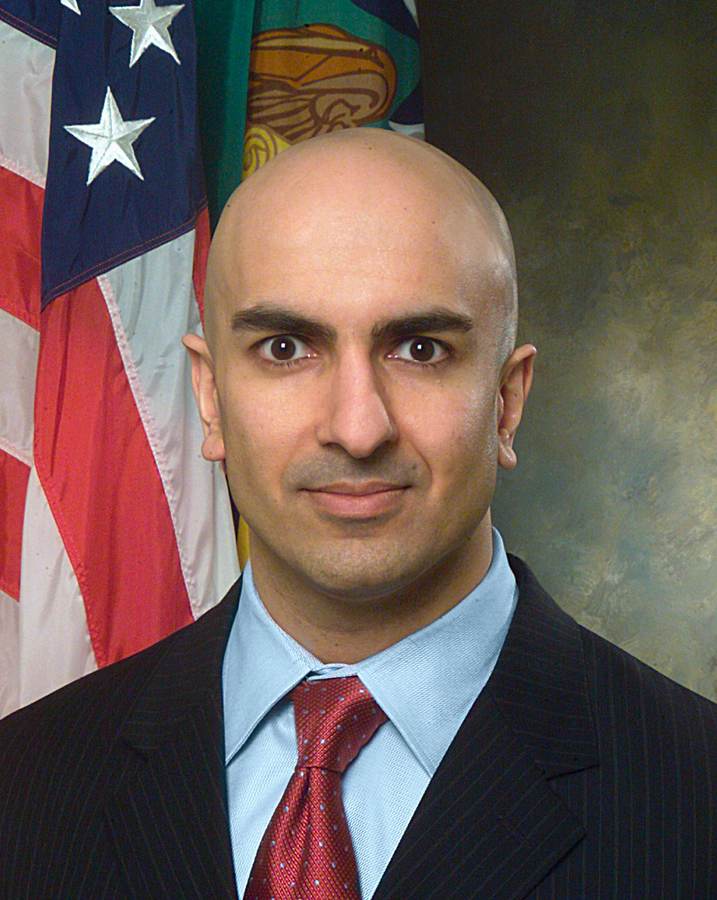
NEW YORK — Neel Kashkari's “inflation still too high” verdict kept another Federal Reserve rate increase in play after August price data showed improvement but remained well above the central bank's goal. Speaking at the Council on Foreign Relations in New York on September 30, the Minneapolis Fed president said he expected another hike could be necessary depending on how the economy develops.
“My basic takeaway on the inflation data is that inflation is still too high,” Kashkari said, adding that the latest numbers “don't change that story.” Headline personal-consumption-expenditures inflation slowed to 3.4% in August from 3.7%, while core PCE was 3.0%. Both remained above the Fed's 2% target, which inflation has exceeded for more than five years.
The comments came two weeks after the Federal Open Market Committee raised its target range to 3.75%–4% at the September 15–16 meeting, the first increase in three years. Kashkari had penciled in two hikes for 2026. He called the published projections “a snapshot in time,” signaling that his path can change with incoming evidence rather than binding him to a calendar.
Why Kashkari's inflation warning matters
The Fed is trying to solve an asymmetrical problem. Tightening too little risks allowing above-target inflation to persist and become embedded in wage contracts, business pricing and household expectations. Tightening too much risks weakening hiring and demand after monetary policy's long delays.
Kashkari's argument is that the economy still gives the central bank room to lean against inflation. Revised gross-domestic-product data showed more resilient growth and consumer spending than officials had understood. He called that strength “the bigger surprise,” while describing the labor market as “pretty good,” though not “great.”
That combination—improving inflation but solid activity—makes policy harder, not easier. A weak economy would give officials a reason to prioritize employment. A rapid inflation reacceleration would make another hike obvious. Gradual disinflation alongside resilient demand leaves the committee debating how much restriction is enough.
August PCE inflation improved, but not to target
The decline in headline August PCE inflation 2026 to 3.4% is genuine progress. Core PCE at 3.0% strips out volatile food and energy categories and provides a clearer view of underlying pressure. But neither figure is close enough to 2% for officials to declare victory.
Year-over-year inflation can fall because of easier comparisons even while monthly price growth remains uncomfortable. Conversely, one firm month does not establish a new trend. The Fed therefore looks at multiple measures, including services, wages, shelter and expectations, rather than treating one headline as decisive.
Kashkari's phrase “doesn't change that story” should be read in that context. He did not say the August improvement was meaningless. He said it did not alter the policy narrative: inflation is still above target and the burden of proof remains on sustained cooling.
September FOMC projections were a snapshot, not a promise
Fed projections summarize individual officials' views under their own economic assumptions. They are not a committee commitment. Kashkari's description of the September FOMC projections as a snapshot reminds investors that a dot on a chart can move when growth, inflation or labor data change.
His own two-hike projection marked him as relatively concerned about inflation. One increase is already complete. The question is whether incoming evidence justifies the second. Markets placed the probability of a hike at the October 28 meeting near 39%, leaving investors divided rather than convinced.
New York Fed President John Williams offered the balancing view, signaling no urgency and a willingness to wait until December. The disagreement is not necessarily over the 2% target. It is over the speed of the economy, the amount of restraint already in the system and the cost of waiting for clearer evidence.
The resilient economy is the bigger surprise
Revisions showing stronger output and consumption matter because monetary policy works partly by slowing demand. If households keep spending and businesses keep hiring despite a higher Fed funds rate of 3.75% to 4%, the policy stance may be less restrictive than officials assumed.
That could mean neutral—the rate that neither stimulates nor restrains the economy—is higher. Kashkari has raised that possibility. A higher neutral interest rate would imply that yesterday's definition of tight policy no longer applies cleanly to today's economy.
It could also mean the lags are simply longer. Fixed-rate mortgages, prior corporate financing and healthy household balance sheets can delay the impact of higher rates. In that case, another hike risks arriving just as earlier tightening begins to bite. Policymakers cannot observe neutral directly, so they infer it from behavior after the fact.
Jobs data and October 14 CPI set the next test
September private payroll data from ADP beat expectations, supporting the argument that labor demand remains firm. The official payrolls report due Friday will provide the broader reading, including job creation, unemployment and wages. A strong report would make it easier for hawks to argue that the economy can absorb additional restraint.
The October 14 CPI report is the next major inflation checkpoint before the October 28 meeting. CPI and PCE are different indexes, but both shape the public and policy debate. Officials will look for whether improvement extends beyond a few categories and whether services inflation is cooling.
A strong jobs report plus a firm CPI reading could move the roughly 39% hike probability higher. Weak payrolls or a clear inflation step-down could support Williams' case for waiting until December.
The dollar and Treasury market are already tightening conditions
The dollar index rose to a three-month high around 101.777, while the euro fell to a 16-month low near $1.1297. A stronger dollar can reduce the price of imports for U.S. consumers, helping the inflation fight. It can also weigh on U.S. exporters and reduce the dollar value of overseas earnings.
The 10-year Treasury yield above 5.3% adds another layer of restraint. Mortgage, corporate and investment rates can rise even without an immediate Fed move. The bond market may therefore do part of the central bank's work.
That creates a feedback question. If market yields tighten financial conditions enough to slow demand, the Fed can wait. If higher yields instead reflect stronger growth and a higher neutral rate, officials may still see another hike as appropriate. The same market move can support opposite policy conclusions depending on its cause.
Who wins and loses if rates rise again
Savers, money-market investors and institutions buying new fixed-income securities benefit from higher nominal yields. Banks can gain from lending spreads if deposit and funding costs remain controlled. The dollar may retain support if U.S. rates look more attractive than those overseas.
Borrowers lose most directly. Households face more expensive mortgages, auto loans and credit. Companies refinancing debt confront higher interest expense. Rate-sensitive sectors such as housing and commercial real estate carry the greatest exposure because financing is central to demand and valuations.
Technology companies face a mixed picture. Strong AI demand can lift revenue, as the Micron-led chip rally demonstrated, but higher discount rates reduce the value investors place on future profits. The winners are firms with current cash flow; the vulnerable group relies on cheap capital and distant returns.
For the Fed, credibility is the ultimate asset. A successful policy path returns inflation to target without unnecessarily damaging employment. Moving too slowly threatens the first half; moving too aggressively threatens the second.
What critics say
Critics of another hike argue that inflation is moving in the right direction and that monetary policy acts with delays. They warn that the Fed may react to backward-looking price data after labor demand has already begun to cool. “Pretty good” rather than “great” employment is not an invitation to ignore downside risk.
Supporters of Kashkari's view answer that five-plus years above target have already tested credibility. They see resilient GDP, consumer spending and payrolls as evidence that policy is not yet excessively restrictive. Waiting for inflation to reaccelerate would require a sharper response later.
Both arguments depend on data that have yet to arrive. That is why Kashkari's conditional language matters. He expects another hike may be needed; he did not declare the October decision complete.
What happens next
Friday's payrolls report will test the “resilient economy” side of the debate. The October 14 CPI release will test the inflation side. Between them, Fed speakers will clarify whether the committee sees the September hike as an insurance move, the beginning of a new cycle or a one-time adjustment.
Watch financial conditions as closely as the policy rate. If the dollar and 10-year yield continue rising, the economy will experience more restraint without a formal decision. If markets reverse, officials may conclude that the existing stance is not transmitting strongly enough.
The October meeting remains genuinely open at odds near 39%. Kashkari's message narrows the conditions for standing pat: inflation must continue to cool, and the economy must show enough moderation to make patience safer than action. Until then, “still too high” is not rhetoric. It is the standard the next data must overcome.
Related coverage
Sources and reporting notes
- Reuters: Kashkari says the Fed must lower inflation pressure (Michael S. Derby, September 30, 2026)
- Morningstar / Dow Jones: Kashkari says inflation is still too high
Reporting note: Quotations, PCE readings, policy-rate history and Kashkari's projections come from the cited reporting. Market-implied odds and currency levels are the stated October 1 snapshot. Policy scenarios are Signal Post News analysis.