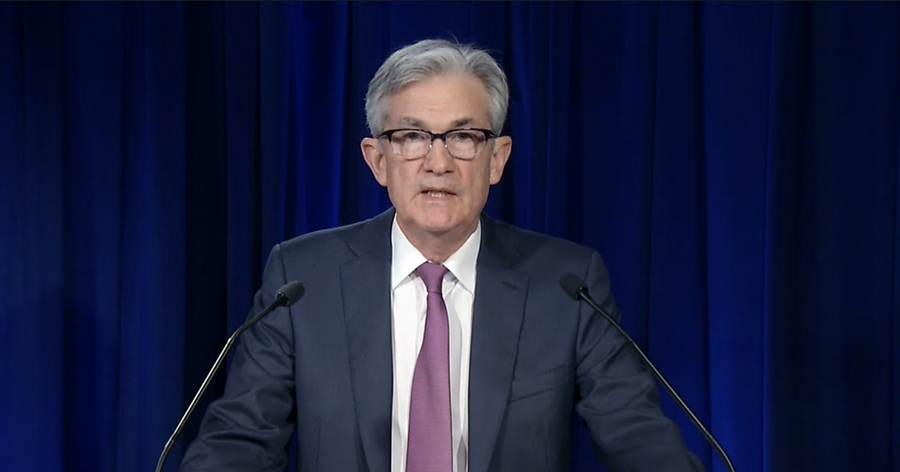
WASHINGTON — Powell cleared Fed renovation probe is the legal conclusion; costly institutional failure is the management conclusion. The Federal Reserve's independent inspector general said Wednesday, September 30, that it found neither reasonable grounds for a criminal referral nor administrative misconduct in the renovation of the Marriner S. Eccles Building and 1951 Constitution Avenue NW. The same 120-page report faulted extensive oversight deficiencies as the estimated bill rose by roughly $1 billion, toward $2.4 billion to $2.5 billion.
President Donald Trump answered by asking Attorney General Todd Blanche to study the report and “make a determination.” On Truth Social, he wrote that “'Too Late' Powell should be forced to resign from the Board,” argued that a man who “can't manage a Building” should not help manage interest-rate policy, and threatened a government lawsuit for what he called corruption or incompetence. The report undercuts the accusation of criminal negligence. It does not erase the evidence of weak controls. That tension — exoneration on misconduct, indictment on management — is why the story will not end with the watchdog's final page.
What the Fed inspector general renovation report actually found
The watchdog's core language is unusually direct: “At no point during our evaluation did we find reasonable grounds to believe that a violation of federal criminal law had occurred” requiring referral to the U.S. attorney general. It also “did not identify administrative misconduct.” That clears then-Chair Jerome Powell of the criminal-negligence theory that drove the Justice Department inquiry and much of the political campaign around the project.
But clearance is not vindication of the project itself. The inspector general described a governance system too loose for a renovation of this scale. The original construction estimate was $921 million; the Fed's Board of Governors approved about $1.3 billion in February 2020. By December 2024, the estimate had climbed to roughly $2.4 billion, with some accounts placing the current total near $2.5 billion. Completion is due in December 2027.
The failures were operational rather than ornamental. The Fed did not secure the effective guaranteed maximum price it intended to obtain. Project managers kept awarding packages as costs and schedules escalated. Contractors sometimes failed to produce three competitive bids, yet payments and awards moved forward. Reuters reported that plumbing and air-conditioning work reached $346 million, about three times its initial estimate; the broader mechanical and plumbing escalation approached $500 million.
One decision was especially expensive in time. Mid-project, the Fed abandoned a largely open-office plan in favor of more private offices. Design progress stopped for 21 months. The inspector general also rejected one of the most politically potent claims: marble restoration, water features and a garden terrace did not materially drive the overrun. The money problem was not a handful of photogenic flourishes. It was the contract structure, incomplete cost discipline and a governance process that failed to force hard decisions early.
Why this matters: Fed independence meets presidential pressure
The immediate question is not whether the renovation was badly managed; the report says it was. The deeper question is whether a building audit should become leverage over monetary policy. The Federal Reserve sets interest rates through a statutory structure designed to insulate decisions from short-term presidential preference. That independence is imperfect and contestable, but it is central to market confidence that inflation policy will not be rewritten to suit the next election calendar.
Trump has never hidden his objection to that separation. He nominated Powell in 2017, then turned against him when the chair would not deliver the rate cuts Trump wanted. The renovation gave the argument a concrete symbol: scaffolding, overruns and a number large enough to dominate a headline. Once the Justice Department opened a criminal investigation, the dispute moved beyond criticism into a test of whether prosecutorial power could be used against a central-bank official over conduct that also happened to furnish pressure on interest rates.
That is the precedent worth watching. A president is entitled to criticize waste, demand better contracting and appoint new leadership when terms expire. A president using a construction failure to push an independent governor out because of monetary-policy disagreement is different. The distinction matters regardless of whether one thinks rates are too high or the renovation is indefensible. If every administrative controversy can be converted into removal pressure, statutory independence becomes conditional on avoiding political embarrassment.
Trump demands Powell resign despite the no-crime finding
The Trump Truth Social Powell resign message was calibrated to preserve pressure after the legal premise weakened. Trump did not accept the watchdog's clearance as closure. He shifted from criminality to competence, arguing that a manager responsible for a building overrun should not remain involved in setting high interest rates. Politically, that is a more durable claim because it does not require prosecutors to prove intent.
Trump gains a pressure point. He can present the report's management criticism as confirmation that his attacks were justified while dismissing its no-misconduct finding as too narrow. Asking Blanche to review the document keeps the prospect of official action alive without committing immediately to a case. It also puts every future vote by Powell inside a new frame: policy disagreement can be recast as evidence that a discredited manager still holds power.
Powell loses some control over his legacy. The criminal cloud has lifted, but the renovation will sit beside his inflation record and pandemic-era decisions as a visible example of institutional weakness on his watch. The Federal Reserve loses something too. Its credibility depends not only on technical monetary judgment but also on competence in the mundane use of money and contracts. An institution that asks households to endure higher borrowing costs cannot be casual about its own billion-dollar overrun.
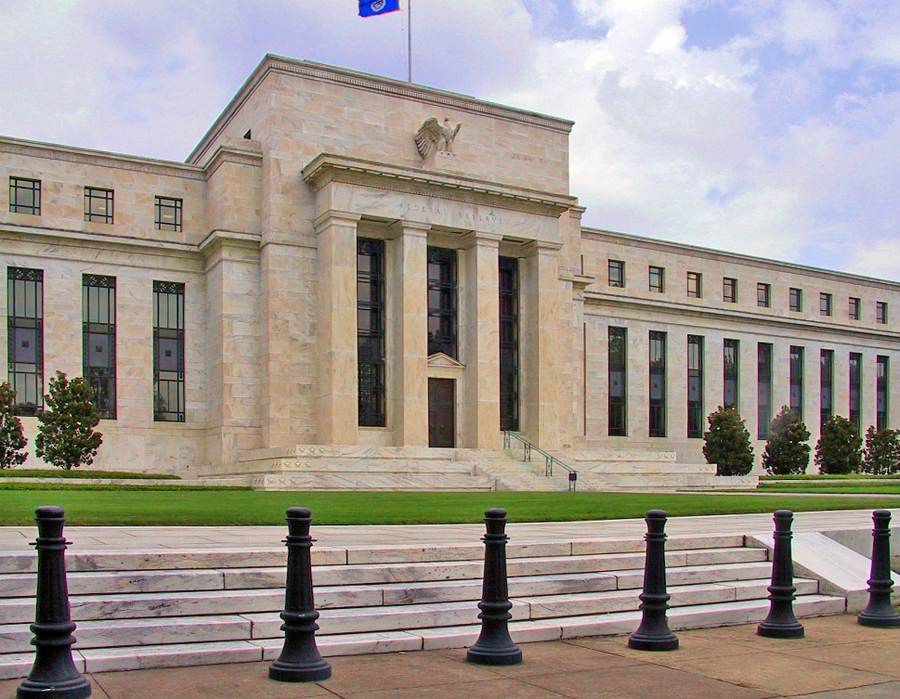
From the 2017 nomination to the Powell DOJ investigation ending
Trump chose Powell for the chairmanship in 2017. Their relationship deteriorated as Powell resisted demands for lower rates, and the building project later supplied a new avenue of attack. Trump toured the construction site with Powell in July 2025. In the most memorable exchange, Powell corrected Trump's cost estimate in front of cameras, turning a site visit into a live demonstration of their broader struggle over facts and authority.
The Justice Department investigation was short-lived. U.S. Attorney Jeanine Pirro issued subpoenas in January 2026 tied to cost overruns and Powell's congressional testimony. A federal judge quashed them in March; Pirro closed the investigation in April and sent the matter to the inspector general. The Powell DOJ investigation ended, but the possibility of revival was left tied to what the watchdog might find. Wednesday's explicit refusal to identify grounds for a criminal referral closes that route more firmly than any political statement could.
Powell left the chair in May but remained on the central bank's Board of Governors. His governor term runs through January 31, 2028. At his final press conference as chair, he said he would remain until the investigation was “well and truly over, with transparency and finality.” The inspector general's report arguably supplies that finality. Trump's latest demand tests whether Powell treats the document as permission to leave or as the reason he stayed.
Kevin Warsh, Fed chair, inherits the cleanup and the rate fight
Kevin Warsh took over as Fed chair in May 2026 after Powell's chair term expired. He concurred with the watchdog's findings, pledged to implement the corrective recommendations and committed to an independent audit of contractor costs to “verify accuracy and compliance.” That response gives Warsh a way to separate institutional repair from political retribution: pursue recoverable costs and better controls without pretending the report found crimes it did not find.
The timing is economically sensitive. The Fed recently voted unanimously to raise the federal funds rate to 3.75% to 4%, its first increase in three years and its first rate change under Warsh. Powell participated as a governor. For anyone searching the Fed rate hike 3.75 percent decision, the renovation dispute can look like a side story. It is not. Pressure on the composition of the rate-setting board can influence expectations about how long the new range will hold and how aggressively the Fed responds to inflation.
Warsh is the institutional hinge. If his audit is independent, publishes a clear methodology and distinguishes reimbursable contractor failures from internal management mistakes, it can restore credibility. If it becomes a vehicle for selective blame, markets will read the exercise as an extension of the White House campaign. The chair's task is to show that accountability and independence are not opposites.
The numbers: what $921 million to $2.5 billion really says
The headline increase is stark. Moving from $921 million to $2.5 billion is an increase of about $1.58 billion, or roughly 171% over the earliest estimate. Against the $1.3 billion budget approved in February 2020, the increase is about $1.2 billion, or roughly 92%. The choice of baseline explains why political claims about the size of the overrun differ. Both calculations describe a serious failure; they describe different starting points.
A clean per-square-foot comparison cannot responsibly be produced from the public summaries alone. The total renovation area, treatment of underground construction, security work, asbestos abatement, historic preservation and what costs are included in each baseline must be standardized first. Without that denominator, a simple division would look precise while comparing unlike scopes. The same caution applies to comparisons with other federal projects: overruns are common, but a headquarters rehabilitation under security and historic-preservation constraints is not interchangeable with a new office building.
The strongest comparison available is political rather than architectural. Trump's White House ballroom renovation budget has doubled from its initial estimate to at least $400 million. The Fed project is more than six times that total, but it also covers two historic headquarters buildings and a far larger, longer program. The ballroom does not excuse the Fed. It demonstrates why percentage overruns, scope changes and procurement discipline are more revealing than a single dollar figure used as a partisan trophy.
The 21-month design halt is the clearest signal of lost leverage. Every month before a final design delays competitive procurement, extends professional fees and exposes materials and labor to more inflation. Reversing from open workspaces to private offices midstream meant the Fed was buying certainty late, when certainty costs more. The report's lesson is less glamorous than Trump's rhetoric: governance choices compound.
Who benefits, who loses and what each side will argue
Trump benefits from the scale of the failure. His strongest case is not that Powell committed a crime, because the independent watchdog found otherwise. It is that elite institutions demand discipline from the public while failing to impose it internally. The overrun, weak bidding and absent success measures give that critique substance.
Powell benefits from the legal clarity but loses reputational ground. The report rejects criminal and administrative misconduct, which is the essential personal finding. Critics will answer that a leader can avoid misconduct and still preside over bad management. Supporters will counter that committees and project staff, not Powell acting alone, made the key contracting and design decisions, and that asbestos, labor and material costs complicated the work.
The Fed's institutional credibility takes the broadest hit. Defenders of central-bank independence should not minimize the management failures, because independence without accountability is politically brittle. Critics of the Fed should not erase the no-crime conclusion, because doing so converts oversight into a verdict the investigator did not reach. The honest reading is uncomfortable for both camps: the project was badly governed, and the evidence did not support criminalizing Powell.
What happens next: Blanche, a possible suit and Powell's Board seat
Blanche has several plausible paths. He can accept the inspector general's conclusion and close the matter; seek a narrower civil or contractual review focused on recoverable payments; or ask prosecutors to examine specific transactions if Warsh's contractor audit uncovers new evidence. What he cannot obtain from this report is the criminal referral Trump's pressure campaign anticipated.
A government lawsuit against a sitting Fed governor would face basic threshold questions: what legal claim exists, who suffered a recoverable injury, what conduct is attributable personally to Powell and what remedy a court could order. Incompetence is a political accusation, not by itself a cause of action. Corruption would require evidence the inspector general says it did not find. Contract claims against vendors are more conventional and are precisely why Warsh's cost audit matters.
Powell can remain on the Jerome Powell Board of Governors seat through January 31, 2028 unless he resigns or another lawful mechanism removes him. If he stays, every rate vote will carry political noise. If he leaves soon after being cleared, Trump will claim victory and future presidents may learn that sustained pressure can shorten an independent official's tenure even when an investigation finds no crime.
The rate path is the final stake. A unanimous move to 3.75%–4% suggests the committee, including Powell, saw sufficient reason to tighten. The building report does not change inflation, employment or financial conditions. But it can change who is in the room, how markets price political influence and whether governors believe an unpopular vote will be answered with a search for another vulnerability. The renovation deserves accountability. Monetary policy deserves insulation from turning that accountability into a loyalty test.
Sources
- Reuters — inspector general findings, project-management deficiencies, construction costs and Powell's response.
- CNN — Trump's reaction, the independent audit commitment and the political history of the renovation dispute.
- USA Today — the 3.75%–4% rate vote, Powell's Board term and the ended Justice Department investigation.
- Federal Reserve Office of Inspector General — official work-plan record for the Eccles and 1951 Constitution Avenue renovation evaluation.
Reporting checked September 30, 2026. Dollar comparisons use the cited estimates; project-scope differences limit direct per-square-foot comparisons.
Politics Desk · Federal Reserve accountability · Back to all stories