former German spy chief arrested
World / Germany / Intelligence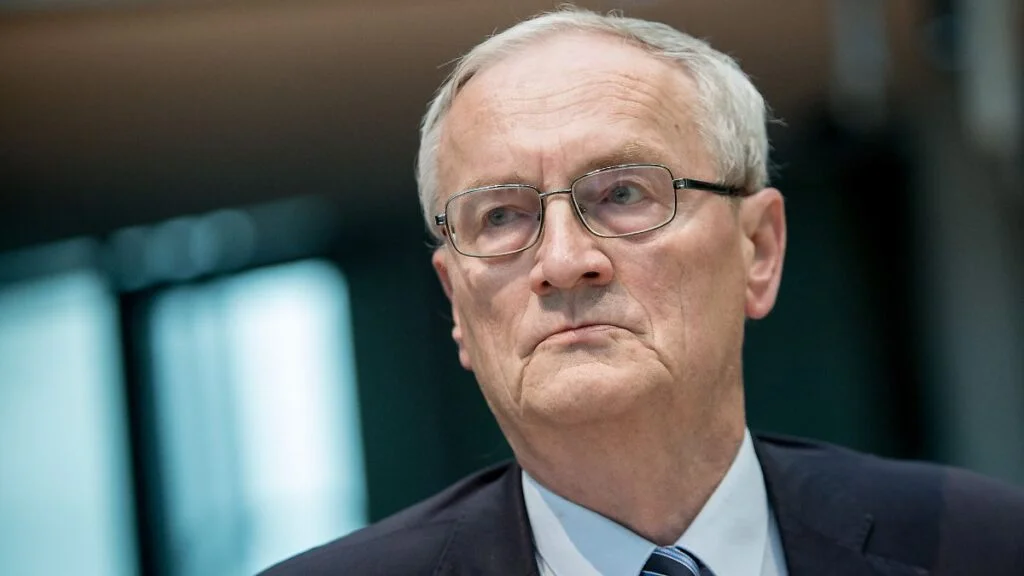
The former German spy chief arrested on Tuesday is not merely another retired official caught in a security investigation. August Hanning, 80, ran the Bundesnachrichtendienst, or BND, from 1998 to 2005 and then served as a senior Interior Ministry state secretary from 2005 to 2009. Germany's Federal Prosecutor General says he is strongly suspected of treasonous espionage, spying out state secrets, attempted treason and acting as an intelligence agent for a foreign power. Those are allegations, not findings of guilt.
Hanning was arrested in Bad Toelz-Wolfratshausen in southern Germany. His former chief of staff, identified under German privacy practice as Manfred D., was arrested the same morning in Steinfurt. Prosecutors accuse Manfred D. of aiding and abetting attempted treason and espionage. Investigators searched both men's homes. An investigating judge at the Federal Court of Justice ordered Manfred D. into pretrial detention on Tuesday; Hanning is scheduled to appear before the judge on Wednesday.
The central allegation reaches back sixteen years. Prosecutors say Hanning and Manfred D. entered an arrangement in spring 2010 under which the former aide supplied intelligence documents for payment. By June 2022, according to the allegation, roughly 2,000 documents had changed hands—many classified, some for internal BND use, and some linked to executive intelligence briefings. Hanning allegedly used the material in private consulting and, at least once, to compile a security briefing for an employee of another state's intelligence service.
Why this matters
Intelligence services survive on controlled trust. They ask officers to guard information, elected leaders to tolerate secrecy and foreign partners to share material that may expose sources, methods or policy intentions. An allegation that the former director himself later benefited from an internal document pipeline therefore threatens more than the two men named in the warrants. It raises the question every partner service will quietly ask: who could see what, who copied it, and where did it go?
That is why the BND spy scandal 2026 label is not simply headline language. The Wall Street Journal described Hanning as the first former BND chief ever detained and the case as one of the largest scandals to hit the service since its creation in the mid-1950s. Rank changes the risk. A senior official understands not only individual reports but also how they fit together—what Berlin knows, what it doubts, which partners supplied it and which gaps remain.
At the same time, the public evidence is incomplete. Prosecutors have announced suspicions and arrest warrants, not an indictment proven at trial. Hanning did not respond to Reuters' request for comment, and reporting available Tuesday did not include a substantive response from either man's defense. The absence of a defense account is a vacuum, not an admission. Any assessment must leave room for challenges to provenance, classification, intent, payment records and whether any briefing actually reached a foreign recipient.

How we got here
From BND chief to private consultant
Hanning's career moved through three distinct phases. He led the BND from 1998 through 2005, became a state secretary at the Federal Interior Ministry from 2005 to 2009, and then entered private consulting. That sequence matters because the alleged conduct begins in spring 2010—after he had left public office but while the institutional knowledge, contacts and authority accumulated there remained valuable.
According to prosecutors, the alleged supply relationship continued until June 2022. Manfred D. had worked as Hanning's chief of staff and remained positioned inside the agency under later presidents. The prosecution theory is therefore not that a retired chief kept a forgotten folder. It is that a current insider allegedly provided a former leader with a recurring stream of fresh material in exchange for payment.
August Hanning espionage charges and the Manfred D. BND documents
The formal language is severe: Hanning is strongly suspected of treasonous espionage, obtaining state secrets, attempted treason and intelligence-agent activity for a foreign power. Manfred D. is accused of aiding and abetting attempted treason and treasonous espionage. Those legal formulations will eventually have to be tied to particular documents, particular acts and a provable state of mind.
Reporting cited by ARD says some of the material concerned Iran's nuclear programme and the Russian armed forces, while some originated with foreign partner agencies. Prosecutors also allege Hanning had an “intensive exchange” with an employee of another state's intelligence service. The most consequential unanswered question is whether information from partners was included and whether it moved beyond Hanning's own files. For allied services, that distinction separates an internal German breach from a multinational exposure.
BND secrets leaked: how the investigation surfaced
Reuters, citing Bild, reported that the arrest followed discovery of an alleged leak involving intelligence reports prepared for the chancellery. That detail explains why investigators may view the document set as unusually sensitive: executive briefings compress assessments from different agencies and, in some cases, allied reporting into material designed for the top of government.
The BND already carried a bruised reputation. It was criticized for failing to anticipate Russia's full-scale invasion of Ukraine in 2022; then-president Bruno Kahl was in Kyiv on the day the invasion began and had to be evacuated by road. German authorities have also detained several BND employees in recent years on suspicion of passing classified information to foreign powers, including Russia. None of those cases proves anything about Hanning, but together they explain why lawmakers are treating the new allegations as a systems question rather than an isolated personnel matter.
Who benefits, who loses and what critics want
The immediate institutional loser is the BND. If the allegations are substantiated, it would need to explain how one insider could allegedly move documents for twelve years and why controls around executive briefings did not stop him. Foreign partners may become more cautious until Berlin can map the exposure. The chancellery and parliamentary intelligence overseers also inherit a credibility test: scrutiny will focus on whether warning signs existed and whether audit trails were preserved.
Prosecutors benefit from the opportunity to test their evidence before an investigating judge, but the arrests also raise the burden on them. A dramatic case against a former director will attract intense scrutiny of procedure and proof. Hanning and Manfred D. retain the presumption of innocence, and defense lawyers—once their positions are public—may challenge whether the files meet the legal definition of state secrets, whether payments were connected to documents, and whether consulting work amounted to service for a foreign power.
Opposition politicians have called for a parliamentary inquiry. That demand is understandable, but the public record does not yet identify which committees will act, what classified evidence they could obtain or whether a cross-party mandate exists. Oversight can establish how the system failed even while a criminal court decides individual guilt; it can also complicate the prosecution if lawmakers broadcast evidence too early.
August Hanning, Azerbaijan and the unanswered foreign-service question
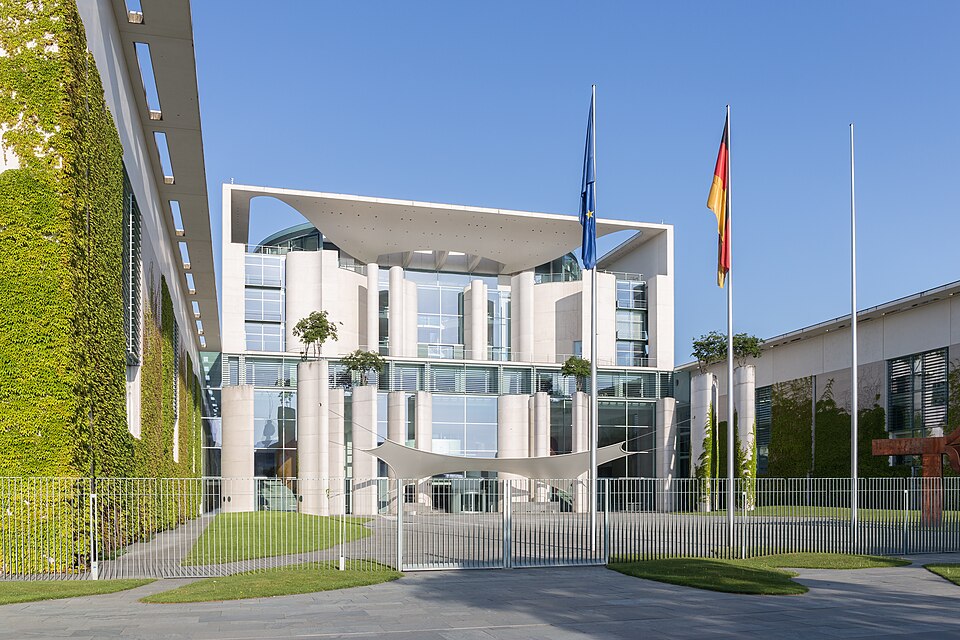
The most politically explosive detail is also the least settled. The recipient country has not been named by prosecutors. Der Spiegel reported Azerbaijan, while NDR, SWR and Süddeutsche Zeitung reported that the service was not Russian. Search interest around August Hanning Azerbaijan may make that claim look firmer than it is. It remains a media report, not an official identification, and “not Russia” does not by itself confirm Azerbaijan.
If Azerbaijan were eventually confirmed, Berlin would face a potentially delicate diplomatic issue involving an important energy supplier and a state whose security relationships span Europe, Turkey, Israel and Russia. If another country is named, the consequences could be different. For now, the responsible position is narrow: prosecutors allege contact with an employee of a foreign service; the service and country remain officially undisclosed.
Data context: one document every two days
Two thousand documents over roughly twelve years works out to about 167 documents a year, or one every 2.2 days. That calculation is only an average—the alleged transfers may have come in batches—but it shows scale better than the headline total. A trickle sustained over twelve years can be more damaging than a single theft because it can reveal change over time: evolving assessments, new sources, shifts in collection priorities and the government's response to crises.
Past BND scandals have involved surveillance controversies, compromised employees and failures of warning. What distinguishes this alleged German spy chief treason arrest is the combination of seniority, duration and document volume. The comparison should not be overstated before the evidence is tested. “Nearly 2,000” describes files, not necessarily 2,000 separate secrets, and classification levels do not automatically measure damage. Yet if partner-originated material is among them, even a smaller subset could carry outsized consequences.
This is also why “Germany intelligence scandal” is a better frame than a courtroom curiosity. The case will test archival controls, printing and download logs, post-employment restrictions, access by chiefs of staff and the mechanics of executive briefing production. Those are governance questions the public can examine without needing operational details exposed.
What happens next
The Federal Prosecutor Hanning case moves to court
Hanning is due before an investigating judge on Wednesday. The immediate issue is pretrial detention, not guilt. The judge will assess the warrant and custody grounds; prosecutors will continue examining seized material and the money trail. Manfred D. was ordered into pretrial detention Tuesday. Searches at both homes may generate further evidence, but seizure alone does not establish that any item is authentic, classified or connected to the alleged foreign-service relationship.
The investigation could produce more charges, additional suspects or narrower allegations than those announced at arrest. Prosecutors will need to reconstruct which files moved, when, under what classification and for what purpose. If partner intelligence is implicated, German investigators may need cooperation from allied services, and some evidence may be too sensitive for unrestricted public proceedings.
Parliamentary and diplomatic pressure
Parliamentary oversight bodies are likely to press the government on access controls and whether the chancellery was warned earlier. An inquiry could run alongside the criminal process, although lawmakers would need to protect both classified information and the defendants' right to a fair hearing. The BND may also conduct an internal damage assessment and quietly brief partner agencies before any public account is complete.
Diplomatic fallout depends on the unnamed country. Confirmation of the foreign service could lead to formal protests, expulsions or a recalibration of intelligence cooperation; it could also reveal that the relationship was more ambiguous than the arrest headlines suggest. Until then, the durable fact is narrower and more troubling: Germany is investigating whether a former head of its foreign-intelligence service paid for protected material and used some of it in work connected to another state's service.
Sources
- Reuters, “Former German spy chief detained on suspicion of espionage and treason” (October 6, 2026)
- CNN, “Former German spy chief arrested on treason and espionage allegations” (October 6, 2026)
- The Wall Street Journal, “Former German Spy Chief Arrested on Suspicion of Espionage” (October 6, 2026)
- The Times, “August Hanning: Ex-German spy chief arrested for espionage and treason” (October 6, 2026)
- New York Post, “Germany's former spymaster arrested for treason” (October 6, 2026)
Reporting note: All allegations remain unproven. The foreign intelligence service has not been officially identified, and no substantive defense response was public at publication.