Eurovision Song Contest
Burgas / A first Canadian entry, a returning North Macedonia and a second straight year of boycotts over Israel — the 71st contest takes shape with its field set, two familiar absences confirmed and its founding argument unresolved
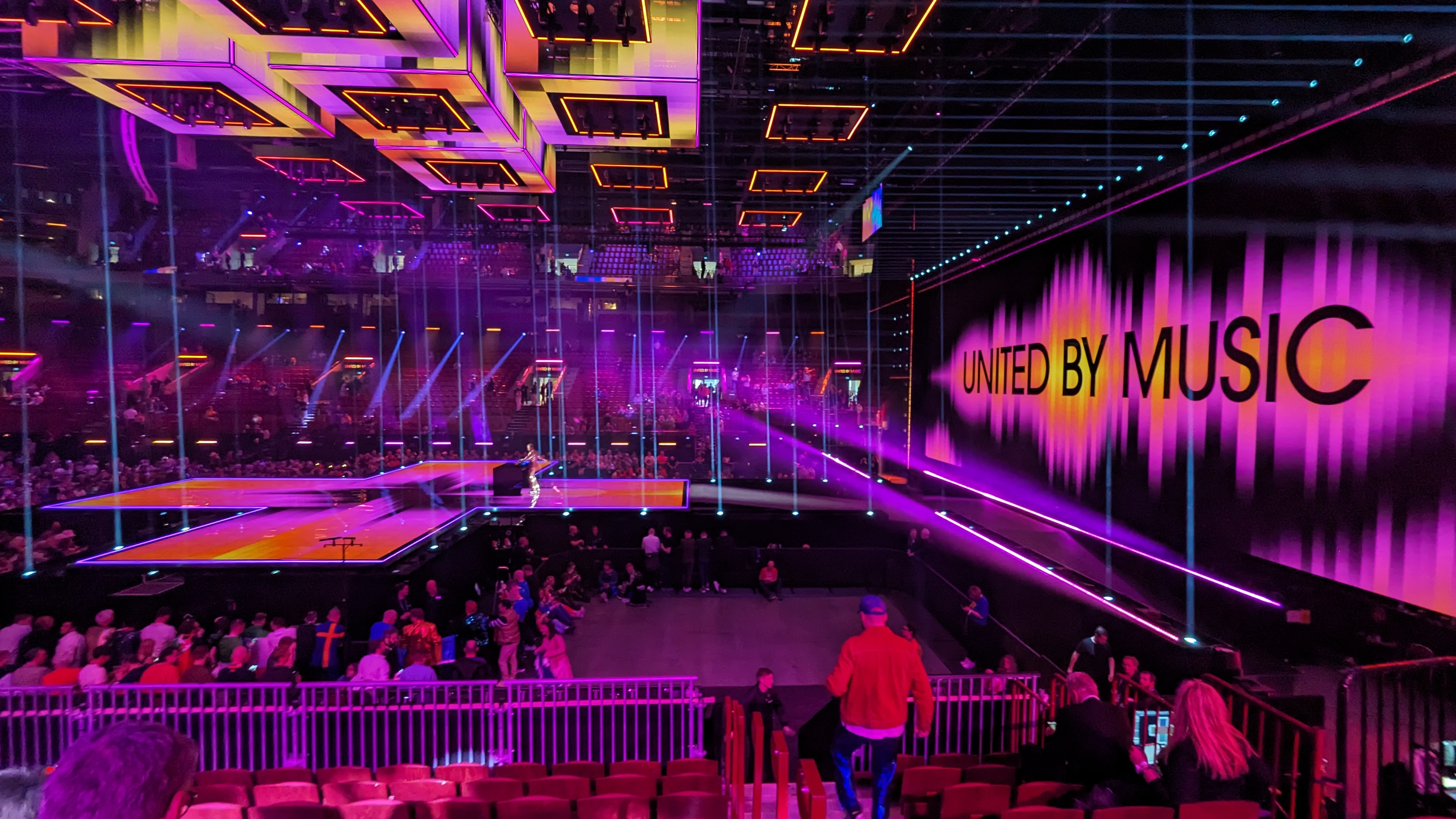
The Eurovision 2027 Canada debut is official. The European Broadcasting Union (EBU) announced on Wednesday, October 28, 2026, that 36 broadcasters will compete in the 71st Eurovision Song Contest in Burgas, Bulgaria, in May 2027 — one participant more than took part in 2026. Canada, entering through CBC/Radio-Canada, will compete for the first time, and North Macedonia returns after a five-year absence. But two of the countries that boycotted the 2026 contest over Israel’s participation — Ireland and the Netherlands — confirmed they will stay out again, and Israel’s broadcaster KAN confirmed it will take part, setting up a second consecutive contest staged in the shadow of the same dispute.
The contest’s director, Martin Green, framed the announcement as a story about reach rather than rupture. “In a world that can feel increasingly divided, it brings audiences together through music, across borders, languages and cultures, and that matters now more than ever,” Green said, welcoming CBC/Radio-Canada to the contest for the first time and North Macedonia’s MRT back into the fold. The numbers support part of that framing: the field grows from 35 broadcasters in 2026 to 36 in 2027 even after two confirmed withdrawals, because a debut and a return outweigh the absences. Whether a bigger field settles the argument about who is missing is a separate question, and it is the one that will follow the contest to Bulgaria.
What we know: the field, the dates and the format
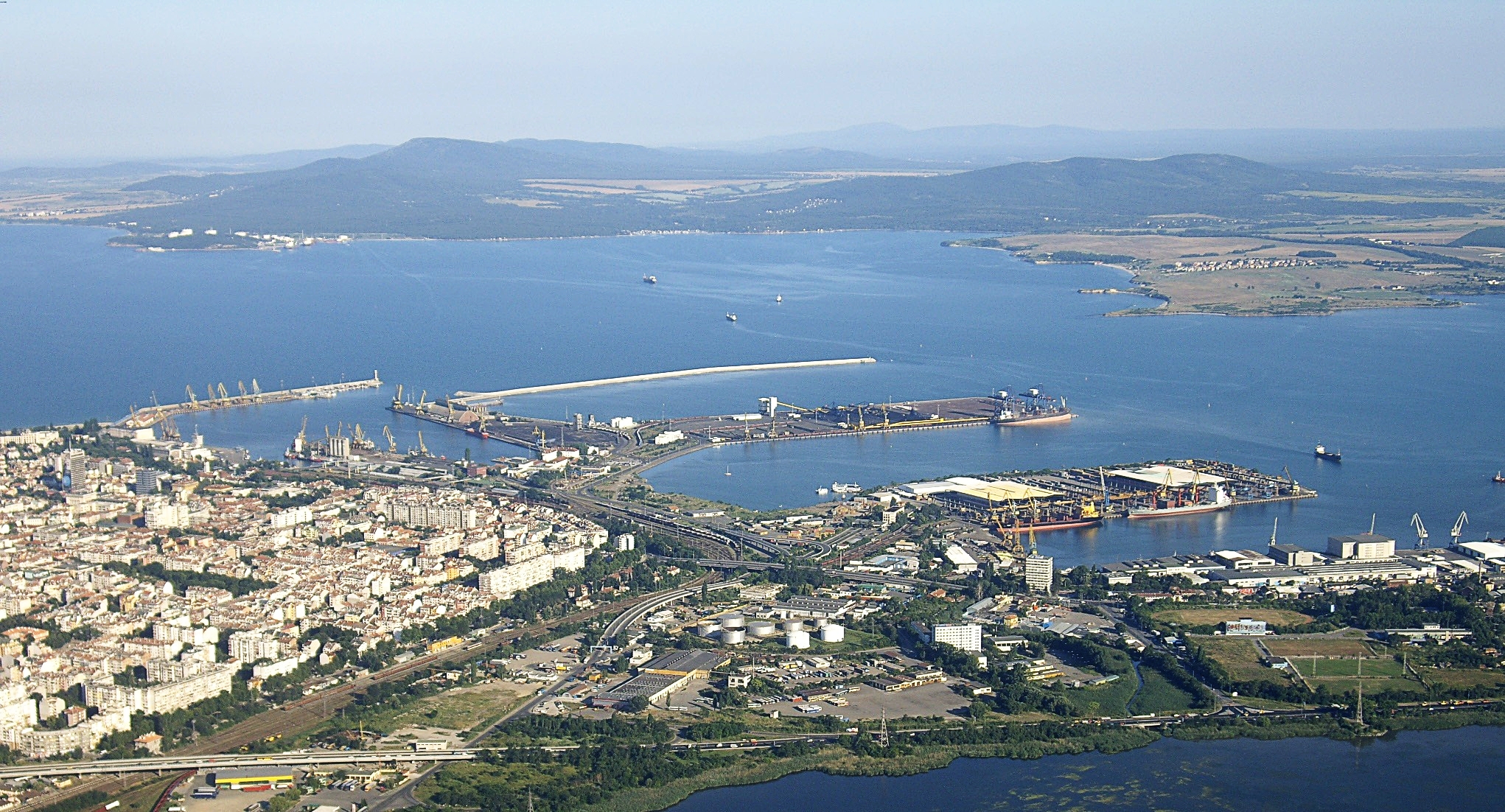
The 71st Eurovision Song Contest will be held at Arena Burgas in the Bulgarian Black Sea city of Burgas, with semi-finals on Tuesday, May 11 and Thursday, May 13, 2027, and the Grand Final on Saturday, May 15, 2027. The structure follows the modern template. The so-called Big Four — the United Kingdom, France, Italy and Germany, the contest’s largest financial contributors — qualify automatically for the final, as does host country Bulgaria. The other competing broadcasters are drawn into the two semi-finals, and 20 of them — ten from each show — will join the five automatic qualifiers to form a 25-country Grand Final.
Within the 36, the movements cut in several directions at once. Canada is in for the first time. North Macedonia’s MRT returns for the first time since 2022. Ireland and the Netherlands are out for a second year. Israel is in. And the list is not quite closed: the EBU said Spain’s RTVE and Slovenia’s RTVSLO have until December to confirm whether they will take part in 2027, so the final field could yet grow. Reuters also reported that Iceland has still to announce its position; RÚV’s board signalled in late September that participation was unlikely, while specialist Eurovision outlets list Iceland as continuing its boycott — a distinction worth keeping, because Iceland’s absence is widely expected but was not presented by Reuters as confirmed. Specialist Eurovision coverage additionally reports that Czechia has withdrawn for financial reasons, unrelated to the boycott.
Canada’s debut: five finalists, a public vote and an artist-first plan
Canada’s route to Burgas began in July 2026, when CBC/Radio-Canada became a full member of the EBU — the step that makes participation possible, since Eurovision is a contest between the union’s member broadcasters rather than between countries as such. It makes Canada the first genuinely new competing country since Australia in 2015, and the first from North America.
Unusually, Canada is choosing its performer before it has a song. CBC/Radio-Canada unveiled five finalists on October 27 in a special programme, “Canada’s Choice”: Josiane, Rêve, TALK, Tyler Shaw and William Cloutier. The five were narrowed down from 325 applicants. Canadians are voting online — voting has been reported to run to November 5 — and the winner will be selected in combination with an industry jury. Only once the artist is chosen will the song be built around them, working with industry songwriters and producers, according to the approach set out by the EBU and CBC/Radio-Canada. The artist-first order inverts the usual national-final logic, in which songs compete and singers are attached to them; Canada is betting that a performer Canadians have already voted for will carry the entry further than a song in search of a singer.
Canadian voices, at least, are not new to the Eurovision stage — only the flag is. Céline Dion won the contest for Switzerland in 1988 with “Ne partez pas sans moi,” one of the most famous victories in its history, and La Zarra represented France in 2023. What changes in 2027 is that a Canadian act will perform as Canada, voted for by Canadians, in a year when Canadian culture is already drawing unusual international attention — from the restaurant world covered in our report on the Michelin Guide 2026 winners in the Netherlands and Vancouver to the arena circuit. The debut also hands the contest something it has long wanted: a prime-time North American broadcaster with a domestic selection show of its own to promote.
The boycott: Ireland and the Netherlands stay out, Israel stays in
Ireland’s RTÉ and the Dutch participating broadcasters have confirmed they will again skip the contest over Israel’s participation, Reuters reported, and Israel’s KAN has confirmed it will compete in Burgas. The standoff is now in its second year. In 2026, five broadcasters — Spain, the Netherlands, Ireland, Iceland and Slovenia — boycotted the contest, calling for Israel to be expelled over its military offensive in Gaza, launched after the Hamas-led attack on Israel of October 7, 2023. Israel rejected the campaign against its participation, saying there was a global smear campaign against it. The EBU, for its part, has held to the position embedded in Green’s statement: that the contest is a competition between public broadcasters, not governments, and that its purpose is to bring audiences together through music.

The Dutch case shows how deep the institutional resistance now runs. According to specialist Eurovision reporting, the Netherlands’ participation had been due to pass from AVROTROS to the umbrella broadcaster NPO for 2027 — and NPO reversed course, citing insufficient support for taking part while Israel competes. That detail, attributed here to specialist ESC coverage rather than to Reuters, matters because it suggests the Dutch absence is no longer one broadcaster’s protest but a settled position across the country’s public broadcasting system. Ireland’s position carries a different weight: RTÉ represents the contest’s most successful country, a seven-time winner, and its absence removes one of Eurovision’s founding storylines from the scoreboard for a second year.
Both sides of the argument can point to 2026 for evidence. The boycotting broadcasters can note that five of them acted together and the contest went ahead without them — proof, in their reading, that only sustained absence raises the cost to the EBU. The EBU and Israel can note the same fact from the other direction: the 2026 contest still drew a global audience of about 130 million people, and the 2027 field has grown rather than shrunk. Neither fact answers the other’s argument, which is why the dispute is arriving in Burgas unresolved.
Context: how a country that is not in Europe ends up at Eurovision
Eurovision eligibility has never been a map test. It is a membership test: the contest is open to broadcasters that belong to the EBU, whose membership area has always extended beyond Europe’s geographic edges — which is how Israel, Morocco (a one-time entrant in 1980) and the South Caucasus countries came to compete. Australia’s path is the closest precedent for Canada’s. SBS had broadcast the contest to a devoted Australian audience for decades; Australia was invited to compete as a guest in 2015 for the contest’s 60th anniversary, finished fifth, and was then invited back year after year until its presence became permanent in practice. Canada’s path is more formal — full EBU membership first, entry second — but the logic is the same: a large, loyal audience outside Europe, a public broadcaster willing to pay for membership and participation, and an EBU happy to extend the contest’s map where the audience justifies it.
The boycott, too, has context. Broadcasters have withdrawn over politics before, and individual artists and national juries have protested particular entrants, but the 2026 walkout was the largest coordinated political boycott in the contest’s modern history — and 2027 will now test whether it becomes a durable feature of the event rather than a one-year rupture. Spain’s and Slovenia’s December deadline is therefore more than an administrative detail: two of the original five boycotters are still, formally, undecided, and their choice will decide whether the boycott shrinks to a rump or holds most of its 2026 coalition together.
Why this matters
Canada changes the contest’s geography — and its arithmetic. This is analysis, not announcement: a North American entrant does three things to Eurovision at once. First, audience: CBC/Radio-Canada gives the EBU a domestic promoter in the world’s largest entertainment market’s time zones, with a selection show that manufactures weeks of coverage before a note is sung in Burgas. Second, voting: Eurovision’s public vote already accepts votes from a “rest of the world” pool, but a competing Canada brings a large, organised domestic televote and a diaspora-linked fan base inside the contest’s own voting system. Third, precedent: if Canada works commercially, the argument against other EBU-member or associate broadcasters from outside Europe becomes harder to sustain, and the word “Euro” in Eurovision becomes purely historical. The risk runs the other way as well — a poor Canadian result, or a low domestic audience for a contest broadcast live in the North American afternoon, would hand sceptics their counter-example.
A second year of boycotts tests the slogan. The contest’s permanent slogan is “United by Music” — the words lit across the Malmö stage in our hero photograph. A one-year boycott can be absorbed as an exception; a second year, with the Dutch position hardening from one broadcaster to its national umbrella and Spain and Slovenia still undecided, starts to look like a structure. The EBU’s counter-argument is real: 36 broadcasters is more than 35, the 2026 audience of about 130 million held up, and the contest has added a debut country with a population larger than most of its European members. But the boycott’s measure was never the headcount — it is whether “united” can describe a contest that two of its most decorated participants refuse to enter. On that measure, Burgas will be judged on its absences as much as its performances, much as the wider 2027 live-entertainment calendar — from Calvin Harris’s first North American headline tour to the spring festival season — will be judged on whether audiences show up.
Who benefits, who loses. The clearest beneficiaries are Bulgaria, which hosts a bigger contest than the one it bid for; CBC/Radio-Canada, which acquires a flagship entertainment property; and North Macedonia, whose return will be celebrated rather than merely noted. The EBU gains a growth story to set against the boycott story. The losers are equally identifiable: Irish and Dutch audiences and artists, who lose their final for a second year; the boycotting broadcasters themselves, whose leverage depends on the contest visibly missing them — and a 36-country field makes that harder to claim; and, arguably, Israel’s KAN, which will compete under protest for a second year, with every rehearsal and voting segment shadowed by the same argument. The honest summary is that nobody’s position collapsed in 2026, so everybody kept it in 2027.
What happens next
The calendar from here is unusually well marked. First, Canada’s decision: online voting in “Canada’s Choice” has been reported to run to November 5, after which the winning artist — chosen with the industry jury — begins work on the song that will carry the debut. Second, the December deadline: Spain’s RTVE and Slovenia’s RTVSLO must confirm or decline by December, and Iceland’s formal position should also be settled, fixing the 2027 field at 36 or above. Third, the semi-final allocation draw, traditionally held in January in the host city, will place Canada and the other semi-finalists into the May 11 and May 13 shows in Burgas and reveal which of the automatic qualifiers votes in each. Then the contest itself: two semi-finals, 20 qualifiers, and a 25-country Grand Final on May 15, 2027, at Arena Burgas — where the only remaining question is the one the EBU cannot schedule: whether the countries watching from home are still being counted as part of the contest, or as its opposition.
Sources
- Reuters, October 28, 2026: “36 countries to compete in Eurovision 2027, Ireland and Netherlands stay out over Israel.” reuters.com
- Eurovision Song Contest (EBU / eurovision.com): “CBC/Radio-Canada launches search for first Eurovision act” — Canada’s Choice finalists and the artist-first selection process. eurovision.com
- European Broadcasting Union announcement, October 28, 2026: 36 participating broadcasters for the 71st Eurovision Song Contest, Burgas; contest director Martin Green quoted.
- Specialist Eurovision Song Contest coverage, October 2026: reporting on Czechia’s withdrawal, the Dutch NPO/AVROTROS position and Iceland’s expected absence, as attributed in the text.
Note: positions attributed to broadcasters, the EBU and governments above are reported as their stated positions. Iceland’s 2027 status was reported by Reuters as still to be announced; specialist Eurovision outlets list it as continuing its boycott.