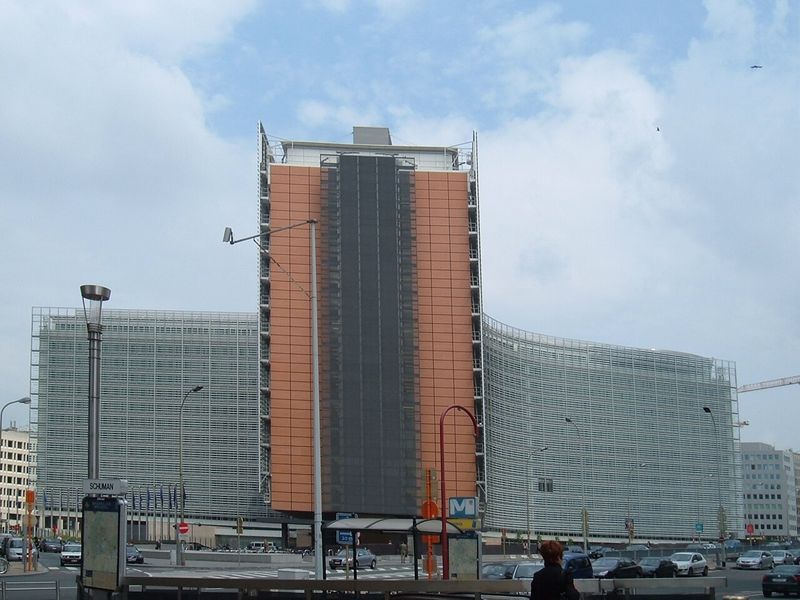
BRUSSELS — The latest round of EU sanctions Russia banks and businesses faced on Monday was not one list but two, and the pairing is the story. In its first decision, the Council of the European Union listed 12 individuals and 101 entities it said provide a substantial source of revenue to Russia's war against Ukraine or support its shadow fleet — nearly 50 Russian banks and financial institutions, the owners behind the country's two biggest online retailers, refinery operators and the St. Petersburg oil terminal, and oil-buying companies in the United Arab Emirates, China, Seychelles and Oman. In a second decision the same day, the Council listed another 30 individuals and two entities for disinformation and cyberattacks: the Moscow-based Social Design Agency, 24 of its staff, several pro-Kremlin propagandists, and the hacker group NoName057(16). Together the two decisions add 145 listings. Everyone named faces an asset freeze; the individuals also face EU travel bans, and EU citizens and companies are barred from making funds available to them.
Track it live: Ukraine war map — live tracker · Live wars tracker
What was actually listed
Nearly 50 banks, and a warning about payment channels
The Council said the banking listings were deliberate and cumulative: “By progressively tightening and expanding sanctions on Russia's banking sector, the EU is cutting off the financial channels that process state revenues and fund Russia's war effort.” A count of the legal annexes by The Edge put banks and credit institutions at 49 of the 101 entities — nearly half the entity list. That proportion matters. Earlier EU rounds often led with energy or defence firms; a list in which one in two entities is a bank is a list aimed at the plumbing — the smaller and mid-sized institutions through which sanctioned trade is routinely rerouted after the big banks are cut off.
Wildberries, Ozon and the e-commerce turn
The most eye-catching names were not bankers. The Council said it was “cracking down on Russia's e-commerce,” listing Tatyana Kim, the founder and sole shareholder of Wildberries — described in the legal act, as reported by Reuters and The Edge, as Russia's largest online retailer, controlling nearly half the country's e-commerce market — and Alexander Chachava, whose company O23 holds the largest stake in Ozon, the second-largest platform, according to the annex and reporting by The Kyiv Independent drawing on an Anti-Corruption Foundation investigation. The annex further alleges that Wildberries operates as a supply network facilitating the sale of military and dual-use goods; that is an EU allegation in a sanctions act, not a criminal finding, and neither company had issued a public response in the reporting checked at publication. Sanctions are restrictive measures adopted by the Council; they do not by themselves establish criminal guilt.
Oil, refineries and the shadow fleet
The energy listings cover companies that manage Russian refineries and the St. Petersburg oil terminal and firms active in exploration and production, the Council said. The shadow-fleet listings reach outside Russia: companies in the UAE, China, Seychelles and Oman that buy Russian crude, and businesspeople who own or manage vessels already subject to EU measures and accused of illegally transporting Russian oil in high-risk shipping. That follows the European Council's conclusions of October 15–16, which called explicitly for further measures to reduce Russia's energy revenues and to “curb shadow fleet operations and undermine their business model.”
The disinformation and cyber list
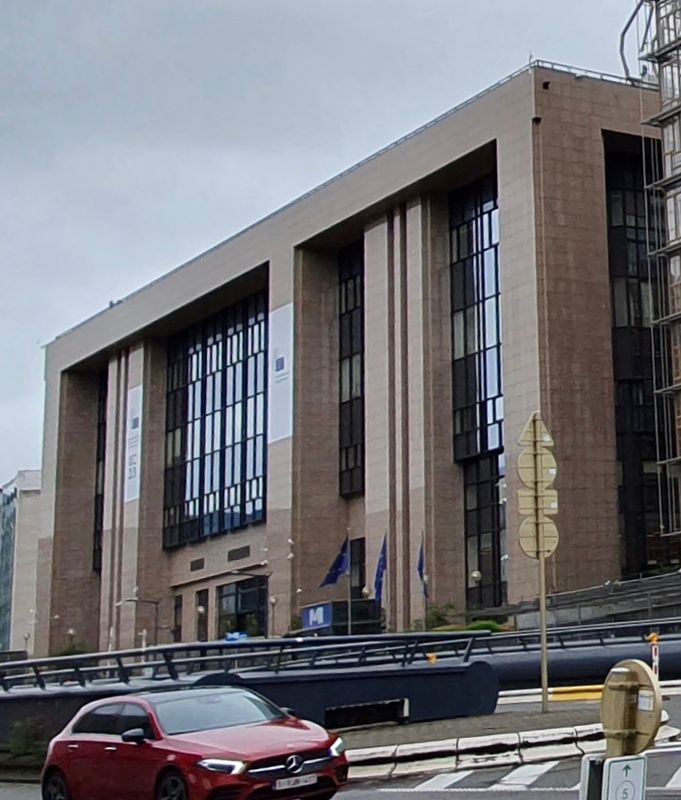
The second decision is, by the EU foreign policy chief's own description, a first in scale. Kaja Kallas wrote on social media Monday that the listings were “the largest set of listings to date against those behind Russia's cyber and disinformation attacks against the EU,” as reported by Kharon. The Council describes the Social Design Agency (SDA) as a Moscow public-relations and political-technology company carrying out large-scale manipulation projects “funded, directed and supervised by the Russian Presidential Administration,” including campaigns targeting European support for Ukraine and the 2024 European Parliament elections, and dedicated operations against Germany and France. Politico has previously linked SDA to the Doppelganger disinformation network; SDA has been sanctioned under other Western regimes since 2023, and Monday's listing adds it to the EU's destabilising-activities regime, which now covers 111 individuals and 21 entities in total. The named propagandists include television figures Vitaly Eliseev and Petr Marchenko, military commentator Yurii Podoliaka, and Chay Bowes of RT International — all accused by the Council of disseminating narratives that legitimise the war. NoName057(16), listed under the cyber regime, first emerged in March 2022 after the full-scale invasion and claims responsibility for denial-of-service attacks on government bodies, critical infrastructure and companies in Ukraine, the United States and EU states, notably targeting energy, finance, transport and water systems and political parties during elections, the Council said. The EU cyber sanctions regime now applies to 27 individuals and 12 entities.
Why this matters
Sanctions stories are easy to file under “more of the same.” This one deserves a closer read for three reasons. First, timing: the listings landed the same day Ukraine's record drone barrage and Russia's overnight strikes dominated the war news — a reminder that Europe's main lever remains economic even as the military tempo rises. The Council framed the first decision explicitly as a response to Russia's attacks on Ukrainian civilian infrastructure. Second, breadth: by listing marketplace owners alongside banks and tanker brokers, Brussels is signalling that no large, war-adjacent revenue stream is considered civilian by default — a significant widening of the circle of exposure for Russia's business elite. Third, the information front: treating a PR agency's staff — down to, as EUobserver's reporting on the annexes notes, caricaturists, monitors and a system administrator — as sanctionable actors is a statement that disinformation is being handled as war infrastructure, not as speech the EU merely dislikes. Critics of that approach, in Europe and beyond, warn that listing commentators risks blurring the line between countering covert, state-directed manipulation and punishing pro-Kremlin viewpoints; the Council's stated test is participation in manipulation operations, and the distinction will be tested if any of those listed challenge the measures in EU courts, as sanctioned individuals regularly do.
Context: how we got here
The EU has built its Russia sanctions in layers since 2022: finance, energy, transport, defence inputs, and — since the destabilising-activities framework was created on October 8, 2024 — hybrid operations including disinformation and cyberattacks. Monday's decisions were agreed by member-state ambassadors on November 11, according to a Steptoe sanctions update summarising the process, and they are not the bloc's next numbered package. Commission President Ursula von der Leyen and European Council President António Costa announced on November 12 that the 22nd sanctions package will be presented at the European Council on November 26–27, and Kallas said Monday it would come “in the coming days.” Read that way, the 145 listings are both a measure in themselves and a down payment — a clearing of ready names ahead of a larger negotiation in which member states will argue over energy and enforcement.
Ukraine's reaction was welcoming and specific. Sanctions commissioner Vladyslav Vlasiuk said roughly 40 percent of those targeted had already been sanctioned by Ukraine or appeared in Kyiv's proposals, as reported by the Helsinki Times — a figure that cuts both ways: it shows alignment between Kyiv and Brussels, and it also implies that a majority of Monday's names were new to at least one of the two lists, underlining how much of Russia's sanctions-evasion economy is still being mapped. No Russian government response to Monday's listings appeared in the sources checked at publication; Moscow has consistently described EU sanctions as illegal and ineffective, and has typically answered new rounds with reciprocal entry bans.
What the numbers actually imply
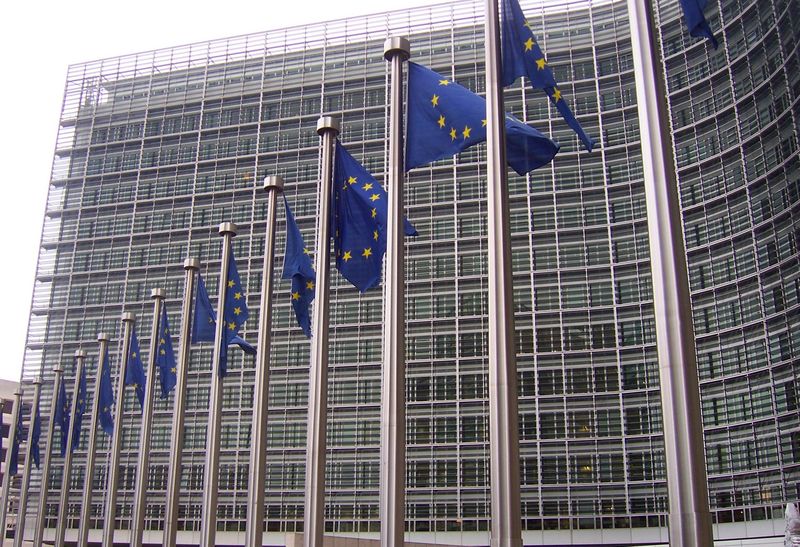
Put the two decisions side by side and the composition is the analysis. Of 145 listings, 113 sit under the Ukraine territorial-integrity regime and 32 under the hybrid/cyber regimes. Within the first list, banks are roughly half the entities — evidence that enforcement has moved from headline assets to transaction routes. Within the second, 24 of 30 individuals work for a single agency — evidence that the EU is now willing to sanction an organisation's org chart, not just its brand name. And the geographic spread of the shadow-fleet names — UAE, China, Seychelles, Oman — is a map of where Russian oil revenue currently clears. None of this proves the measures will bite: sanctions research after 2022 is a long argument between those who point to Russia's shrinking room for manoeuvre and those who point to its adaptation. What Monday's lists do show, measurably, is the direction of travel — wider, more granular, and increasingly aimed at intermediaries rather than principals alone.
What happens next
Scenario one: the 22nd package builds on Monday
The most likely path. If the November 26–27 European Council adopts a 22nd package that extends Monday's logic — more shadow-fleet vessels, tighter oil-price-cap enforcement, more third-country intermediaries — then Monday will read in retrospect as the technical groundwork for a political decision.
Scenario two: legal and commercial friction
Listed individuals can challenge EU sanctions in the General Court, and e-commerce and shipping interests can be expected to test both the evidence and the proportionality of listings that rest on annex reasoning. Even unsuccessful challenges force Brussels to defend its files in detail — which is one reason the Council publishes its reasoning as carefully as it did on Monday.
Scenario three: adaptation outruns the lists
The sceptical case: banks can be replaced, tanker ownership can be re-papered, and disinformation operations can rebrand faster than councils can list them. Monday's own design — listing staff, brokers and vessel managers, not just flagship names — is Brussels' implicit answer to that critique. Whether the answer works will be visible in Russian oil export revenues and bank payment data over the next two quarters, not in press releases.
Read next: Ukraine's record drone barrage: 1,336 drones, the Kerch Bridge and Moscow · Ukraine strikes Nizhnekamsk: the Tatarstan refinery and petrochemical hit
Sources
Sources: Council of the European Union, press release, November 16, 2026 (113 listings) and press release, November 16, 2026 (FIMI and cyber, 30 individuals and two entities); Helsinki Times / AFP, “EU expands Russia sanctions to banks, oil firms and hackers,” November 16, 2026 (note: its 143 combined total predates the Council's final counts; the Council's own figures — 113 plus 32 — total 145); Kharon, EU designations brief, November 16, 2026 (Kallas statement; 22nd package); Steptoe, Sanctions Update, November 16, 2026 (ambassador agreement November 11; 22nd package presentation November 26–27); The Edge, count of Council Implementing Regulation (EU) 2026/2574 annexes (49 banks; Wildberries and Ozon annex reasoning); The Kyiv Independent / Anti-Corruption Foundation reporting identifying Alexander Chachava (via Helsinki Times). Legal acts: Council Decision (CFSP) 2026/2575 and Implementing Regulation (EU) 2026/2574; Council Decision (CFSP) 2026/2556 and Implementing Regulation (EU) 2026/2558, all published in the Official Journal of the EU, November 16, 2026.