War · Ukraine · EU Sanctions
The EU 22nd sanctions package Russia is being sold as the broadest yet — banks, crypto, energy services, tankers, visas and, for the first time, the flag itself. But it is a proposal, not a decision: every one of its measures still has to survive the unanimous vote of 27 governments, and Brussels has been here before, watching strong drafts come back thinner.
Track it live: Ukraine war map — Live Global Trackers · Wars tracker — Live Global Trackers
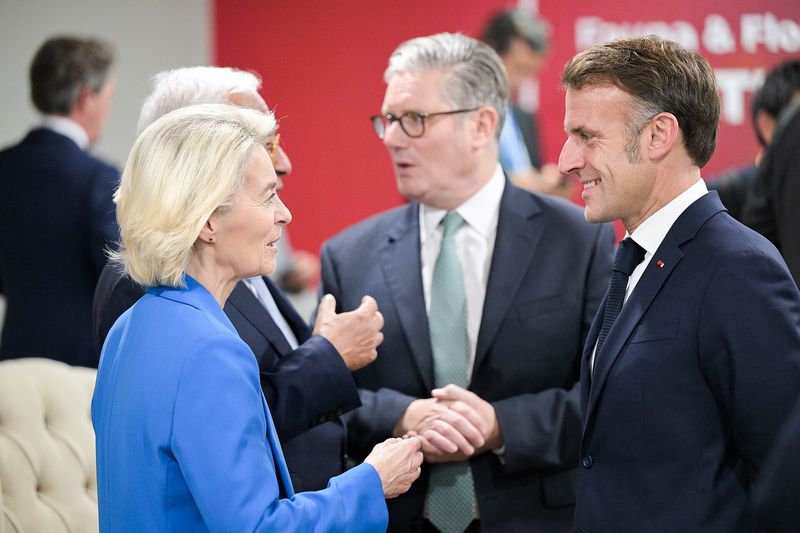
BRUSSELS, November 23, 2026 — The European Commission on Monday proposed the EU 22nd sanctions package Russia will face since its full-scale invasion of Ukraine, a sweeping set of measures that would extend transaction bans to some 60 Russian banks, create a dedicated Crypto Sanctions Task Force, bar European companies from servicing Russian energy infrastructure — electricity included, for the first time — list more than 70 additional shadow-fleet ships, impose a visa ban on Russian ex-combatants, and prohibit Russian teams and athletes from competing under the Russian flag at sporting events in the European Union. Commission President Ursula von der Leyen presented the package in a video address and official statement on November 23, framing it as sustained pressure to end Russia’s war of aggression: the EU, she said, will keep proposing sanctions until Russia shows genuine intent for a lasting peace. Nothing in the package is law yet. Adoption requires the unanimous agreement of all 27 member states, a process that typically takes weeks and in which individual measures can be softened, delayed or dropped.
What Brussels proposed, measure by measure
Von der Leyen sanctions Russia banks: a transaction ban on some 60 lenders
The financial core of the proposal is an extension of the EU’s transaction ban to some 60 Russian banks — the von der Leyen sanctions Russia banks measure that anchors the package. A transaction ban is broader than an asset freeze: it prohibits EU persons and companies from dealing with the listed banks at all, cutting them out of euro-denominated business rather than merely immobilizing funds they already hold in Europe. All of the banks concerned have already been removed from SWIFT, the global financial messaging network, so the proposal layers a comprehensive dealing prohibition on top of an existing messaging cutoff. The practical effect, if adopted, is to narrow further the set of Russian financial institutions through which trade with Europe can be settled at all, pushing remaining commerce toward smaller, less scrutinized intermediaries — which is precisely the evasion channel the package’s crypto and third-country provisions are designed to chase.
Russia SWIFT ban 60 banks: what losing SWIFT actually does
The Russia SWIFT ban 60 banks element deserves a precise explanation, because SWIFT is widely misunderstood. SWIFT is not a payment system and holds no money; it is the standardized messaging network banks use to instruct each other to move funds. Removal does not make payments impossible — it makes them slow, manual and error-prone, forcing banks onto phone, fax, email and rival messaging systems, and raising the cost and risk of every cross-border transaction. For a Russian bank already off SWIFT, the added transaction ban removes the remaining legal basis for European counterparties to deal with it through any channel. The combination is designed to be cumulative: each package leaves fewer workarounds, and each workaround that remains is more visible to enforcement.
EU crypto sanctions task force: chasing evasion through digital payment networks
The proposal would create an EU crypto sanctions task force and step up the crackdown on crypto and payment networks used to circumvent existing measures, including networks operating through third countries that help Russia evade sanctions. This is an acknowledgment, in institutional form, of where the sanctions war has moved. As conventional banking channels have closed, trade settlement has migrated toward crypto assets, informal payment intermediaries and jurisdictions willing to intermediate between Russia and its customers. A dedicated task force signals that Brussels now treats evasion not as a compliance footnote but as a front of its own — one that requires investigators, data-sharing and the ability to designate networks, not just individual banks. How much bite it has will depend on staffing, on cooperation from third countries, and on whether member states are willing to designate intermediaries in countries whose goodwill they also need for other reasons.
Energy services: refineries, infrastructure — and electricity for the first time
On energy, the Commission proposes expanding the existing energy services ban so that no European company can help Russia build, operate or repair energy infrastructure, including refineries. For the first time, the ban would cover electricity services. The distinction matters. Europe has already largely stopped buying Russian pipeline gas and seaborne crude; what remained was a quieter layer of technical dependence — European engineering, maintenance, software and specialist services that keep Russian energy assets running. A services ban attacks that layer. Refineries and power infrastructure degrade without parts, expertise and upkeep; a prohibition on supplying them does not stop production tomorrow, but it raises costs, lengthens outages and forces Russia to source lower-quality substitutes over time. Extending the ban to electricity services closes a category that previous packages left open, and it is one of the proposal’s clearest escalations in scope.
Russian shadow fleet sanctions: 70 more ships and an insurance ban
The Russian shadow fleet sanctions in the draft would list over 70 more vessels — the ageing, opaquely owned tankers Russia uses to move oil outside the Western insurance and shipping system — and would go further, proposing a ban on all tanker vessels insured in Russia. Listing a ship exposes it to port-access denials and service refusals across the EU and raises the cost of insuring, crewing and maintaining it. An insurance-based ban is broader still: it targets the paperwork that makes a tanker commercially viable, not just the hull. The shadow fleet has been the single most successful evasion mechanism of the sanctions era, sustaining Russian oil revenues through hundreds of vessels operating beyond the price-cap regime. Each new listing round shrinks the usable fleet and forces Moscow to buy, reflag and re-insure replacements — a real cost, though one Russia has so far been willing to pay.
Russia ex-combatants visa ban and a bar on EU citizens in Russian company boards
Two measures reach beyond commerce into people. The package proposes implementing a visa and travel ban on Russian ex-combatants — an idea agreed in principle in the previous package, subject to a feasibility assessment — on the stated ground that former combatants pose a security risk and that their entry into the EU should be off limits. The Russia ex-combatants visa ban would be one of the most politically charged elements to implement: it requires member states to identify who counts as an ex-combatant, to share that information, and to apply the ban consistently at a common border that is only as strong as its least-resourced checkpoint. Separately, the proposal would prohibit European citizens from occupying posts in the governing bodies of companies in Russia — closing a channel through which European executives and directors have continued to lend governance, credibility and expertise to Russian firms deep into the war.
Russian athletes ban EU: sport, symbols and sponsorship money
The most publicly visible novelty is the sport and culture chapter. The proposal would ban Russian teams and athletes from competing under the Russian flag at sports events in the EU under the Russian athletes ban EU measure, ban the display of official Russian symbols, and restrict financial flows from Russian sponsors to European sports and cultural associations. “Sports events cannot be a forum for propaganda activities,” the Commission said. Since 2022, Russian athletes have typically competed, where they compete at all, as neutral individuals stripped of flag, anthem and national colours. A blanket prohibition tied to the flag at EU events would codify and extend that exclusion across the bloc, and the sponsorship restriction would cut a financial channel linking Russian money to European clubs, federations and cultural institutions. Critics of such measures argue that they punish athletes for a state’s decisions and blur the line between pressure on a government and exclusion of a society; supporters answer that the flag at an international event is a state symbol by design, and that hosting it is itself a political act.
Why this matters
A proposal is not a package: the unanimity problem
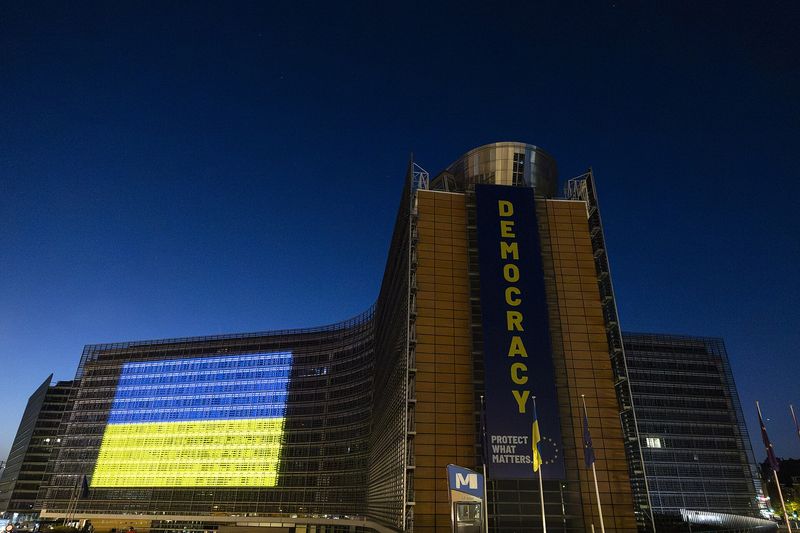
The single most important fact about EU sanctions Russia November 2026 is procedural. The Commission proposes; the Council of member states disposes — unanimously. All 27 governments must agree, which means any one capital can hold a measure hostage to an unrelated grievance, a domestic constituency or a bilateral dispute with Brussels. Previous packages have emerged from that process weeks late and measurably diluted, with carve-outs and phase-ins traded for signatures. Readers should therefore treat every measure above as an opening position. The transaction bans and listings, which cost most member states little, are the most likely to survive intact. The measures with concentrated domestic costs or principled opposition — the ex-combatants visa ban, the sport chapter, the broadest reading of the insurance ban — are where the negotiation will bite. The honest headline is not that the EU has sanctioned 60 more banks; it is that the EU has opened a negotiation in which it proposes to.
Who gains, who loses
If adopted broadly as drafted, the losers are clear: Russian banks pushed further out of legitimate finance; Russian energy operators facing a deepening maintenance and expertise deficit; the shadow fleet’s owners and insurers; Russian former combatants shut out of Europe; and Russian sport, whose international isolation would be formalized in EU law rather than left to federations. The relative gainers are Ukraine, which has pressed for each of these measures; European enforcement agencies, which would gain a dedicated crypto-evasion instrument; and third-country intermediaries only in the narrow sense that every closed channel raises the price of the ones that remain open. European companies still embedded in Russian energy services, boards and sponsorship arrangements would bear real adjustment costs — which is why those provisions, not the bank listings, will generate the heaviest lobbying in the weeks ahead.
The critics’ case, and its limits
Two critiques run in opposite directions. From one side: after 21 packages, Russia’s economy has adapted, its oil still sells, and its war continues — so a 22nd package is ritual, not strategy. From the other: each package arrives late, unanimous only after dilution, and leaves the largest evasion channels — third-country transshipment, the shadow fleet, crypto settlement — to be addressed in the next one. Both critiques contain truth, and the proposal reads as if drafted with both in mind. The crypto task force, the insurance ban and the electricity-services extension are aimed precisely at the adaptation channels the first critique cites; the breadth of the draft is the Commission’s answer to the second. What neither critique dissolves is the counterfactual: the packages have raised the cost of Russia’s war economy measurably — in discounted oil, degraded equipment, expensive workarounds and a shrunken financial system — even if they have not, on their own, changed the Kremlin’s decision to keep fighting.
Context: twenty-one packages in, almost five years on
The proposal lands almost five years into Russia’s full-scale invasion of Ukraine, launched in February 2022, and just over a month after the previous package listed almost 1,600 officials and companies. That tempo — a major package roughly every few months, layered over thousands of individual listings — has made the EU’s sanctions regime less a single policy than a standing institution of the war. It also frames the distinction this newsroom drew in its earlier coverage: our November 16 report, EU Sanctions Hit Russia’s Banks, Shopping Giants and Disinformation Machine in a Single Day, covered a set of listings adopted that day — nearly 50 banks, the owners behind Wildberries and Ozon, and the Social Design Agency and NoName057(16) hackers — and noted explicitly that it was a preview of the 22nd package, not the package itself. Monday’s proposal is the package itself, now formally on the table. On the battlefield the sanctions are meant to constrain, the war grinds on in parallel: see our reporting on Ukraine’s Drones Strike Oil Sites in Three Russian Regions in One Night, Killing One in Perm, and follow the front on our wars tracker.
What happens next: three scenarios
Adoption broadly as drafted. Member states move quickly, the negotiation trims details rather than chapters, and the package is adopted within weeks. This is most likely for the financial listings and shadow-fleet measures; it would mark the sport ban and the ex-combatants visa ban as new settled territory for EU sanctions policy, and invite immediate legal and practical fights over implementation.
Dilution at the Council table. One or more governments extract carve-outs — a longer phase-in here, a narrower definition there, the visa ban returned to feasibility study. The package is adopted, weeks late, with its financial core intact and its most novel chapters thinned. On the record of previous rounds, this is the base case, and markets and ministries alike will read the final text, not Monday’s draft, for what the EU actually did.
Stalemate and Russian counter-moves. A holdout blocks adoption outright, or the process drags long enough to lose political momentum. Moscow, meanwhile, can be expected to denounce the package, threaten reciprocal measures against European companies and nationals, and accelerate the very evasion build-out — alternative payment networks, fleet expansion, third-country intermediation — that the draft targets. Even in this scenario, the proposal itself has done work: it has told banks, insurers, clubs and executives exactly which exposures Brussels intends to make untenable, and compliance departments across Europe will begin acting on that signal long before any regulation is published.
Sources
Reuters, reporting on the European Commission’s proposed 22nd sanctions package against Russia (November 23, 2026): reuters.com. Associated Press, reporting on the proposed package and its bank, energy, shadow-fleet, visa and sport measures (November 23, 2026): apnews.com. European Commission President Ursula von der Leyen, official statement and video address presenting the proposed 22nd package (November 23, 2026): commission.europa.eu. This article distinguishes throughout between measures proposed on November 23 and measures adopted into law; as of publication, the package had been proposed by the Commission and not yet adopted by the member states.