Amnesty’s investigators verified 14 civilian deaths in four September shelling incidents in Alamata — and say dozens were killed in three days. Their report accuses the attacking forces of possible war crimes, and the city’s defenders of hiding among the civilians they claimed to protect.
Track it live: Africa wars tracker · Wars tracker
NAIROBI, November 24, 2026 — Amnesty International said on Tuesday that artillery strikes by the Ethiopian National Defense Forces (ENDF) and their allied Tigray Peace Forces (TPF) on densely populated neighbourhoods of Alamata, in Ethiopia’s northern Tigray region, must be investigated as possible war crimes — the demand at the centre of the Alamata war crimes investigation the rights group published on November 24. Reuters reported on November 24 that Amnesty independently verified the deaths of 14 civilians in four shelling incidents between September 26 and 28, and many more injuries, while the overall toll across the three days of shelling was in the dozens. The report’s second finding cuts the other way: the Tigray People’s Liberation Front (TPLF), which held Alamata until the ENDF and TPF seized it on September 28, endangered civilians by establishing military bases in residential areas, including schools, and launching artillery from them without warnings. Amnesty was explicit that this does not excuse the shelling. “For three consecutive days, the ENDF and TPF repeatedly shelled Alamata in total disregard of the lives of its 80,000 inhabitants,” said Yasmine Ahmed, Amnesty International’s Senior Director for Regional Human Rights Impact. “The use of artillery, a weapon with wide-area effects, in densely populated neighbourhoods has a terrible impact on civilians. Indiscriminate attacks violate the rules of international humanitarian law, and these strikes must be investigated as war crimes.”
What Amnesty found: four incidents in three days
Amnesty investigated four artillery incidents in Alamata between September 26 and 28. Its researchers interviewed 28 people — survivors, witnesses, relatives of victims, and humanitarian and medical personnel — and its Evidence Lab analysed eight videos and 17 photographs, together with satellite imagery and other open-source material. On that basis it says it independently verified 14 civilian deaths in the four incidents. A medical worker who was on duty at Alamata hospital between September 26 and 28 told the organisation that almost all casualties recorded during those three days were civilians, and that most of the injuries appeared to have been caused by shrapnel from explosive munitions. Based on interviews with residents and two sources with direct knowledge of military movements during the offensive, Amnesty identified the Waja Ena Tumuga area, approximately 13 kilometres south of the city, as the main position from which ENDF and TPF forces shelled Alamata; one eyewitness saw ENDF forces moving artillery into Waja. Two individuals with close knowledge of the TPF’s military capabilities told Amnesty that the TPF possessed artillery and participated alongside the ENDF in the operation to capture Alamata — a claim the TPF disputes, as set out below.
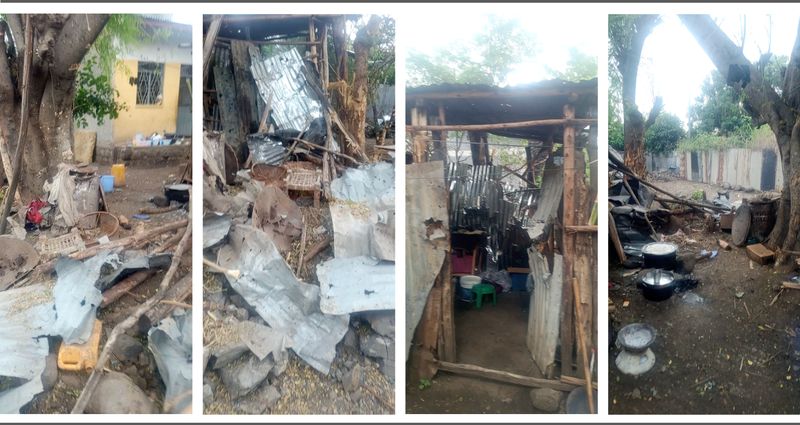
The deadliest incident struck at dawn on September 27 in Kebele 04, a densely populated neighbourhood of houses and two multi-storey buildings in the condominium area. Three eyewitnesses told Amnesty that artillery struck five houses, killing seven people and injuring four. Among the dead were Meron Sewasew, 26, who was killed inside her home alongside her eight-year-old son, Markon Girmahiwot, and her older brother, Tewekel Sewasew, 33; her two-year-old son survived with minor injuries. Her husband, Girmahiwot Negash, was away from the city for work: “They were staying in the house because it was supposed to be safe from the war. She was my high school love, and our story ended too soon.” The same attack killed four members of the family next door: Kumhis Kahsay, 40, her 14-year-old child Helina Hailay, Lezeu Yirga, 38, and Yirga’s three-year-old child. The Evidence Lab verified four videos showing damage to two houses and an external structure in a compound some 150 metres from the Werknesh Hotel, where residents said TPLF fighters had stayed. One eyewitness described fighters on top of tall buildings and at the hotel on September 26, directing residents to use a different route; another person near the hotel said fighters were not present near it on the day of the strike. Amnesty said it could not independently verify whether TPLF fighters were inside or near the hotel at the time — and that, minutes before the shells struck the homes, a separate strike fell just outside the hotel, damaging its exterior.
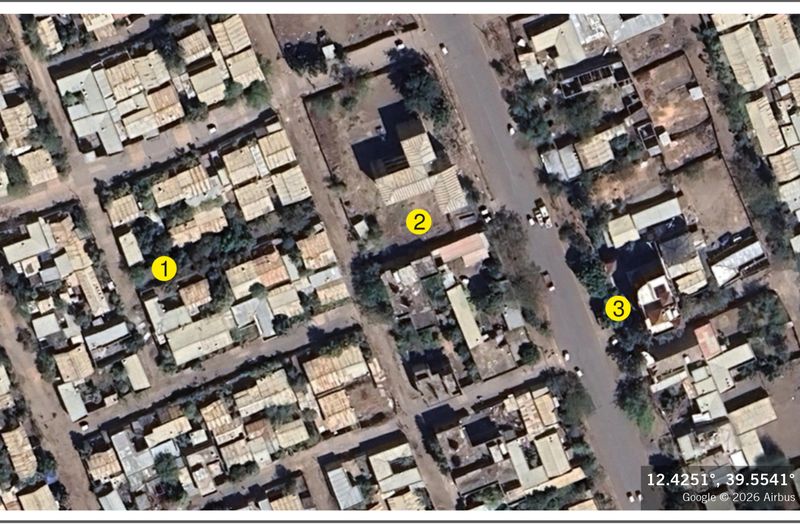
The other three incidents struck places where residents said there was no military presence, or where the military presence was in dispute. On September 26, at around 11 a.m., artillery hit the Nigus Shimoy bar at the entrance of a bustling market in a predominantly commercial area, killing at least three people, according to an injured survivor and one witness; the attack came as people poured out to celebrate Demera, the eve of the Meskel festival. On September 27, shelling hit a family home in Kebele 02: Deyima Rebso, 55, was killed in her home, her husband Ararse Yasin, 62, survived with severe injuries, and their children and a 10-year-old grandchild were seriously injured. Amnesty’s weapons investigator identified munitions fragments recovered at the scene as consistent with an artillery round of the type fired by the ENDF and their allies, and a witness said the house was the only structure struck in the area, with no military activity observed nearby beforehand. On September 26, at around 6:45 p.m., a shell struck a house in the densely populated Missionary Camp neighbourhood, killing three civilians and injuring four — close to Biruh Tesfa School, which the TPLF had used as a base, though witnesses differed on whether fighters were still there: one said most had left a week before the fighting, another saw a few guarding the school in the days before the strike.
The other half of the report: TPLF bases in schools and homes
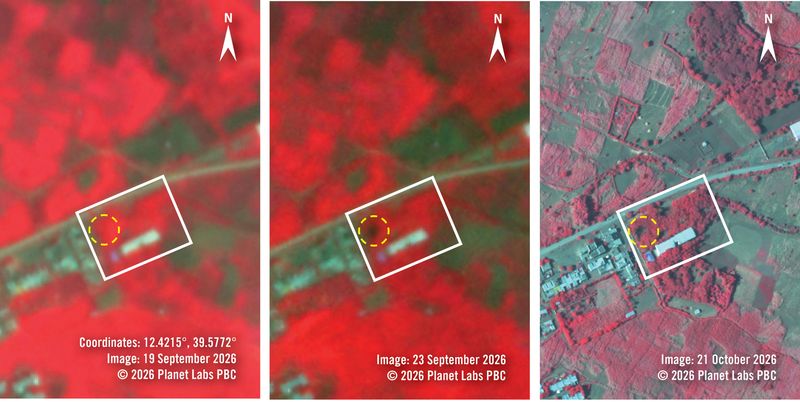
Amnesty’s findings against the TPLF are specific. Six people interviewed said almost all schools in Alamata were used by TPLF fighters as military bases in the months before the renewed fighting, several of them close to civilian neighbourhoods, and that artillery was launched from school sites, including Biruh Tesfa and Alamata Preparatory School, after the conflict resumed. Every resident interviewed said the TPLF issued no warnings or evacuation orders to people living near those locations. A resident near Alamata Preparatory School told Amnesty the school was hit by an ENDF drone strike on September 22 and had been, in his account, the main site from which the TPLF launched artillery to defend the city until its fighters began withdrawing on September 28; satellite imagery shows a new burn scar beside the school appearing between September 19 and 23. Amnesty was careful about the limits of its own evidence here: it could not independently confirm whether Biruh Tesfa School was ever attacked or whether it was still harbouring fighters when the Missionary Camp house was struck, and no damage was clearly visible at that school in satellite imagery.
The legal line Amnesty draws matters, because both sides can be expected to quote only half of this report. International humanitarian law requires all parties to avoid, to the maximum extent feasible, placing military objectives within or near densely populated areas, and to protect civilians by facilitating evacuations and giving effective warning of attacks. But, Ahmed said, “any possible violation of international humanitarian law by TPLF through placing their forces and military objects inside densely populated neighbourhoods, does not absolve the ENDF and its allies of their obligations and can never justify the indiscriminate use of explosive weapons, such as artillery, in a densely populated area.” Amnesty also addressed the alternative explanation head-on: although TPLF fighters had artillery and were firing it, the organisation assessed that it is highly unlikely the shelling of Alamata was caused by the TPLF’s own forces firing from within the city, and that the likelihood of technical failure explaining it is extremely low.
The responses: rejection, denial and silence
Each accused party has answered differently, and the differences are part of the record. The TPLF, in a four-page letter to Amnesty dated November 18, “categorically rejected” the allegations against it as unfounded; while acknowledging what it called atrocities by the federal government and its forces, it said the allegations directed at Tigrayan forces required further independent, impartial and comprehensive investigation before conclusions could be drawn. A spokesperson for the TPF told Reuters that the group’s fighters were not on the front lines during the battle for Alamata — a denial that sits alongside, and does not resolve, the accounts Amnesty gathered from two sources with knowledge of the TPF’s capabilities, who said the force had artillery and took part in the operation. Spokespeople for the Ethiopian government and the ENDF did not respond to Reuters’ requests for comment. Amnesty wrote to the ENDF, the TPF and the TPLF on October 27 requesting information, and on November 17 shared its findings with the ENDF and TPF and invited their comments; neither had responded by the time of publication. Signal Post News reports those positions as the parties have stated them: Amnesty’s incident findings are its verified findings, built on named methods; the parties’ denials and non-responses are claims and silences, and neither cancels the other out.
Background: a war reignited
The shelling of Alamata happened in the first week of a war that had supposedly ended. Renewed fighting between federal forces and the TPLF erupted on September 21–23, 2026, rekindling the 2020–2022 Tigray war, in which an African Union envoy put the death toll at around 600,000 and the United States accused all sides of war crimes — accusations the parties broadly denied. Alamata, a strategic supply hub for troops, food and fuel in southern Tigray, fell to the ENDF and TPF on September 28, as we reported in our report on the civilian deaths and the government capture of Alamata, and federal forces captured the Tigrayan capital, Mekelle, less than a week later. Federal forces now hold Tigray’s major cities while TPLF resistance continues, and the conflict’s perimeter is widening: as our reporting on the Ethiopia–Eritrea border buildup around Badme has tracked, forces are massing on the Eritrean frontier, raising the risk that an internal war becomes a regional one. It is into that landscape — not a quiet post-war setting — that Amnesty has now introduced a war-crimes file.
Why this matters
Analysis: the Alamata report is not only a record of three days in September. It is a test of whether any accountability machinery still exists for Ethiopia’s wars, and its numbers need to be read with care.
The impunity cycle
Ahmed framed the report as a consequence of the last war’s unfinished business: “Civilians are paying the ultimate price for the failure to hold perpetrators accountable in past and ongoing conflicts in Ethiopia. Impunity has emboldened perpetrators to carry on committing serious violations with no fear of the consequences.” The 2020–2022 war generated documented accusations against every armed party and almost no prosecutions; a previous UN-mandated commission of experts on Ethiopia was allowed to lapse in 2023, and domestic processes have not produced trials of senior figures from any side. Amnesty’s argument is causal, not rhetorical: if the commanders who ordered or tolerated abuses in the last war faced no consequences, the gunners at Waja Ena Tumuga had no reason to expect any either. Whether or not one accepts that chain in full, the September shelling is the first major test of it — a new war, fought under the shadow of the old one’s impunity, producing its first detailed war-crimes file within two months.
What an independent mechanism would actually require
Amnesty’s central demand is that the UN Human Rights Council “act fast to establish an independent mechanism to investigate, identify those responsible for crimes under international law, and ensure they are held accountable.” That is a heavier lift than the sentence suggests. A mechanism needs a Council resolution carried by member states willing to spend political capital against Ethiopian opposition; investigators need access that Addis Ababa has historically restricted, in a country where, as Ahmed noted, the authorities have a record of suppressing independent monitoring and are currently fighting three armed conflicts; and it needs evidence preserved now — satellite imagery, munitions fragments, hospital records and witness testimony from people whose names Amnesty had to withhold or change for their protection. None of that machinery exists for Ethiopia today. The gap between the report’s standard of proof — verified incidents, identified firing positions, named victims — and the absence of any body mandated to act on it is precisely the gap Amnesty is asking the Council to close. It also called on the Ethiopian authorities to cooperate with independent international monitors, journalists and humanitarian organisations and to grant them unhindered access to all conflict-affected areas.
The numbers in context
Fourteen is a floor, not a toll. It is the number of deaths Amnesty could independently verify, incident by incident, in four of the strikes on one city — corroborated through 28 interviews, eight videos, 17 photographs and satellite imagery. Amnesty’s own framing is that dozens were killed across the three days, and the verified figure should be read as the portion of that toll that met a publication-grade standard of proof, not as a competing total. The other numbers frame the legal question. Alamata’s population is about 80,000. The Kebele 04 homes stood roughly 150 metres from a hotel where fighters were said to have stayed. Artillery is an area weapon: a single round can kill across a radius that makes a 150-metre separation between a possible military objective and a family home a distinction the weapon itself cannot honour. That arithmetic — wide-area effects, dense housing, three consecutive days — is why Amnesty reaches for the word “indiscriminate,” and why the argument will turn less on whether civilians died, which the evidence strongly supports, than on what the gunners knew, aimed at, and kept firing at.
What happens next
Three tracks now run in parallel. In Geneva, the question is whether any member state tables a resolution at the UN Human Rights Council to create the independent mechanism Amnesty wants: Ethiopia has defeated or outlasted international scrutiny before, and no vote has been scheduled. On the ground, the test of seriousness is access — whether monitors, journalists and humanitarian organisations are allowed into Alamata and the other conflict areas unhindered, and whether the ENDF and TPF now answer the findings put to them on November 17. And on the battlefield, the accountability debate is landing mid-escalation: with federal forces holding Tigray’s cities, TPLF resistance continuing and Ethiopian and Eritrean forces massing on the border, every new incident adds to a file that someone, someday, may be mandated to open. One unusual opening exists: the TPLF’s own letter demanded independent investigation of the allegations against it. When the investigators, the accusers and one of the accused all say they want an independent inquiry, the refusal — if it comes — will have an address. Watch for an Ethiopian government statement, any African Union response, and the Human Rights Council’s agenda in the coming weeks.
Sources
Sources: Reuters, November 24, 2026 — Amnesty said artillery strikes by Ethiopian forces and the TPF on densely populated areas of Alamata should be investigated as possible war crimes; Amnesty verified 14 civilian deaths in four incidents, including seven in Kebele 04 on September 27 about 150 metres from the Werknesh Hotel; the ENDF and TPF seized Alamata on September 28 and Mekelle less than a week later; the TPLF told Amnesty the allegations against it were unfounded; a TPF spokesperson told Reuters its fighters were not on the front lines; Ethiopian government spokespeople did not respond to requests for comment; background on the September 23 eruption of fighting and the 2020–2022 war. Amnesty International, November 24, 2026 — the full investigation: four incidents investigated, 28 people interviewed, eight videos and 17 photographs analysed by the Evidence Lab with satellite imagery; the Kebele 04, Nigus Shimoy, Kebele 02 and Missionary Camp incidents and the victims named above; the Waja Ena Tumuga firing position; the TPLF schools finding; the October 27 letters and November 17 sharing of findings without ENDF or TPF response; the TPLF’s November 18 letter; and the calls for a UN Human Rights Council mechanism and unhindered access. Photographs and satellite imagery are Amnesty International’s own report images, credited in the captions.