Two armies that last fought a full border war a generation ago are again within striking distance of each other around Badme. Whether they have already exchanged direct fire is contested — and that contest over the facts is itself part of the story.
Track it live: Africa wars tracker · Wars tracker
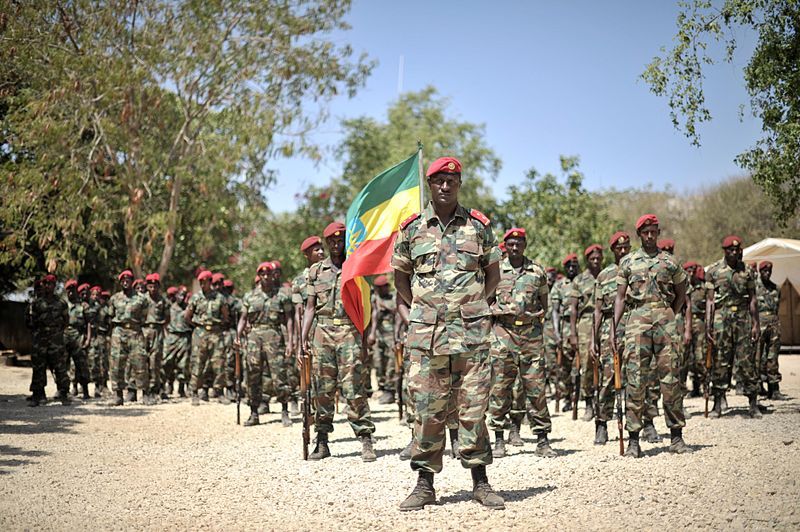
ADDIS ABABA / ASMARA, November 18, 2026 — Ethiopia Eritrea border war fears returned to the centre of Horn of Africa diplomacy on Wednesday after Reuters reported on November 18 that Ethiopia and Eritrea have amassed forces along their shared border, within striking distance of each other. Reuters drew on the conflict monitor ACLED and the International Crisis Group, a person close to a pro-Ethiopian-government militia in Tigray, and a person close to anti-government rebels there. On the most serious claim — that the two sides have already clashed directly in recent days, in what would be their first direct exchanges in over a month — the sourcing splits, and this article keeps it split: ACLED and the rebel-linked source said the sides clashed; the pro-government militia source disputed that there had been direct clashes; and Reuters said it could not independently confirm the reported skirmishes. The massing of forces is the agreed fact. The shooting is the contested one.
What the monitors and the sources say — and what they dispute
ACLED’s account, published late on Tuesday, November 17, is the most detailed timeline available, and it should be read as ACLED’s account. ACLED said there had been artillery shelling and clashes near Badme since last week, as Ethiopia’s military moved to clear Tigrayan rebels from the border area. In ACLED’s telling, Ethiopian drones on November 12 targeted likely Eritrean positions around Badme, Eritrean forces fired artillery toward Ethiopian positions, and on November 13 the two armies clashed on the Ethiopian side of the border. The Critical Threats Project, in its Ethiopia War Security Review of November 17, added a wider frame: it reported that the Ethiopian National Defense Force (ENDF) and Tigrayan forces (TPLF/TDF) have clashed near the border since November 7, including around Rama, that ENDF–EDF artillery exchanges ran from November 11 to 13, and that fighting around Badme has continued since November 9 after mutual buildups — with the Eritrean Defence Forces (EDF) reportedly regaining Badme by November 15, per ACLED via CTP. Control of Badme should therefore be described as disputed and fluid, not settled in either direction.
Against that, two qualifications stand in the same Reuters report. The person close to a pro-Ethiopian-government militia in Tigray disputed that direct Ethiopia–Eritrea clashes had occurred at all — a denial that, if right, would mean the border has seen a Tigrayan internal fight and a bilateral buildup, but not yet a bilateral exchange. And Eritrea’s Information Minister, Yemane Gebremeskel, decried ruling-party “propaganda” about border developments, in Reuters’ account — Asmara’s public position being that the narrative itself is manufactured. Our earlier reporting on this border’s deterioration, including Ethiopia’s drone strikes on Eritrean troops in Tigray and Eritrean troops entering Ethiopia around Adigrat, traced how each side’s claims have repeatedly outrun independent verification. November is following the same pattern, at higher stakes.
Why Badme matters: the town that started a war
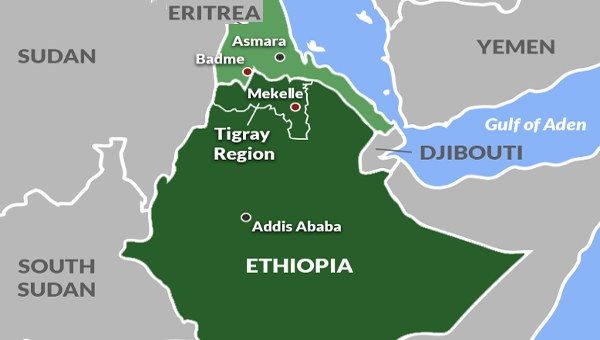
Badme is a small, arid border settlement whose importance has never been about its size. It was the flashpoint of the 1998–2000 Ethiopia–Eritrea border war, a conflict that killed tens of thousands of people over territory most outsiders could not find on a map. A United Nations boundary commission later found that Badme fell within Eritrean territory — a ruling Ethiopia long resisted implementing, leaving the border legally settled on paper and militarily unsettled on the ground for a generation. That history is why artillery around Badme, if confirmed, cannot be read as a local skirmish: the town is the symbolic and legal centre of the entire border dispute, and both armies know it. It is also why the present Tigray fighting matters so much. Since September, Ethiopia’s federal government has been fighting Tigrayan rebels in the region that sits directly against the Eritrean border — the same geography covered in our report on Ethiopian forces closing on Mekelle amid wider war fears. A counter-insurgency that pushes rebels toward the border inevitably pushes the federal army toward Eritrean positions, whether or not either capital wants a second, interstate war on top of the first, internal one.
Why this matters
Analysis: three mechanisms make a contested border clash a regional risk, and each should be weighed separately from the unverified claims themselves.
Massed armies create their own momentum
Even if no direct exchange has yet occurred — the pro-government militia source’s position — two forces within striking distance, conducting drone operations and artillery movements around a town both sides claim, generate escalation risk mechanically: a misidentified drone track, a local commander’s artillery response, a rebel unit firing from near the other army’s positions. ACLED’s timeline (drones on November 12, artillery in reply, a reported clash on November 13) describes exactly the action-reaction sequence by which border wars start without a cabinet ever voting for one. The buildup is therefore dangerous on every version of the facts, including the most benign.
An internal war is regionalising
The Tigray fighting since September pits Addis Ababa against Tigrayan rebels, but its cast has widened: Eritrean forces are present in the border equation, and Ethiopia has accused Sudan and Egypt of backing the rebels, as Reuters noted in context. Each accusation and each foreign deployment converts a domestic conflict into a regional system, in which Cairo’s Nile dispute with Addis Ababa, Khartoum’s own war, and Asmara’s long rivalry with Tigray’s leadership all intersect at the same border. Regionalised wars are harder to stop than bilateral ones, because no single negotiation includes all the parties doing the fighting or the funding.
The Red Sea raises the price of miscalculation
Eritrea’s coastline sits on the Red Sea shipping corridor at a moment when that corridor is already militarised and commercially fragile. A full Ethiopia–Eritrea war would not stay in the highlands around Badme: it would threaten ports, refugee flows into Sudan and Djibouti, and the sea lanes every Horn government depends on. That external stake is also the strongest restraint on both capitals — and the reason monitors such as ACLED and the International Crisis Group are publishing timelines at all.
Who benefits, who loses — and the case against the narrative
On a hard-headed reading, no capital benefits from a full war: Ethiopia is already fighting in Tigray, Eritrea’s economy and manpower are strained by indefinite mobilisation, and both would face immediate international pressure. The actors who gain from tension short of war are narrower ones: hardliners on each side for whom a border emergency justifies mobilisation and silences domestic dissent, and rebel forces whose survival improves if the federal army must watch two fronts at once. The losers are unambiguous: civilians in Badme, Rama and the border districts, who have already lived through the 1998–2000 war and the Tigray wars that followed, and who would absorb the first artillery of any new one.
The critics of the war-fears narrative deserve equal space, because the factual record is genuinely thin. Eritrea’s information minister has dismissed the border reporting as ruling-party “propaganda.” The pro-government militia source disputes direct clashes outright. Reuters could not independently confirm skirmishes. And the information environment around this border is polluted: a viral video purporting to show fighting around Shiraro and Badme has been identified by fact-checkers as a recycled 2021 Facebook reel, and a companion still as AI-edited — neither is used in this article, and both illustrate why every dramatic claim from this front requires the attribution discipline applied above. The honest summary is uncomfortable in both directions: the buildup is real and sourced to named monitors; the exchanges are reported, dated and disputed; and the absence of independent confirmation is a fact, not a footnote.
What happens next: scenarios and a watch list
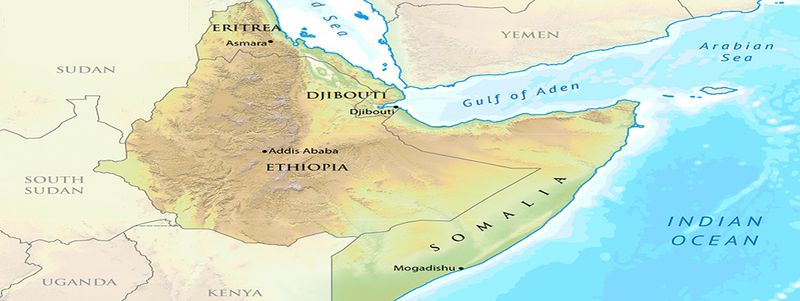
Three scenarios frame the coming days. In the first, containment: the buildup is leverage, the reported November 11–13 exchanges are not repeated, and both capitals let monitors’ timelines fade without a second week of fire — the outcome the denials, read generously, may be preparing the ground for. In the second, a localised border war: artillery and drone exchanges around Badme and Rama continue and intensify without either side declaring war, on the 1998 pattern in miniature, with control of Badme changing hands as each side tests the other. In the third, regionalisation: the Tigray war and the border war merge, Sudan and Egypt are drawn from accusation into open involvement, and the conflict becomes a Horn-wide crisis touching the Red Sea. The watch list that distinguishes among them is concrete: any independent confirmation of cross-border strikes; movement of Eritrean forces beyond the immediate Badme sector; Ethiopian statements naming Eritrea, rather than rebels, as the adversary; and whether ACLED and the Critical Threats Project record exchanges after November 15 or a silence that suggests the guns have, for now, stopped. Until then, the verified position is narrow and should be stated plainly: two armies have massed at the most sensitive point on their border, credible monitors report they have exchanged fire, one side’s sources dispute it, and no independent observer has yet settled the question.
Sources
Sources: Reuters, November 18, 2026 — forces amassed within striking distance per ACLED, the International Crisis Group, a person close to a pro-Ethiopian-government militia in Tigray and a person close to anti-government rebels there; Reuters could not independently confirm skirmishes; ACLED and the rebel-linked source reported recent direct clashes, the first in over a month; the militia-linked source disputed direct clashes; Eritrean Information Minister Yemane Gebremeskel decried ruling-party “propaganda” about border developments; background on the 1998–2000 war, the UN boundary commission finding on Badme, Tigray fighting since September, and Ethiopia’s accusations against Sudan and Egypt. Critical Threats Project, Ethiopia War Security Review, November 17, 2026 — ENDF and TPLF/TDF clashes near the border since November 7 including Rama; ENDF–EDF artillery exchanges November 11–13; fighting around Badme since November 9; EDF reportedly regained Badme by November 15 per ACLED via CTP. ACLED statement of late Tuesday, November 17, as reported by Reuters and summarised via Addis Standard via Genocide Watch — artillery and clashes near Badme since last week; November 12 Ethiopian drones against likely Eritrean positions; Eritrean artillery in reply; November 13 clash on the Ethiopian side. Photographs and maps are file images, credited in the captions; the viral Shiraro/Badme video identified as a recycled 2021 reel and its AI-edited companion still were deliberately not used.