World · Africa · Wars & Conflicts
The Moyale clashes Ethiopia Kenya is now watching began on October 18 as a dispute over an office and a flag in a contested corner of Ethiopia — and within three weeks they had emptied whole neighbourhoods across an international border, killed Kenyans who were never part of the fight, and forced Nairobi to choose between diplomacy and a police surge in Marsabit County.
Track it live: Africa Wars — Live Global Trackers · Wars & Conflicts — Live Global Trackers
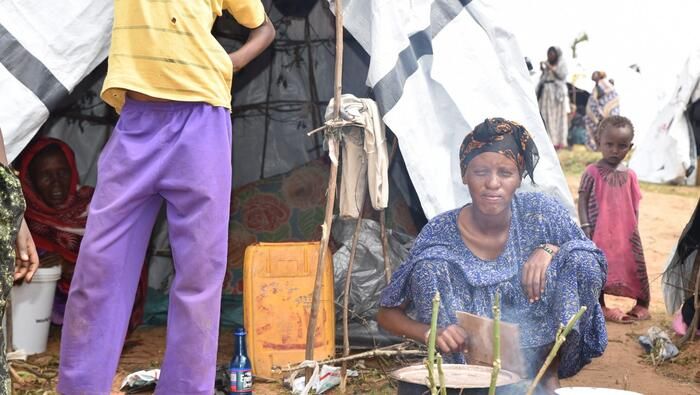
MOYALE, Kenya, November 6, 2026 — The Moyale clashes Ethiopia Kenya border communities are now living through started with an office opening. On October 18, a Somali regional administration office was opened and its flag raised in a disputed locality around Moyale, the twin town that straddles the Ethiopia–Kenya border, and fighting erupted between forces and militias linked to Ethiopia’s Oromia and Somali regional administrations. A 13-year-old Oromo girl was killed in the initial confrontation, the Associated Press reported. Three weeks on, the United Nations refugee agency estimates that up to 50,000 people have crossed into Kenya, stray bullets and a rocket-propelled grenade have landed on the Kenyan side, and Kenya’s police chief has flown in to order reinforcements to a border his country insists it wants to keep out of Ethiopia’s war.
UNHCR’s representative in Kenya, Fatima Mohammed-Cole, said in an October 28 statement that significant cross-border movements had been reported since October 22, and that local authorities estimated up to 50,000 people had crossed into Kenya — a figure she stressed was still being verified. The AP, a day earlier, put the count at 36,000. However the final verified number settles, the direction is not in doubt: families have been arriving in Marsabit County faster than the system built to receive them, and registration teams only began formally recording arrivals around October 31, at temporary sites including Harhosa and OMC, according to Addis Standard.
An $8.9 million appeal for 50,000 people — and planning for 80,000
The humanitarian arithmetic of the Ethiopia Kenya border crisis is stark. UNHCR, UNICEF, the International Organization for Migration and the World Food Programme are jointly seeking $8.9 million (about KSh 1.16 billion) to support up to 50,000 people for three months — food, shelter, water, sanitation, registration and protection services. UNHCR says it is mobilising household items and shelter materials for nearly 12,000 people. The IOM, meanwhile, has spoken of planning for up to 80,000 arrivals, a planning figure that tells its own story about which way aid officials expect this to move if the fighting does not stop.
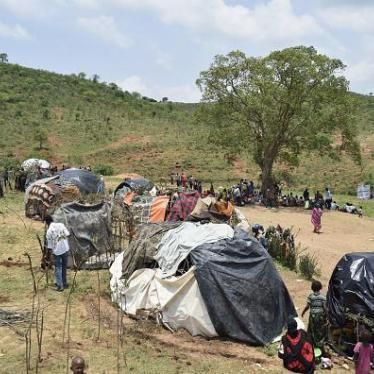
The strain is easiest to see in the host town itself. Kenyan Moyale has roughly 65,000 residents. About 70 percent of the new arrivals are being hosted by the community — absorbed into the homes of relatives, clan networks and strangers — while at least 11,000 people, mainly women and children, are in temporary sites, most of them schools. Every classroom converted into a dormitory is a Kenyan school closed to Kenyan children, and every host household feeding guests from its own stores is spending down reserves in one of the poorest counties in Kenya. The 50000 refugees Moyale Kenya is hosting, in other words, amount to a second town arriving on top of the first, in a place that was never resourced for one.
The war crossed the border: stray bullets, a grenade and three Kenyan dead
What turned a refugee emergency into a Kenyan security crisis is that the violence did not stop at the boundary line. The Kenya Red Cross says stray bullets from the fighting have killed three people inside Kenya and wounded 20. On November 2, a 65-year-old Kenyan woman, Amina Guchi, was killed by a stray bullet at the Marsabit County offices in Moyale itself. On November 4, a 20-year-old woman was seriously injured when bullets entered her home in the Biashara area. On October 31, a rocket-propelled grenade landed near Sessi Primary School — by fortune, hurting no one. Homes in Lami, Manyatta Heillu and Sessi have all been hit. For Kenyan families in those neighbourhoods, the Ethiopia Oromia Somali fighting Moyale residents fled is not a foreign war on the television; it is coming through their walls.
Kenya deploys police to the Moyale border
Nairobi’s answer, this week, was to send its police chief to see the problem himself. Inspector General of Police Douglas Kanja visited Moyale on November 5, chaired a security assessment meeting and ordered additional police officers deployed to the border town, Capital FM reported on November 6. Marsabit Governor Mohamud Ali has urged an immediate ceasefire and dialogue, and the Kenyan government says it is pursuing diplomatic channels alongside the deployment. The choreography matters: Kenya deploys police Moyale border communities can see, while insisting publicly that the solution must be negotiated in Addis Ababa and between Ethiopia’s regions — not enforced by Kenyan boots on Ethiopian soil.
Why Moyale keeps exploding: a border drawn through one town
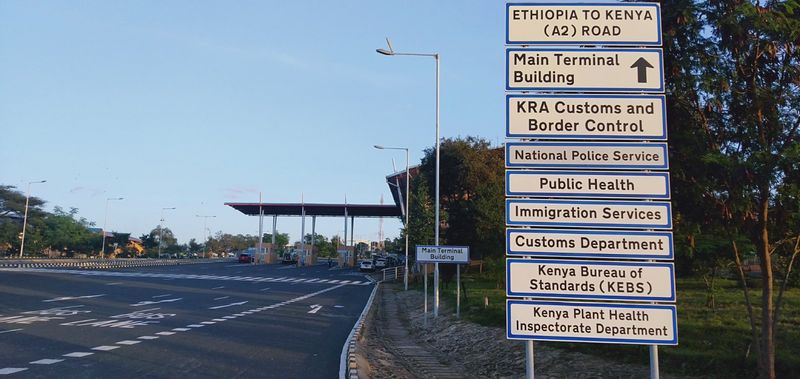
None of this is new, and that is precisely the problem. Moyale is one town split by an international boundary: the same families, clans, markets and grazing routes exist on both sides, which is why fighting on the Ethiopian side becomes a Kenyan emergency within days. Inside Ethiopia, the town sits on one of the most contested seams of the country’s ethnic-federal system. Ethiopia’s constitution organises the state into regions defined largely by ethnicity, each with its own administration, security forces and flag — and the boundary between the Oromia and Somali regions around Moyale has been disputed for decades, through referendums, commissions and repeated rounds of violence that long predate this October.
That structure explains both the trigger and the escalation. In an ethnic-federal system, an administrative office is never just an office: opening one, and raising a regional flag over it, in a locality the other side claims is a statement of sovereignty, and it is answered as one. The Oromia side regards the area as Oromo land administered from Oromia; the Somali regional side regards the locality as falling within its jurisdiction and its decision to open an office there as a lawful act of administration. Signal Post News is not in a position to adjudicate the boundary, and neither administration’s claim is self-evidently the whole story: both rest on competing readings of history, settlement patterns and past demarcation exercises. What is documented is the sequence — office opened, flag raised, confrontation, a child dead, and then a fight between armed formations that neither regional government has since been able, or willing, to switch off.
Ethiopia’s wider condition does the rest. The federal government in Addis Ababa governs a country still managing the after-effects of the Tigray war, an insurgency in Oromia and conflict in Amhara, and its authority over regional security forces is negotiated as often as it is exercised. Readers following that unravelling will recognise the pattern from our reporting on Sudan and Ethiopia closing each other’s border consulates this week amid rival accusations of backing each other’s armed enemies: a region in which borders, proxies and regional forces interact faster than diplomacy can follow.
Why this matters
First, because of the ratio. Fifty thousand arrivals against a host town of 65,000 is not a burden-sharing problem at the margins; it is a near-doubling of a remote border town’s population in under three weeks, landing on schools, clinics, water points and food markets that were already thin. Second, because of the precedent. Moyale has flared before — in 2012, in 2018 and in smaller rounds between — and each time the displacement was treated as a temporary emergency rather than evidence of an unresolved boundary dispute with a permanent fuse. The UNHCR Moyale appeal, $8.9 million for three months, is priced for the temporary version of this crisis. If the underlying dispute is not settled this time either, the honest planning figure is the IOM’s: 80,000.
Third, because Kenya is now a party to the story whether it wants to be or not. Three of its citizens are dead from a war it is not fighting; its police are deploying to its own side of the line; its governor is calling for a ceasefire in a neighbour’s internal conflict. That is a familiar doorway through which border crises become regional ones. And fourth, because Moyale is a stress test of Ethiopia’s ethnic-federal bargain itself: if the state cannot keep two of its own regions from fighting over a town — and cannot keep that fight from exporting 50,000 people into a neighbouring country — the question other regions are entitled to ask is what the federal centre is for. The same question, asked with far larger armies, runs through our coverage of Myanmar’s civil war death toll passing 100,000: what happens to civilians when a state’s monopoly on force fragments along identity lines.
Who gains, who loses — and what the numbers do not yet say
The losers are unambiguous: the displaced, overwhelmingly women and children; the Kenyan host community absorbing them; the Kenyan dead and wounded who had no side in the fight at all; and traders on both sides whose cross-border market — Moyale lives on trade — stops when the shooting starts. The gainers are harder to name, which is itself diagnostic: no administration has won territory it can safely administer, no government has gained security, and the armed formations doing the fighting have gained, at most, a few streets of a town their own people are fleeing. Boundary wars of this kind persist not because anyone is winning them but because backing down is priced, politically, as surrender — a price neither regional leadership appears willing to pay while the other side’s flag is still up.
On the death toll inside Ethiopia, precision requires restraint. ACLED, the conflict-data organisation, has recorded several deaths in the clashes, but the exact toll remains difficult to establish, and figures circulating on social media run well ahead of anything verified. What is verified is specific: the 13-year-old girl killed on October 18; the three people killed and 20 wounded by stray fire inside Kenya, per the Kenya Red Cross; Amina Guchi, 65, killed on November 2; and the 20-year-old woman seriously injured on November 4. Beyond those named and counted incidents, Signal Post News treats all tolls as unconfirmed, and will update this story as verification catches up with the claims.
What happens next
Three clocks are now running. The humanitarian clock: whether the $8.9 million UNHCR Moyale appeal is funded fast enough to turn schoolrooms back into schools and registrations into rations, and whether registration at Harhosa, OMC and the other Marsabit Moyale refugees sites produces a verified number that unlocks a bigger response. The security clock: whether Kanja’s additional officers can keep Kenyan neighbourhoods from being hit without incidents that drag Kenya further in — and whether the shooting on the Ethiopian side stops travelling. And the diplomatic clock: whether Addis Ababa can impose, or negotiate, a ceasefire between two of its own regional administrations, and whether Kenya’s diplomatic channels produce a demarcation conversation rather than another pause. Governor Ali’s call — immediate ceasefire, then dialogue — is the only formula anyone in authority has actually proposed. Until one of those clocks runs out, families will keep walking south across a border that, in Moyale, has never really divided the town at all. Signal Post News will update this story as the verified arrival count, the ceasefire diplomacy and the appeal’s funding are confirmed.
Sources: UNHCR press release, “UNHCR warns of growing humanitarian needs as thousands flee Ethiopia to Kenya,” October 28, 2026 (statement of UNHCR Representative in Kenya Fatima Mohammed-Cole); ReliefWeb mirror, UNHCR warns of growing humanitarian needs as thousands flee Ethiopia to Kenya; Capital FM, “IG Kanja orders additional police deployment to Moyale amid Ethiopia border crisis,” November 6, 2026; Addis Standard, “Kenya begins registering Ethiopian refugees fleeing Moyale clashes,” 2026; Associated Press reporting on the October 18 outbreak and arrival counts, October 2026; Kenya Red Cross statements on cross-border stray-fire casualties, November 2026. Follow the conflict on our live Africa wars tracker and wars tracker.