Ethiopia drone strikes Eritrean troops
Ethiopia drone strikes Eritrean troopsEthiopia Eritrea war 2026Eritrean troops Adigrat TigrayEthiopia Eritrea border warTigray conflict drone attacksEritrea incursion Ethiopia October 2026Ethiopia severs ties EritreaAbiy Ahmed Red Sea accessEthiopia demands Eritrea withdrawal UN
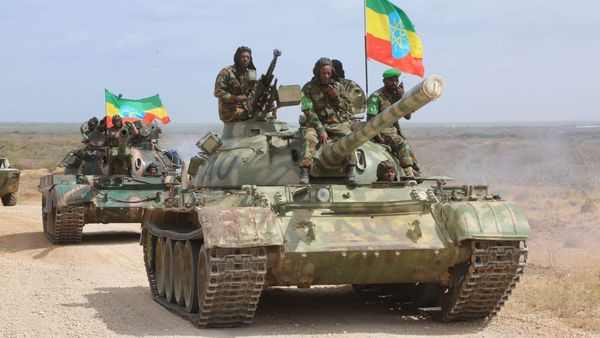
ADIGRAT, ETHIOPIA — Ethiopia drone strikes Eritrean troops near the northern Tigrayan town of Adigrat overnight on October 7–8, according to the Armed Conflict Location & Event Data project, or ACLED. The conflict monitor said multiple attacks hit Eritrean personnel and ammunition roughly 25 kilometers, or 15 miles, inside Ethiopian territory and attributed the operation to Ethiopia's military. No death toll has been confirmed.
ACLED East Africa analyst Jalale Getachew Birru said the monitoring group's sources identified the Eritrean units through their uniforms, vehicles and license plates. That assessment followed reports that Eritrean soldiers crossed at Zelambesa on Wednesday. Tigray Peace Force commander Ermiyas Ababu separately told the Associated Press that Eritrean forces entered Adigrat on Tuesday and Idaga Hamus on Wednesday. AP said it could not independently verify either account.
Witnesses reached by AFP described repeated drone strikes, a powerful overnight blast and damaged Eritrean military vehicles. One said Eritrean lorries seen earlier were no longer on the streets; another said troops appeared to be moving north. Two sources cited by Reuters — a diplomat and a conflict specialist — also described Eritrean forces moving north under heavy drone bombardment. It remained unclear whether they were leaving Ethiopia or repositioning.
Neither Ethiopia's government and military nor Eritrea's information minister, Yemane Gebremeskel, responded to Reuters' questions on Thursday. That leaves the battlefield picture dependent on conflict-monitoring data, anonymous witnesses and officials aligned with parties to the war. The convergence is significant, but it does not establish a casualty count or prove the destination of the retreating units.
What happened near Adigrat
A reported incursion followed by Tigray conflict drone attacks
The sequence matters. Reports first placed Eritrean soldiers in Adigrat and Idaga Hamus, then at the border crossing around Zelambesa, and finally under drone attack inside northern Ethiopia. ACLED said the forces had advanced dozens of kilometers before withdrawing under heavy strikes. Adigrat lies on the principal corridor between the frontier and Mekelle, making it a natural route for any force trying to reach or block the Tigrayan capital.
The use of drones suggests a deliberate effort to stop or punish movement without immediately committing Ethiopian ground forces to a close-range battle. It also broadcasts capability. Vehicles, ammunition and troops concentrated on a road are vulnerable to persistent aerial surveillance and precision attack. A strike 25 kilometers inside Ethiopia carries a different political meaning from fire exchanged at an uncertain border point: Addis Ababa can present it as defense of recognized territory, while Asmara can argue that Ethiopia is manufacturing a wider-war narrative.
Gebremeskel has denied that Eritrea backs the rebel alliance fighting Ethiopia's federal government. On Wednesday he called incursion reports part of an Ethiopian effort to justify aggression and accused Addis Ababa of pursuing regime change in Eritrea. He also described Ethiopia's self-defense case as false. Eritrea's government had not, by Thursday, issued a detailed public account addressing the specific ACLED report of troop movement and drone strikes.
Ethiopia demands Eritrea withdrawal at the UN
While the strikes were being reported, Ethiopian Foreign Minister Gedion Timothewos met UN Deputy Secretary-General Amina J. Mohammed. Ethiopia's foreign affairs ministry said he demanded the immediate removal of Eritrean forces and restated Ethiopia's right to protect its sovereignty and territorial integrity under international law.
The wording is more than diplomatic protest. It builds a public legal record: Ethiopia is saying foreign troops are on its soil, that they have been asked to leave and that military action is defensive. Eritrea rejects the underlying claim and says the narrative is a pretext. Those incompatible positions sharply narrow the space for a face-saving compromise unless an outside mediator can establish where the forces are and what a verified withdrawal would look like.
Why this matters: the interstate-war threshold
This is the first reported strike on confirmed foreign troops inside Ethiopia since the truce that ended the main phase of the 2020–2022 Tigray war began to unravel. Until now, the new conflict could still be described chiefly as an Ethiopian civil war with allegations of outside support. Direct attacks on Eritrean regulars, if the identification is correct, push it toward a confrontation between sovereign states.
That threshold does not mean a full Ethiopia Eritrea border war is inevitable. States sometimes absorb limited losses, deny deployments or quietly pull forces back. But the tools of escalation are now visible: cross-border troop movement, mechanized formations, drones, severed diplomatic relations and rival claims of self-defense. Each makes the next move easier to justify and harder to reverse.
The immediate danger is reciprocal action. Eritrea could answer with air defenses, artillery or deeper deployments. Ethiopia could broaden strikes toward staging areas nearer the frontier. Rebel groups could exploit the diversion. Even if leaders intend a bounded operation, field commanders and armed partners may make decisions faster than diplomats can contain them.
How the Ethiopia Eritrea war 2026 crisis reached this point
The Tigray truce collapsed, and Mekelle changed hands
Fighting resumed last month between Ethiopia's military and an armed coalition led by Tigrayan forces, the largest escalation since the Pretoria agreement paused the 2020–2022 war. Federal forces captured Mekelle days ago, shifting the military balance and placing new pressure on rebel supply routes. The appearance of Eritrean troops near Adigrat, north of the capital, would create an additional axis at precisely the moment federal forces are trying to consolidate their gain.
The rebel TPLF has joined six other groups in an “Alliance for Survival” aimed at removing Prime Minister Abiy Ahmed. That coalition expands the challenge beyond Tigray, but it also contains factions with different constituencies and interests. A direct Ethiopia-Eritrea confrontation could give the alliance breathing room by diverting federal forces; it could also deepen public suspicion around any rebel contact with Asmara, especially in Tigray, where memories of Eritrean abuses in the last war remain raw.
Ethiopia severs ties with Eritrea
The military crisis follows a diplomatic rupture. Ethiopia severed relations with Eritrea last week, closed its embassy in Asmara and expelled Eritrean diplomats. Eritrea responded in kind. The sequence removed the most direct channels for checking troop movements or clarifying intent before the first reported clash.
That is why embassy closures matter in wartime. A hotline does not guarantee restraint, but it can distinguish a withdrawal from a reinforcement, or a local commander's move from national policy. Without that machinery, public statements and battlefield action become the main means of signaling — both blunt instruments that reward firmness over nuance.
Abiy Ahmed, Red Sea access and the older border war
Ethiopia lost its coastline when Eritrea became independent in 1993 after a three-decade struggle. Landlocked and heavily dependent on Djibouti, Ethiopia has since treated dependable access to the Red Sea as an economic and strategic priority. Abiy has repeatedly framed sea access as essential to the country's future. Eritrea, with the ports of Assab and Massawa, hears that debate through the lens of sovereignty and survival.
Sea access is not proof that the Adigrat strikes are part of a territorial campaign, and neither side's immediate public case turns solely on ports. It is, however, the strategic backdrop that gives a border incident consequences far beyond one road. A crisis about troops in Tigray can quickly absorb disputes over commerce, naval access, regime security and regional alliances.
The historical warning is the 1998–2000 Ethiopia-Eritrea border war, which killed tens of thousands before a peace agreement ended open combat. The later 2020–2022 Tigray war placed the two governments on the same side against the TPLF, but that tactical partnership did not erase the older rivalry. The African Union has cited an estimate of roughly 600,000 deaths in the Tigray war — a disputed figure that nonetheless conveys the scale of the precedent leaders are now approaching.

Who benefits, who loses — and what each side may be calculating
Addis Ababa's deterrence signal
Analysis: For Ethiopia, hitting a force soon after it crosses the border can deter reinforcement and demonstrate that foreign deployments will be visible and costly. Drones allow the government to impose that cost while limiting immediate exposure of ground troops. The political benefit is a sovereignty narrative that can unite otherwise divided constituencies.
The risk is that successful tactical strikes produce strategic overconfidence. Destruction of vehicles does not guarantee the removal of a larger force, and public claims of self-defense can create pressure to keep attacking until the threat is visibly gone. If Eritrea interprets the strikes as the opening of a campaign against its government, deterrence can turn into reciprocal mobilization.
Asmara's buffer logic
Analysis: ACLED's assessment is that Eritrean forces moved south to prevent Ethiopian and allied units from reaching the border and carrying the fighting into Eritrea. Tigray Peace Force commander Gebreigziabher Beyene offered a similar logic to Reuters, arguing that Eritrea wanted combat kept inside Tigray rather than on Eritrean soil. From Asmara's perspective, a forward buffer may look defensive even though entering Ethiopia makes it an incursion in Addis Ababa's eyes.
The weakness in that logic is political and operational. A buffer inside another country creates exactly the evidence Ethiopia can use to justify strikes. It also exposes troops on roads watched from the air. The farther Eritrean units move from their border, the greater the difficulty of supply and the more credible Ethiopia's claim that the deployment is not merely defensive.
Civilians and smaller states lose first
The clearest losers are civilians in Tigray and communities along both sides of the frontier. Roads that carry troops also carry food, fuel and aid. Drone warfare can disrupt those routes without occupying them, while rumors of foreign deployments are enough to close markets and trigger flight. Tigray's population has not recovered from the last war's mass displacement and deprivation.
Regional governments also face mounting pressure. Eritrea, Egypt, Somalia and Sudan were due to send leaders to a meeting at El-Alamein on Sunday, a gathering likely to be read in Addis Ababa through the prism of competing alignments. None of that proves a coordinated front against Ethiopia. But in a crisis, meetings among wary neighbors can amplify threat perceptions even when participants have separate agendas.
What the numbers and this week's timeline tell us
Twenty-five kilometers is deep enough to weaken any claim that the clash was a momentary border mistake, yet close enough for Eritrean forces to move back toward the frontier. Two nights transformed the story: troops were reported entering Adigrat and Idaga Hamus, ACLED recorded a crossing at Zelambesa, and drones then struck personnel and ammunition. About 600,000 deaths, in the AU's cited estimate from the previous Tigray war, explain why even a limited interstate exchange demands urgent attention.
Another number comes with caution. A senior Ethiopian official told Reuters that Eritrea had deployed one mechanized and three infantry divisions in Tigray, with roughly 1,500 troops in each division. Reuters did not independently verify that force estimate, and neither government publicly confirmed it. If accurate, it would point to an organized deployment rather than a small reconnaissance element. If inflated, it could still shape decisions by creating the expectation of a larger threat.
The available evidence therefore supports a strong conclusion about escalation, not precision about force size or losses. Multiple sources place Eritrean troops in northern Ethiopia; ACLED attributes strikes to Ethiopia; witnesses report damaged military vehicles and northward movement. What remains unknown is how many troops were hit, whether anyone was killed, how much ammunition was destroyed and whether the movement north was withdrawal or redeployment.
What happens next: three scenarios
1. A negotiated and verified withdrawal
The least destructive path is a third-party arrangement that verifies troop positions, establishes a timetable for withdrawal and creates a military channel even while formal diplomatic ties remain severed. The African Union, United Nations or a mutually acceptable state could help. Ethiopia would gain confirmation that its territory was cleared; Eritrea could withdraw without publicly accepting Ethiopia's entire account.
2. A wider Ethiopia-Eritrea interstate war
A second path begins with retaliation: Eritrea fires on drones or stages, Ethiopia strikes again, and both governments mobilize along a border built for war. Ground fighting could then spread from Adigrat toward other crossings. The danger is not only military scale but political lock-in; once casualties are acknowledged, leaders may find restraint harder to defend at home.
3. The rebel alliance exploits the split
A prolonged standoff could give the Alliance for Survival time to regroup, open supply routes or attack federal forces diverted toward Eritrea. That does not require formal coordination with Asmara. It requires only a division of Ethiopian attention. The countervailing risk for the rebels is legitimacy: any perception that they rely on Eritrean intervention could alienate Tigrayans and other Ethiopians with memories of the previous war.
What to watch now
Watch first for independently geolocated imagery of destroyed vehicles, troop positions or drone debris around Adigrat and the road to Zelambesa. Second, watch whether Eritrea explicitly confirms or denies having regular units south of the border rather than addressing the broader political accusation. Third, watch for fresh strikes closer to Eritrea, where the distinction between defense and escalation will become harder to sustain.
Diplomacy matters just as much. A UN or AU statement naming troop withdrawal, an announced hotline or access for monitors would indicate a containment effort. Embassy expulsions, airspace restrictions, mass mobilization or strikes beyond the current zone would indicate the opposite. The Sunday meeting at El-Alamein will also be scrutinized for any coordinated message on Ethiopia.
The current record does not support a death toll, a claim that Eritrea has fully withdrawn or a conclusion that interstate war is inevitable. It does support something grave: foreign troops were reportedly inside Ethiopia, Ethiopian drones reportedly attacked them and both governments are now framing the confrontation in existential terms. The distance from Adigrat to the border is short. The political distance back from direct war may be shorter still — if verification and mediation begin before the next strike.
Sources and methodology
This report distinguishes verified public statements, conflict-monitoring assessments, anonymous witness accounts and Signal Post News analysis. No casualty figure has been published as confirmed.
- Reuters — October 8, 2026 reporting on ACLED's assessment, witness accounts, reported troop movements and the positions of both governments.
- AFP reporting via Berliner Tageblatt — October 8, 2026 witness accounts from Adigrat and Ethiopia's diplomatic demand for withdrawal.