Eritrean troops enter Ethiopia
Eritrean troops enter EthiopiaEritrean troops in AdigratEthiopia Eritrea war fearsEthiopia Eritrea diplomatic ties severedTigray conflict October 2026Adigrat Eritrean soldiers sightingEthiopia rebel alliance September 2026Yemane Gebremeskel denialEthiopia Eritrea border war risk
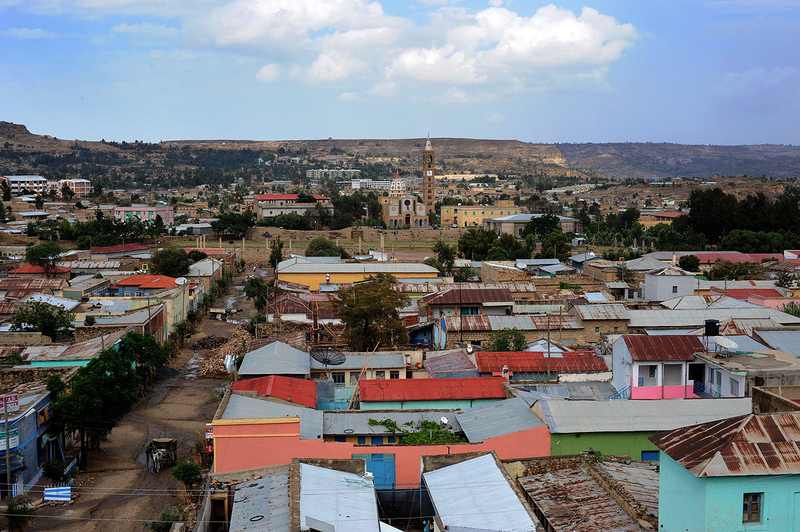
ADIGRAT, ETHIOPIA — Reports that Eritrean troops enter Ethiopia have opened the most dangerous question of the new Tigray conflict: whether a domestic rebellion is becoming a war between states. Two Adigrat residents told Reuters they saw two trucks carrying dozens of Eritrean soldiers drive through the town on Wednesday morning, October 7. They said the soldiers were identifiable by off-white camouflage uniforms. A third resident said family members had reported the same sight. All three spoke on condition of anonymity.
Reuters could not independently verify the accounts. That limitation is central, not incidental: the reported movement would mark the first sightings of Eritrean troops on Ethiopian soil in this conflict, but anonymous testimony is not the same as independently confirmed deployment. Eritrea's information minister, Yemane Gebremeskel, denied the reports and said they formed part of an Ethiopian plan to justify a war of aggression. Ethiopia's government and Prime Minister Abiy Ahmed did not respond to Reuters' requests for comment.
A separate AFP report carried by Addis Standard quoted a local Adigrat official who said Eritrean soldiers had been present for about four days. Witnesses described troops in Eritrean uniforms moving south toward Mekelle, while large trucks and patrol vehicles carrying heavy weaponry headed toward Idaga Hamus, about 20 kilometers south of Adigrat. Those claims also require caution: access is constrained, the parties have incentives to shape the narrative and no neutral monitoring mission has publicly confirmed the movement.
What is known — and what remains disputed
The Adigrat Eritrean soldiers sighting
Adigrat's location gives the accounts strategic weight. The town sits on the main north-south route between the Eritrean frontier and Mekelle, Tigray's capital. Trucks passing south through Adigrat would therefore suggest more than a border patrol accidentally crossing a line; they could indicate access to the conflict's central corridor. Yet uniforms can be misidentified, vehicles can change hands and wartime witnesses see only fragments. The reports establish a credible alarm, not a settled military fact.
The details nevertheless overlap. Reuters' witnesses described dozens of troops in two trucks. The local official quoted by AFP described a presence lasting several days. Other witnesses cited by Addis Standard reported movement toward both Mekelle and Idaga Hamus, including vehicles carrying heavy weapons. Multiple accounts do not automatically prove a claim, but the geographic and visual consistency makes independent verification urgent.
The Yemane Gebremeskel denial is equally part of the record. His argument is not merely that the witnesses are mistaken; he says Addis Ababa is constructing a pretext for aggression. That frames the information contest itself as a possible stage of escalation. If Asmara believes Ethiopia is preparing public justification for war, it may interpret Ethiopian troop movements defensively. If Addis Ababa believes Eritrea has crossed the border, it may describe offensive action as self-defense. The gap between those readings is where miscalculation grows.
Diplomatic ties severed before the troop reports
The sightings did not emerge from a normal bilateral relationship. On October 1, Ethiopia closed its embassy in Asmara and expelled 10 Eritrean diplomats as persona non grata on national-security grounds. Eritrea reciprocated, severing ties and closing its embassy in Addis Ababa. Signal Post News covered the rupture in its report, Ethiopia Closes Its Asmara Embassy and Expels Eritrean Diplomats.
When embassies close, the cost is not symbolic alone. Governments lose routine channels for checking military movements, clarifying intent and containing incidents before they harden into policy. Third-party diplomats can carry messages, but more slowly and with less precision. The timing therefore matters: disputed sightings arrived after the direct diplomatic safety valve had already been removed.
Ethiopia accuses Eritrea of supporting a TPLF-led rebel alliance that has fought federal forces since September 23 across Tigray, Amhara and Afar. Afar's chief administrator has also claimed Eritrean troops are fighting in Afar; Reuters said it could not confirm that claim. Pro-government forces retook Mekelle on October 4, a major battlefield and political development examined in a separate Signal Post News report on the federal seizure of Mekelle. The reported Adigrat movement, if verified, would place Eritrean forces on the same axis only days later.
Why this matters
An Ethiopia-Eritrea war would not be a wider version of the current conflict. It would change its category: two sovereign states with large militaries, a militarized border and unresolved strategic disputes would be fighting directly while armed factions operated across several Ethiopian regions. The 2020-2022 Tigray war, in which Ethiopian federal and Eritrean forces fought on the same side against Tigrayan forces, killed an estimated 600,000 people by one widely cited estimate. Wartime death counts remain contested, but even the uncertainty points to the scale of destruction a new interstate war could unleash.
There is also a larger strategic issue: Ethiopia's pursuit of reliable Red Sea access. Landlocked Ethiopia depends heavily on Djibouti and regards port access as an economic and security imperative. Eritrea controls a long Red Sea coastline and the ports of Assab and Massawa. That does not prove the present confrontation is about ports, and neither government has publicly reduced the crisis to a single territorial demand. But it raises the stakes around every border and sovereignty dispute, because sea access shapes Ethiopia's long-term calculus while territorial control shapes Eritrea's sense of survival.
The immediate civilian risk lies in northern Ethiopia. Tigray communities have endured siege conditions, displacement, food insecurity and mass violence within recent memory. A new front would interrupt aid routes, commercial traffic and communications even before major battles began. Civilians could again face detention or retaliation based on perceived allegiance. For people in Adigrat, the distinction between a verified invasion and an unverified sighting matters legally and politically; the fear produced by either can still empty roads, close markets and trigger flight.

How former allies reached this point
The 1998-2000 border war
Ethiopia and Eritrea fought a border war from 1998 to 2000 after relations between former liberation allies collapsed. Tens of thousands were killed, large populations were displaced and the frontier remained heavily militarized after a peace agreement stopped the fighting. The dispute around Badme became both a territorial argument and a symbol of national resolve, making compromise politically costly on each side.
The lesson is not that history must repeat. It is that both governments possess institutional memory of full mobilization against the other. Commanders, political elites and communities along the border understand the routes, grievances and propaganda of the previous war. That can improve deterrence because leaders know the price. It can also accelerate escalation because each side has a ready-made story about the other's intentions.
The 2018 peace and the 2020-2022 coalition
Prime Minister Abiy Ahmed and Eritrean President Isaias Afwerki announced a peace in 2018 that formally ended the long state of hostility. The breakthrough reopened transport and family connections and helped Abiy win the Nobel Peace Prize. Yet much of the relationship remained leader-driven and opaque, with limited institutional architecture beneath the summit diplomacy.
During the 2020-2022 Tigray war, Ethiopia and Eritrea became battlefield partners against the TPLF. That tactical alignment obscured different end goals. Addis Ababa sought to restore federal authority; Asmara saw the TPLF, which had dominated Ethiopia's former ruling coalition and fought Eritrea in the border war, as an enduring security threat. The Pretoria peace agreement ended the main war between Ethiopia's federal government and the TPLF, but Eritrea was not a signatory. The coalition that fought together therefore did not produce a shared political settlement.
The latest fighting has reopened that fault line. A TPLF-led alliance is again battling federal forces, while Addis Ababa accuses Asmara of backing it. In one of the conflict's sharpest reversals, yesterday's coalition partner is now accused of helping the force it once joined Ethiopia to defeat. Signal Post News has separately covered competing claims around the capital and its airport.
Four calculations now shaping the crisis
Asmara's leverage
Analysis: Eritrea has several ways to pressure Ethiopia short of declaring war. It can mass forces near the frontier, maintain relationships with Ethiopian armed groups or use uncertainty itself to stretch federal deployments. A limited presence in northern Tigray, if one exists, could be intended as deterrence, support for a partner or preparation for deeper intervention. Each option offers leverage, but each also risks giving Addis Ababa the evidence it needs to rally domestic support for direct action.
Addis Ababa's calculus
Analysis: Ethiopia must decide whether to treat the reports as intelligence to verify, a public warning to issue or an attack to answer. Its forces have just retaken Mekelle and may prefer to consolidate rather than open a state-to-state front. But failing to respond to confirmed Eritrean troops could appear weak and leave federal supply lines exposed. The absence of an official response to Reuters may reflect deliberation, uncertainty or messaging discipline; it should not be read as confirmation of any one motive.
The TPLF's position
Analysis: The TPLF-led alliance could gain breathing room if federal forces divert toward Eritrea, but association with Asmara would be politically explosive. Eritrean forces were accused of grave abuses during the 2020-2022 war, and hostility toward Eritrea runs deep in Tigray. Any tactical contact would therefore carry a profound legitimacy cost among civilians and fighters who experienced the last conflict. The alliance has reason to benefit from pressure on Addis Ababa without appearing subordinate to Asmara.
The civilian cost
Analysis: Civilians have the least control and the most to lose. Border closures, fuel shortages and disrupted trade can spread harm before artillery does. An interstate confrontation could also complicate aid negotiations because relief agencies would need permissions across multiple chains of command. Communities in Tigray, Amhara and Afar may face renewed displacement while Eritrean border towns confront mobilization and economic isolation.
What happens next
Scenario one: containment
The least destructive path is rapid verification and deconfliction. Ethiopia could present evidence through a trusted intermediary; Eritrea could permit observation near the reported routes; the African Union or another acceptable third party could establish a military hotline. Forces would remain on alert, but neither side would cross the threshold into acknowledged combat. This scenario requires political restraint precisely when diplomatic relations have been severed.
Scenario two: proxy escalation
A second path keeps regular armies mostly behind the border while material, intelligence or access flows to Ethiopian factions. That would prolong fighting and preserve deniability, but it is not stable. Proxies can pursue their own agendas, battlefield setbacks can prompt direct intervention and each side may answer suspected support with covert action of its own. The conflict would widen without a formal declaration of war.
Scenario three: full interstate war
The most dangerous path begins with confirmed troop contact, an airstrike, artillery fire or a border incident that leaders believe they cannot ignore. Mobilization could then expand quickly along a frontier designed for war. Red Sea access, old territorial disputes and support for rival Ethiopian factions would become parts of one confrontation. Even a limited operation could be difficult to stop once casualties create domestic pressure for retaliation.
Forward-looking conclusion: verification is now a security imperative
The reported Eritrean troops in Adigrat are neither a fact to dismiss nor a claim to present as proved. Reuters could not independently verify the witness accounts. Eritrea denies them and alleges a manufactured pretext. Ethiopia has not answered Reuters' questions. AFP's separate reporting adds detail but not independent military confirmation.
That uncertainty is itself dangerous. In a relationship with closed embassies, a history of border war and armed partners operating across contested regions, an unverified convoy can shape decisions before the truth is established. The immediate priority is therefore not rhetorical certainty but credible observation, restored communication and protection for civilians along the Adigrat-Mekelle corridor.
If the reports are disproved, both governments have an interest in showing that quickly. If they are confirmed, outside mediation should focus on withdrawal and deconfliction before the first sightings become the first battles. The difference between containment and interstate war may now depend on whether facts can move faster than fear.
Sources and methodology
This article separates reported observations, official statements and Signal Post News analysis. Troop movements described by anonymous witnesses remain unverified unless explicitly stated otherwise.
- Reuters — October 7, 2026 reporting on the Adigrat witness accounts, Eritrea's denial and the lack of an Ethiopian response.
- Addis Standard — AFP reporting on claims from a local official and witnesses concerning movement toward Mekelle and Idaga Hamus.