Airstrikes and artillery fire killed at least 17 people across northern Tigray overnight into Monday, aid sources said, as the fall of Mekelle failed to end the fighting — and drew Eritrea, Sudan, Egypt and Somalia into the crisis.
ADWA / MEKELLE — The Ethiopia Tigray airstrikes reported overnight into Monday killed at least 17 people in two towns northwest of the regional capital, according to a bulletin circulated among humanitarian groups, in the deadliest single night of the renewed war since federal forces walked into Mekelle over the weekend. Nine people were reported killed in Adwa, about 100 kilometres northwest of the capital, and eight in Sheraro in northwestern Tigray. A second aid worker confirmed that strikes had hit Adwa, though without casualty details. On Monday morning, federal forces and Tigrayan fighters exchanged heavy artillery fire near the Tekeze River, close to the town of Mai Tsebri.
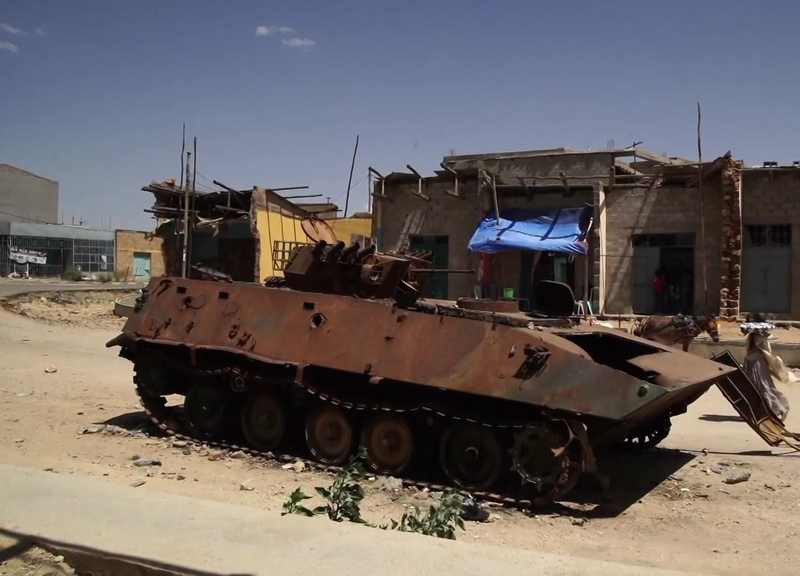
What the reports do not say matters as much as what they do. The bulletin did not identify who launched the airstrikes. Reuters, which first reported the bulletin on Monday, said it could not independently confirm the casualty figures. Spokespeople for Prime Minister Abiy Ahmed's office, the Ethiopian National Defence Force and the Tigray People's Liberation Front did not respond to requests for comment. In a separate account, eyewitnesses told the Ethiopian outlet Addis Standard that a drone strike hit a camp for internally displaced people in Shiraro at about 2:15 a.m. on Saturday — in the Adi Abay area, where families displaced from Western Tigray are sheltering — killing nine people and injuring 14, including a days-old baby. Residents said several locations in Adwa, including hotels, were also hit, though the exact toll there could not be verified.
Why this matters
The fall of a capital is supposed to end a campaign. In Tigray, it has done the opposite. When federal forces entered Mekelle over the weekend — the TPLF says it withdrew without a fight and has "temporarily" moved the regional government elsewhere — the assumption in Addis Ababa was that the geography of the war had been settled. Monday's strikes say otherwise: the front has not collapsed, it has relocated to the towns and river crossings of northern and western Tigray, and the weapons being used — airstrikes on Adwa, a drone strike on a displacement camp, artillery across the Tekeze — are the weapons of a war that is widening, not winding down.
The deeper significance is regional. This is no longer a contained Ethiopian counterinsurgency. On Sunday, the leaders of Egypt, Eritrea, Sudan and Somalia met to discuss the crisis and agreed to coordinate military and intelligence efforts if the conflict reaches the borders Ethiopia shares with them. Ethiopia accuses all three of its neighbours — Eritrea, Sudan, and beyond them Egypt — of backing the armed opposition; all three deny it. Last week Ethiopia and Eritrea, which fought a border war from 1998 to 2000, severed diplomatic ties. The US State Department on Saturday urged both Asmara and Addis Ababa to exercise restraint, warning that a wider conflict would jeopardise American collaboration with both countries. When four neighbouring states start planning for your war crossing their borders, your war is no longer yours alone.
How we got here
The current fighting began on September 23, when a seven-group rebel alliance led by the TPLF — calling itself the Ethiopian Peoples' Forces Alliance for Survival — launched a fresh offensive that struck government positions in Tigray, Afar and Amhara. It is the worst escalation since the 2020–2022 civil war, which killed hundreds of thousands of people and ended with the Pretoria cessation of hostilities in November 2022. That agreement held, uneasily, for nearly four years.
The unraveling was fast. In late September the alliance seized Tigray's main airport; within days federal forces and allied militias reversed the gains, retook the airfield, and advanced on Mekelle. Thousands of civilians fled the city; electricity and internet were cut for a week. Then, over the weekend, the TPLF withdrew and federal forces entered the capital — a major federal victory covered here — with daily life reportedly returning to normal, shops reopening, and communications restored. The TPLF's statement was careful: it had retreated, and the regional government would operate "from somewhere else." That phrasing now reads less like a concession than a redeployment.
Behind the battlefield sits a diplomatic collapse. Ethiopia's decision to close its embassy in Asmara and expel Eritrean diplomats on October 1, citing "acts of hostility," ended the rapprochement that won Abiy the Nobel Peace Prize in 2019. Eritrean forces fought alongside Ethiopia's federal government in the last Tigray war; now Asmara is accused of backing the other side. Addis Ababa's grievance is sharpened by geography: landlocked Ethiopia insists that sea access is vital to its security and economy, and Eritrea fears Abiy intends to take its Assab port by force. On Monday, hours after being sworn in for another five-year term following his Prosperity Party's June landslide, Abiy told parliament: "Ethiopia's modernisation cannot be realised without sea access." He says Ethiopia will pursue it peacefully. In Asmara, few appear convinced.
What the reports say — and what they don't
Discipline about evidence matters in this war because the information environment is a battlefield of its own. Here is the ledger, separated into what is reported and what is not established.
Reported: 17 killed in Adwa and Sheraro
Two independent reporting chains describe the same overnight strikes. Reuters' account rests on a bulletin circulated among humanitarian organisations: nine dead in Adwa, eight in Sheraro, plus artillery exchanges near Mai Tsebri on Monday morning. A second aid worker independently confirmed strikes in Adwa. The Eastleigh Voice, drawing on eyewitness accounts gathered by Addis Standard, describes a drone strike on the Shiraro displacement camp at 2:15 a.m. Saturday killing nine and wounding 14, and strikes on Adwa hotels. The two chains agree on the locations, the timeframe, and the approximate scale. Neither chain could independently verify the toll, and no official body has confirmed it.
Not established: who launched the strikes, and the full toll
The humanitarian bulletin did not attribute the airstrikes. Neither the federal government nor the TPLF has commented. In a war where both sides have used airpower and drones — and where the alliance demonstrated drone capability with claimed strikes on Addis Ababa itself on October 1 — attribution by assumption would be malpractice. Treat every casualty figure in this article as reported, not confirmed.
The numbers behind the stakes
Seventeen reported dead in a single night is a small number beside the hundreds of thousands killed in the 2020–2022 war — and that comparison is precisely why it matters. The last war began with numbers like these: scattered strikes, disputed tolls, each side testing what the world would tolerate. It took two years to become one of the deadliest conflicts of the century, with famine conditions, mass displacement, and atrocities documented on all sides. The question these strikes pose is whether the region is watching the opening chapter of a sequel.
The displacement arithmetic is already moving. Thousands fled Mekelle ahead of the federal advance; the Shiraro camp strike hit people who had already been displaced once, from Western Tigray — the doubly displaced, now struck in the place they fled to. About 80,000 Afar residents are reported trapped in affected areas of that region, where fighting has also spread and the government claims to have retaken the towns of Erebti and Abaala — claims that, like so much in this war, are unconfirmed.
The regional numbers explain the Sunday summit. Ethiopia shares borders with Eritrea, Sudan, Somalia, Kenya, South Sudan and Djibouti; three of those neighbours' leaders met with Egypt's to game out a cross-border escalation. A war that draws in Eritrea — with its unresolved border disputes and its own large, mobilised military — or that spills into Sudan, itself in the third year of a catastrophic civil war, would not be a bilateral conflict. It would be a Horn of Africa war, in a region that already hosts one of the world's worst humanitarian crises.
Who gains, who loses
The federal government gains the symbolism of Mekelle — the capital, the airport, the apparatus of regional administration — but symbolism is not control. If the TPLF has traded the city for the countryside, as its "temporary" relocation language suggests, Addis Ababa now owns a capital whose hinterland is contested, and every airstrike on a town like Adwa is a reminder that taking ground and holding it are different wars. The risk for Abiy, fresh from his swearing-in, is the familiar one of counterinsurgency: tactical victories that do not translate into political settlement.
The TPLF-led alliance gains time and narrative. Withdrawing from Mekelle without a fight preserved its forces; the reported strikes on Adwa and Sheraro — whether or not the alliance carried them out — feed a story of federal brutality that plays well with the diaspora and with the international human-rights apparatus. The alliance's demonstrated willingness to strike deep — including the claimed October 1 drone attacks on Addis Ababa itself — suggests it intends to make the war expensive for the capital, not just the periphery. Its weakness is the one it has always had: no evident path from insurgency to governance that the region's neighbours would accept.
Eritrea sits in the most dangerous position of all. It denies backing the rebels, but it has severed ties with Addis Ababa, expelled diplomats are gone, and its president now sits in summit meetings planning for the war's arrival at his border. Asmara's nightmare is a two-front squeeze: an Ethiopian government demanding sea access and a Tigrayan force with old scores to settle.
Civilians are the certain losers. The pattern of the last war — strikes on towns, displacement camps hit, communications blackouts, unconfirmed tolls — is already repeating. The only figure in this story that is not disputed is the direction of travel.
What the neighbours' summit reveals
The Sunday meeting of Egyptian, Eritrean, Sudanese and Somali leaders is the clearest signal that the region's governments no longer believe this war stays inside Ethiopia. Coordination of "military and intelligence efforts" is the language of contingency planning for intervention — defensive in intent, escalatory in effect. It also reveals the alignments: Egypt, in its long dispute with Ethiopia over the Nile dam, now openly coordinating with Asmara. For Addis Ababa, that looks like encirclement. For the alliance, it looks like an audience.
What happens next: three scenarios
1. The federal government consolidates. Mekelle holds, communications stay up, the TPLF's rural forces are degraded by airpower, and the neighbours' summit remains a contingency exercise. This is Addis Ababa's plan — and it requires the airstrike campaign to break the alliance faster than it generates new recruits, a bet counterinsurgencies usually lose.
2. The war regionalises. Eritrea is drawn in — by border incidents, by the sea-access dispute, or by miscalculation — and Sudan's chaos provides rear bases and arms flows. The Sunday summit's coordination becomes operational. The Horn of Africa, already buckling under Sudan's war, gets a second interstate conflict. This is the scenario the US State Department's Saturday warning was aimed at preventing.
3. A frozen, grinding stalemate. The federal government holds the cities and the alliance holds the countryside; airstrikes and ambushes continue at a tempo too low for international intervention and too high for civilian life. Tigray becomes what it was between 2021 and 2022 at the war's edges: a place where the toll is counted in bulletins that no one can independently confirm. For the displaced sheltering in Shiraro, that is not a scenario — it is already the reality.
Watch three things in the coming days: whether any official body — federal, TPLF, or international — confirms or revises the Adwa and Sheraro tolls; whether the Tekeze River artillery exchanges spread toward the Eritrean border; and whether Asmara's posture shifts from summit coordination to mobilisation. In this war, the bulletins arrive first and the confirmations arrive later — if they arrive at all.
Sources
- Reuters: Airstrikes and artillery hit north Ethiopia after Tigray capital's fall, aid sources say (Oct 5, 2026)
- The Eastleigh Voice (via Addis Standard): Drone strikes kill nine IDPs, injure 14 in Tigray as renewed fighting escalates in Ethiopia (Oct 6, 2026)
- BusinessDay (Reuters): At least 17 killed as Ethiopia-Tigray conflict reignites (Oct 5, 2026)