War · Arctic · Diplomacy
Every lawmaker present in the Folketing voted on Thursday to ratify the security agreement signed in New York in September — no debate, no dissent, no abstentions — giving Washington an expanded military role in Greenland, including permission for a Golden Dome missile-defence system, while the text reaffirms that Greenland is Danish, Greenlanders decide their own future, and Greenland sits at the table as an equal partner.
Track it live: War tracker — live war tracker
COPENHAGEN, November 19, 2026 — Denmark’s parliament, the Folketing, on Thursday unanimously ratified the security agreement with the United States covering Greenland, voting 109 in favour and none against at the second reading, according to Reuters reporting from Copenhagen. All 109 lawmakers present in the 179-seat chamber voted yes. There was no debate, no opposition and no abstention — a strikingly quiet end, in parliamentary terms, to the loudest diplomatic confrontation between Denmark and the United States in generations.
The agreement, signed in New York on September 22 by President Donald Trump, Danish Prime Minister Mette Frederiksen and Greenlandic Prime Minister Jens-Frederik Nielsen, expands the American military role in Greenland and gives the United States permission to establish a “Golden Dome” missile-defence system there. In the same text, Washington reaffirms Danish sovereignty over the island, recognises Greenlanders’ right to self-determination and treats Greenland as an equal partner in the arrangement. It supplements — it does not replace — the 1951 accord that has governed the US military presence in Greenland for 75 years.
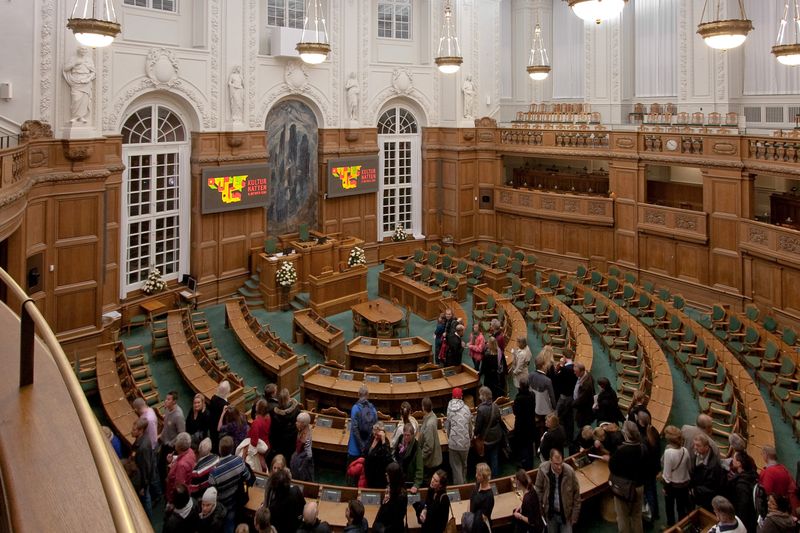
The vote: 109 present, none opposed
The arithmetic matters, because it will be misquoted. The Folketing has 179 seats. On Thursday, 109 members were present, and all 109 voted in favour: 109–0, with no abstentions recorded. That is unanimity among those present — a complete absence of dissent in the room — not a vote of all 179 members, and the distinction is worth keeping precisely because the government in Copenhagen will present the result as a national consensus and its critics will note how much of the chamber was elsewhere. Both things are true: nobody voted against, and the full chamber did not vote.
Procedurally, Thursday’s vote followed the agreement’s first reading in the Folketing on November 11 and Greenland’s own ratification earlier this month. Ratification in Copenhagen, however, is not the same as the deal taking effect. The agreement is not yet in force. Under the procedure reported by Reuters, it enters into force once Denmark’s Foreign Ministry informs the United States, through a diplomatic note, that Denmark’s internal procedures are complete. On the American side, the deal is an executive agreement: it does not require, and will not receive, a vote in the US Senate. The remaining steps are therefore administrative rather than parliamentary — a note in Copenhagen, and then implementation.
Why this matters
An annexation crisis ends in a parliamentary formality
Less than a year ago, the president of the United States was repeatedly threatening to take control of Greenland — a mineral-rich, self-governing territory within the Kingdom of Denmark — and refusing to rule out pressure that allies described as coercive. On Thursday, the Danish parliament disposed of the resulting settlement without a single speech against it. Whatever else the agreement does, it marks the formal end of that standoff on terms Copenhagen and Nuuk can present as a vindication: no transfer of sovereignty, no sale, no annexation — instead, a negotiated expansion of a military presence that has existed, in one form, since 1951. The crisis that dominated Denmark’s politics through 2026 closes not with a confrontation but with a unanimous procedural vote, and the silence in the chamber is itself part of the message: Denmark wanted this finished, and finished quietly.
Golden Dome moves from slogan to siting question
The agreement’s most consequential clause is the permission to establish a Golden Dome missile-defence system in Greenland. Geography explains why. Greenland sits on the shortest great-circle routes between North America and both Russia and China; sensors and interceptors placed there look down the corridors that any northern attack on the continent would travel. Until now, that role has been carried by a single installation — Pituffik Space Base, the northernmost US base in the world. Ratification turns Golden Dome in Greenland from a presidential talking point into a programme with legal cover: the questions that follow are engineering and political ones — where exactly, at what scale, built by whom, and with what Greenlandic consent at each step. Thursday’s vote answers none of those questions. It makes them unavoidable.
Greenland is written in as a partner, not a prize
The text’s language on sovereignty and self-determination is not decoration. For Nuuk, the central achievement of the September negotiation was that Greenland was treated as a party to its own future — recognised as an equal partner, with its right to determine its own status reaffirmed by the very power that had threatened to override it. That language now has parliamentary backing in Copenhagen as well as in Nuuk, and it will be the standard against which every future American request — a radar site, a runway, a mining concession — is publicly measured in Greenland. Denmark, meanwhile, is rearming in parallel: its decision this autumn to buy its first long-range missiles underlines that Copenhagen sees the Greenland agreement as one layer of a broader deterrence posture, not a substitute for its own capabilities.
How the deal got here
The road to Thursday’s vote ran through one of the strangest episodes in modern transatlantic relations. Through 2025 and into 2026, President Trump returned again and again to the idea that the United States should control Greenland, citing its Arctic position and its mineral wealth, and declining to treat Danish and Greenlandic refusals as final. Copenhagen and Nuuk held a single line in public — Greenland is not for sale, and its future belongs to Greenlanders — while negotiating the alternative: a formal expansion of the American security role that would give Washington the substance of what it said it needed, without the sovereignty it had demanded.
That alternative was signed in New York on September 22, 2026, by Trump, Frederiksen and Nielsen. Our coverage at the time set out what the September agreement actually says — expanded US access and a missile-defence role, in exchange for explicit reaffirmation of Danish sovereignty and Greenlandic self-determination. Thursday’s ratification is the Danish constitutional machinery catching up with that signature.
The deeper foundation is older. The 1951 accord between Denmark and the United States — now 75 years old — established the framework for American forces in Greenland at the height of the early Cold War, when the island’s position between North America and the Soviet Union made it some of the most valuable military geography on earth. The base now called Pituffik was built in that era as a forward outpost for bombers, early-warning radar and Arctic operations, watching the polar routes across the top of the world. It was known for most of its life as Thule Air Base; it was renamed Pituffik Space Base in 2023, taking the Greenlandic name of the place and reflecting its transfer into the US Space Force’s order of battle. The September agreement explicitly supplements the 1951 framework rather than replacing it — a deliberate piece of legal continuity that lets all three governments describe the deal as an update to a 75-year-old partnership rather than a new concession extracted in a crisis.
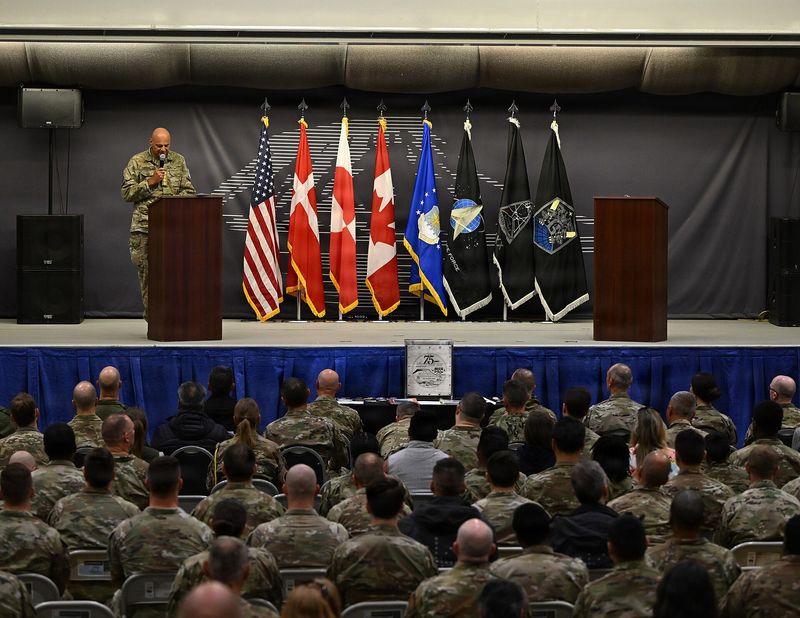
Greenland’s own parliament moved first. On November 3, it ratified the agreement by 16 votes to 0 — with seven abstentions. Those abstentions are part of the record, not a footnote to it: the vote in Nuuk was a majority decision with a visible bloc of members unwilling to endorse the deal, which is a different political fact from the unanimity-in-the-room recorded in Copenhagen on Thursday. The Folketing then gave the agreement its first reading on November 11, and completed the process eight days later.
What is actually in the agreement
Stripped to its essentials, the deal does four things. First, it expands the role of the US military in Greenland beyond the single-base footprint that exists today. Second, it grants permission for a Golden Dome missile-defence system — the space- and ground-based shield the Trump administration has made the centrepiece of its homeland-defence plans — to be established on Greenlandic territory. Third, it reaffirms Danish sovereignty and Greenlanders’ right to self-determination, and recognises Greenland as an equal partner in the arrangement. Fourth, it does all of this as a supplement to the 1951 accord, inside the existing legal architecture of the Kingdom of Denmark.
One thing the deal does not do, on the public record, is fix the size of the future American footprint. Accounts of how many additional facilities the expansion might involve have differed, and no specific number of new bases is established by the ratification itself. Anyone quoting a figure for new bases is getting ahead of the documents: what has been ratified is a permission and a framework, and the footprint will be determined by the siting decisions, negotiations and Greenlandic consultations that now follow.
The numbers in context
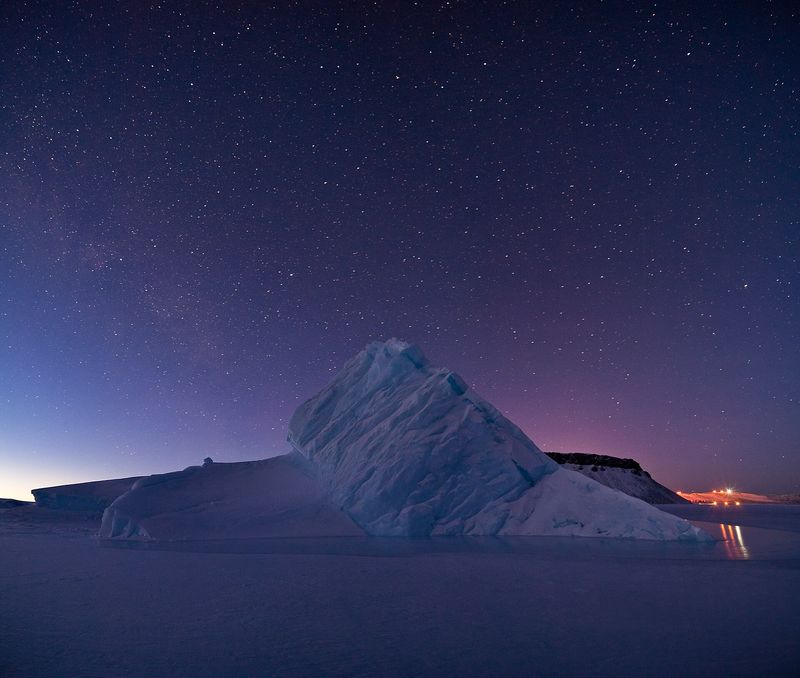
Three numbers frame the politics. In Copenhagen: 109 of the Folketing’s 179 members were present, and the vote among them was 109–0 — complete support, from a partial chamber. In Nuuk: 16–0 in favour, with seven abstentions — a clear majority, with recorded reservations. And on the ground in Greenland today: exactly one US base, Pituffik, in the island’s north-west, roughly 750 miles north of the Arctic Circle and the northernmost American installation anywhere. The 1951 accord underpinning it all is 75 years old — older than most of the states that now compete for Arctic influence. The agreement’s supporters read those numbers as continuity modernised. Its critics read the same numbers and ask why a 75-year-old framework needed a crisis — and an annexation threat — to be updated at all.
Who benefits — and who is uneasy
Washington gets the strategic substance it demanded — a legal basis for a substantially larger Arctic military presence and for Golden Dome infrastructure on the world’s most valuable missile-defence geography — without the diplomatic wreckage an attempted annexation would have caused across NATO. Copenhagen gets the sovereignty question closed, in writing, with American signatures on the reaffirmation, and keeps the alliance relationship intact. Nuuk gets its status written into the text: equal partner, self-determination recognised, and its own parliament’s ratification treated as a necessary step rather than a courtesy.
The unease is real, and it has names. Pele Broberg, chairman of the Naleraq party in Greenland, questioned the deal’s economic value and its clarity in comments reported by Reuters on October 12 — asking, in effect, what Greenland itself gains, in income and in defined obligations, from hosting a larger American presence. The seven abstentions in Nuuk’s November 3 vote suggest that scepticism extends beyond one party chairman. There are open questions about what an expanded footprint means for Greenlandic communities, for land use, and for the island’s parallel economic debates — including the mineral development Washington has talked up, where, as our reporting has noted, Trump’s promised exploration boom still runs through Nuuk’s permits, not around them.
And beneath the specific objections sits the structural one, which Thursday’s unanimous vote does not answer: the agreement was negotiated because a president threatened to take the island. Ratifying it — unanimously, without debate — can be read two ways. The charitable reading is that Denmark and Greenland converted a threat into a treaty-shaped constraint, binding the United States to respect the sovereignty it had questioned. The harder reading is that the sequence teaches a lesson other capitals will study: threaten an ally’s territory loudly enough, and you will be negotiated with — and end up with more access than you had before the threats began. Both readings will be argued in Copenhagen, Nuuk and allied capitals long after the diplomatic note is sent. The Folketing’s silence on Thursday settled the law. It did not settle that argument.
What happens next
The immediate step is the diplomatic note: once Denmark’s Foreign Ministry formally informs the United States that procedures are complete, the agreement enters into force. No further votes are required anywhere — not in the Folketing, not in Nuuk, and not in the US Senate, because the deal is an executive agreement on the American side. From that point, the story moves from parliaments to planners: Golden Dome siting studies, infrastructure assessments around Pituffik and beyond, and the consultations with Greenland’s government that the agreement’s partnership language commits all sides to hold.
Two longer clocks are also running. The first is Greenland’s independence debate, which this agreement will now run through rather than around: every future discussion of Greenland’s constitutional future will have to reckon with a freshly ratified, American-backed security architecture on the island, and with the question of whether that architecture makes independence more feasible — a superpower guaranteeing the island’s defence — or less, by embedding Greenland in arrangements negotiated while it was still part of the Kingdom. The second is diplomatic: December’s G20 gathering in Florida will be the first big multilateral stage on which Trump, Frederiksen’s Denmark and America’s allies meet with the Greenland file formally closed, and it will test whether the closing of this standoff calms the wider transatlantic argument about territory, threats and alliance discipline — or merely relocates it.
Three scenarios for the deal’s first year
The quiet build-out
In the smoothest scenario, the diplomatic note is exchanged within weeks, Golden Dome planning proceeds as a technical programme anchored on Pituffik, and construction and consultation advance without a political fight in Nuuk. The agreement fades into the background of Arctic policy — which is, historically, how the 1951 framework lived most of its 75 years — and Thursday’s vote is remembered as the moment the crisis formally ended.
The footprint fight
In the contested scenario, the first concrete siting or expansion proposals become the argument the ratification debate never had. Greenlandic politicians who abstained, and critics like Broberg, press the unanswered questions — how many facilities, where, employing whom, under whose environmental rules — and each proposal requires visible Greenlandic consent. The deal survives, but its implementation becomes a rolling negotiation in which Nuuk’s equal-partner language is tested clause by clause.
The precedent problem
In the widest scenario, the fight is not about Greenland at all. Other allies and adversaries draw conclusions from the fact that a year of annexation threats ended with the threatening power better positioned than before — and the next territorial pressure campaign, somewhere else, opens with the Greenland precedent cited on all sides. Denmark and Greenland’s counter-argument — that sovereignty was reaffirmed, not traded — only holds if the coming years show the reaffirmation being honoured in practice. That is the real stake of implementation, and it is why a unanimous, debate-free vote in Copenhagen is the beginning of this story’s next chapter rather than the end of the book.
Related coverage: The Greenland deal: US bases, Golden Dome and what the September agreement actually says · Denmark buys its first long-range missiles — and Russia answers with a warning · ‘Massive’ exploration is coming to Greenland, Trump says — but Nuuk holds the permits
Sources
Sources: Reuters, Copenhagen, November 19, 2026 — reporting that Denmark’s parliament, the Folketing, unanimously ratified the security agreement with the United States covering Greenland, 109 in favour and 0 against among the 109 lawmakers present in the 179-seat chamber, after the second reading and with no debate; that the agreement was signed in New York on September 22, 2026 by President Trump, Prime Minister Mette Frederiksen and Prime Minister Jens-Frederik Nielsen; that it expands the US military role, permits a “Golden Dome” missile-defence system, reaffirms Danish sovereignty and Greenlanders’ right to self-determination, supplements the 1951 accord, and enters into force once Denmark’s Foreign Ministry informs the US by diplomatic note that procedures are complete — reuters.com. Reuters, October 12, 2026 — reporting criticism of the agreement by Naleraq chairman Pele Broberg, who questioned its economic value and clarity. The Guardian, November 19, 2026 — corroborating coverage of the Folketing’s unanimous ratification vote and the agreement’s terms, including the Golden Dome permission and the reaffirmation of Danish sovereignty — theguardian.com. Brussels Reporter, November 19, 2026 — coverage of the ratification and the end of the annexation standoff — brusselsreporter.com. Associated Press, November 3, 2026 — reporting Greenland’s parliament’s ratification of the agreement by 16 votes to 0 with seven abstentions — apnews.com. Background on Pituffik Space Base — the northernmost US installation, about 750 miles north of the Arctic Circle, renamed from Thule Air Base in 2023 — is drawn from US Space Force and Wikimedia Commons records. Analysis in this article — on the precedent set by negotiating under threat, the politics of the two ratification votes, and the scenarios for implementation — is Signal Post News’s own and is distinguished from the reported facts above.