Greenland oil gas mineral exploration: Donald Trump says a "massive" programme is getting ready to begin in Greenland — but he named no company, no site and no date, and the licences that would make it real are issued in Nuuk, not Washington.
'Massive' Exploration Is Coming to Greenland, Trump Says — but Nuuk Holds the Permits
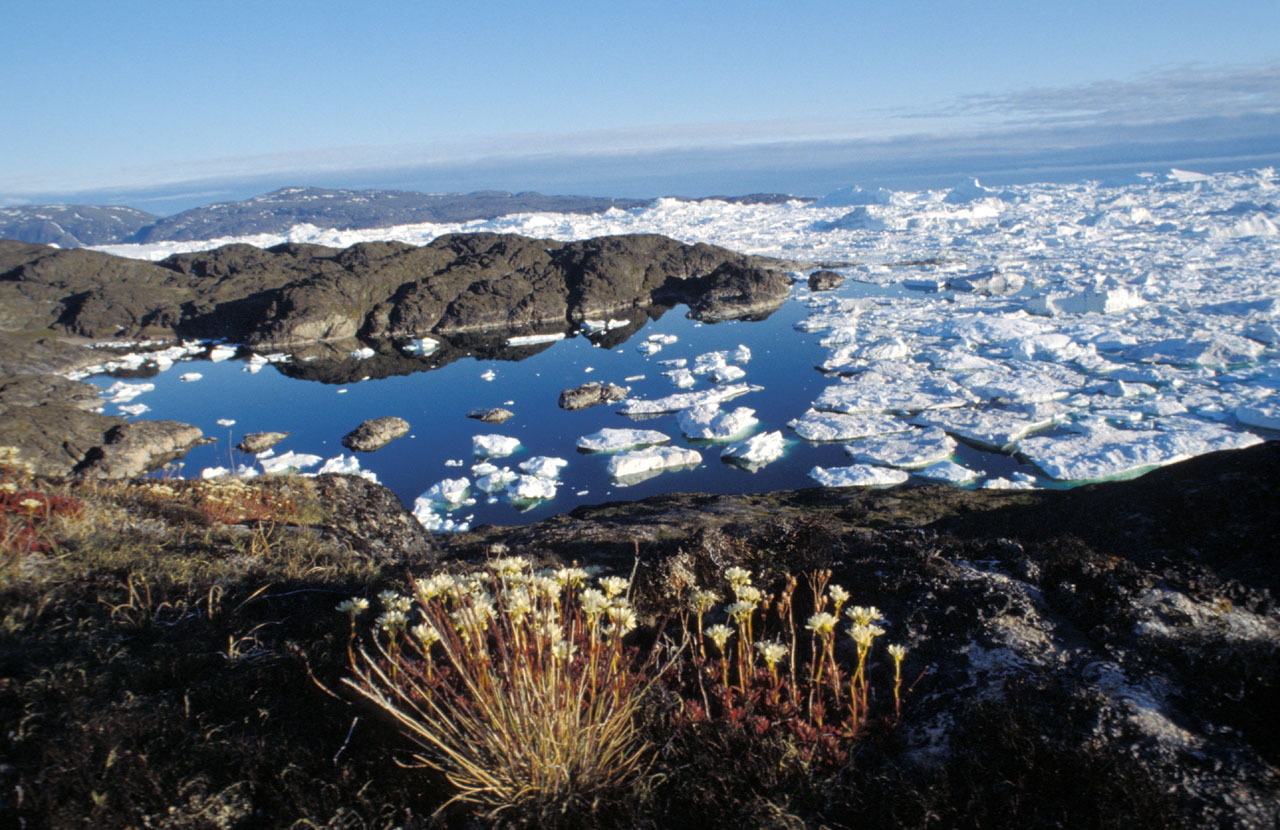
President Donald Trump said on Wednesday that "massive" oil, gas and mineral exploration is getting ready to begin in Greenland, announcing the move in a Truth Social post published just after midnight. "Massive Oil, Gas, and Mineral Exploration is getting ready to begin in our new and beautiful Greenland," he wrote, adding that "there are Experts that are saying that the amount of easily available Oil is far greater than that of almost any land, anywhere in the World." Reuters and France 24 reported the statement within hours. Trump named no company, no exploration area and no start date.
Track it live: oil price forecast and live energy data
The post tied the resources directly to military geography. Any future attack on the United States, Trump wrote, "will have to come across Greenland, where our Defense will routinely knock down drones, missiles, or any other form of weapon not yet even conceived. It gives us time, location, and sightline, like nowhere else in the World." The announcement comes four weeks after the United States, Denmark and Greenland signed a security agreement in New York on September 22 that expanded the American military role on the island — an agreement Trump has claimed gave the United States "permanent control" over Greenland's security, and that Copenhagen and Nuuk describe in markedly different terms.
What was actually announced — and what was not
The sum of the announcement is the post itself. No White House fact sheet accompanied it, no energy company has announced a Greenland programme in response, and no Greenlandic authority has issued a licence or an approval in connection with it. CNN reported that it had sought comment from the White House, the Danish Prime Minister's Office, Greenland's government and Greenland's Mineral Resources Authority. As of the first wire reports on Wednesday, neither Nuuk nor Copenhagen had issued a public response to the post.
That gap between declaration and detail is the story. Exploration is not a switch a president can flip for territory administered by someone else. Under Greenland's self-rule arrangements, decisions over the island's natural resources rest with its elected government in Nuuk — a point Greenlandic and Danish leaders repeated throughout the September negotiations. Whatever begins in Greenland begins with paperwork in Nuuk.
Why this matters
The post is the first time Trump has publicly attached a resources programme to the September agreement, and it tests the compromise that made the agreement possible. The deal worked politically because each capital could describe it differently: Washington emphasised access and permanence, Copenhagen emphasised that sovereignty and territorial integrity were recognised, and Nuuk emphasised that Greenland's interests and right to self-determination were written into the text. A unilateral announcement that exploration is "getting ready to begin" — in "our" Greenland — pushes on exactly the seam the negotiators papered over. If Greenland's government now confirms a programme, the deal looks like a pipeline to resources. If it stays silent or pushes back, the limits of what Washington actually secured become the story instead.
There is also a market and strategic layer. Greenland sits on deposits of rare earths and other critical minerals that Washington wants to develop outside China's supply chains, and on offshore basins that the US Geological Survey has long described as prospective. Announcing exploration costs nothing and signals to investors, to Moscow and Beijing, and to domestic audiences that the Arctic is being claimed as an American sphere. Whether it survives contact with Greenlandic law is a separate question — and it is the question this article works through.
The September agreement: what the text says and what it does not
The agreement signed in New York on September 22, 2026 expanded the 1951 defence treaty framework that has governed the American presence in Greenland since the early Cold War. According to CNN's account of the text published on the White House website, the agreement opens with an acknowledgment of Denmark's sovereignty and the right of the Greenlandic people to self-determination — the two principles Copenhagen and Nuuk insisted on — and then makes what CNN described as small changes to the 1951 treaty. It paves the way for additional American bases and assures the United States military access and use of Greenland even in the event Greenland becomes independent from Denmark.

Reporting on the signing put the additional facilities at Narsarsuaq in the south and Mestersvig in the east, some 950 miles apart, alongside an expansion of the existing Pituffik Space Base in the far north, with a role in the proposed Golden Dome missile defence shield. Trump presented the deal in superlatives, saying the United States would "forever have the complete ability to do what is necessary in Greenland." Greenland's prime minister, Jens-Frederik Nielsen, said the agreement would "strengthen the security of Greenland" and that it "recognizes Greenland's interests." Denmark's prime minister, Mette Frederiksen, said it "strengthens our common security in the Arctic" while recognising "the sovereignty and territorial integrity of the Kingdom together with the right of the Greenlandic people to self-determination." A NATO spokesperson welcomed it. The agreement still requires parliamentary action in Copenhagen and Nuuk before it can be enforced.
On resources, the text is narrower than the President's post. CNN's reading found no explicit mention of oil or gas in the agreement. What it does contain is an acknowledgment of "minerals cooperation" and of "cooperation on economic development and business promotion." That language supports joint work on mining and investment in principle; it does not award acreage, approve a well, or transfer any licensing power. The distance between "minerals cooperation" in a security text and "massive oil, gas, and mineral exploration" in a presidential post is where the politics of the next few weeks will be fought.
The geology is real. So are the obstacles.
Trump's claim that the oil prize is enormous has a genuine, if heavily qualified, basis. The US Geological Survey has estimated the waters around Greenland could hold around 17.5 billion barrels of undiscovered oil and 148 trillion cubic feet of natural gas, and its 2008 circum-Arctic appraisal put some 90 billion undiscovered barrels across the Arctic as a whole, the great majority offshore. Greenland also hosts deposits of 25 of the 34 raw materials the European Union classifies as critical, and 43 of the 50 on the United States' critical minerals list, including rare earths, graphite, nickel and zinc.
The qualifications, however, are the size of the island. Roughly 80 percent of Greenland is covered by ice. No oil has ever been produced commercially there, despite exploration campaigns stretching back decades and dry or abandoned wells offshore. Researchers note that extraction in Greenland would be difficult and expensive even by Arctic standards: there are few ports, no road network between towns, a short working season, and ice conditions that defeated better-capitalised efforts in the past. The USGS numbers describe oil that might exist, in places no one has drilled, at costs no one has proven. "Easily available" is a description the exploration industry itself has never applied to Greenland.
The legal wall in Nuuk: no new oil licences since 2021
The most concrete obstacle to the President's timeline is a decision Greenland's own government took five years ago. In July 2021, the Inuit Ataqatigiit government in Nuuk announced it would cease issuing new licences for oil and gas exploration, saying the government took the climate crisis seriously and that the price of extraction was too high — weighing the effects on nature, fisheries and tourism, and the poor economics of extracting oil in Greenlandic waters. Environmental groups welcomed the decision internationally. Four exploration licences already in force were allowed to continue, held by two small companies, on condition the licensees kept actively exploring.
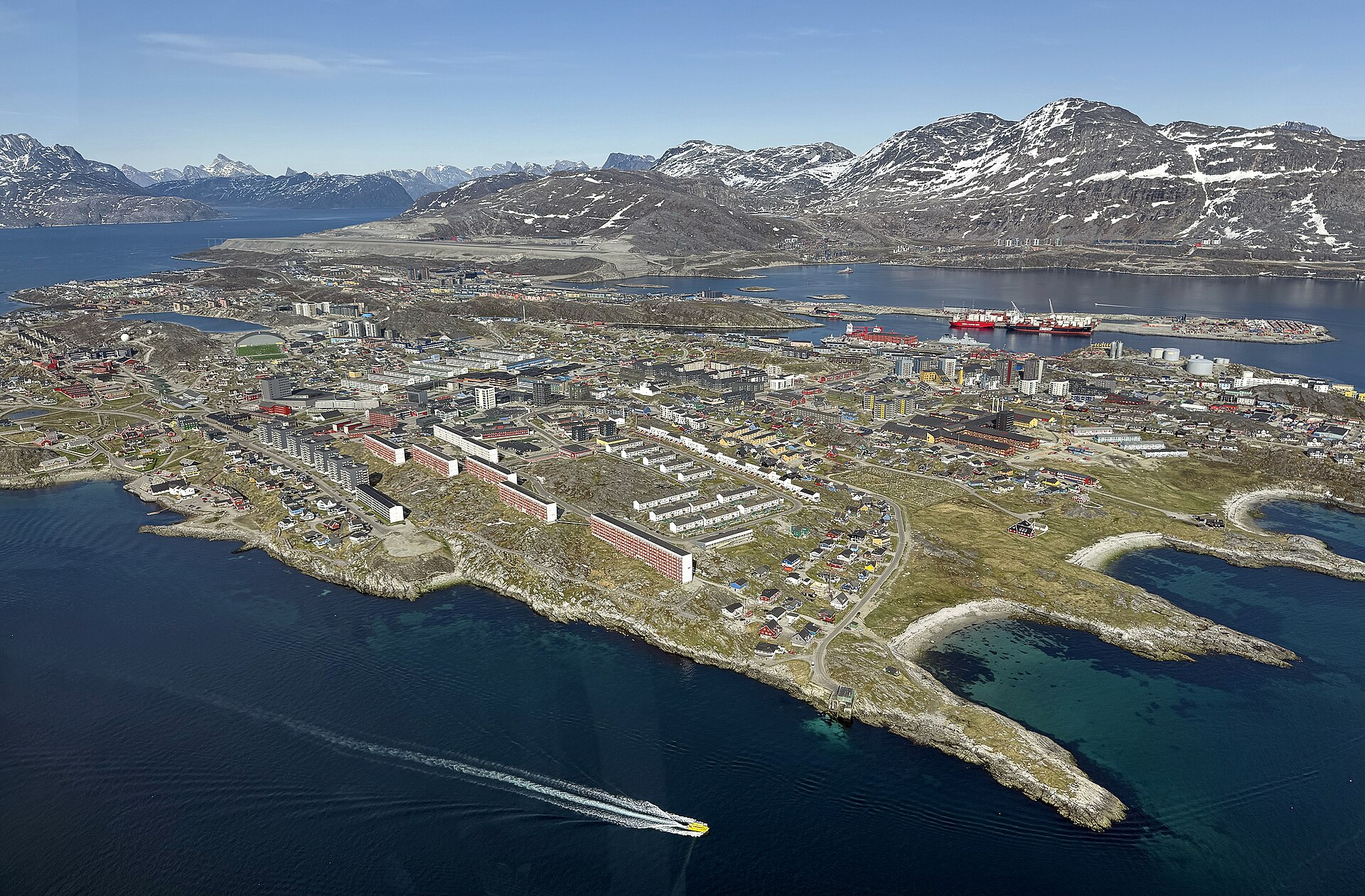
Nothing in Wednesday's post, or in the September agreement, changes that policy — and Washington cannot change it for Nuuk. The same assertiveness has been visible on minerals. Greenland's 2021 uranium legislation blocked the Kvanefjeld rare earths project in the south, and in June 2026 the government rejected a licence-renewal application from Energy Transition Minerals for the site. Mute Egede, the minister for foreign affairs and mineral resources, defended the refusal, saying the government was listening to the people of South Greenland and remained committed to the course Greenland had chosen. A government that has spent five years saying no — to oil licensing generally, and to a specific rare earths mine its voters rejected — is not obviously a government about to say yes to "massive" exploration on a foreign president's timetable.
The one live test case is already stuck
If anywhere in Greenland could show what American-backed exploration actually looks like in 2026, it is Jameson Land in the east, where a Texas-based company, Greenland Energy, holds a long-standing project it says could contain billions of barrels. The company's recent history is a study in the distance between announcement and authorisation. In June 2026, a company representative told a community meeting it had permission to bring drilling equipment ashore; the chief executive later acknowledged there had been "confusion." Equipment was landed in Jameson Land in the following weeks anyway, and Greenland's government issued what was described as a strong warning, noting that the company's drilling application was still under review and no approval had been given.
Since then, the timeline has slipped rather than accelerated: financial reporting in September said Greenland Energy had postponed drilling to winter 2027, citing permit delays — even as the Trump administration's Greenland envoy, Jeffrey Landry, claimed oil production could begin as soon as next year. The stock market, at least, has responded to the politics: shares in Greenland-linked miners jumped sharply on the September deal, with Greenland Energy up 141 percent on the day and Critical Metals, behind the Tanbreez rare earths project, up 38 percent. Paper gains are not permits. On the ground in Greenland, the scoreboard still reads: equipment ashore, warning issued, application pending, no well approved.
Two readings of the same island
The administration's framing, consistent across the post and the September sales pitch, is security first: Greenland is the linchpin of North American missile defence, the shortest route between Russia and the United States runs over it, Chinese and Russian activity in the Arctic is growing, and critical minerals developed under American influence reduce dependence on China. On that reading, resources and bases are one strategy — the island becomes harder to threaten if it is wired into the American economy as well as the American defence perimeter.
The reading in Nuuk and Copenhagen starts from a different premise: Greenland is not a vacant platform but a self-governing society of some 56,000 people whose parliament controls its resources and whose long-term stated ambition is greater independence from Denmark — on Greenlandic terms, not as a transfer to Washington. Critics of the September deal argued that permanence for American bases risks hollowing out exactly that self-determination. Mikkel Runge Olesen of the Danish Institute for International Studies described the agreement as giving the United States "a lot of the benefits of a takeover without a takeover," while Ulrik Pram Gad of the University of Copenhagen said it could be the beginning of replacing a colonial relationship with Denmark with something more resembling one with the United States. Supporters in Nuuk counter that the deal brought security guarantees and investment interest without a change of flag, and that Greenland's government kept — and keeps — the pen on resource decisions. Wednesday's post, with its possessive "our new and beautiful Greenland," will test how much longer both readings can coexist.
Winners, losers and open questions
The clearest near-term winners are financial and strategic. Greenland-linked mining and energy shares have already shown they can double on political headlines, and Wednesday's post hands those companies another news cycle of presidential endorsement without requiring a single approval. American defence planners gain a public narrative of momentum behind the base expansion and the Golden Dome architecture. Greenland's government, paradoxically, also gains leverage: the more valuable Washington declares the island, the more Nuuk can charge — politically and commercially — for access to it.
The exposed parties are different. Denmark must defend a deal it sold domestically as sovereignty-preserving against a partner who describes the island as his own. Greenlandic opponents of large-scale extraction — a politically organised force that won an election in 2021 partly on stopping a mine — face pressure from Washington, investors and their own government's economic ambitions at once. And the exploration companies face the oldest problem in the Arctic: geology and weather do not attend press conferences. Every previous Greenland oil campaign ended in cost, disappointment or politics; the licence regime, the Nuuk warning over Jameson Land and the winter-2027 postponement all say the new campaign starts from the same constraints.
What happens next
Four things will show whether Wednesday's announcement was a programme or a posture. First, whether Nuuk or Copenhagen responds publicly — silence, welcome or objection each set a different course, and reporters in both capitals were already seeking comment on Wednesday. Second, whether the White House publishes anything with names and places attached: a company, a basin, a permitting pathway. Third, the pending Greenlandic decisions that predate the post — above all the Jameson Land drilling application, still under review, and the parliamentary consideration the September agreement needs in both Copenhagen and Nuuk before it can be enforced. Fourth, the calendar: winter 2027 is the earliest drilling date even the most advanced project now claims, which means "getting ready to begin" will be measured in seasons of paperwork, not weeks of drilling.
Greenland has heard big resource promises before, from oil majors in the 1970s to rare earths developers in the 2010s, and most of them are now footnotes. What is genuinely new in 2026 is the combination: a security agreement that embeds the United States on the island for the long term, a president who speaks of its resources as America's by right of geography, and a Greenlandic government that holds the licensing pen and has used it, repeatedly, to say not yet. The exploration Trump announced will begin, if it begins, when Nuuk says so. That was true before the post. It remains true after it.
Related coverage: The Greenland deal: US bases, Golden Dome and what the September agreement actually says · Denmark's intelligence warning on Russia and NATO's Arctic flank
Sources: France 24 (AFP), Reuters, CNN, Associated Press, Barron's.