Travel · Business · Airlines
The automation that calculates weight and balance for Delta’s departing flights failed on Sunday morning. The airline fell back to counting bags by hand, the FAA briefly stopped Atlanta-bound Delta flights, and by evening more than half of Delta’s Sunday schedule was delayed — at the start of the busiest travel week of the year.
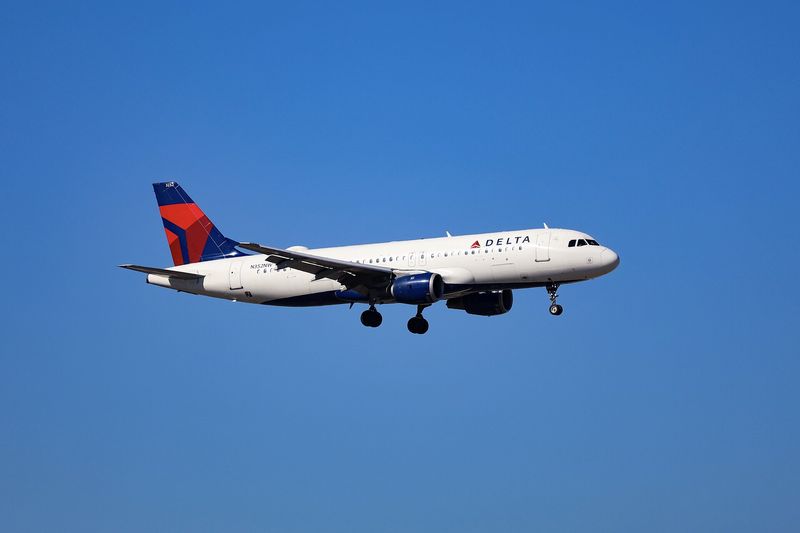
ATLANTA, November 22, 2026 — Delta flights delayed Atlanta outage became the defining disruption of Thanksgiving travel on Sunday, after the automated system Delta Air Lines uses to calculate weight and balance for departing flights failed in the morning, forcing the airline onto manual workarounds, prompting the Federal Aviation Administration to briefly ground-stop Atlanta-bound Delta flights, and delaying more than half of the carrier’s schedule before the system was restored in the afternoon. Delta had about 5,000 flights scheduled on Sunday, according to USA Today, and by 5:15 p.m. ET FlightAware showed over half of Delta’s total flights delayed and 2% cancelled, CNN reported. At Hartsfield-Jackson Atlanta International Airport — the world’s busiest airport and Delta’s biggest hub — more than 55% of flights out were delayed on Sunday evening. Delta has not disclosed what caused the automation to fail, and nothing in Sunday’s reporting supports any claim beyond a technology failure: the FAA said the disruption was not related to FAA air traffic systems, according to Reuters and CNN.
The detail that explains the whole day came from a ramp frequency in Boston, of all places. In a radio call captured by ATC.com and reported by CNN, a ramp worker described manually counting bags because no ramp worksheet was available. That is what a weight-and-balance outage looks like at ground level. The figures an automated system normally produces in seconds — how much the aircraft weighs, where that weight sits, what the load means for takeoff performance — had to be assembled by people, flight by flight, bag by bag. It can be done safely, and Delta did it. It cannot be done quickly, and on the Sunday before Thanksgiving, at the largest hub in American aviation, quickly was the only speed that would have kept the schedule intact.
What we know
- What failed: Delta’s automation for departing-flight weight-and-balance calculations failed on Sunday morning. The system is ALIS, the Automated Load Instruction System, planned at Delta’s Operations and Customer Center in Atlanta (CNN).
- How Delta coped: the airline used manual workarounds to safely dispatch flights. A Boston ramp radio call captured by ATC.com described workers manually counting bags because no ramp worksheet was available (CNN).
- The FAA’s role: the FAA briefly issued a ground stop for Atlanta-bound Delta flights, downgraded it to a ground delay around 8:40 a.m. ET, and cancelled the ground delay at about 11:30 a.m. ET, according to the FAA advisory reported by CNN. The FAA said the disruption was not related to FAA air traffic systems (Reuters / CNN).
- When it ended: the automated system was restored and operational by about 3:30 p.m. ET (USA Today). The delays it created ran on into the evening.
- The toll: about 5,000 Delta flights were scheduled on Sunday (USA Today). As of 5:15 p.m. ET, FlightAware showed over half of Delta’s total flights delayed and 2% cancelled; Delta attributed about 70% of the day’s schedule changes to the automation issue and the rest to Northeast weather and air traffic control constraints (CNN). Over 55% of flights out of Hartsfield-Jackson were delayed Sunday evening (CNN / FlightAware).
- The cause: not disclosed. Delta has not said what caused the failure, and this article claims no cause.
How the morning unfolded: an Atlanta airport ground stop, then a long manual day
The sequence matters, because Sunday’s disruption came in two distinct acts. In the first, the Atlanta airport ground stop phase, the FAA briefly halted Atlanta-bound Delta flights while the scale of the failure became clear. By about 8:40 a.m. ET the stop had been downgraded to a ground delay — a metering measure that spaces arrivals rather than freezing them — and at about 11:30 a.m. ET the FAA cancelled the ground delay altogether, according to the FAA advisory reported by CNN. A reader scanning only the FAA’s actions might conclude the crisis ended before lunch. It did not. The ground stop governed aircraft flying toward Atlanta; the outage governed aircraft trying to leave, everywhere Delta flies, and that second problem ran for hours after the first one was stood down.
The second act was the manual day. With ALIS unavailable, each departure needed its load figures built the slow way. CNN’s reporting, including the Boston ramp call captured by ATC.com, captured the texture of it: ramp teams counting bags by hand because the worksheet the system normally generates did not exist. Every manual flight is a small queue of its own — bags counted, weights totalled, balance checked, figures passed to the crew — and queues compound. An aircraft that leaves forty minutes late arrives forty minutes late, turns late, and hands its delay to the next departure and the crew’s next leg. That arithmetic, repeated across a hub running hundreds of departures, is how a morning software failure becomes an evening in which over half a 5,000-flight schedule is late.
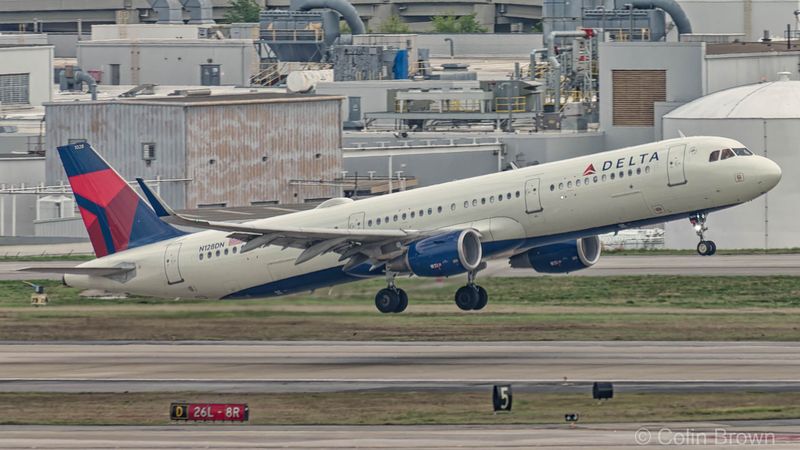
The Delta weight and balance system: what ALIS does, and why there is no skipping it
To understand why one system could hold up an airline, it helps to understand what the Delta weight and balance system actually produces. Before any airliner departs, someone must establish — precisely, and on paper that the crew signs off — the aircraft’s total weight and the distribution of that weight: passengers and where they sit, cargo and bags and where they are loaded, fuel and how it is spread across the tanks. Those figures determine whether the aircraft is within its certified limits and where its centre of gravity falls, which in turn drives the takeoff speeds and trim settings the pilots use. Get it wrong and the consequences range from degraded performance to an aircraft that handles dangerously at the most unforgiving moment of flight, rotation. There is no discretionary version of this calculation. A flight without verified weight-and-balance figures does not depart, full stop — which is precisely why the manual fallback, however slow, was the only fallback there was.
Delta Air Lines outage today vs. the system’s normal invisibility
ALIS — the Automated Load Instruction System, planned at Delta’s Operations and Customer Center in Atlanta, per CNN — exists to make that calculation industrial: continuous, standardised and fast enough to serve thousands of departures a day without human arithmetic becoming the bottleneck. On a normal day it is invisible, one of the unglamorous data layers modern aviation quietly depends on. Sunday exposed the dependency. The aircraft were fine. The crews were available. The weather over Atlanta was not the story. What was missing was a stream of numbers — and without the numbers, a twenty-first-century airline was reduced to counting bags by hand, a scene more familiar to 1966 than to 2026, performed under 2026 schedule pressure.
Why this matters
Sunday’s outage matters for three reasons, and they are worth separating. The first is architectural. Between an airline’s dispatch organisation and its fleet sits a thin data layer — load planning, weight and balance, takeoff performance — that every departure must pass through and that has no parallel path at scale. When that layer fails, the failure is not proportional to the size of the broken component; it is proportional to the size of the network behind it. Delta’s network is the largest single-hub operation in the world, which is why a planning system planned in Atlanta could delay flights in Boston and beyond within hours. Aviation has spent decades making aircraft themselves extraordinarily redundant — duplicate hydraulics, multiple engines’ worth of margin, backup flight controls. Sunday was a reminder that the redundancy thins out considerably once you step off the aircraft and into the software that releases it.
The second reason is the safety logic that made the disruption unavoidable once the system failed. It would be easy to ask why Delta did not simply waive the paperwork and fly. The answer is that the paperwork is not paperwork: weight and balance is a genuine flight-safety function, and the manual workaround — slower, human, checked — is the system working as designed at its fallback level. The correct criticism of Sunday is not that flights waited for hand-built load figures; it is that the automated layer had no faster understudy. An industry that treats manual reversion as an acceptable bridge for ninety minutes discovers, on a holiday Sunday, that the bridge must sometimes carry most of a day’s operation.
The third reason is timing, and it is the one passengers felt. This was not a random Sunday. It was the Sunday before Thanksgiving — Thanksgiving Day itself falls on Thursday, November 26, 2026 — at the front edge of the peak travel window, with more than 4 million travellers expected to pass through Hartsfield-Jackson between November 19 and December 1, according to the airport’s release reported by CNN. Holiday schedules are built full: fuller aircraft, tighter connections, fewer empty seats on later flights for displaced passengers to be rebooked into. A delay wave in an ordinary week is an inconvenience absorbed by slack. The same wave in Thanksgiving week meets a system with almost no slack to give.
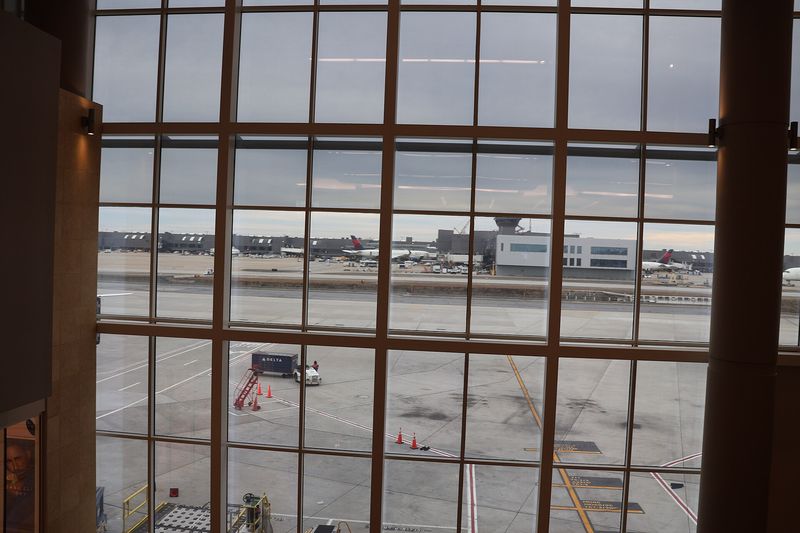
The numbers in context: FlightAware Delta delays Sunday, and what 70% means
The day’s statistics deserve a careful read, because they contain two different stories. The headline figures are severe by any standard: about 5,000 Delta flights scheduled (USA Today); over half of Delta’s total flights delayed and 2% cancelled as of 5:15 p.m. ET (FlightAware via CNN); over 55% of departures from Hartsfield-Jackson delayed into Sunday evening (CNN / FlightAware). The cancellation figure — 2% — is the quieter but telling number. Delta overwhelmingly chose delay over cancellation, which is consistent with a manual-dispatch day: flights could still go, just late, and cancelling them would have stranded holiday passengers in a network with no spare seats. Delay is recoverable in a way cancellation, in Thanksgiving week, is not.
Then there is Delta’s own attribution, reported by CNN: about 70% of Sunday’s schedule changes were attributed by the airline to the automation issue, and the rest to Northeast weather and air traffic control constraints. That split matters for accountability. Sunday was not a clean single-cause day, and any account that loads every late Delta flight onto ALIS overstates the case. It also matters in the other direction: an airline attributing seven in ten of its own schedule changes to a single internal system is describing a very large internal failure, on the record, on one of the most scrutinised travel days of the year. For travellers searching Delta flights cancelled today or checking whether their flight was one of the delayed majority, the practical picture by Sunday evening was simple — if you were flying Delta, especially through Atlanta, you were probably late, and the reason was most likely a computer in Atlanta rather than the weather outside your window.
Four perspectives on one broken system
Passengers: Thanksgiving travel delays 2026 begin early
For passengers, Thanksgiving travel delays 2026 arrived four days before the holiday. The cruellest delays in a hub outage are not the longest ones but the missed connections: a forty-minute late arrival in Atlanta becomes a missed onward flight, and on a Sunday when aircraft are running nearly full, the next available seat may be a day away rather than an hour. Travellers with Monday and Tuesday departures inherit Sunday’s displaced aircraft and crews as well — an operation does not reset at midnight; it recovers across the following day or two, which is why a Sunday failure shadows the very days when Thanksgiving travel builds to its Wednesday peak.
Delta: a second November reckoning with dispatch data
For Delta, Sunday invites an uncomfortable comparison it did not choose. Just over a week earlier, Delta contended with a separate nationwide ground stop — a distinct event, with its own circumstances, and not part of Sunday’s failure. And six days before Sunday, on November 16, United Airlines suffered its own weight-and-balance-related outage, in which departing aircraft could not receive their takeoff numbers from dispatch — the event Signal Post News covered in our report on the United Airlines outage, resolved after 90 minutes with 554 flights delayed. The two outages are separate — different airlines, different systems, different days — and this article does not merge them. But two of America’s largest carriers losing the same category of dispatch data within one week is a pattern the industry, and its regulators, will notice even if the causes turn out to be entirely unrelated. Delta’s own recent history adds context of a different kind: the airline’s operations have been under financial as well as technical scrutiny this autumn, as our October report on Delta’s Q3 earnings miss and guidance cut set out.
The FAA: a short stop, clearly bounded
For the FAA, Sunday was an exercise in bounded intervention. The agency briefly ground-stopped Atlanta-bound Delta flights, stepped the measure down to a ground delay around 8:40 a.m. ET, and cancelled it around 11:30 a.m. ET, per its advisory reported by CNN — and it stated that the disruption was not related to FAA air traffic systems, as Reuters and CNN reported. That clarification matters: the air traffic system itself kept working all day. What failed sat inside one airline’s operation, and the FAA’s role was traffic management around the consequences, not repair of the cause.
The airport: Hartsfield-Jackson airport delays at maximum exposure
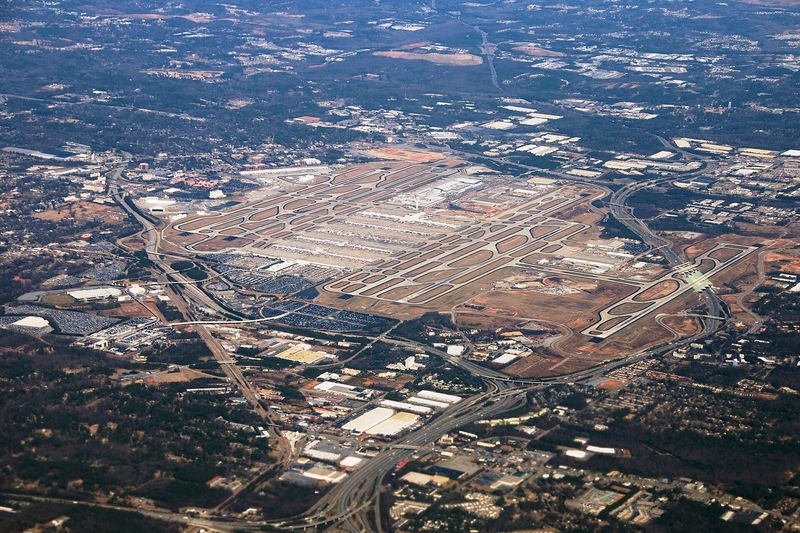
For Hartsfield-Jackson, the exposure is structural. The world’s busiest airport is also the most single-airline-dependent of the great hubs: Delta’s operation is the airport’s operation, to a degree true nowhere else at this scale. When Delta has a good day, Atlanta is the most efficient connecting machine in aviation. When Delta’s systems fail, there is no second hub carrier to absorb the flow — over 55% of the airport’s outbound flights delayed on Sunday evening is what that dependence looks like as a statistic, in a fortnight when the airport expects more than 4 million travellers to pass through.
What happens next: the Thanksgiving peak week ahead
The system came back at about 3:30 p.m. ET on Sunday. The week it interrupted is still ahead. Three things will decide how Sunday is remembered. First, recovery speed: Delta entered Monday with aircraft and crews out of position across its network, and the measure of the operation will be whether Monday and Tuesday run clean or carry Sunday’s residue into the build-up. Second, the Wednesday peak: the day before Thanksgiving is traditionally among the heaviest travel days of the year, and it will test the same dispatch layer that failed on Sunday, at even higher volume, with the 4-million-traveller fortnight at Hartsfield-Jackson in full flow. Third, explanation: Delta has not disclosed what caused ALIS to fail, and until it does — to regulators, to its own frontline staff, or publicly — the central question of Sunday remains open. An airline can survive a bad day in November. What it cannot leave unanswered, after two November data failures at two major carriers in six days, is whether the layer between dispatch and the fleet is as resilient as the aircraft it releases.
For travellers flying Delta this week, the practical advice is unglamorous and real: check your flight’s status before leaving for the airport, treat tight Atlanta connections as fragile for another day or two, and keep the airline’s app notifications on. For everyone else, Sunday offered a clear view of something usually hidden — that a modern airline is, at its core, a data company that happens to operate aircraft, and that when the data stops, the aircraft, however ready, wait. Signal Post News will update this article as Delta’s recovery and any disclosure about the cause develop.
Sources
- Reuters, November 22, 2026 (19:16 UTC) — Delta’s weight-and-balance automation failure on Sunday, the manual workarounds, the FAA’s brief ground stop for Atlanta-bound Delta flights, and the FAA’s statement that the disruption was not related to FAA air traffic systems.
- CNN, November 22, 2026 — the system identified as ALIS (Automated Load Instruction System), planned at Delta’s Operations and Customer Center in Atlanta; the Boston ramp radio call captured by ATC.com describing bags counted manually with no ramp worksheet available; the FAA advisory timeline (ground stop downgraded to a ground delay around 8:40 a.m. ET, ground delay cancelled about 11:30 a.m. ET); FlightAware figures as of 5:15 p.m. ET showing over half of Delta’s flights delayed and 2% cancelled, with Delta attributing about 70% of schedule changes to the automation issue and the rest to Northeast weather and ATC; over 55% of Hartsfield-Jackson departures delayed Sunday evening; and the airport’s expectation of over 4 million travellers between November 19 and December 1.
- USA Today, November 22, 2026 — about 5,000 Delta flights scheduled on Sunday, and the automated system restored and operational by about 3:30 p.m. ET.
- Federal Aviation Administration (FAA), November 22, 2026, advisory as reported by CNN — the Atlanta ground stop, its downgrade to a ground delay, and the ground delay’s cancellation; the FAA is cited here through that reporting, and Delta’s cause for the failure remains undisclosed.
- Related Signal Post News coverage: United Airlines’ November 16 outage, resolved after 90 minutes with 554 flights delayed — a separate event at a different airline — and Delta’s Q3 earnings miss and 2026 guidance cut.
- Photos: a Delta A320 on approach to Atlanta by Matthew Groh (CC BY-SA 4.0); a Delta A321 lifting off at Hartsfield-Jackson by Colin Brown (CC BY 2.0); the Concourse F ramp view by DiscoA340 (CC BY-SA 4.0); and an aerial view of Hartsfield-Jackson by Craig Butz (CC BY-SA 3.0) — all via Wikimedia Commons, each credited in its caption, and none depicting the November 22, 2026 outage itself.