What SpaceX agreed to buy
SpaceX said on October 8 that it had reached an agreement to acquire Grain Management's nationwide low-band wireless license portfolio. The transaction covers as much as 14 MHz of paired spectrum in the 800 MHz band and requires FCC approval. The companies did not disclose a price in the announcement cited by Reuters and the Wall Street Journal.
The buyer's language was unusually direct about its destination. SpaceX described the frequencies as filling one of the remaining technical gaps on the road to making Starlink Mobile a major U.S. carrier, while Musk called the agreement a “very big deal.” The strategic concept is a hybrid terrestrial-plus-satellite architecture: towers handle dense and indoor traffic where ground networks excel; satellites extend service into places where building enough towers is uneconomic or slow.
Why this matters
This is not simply more spectrum for satellite-to-phone messaging. It is an attempt to assemble the scarce ingredients of a nationwide mobile network under one roof: licensed airwaves, a large low-Earth-orbit constellation, direct-to-device technology, launch capacity and, eventually, terrestrial radio sites. Each ingredient already existed separately. The SpaceX 800 MHz spectrum portfolio is the piece that can bind them into a service that looks less like emergency coverage and more like a carrier.
That distinction changes the competitive question. Incumbents have generally treated satellite links as an extension of their networks: a way to fill dead zones while preserving the customer relationship, monthly bill and retail distribution. SpaceX appears to be building toward owning more of that relationship itself. If it succeeds, satellite coverage stops being only an add-on sold through carriers and becomes a substitute at the edge of their networks.
SpaceX 800 MHz spectrum adds reach where satellites are weakest
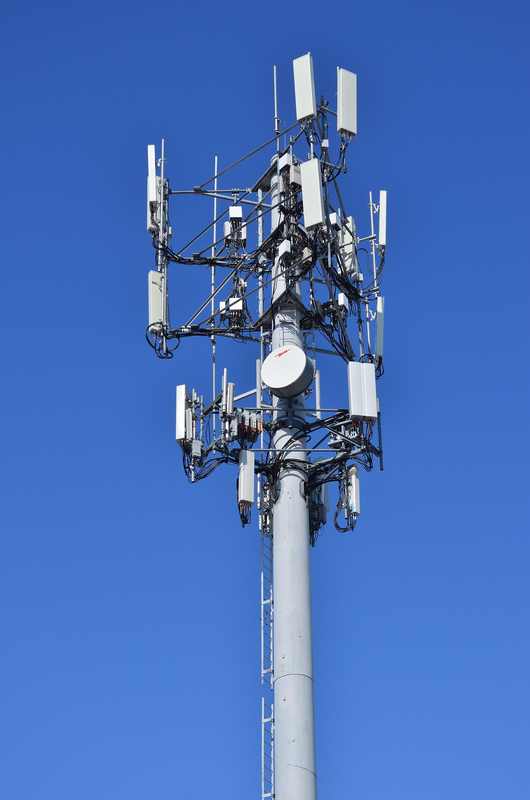
Low-band spectrum is valuable because physics gives it reach. An 800 MHz signal generally travels farther and penetrates walls better than mid-band and millimeter-wave frequencies. That means fewer terrestrial sites are needed to cover a given geography, and indoor service is more practical. Fourteen megahertz is not enough to match the full capacity of a mature carrier's layered holdings, but it is enough to establish a broad coverage layer — the foundation on which capacity can be added later through other bands or satellite links.

From EchoStar to Grain Management: the spectrum buildout
The Grain Management SpaceX transaction follows a much larger spectrum campaign. Last year, SpaceX struck a roughly $17 billion cash-and-stock deal with EchoStar for satellite spectrum rights, then added EchoStar ground-based licenses for another $2.6 billion. The progression matters: orbital rights support the space layer, while terrestrial authorizations make it possible to deliver a more conventional mobile experience on the ground.
SpaceX EchoStar $17 billion spectrum deal set the scale
The EchoStar agreement showed that SpaceX was willing to spend at carrier scale, not merely experiment with a niche service. The latest purchase is narrower but strategically complementary. Rather than accumulating spectrum indiscriminately, SpaceX is pairing nationwide low-band coverage with the higher-capacity and satellite rights already in its portfolio. The emerging architecture resembles a network plan, not a collection of licenses.
FCC 15000 Starlink satellites approval expands the space layer
The regulatory backdrop has also moved. The FCC recently approved SpaceX to launch 15,000 additional next-generation Starlink satellites for Starlink Mobile. That authorization expands the potential density and capacity of the orbital network, but it does not pre-approve the Grain licenses or settle how a hybrid system will manage interference. The spectrum transfer must still pass a separate public-interest review.
Meanwhile, AT&T, Verizon and T-Mobile teamed up earlier this year to extend service over satellite links, a move widely interpreted as defensive. Their advantage is immediate: existing subscribers, phones, billing systems, retail footprints and enormous terrestrial networks. SpaceX's advantage is structural: it controls the satellites and the launches, and it is now buying the spectrum needed to reduce dependence on incumbent partners.
Who benefits — and who faces pressure
The Starlink Mobile carrier thesis
SpaceX benefits if it can turn Starlink from a broadband product into a broader connectivity platform. Owning spectrum reduces the number of outside permissions and commercial relationships required to reach phones. It also creates optionality: SpaceX could sell a standalone service, wholesale capacity to carriers, bundle mobile with home broadband, or mix all three.
Tower owners may benefit even if traditional carriers feel threatened. A hybrid network still needs terrestrial antennas, fiber backhaul, power and real estate in cities and suburbs. Crown Castle gained about 9% and American Tower about 6% in after-hours trading, according to reports at the time. Those moves suggest investors saw SpaceX as a potential new tenant rather than a reason to abandon towers.
Rural users stand to gain if the architecture works as promised. Low-band towers can cover large territories, while satellites can fill the gaps beyond them. The combination could lower the economic threshold for serving sparsely populated roads, farms and communities that are difficult to reach with dense terrestrial construction.
Verizon AT&T stock drop points to pricing-power risk
Reuters reported AT&T down roughly 7% after hours, with Verizon and T-Mobile each off about 6.6%; market figures varied somewhat by time and outlet. Such one-session moves do not forecast a winner. They do reveal the risk investors priced first: a credible fourth network could pressure monthly prices, increase customer churn and force incumbents to spend more on coverage, satellite partnerships or retention.
The asymmetry is telling. Carrier shares fell on the prospect of lower margins, while tower shares rose on the prospect of another customer. Investors were not betting that terrestrial infrastructure disappears. They were betting that control of the subscriber may become less concentrated.
What skeptics say: approval, scale and interference
The case against treating the announcement as a finished carrier is substantial. First comes regulation. The FCC will examine whether the transfer serves the public interest, how the licenses will be used, and whether concentration or interference concerns require conditions. Rivals and public-interest groups can seek to shape that review.
Second comes execution. Nationwide spectrum does not equal nationwide capacity. SpaceX would still need compatible handsets, terrestrial radios, site leases, backhaul, network cores, emergency-service compliance, customer support and reliable handoffs between space and ground. The capital requirement is large even for a company that builds its own rockets.
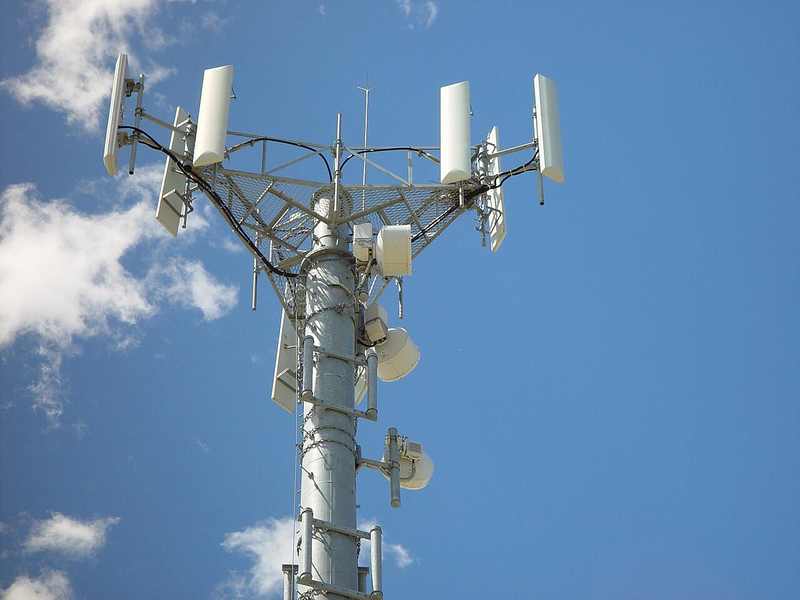
Third comes interference management. Satellite and terrestrial systems operate with different geometries and power levels. Coordinating them without degrading neighboring networks or creating edge-case dead zones will require engineering discipline, testing and regulatory oversight. The Starlink direct to phone promise is technically persuasive only when it performs under real congestion, indoors and during network transitions.
What 800 MHz buys — and what it does not
Think of low band as the coverage canvas, not the whole painting. At 800 MHz, radio waves bend around obstacles and travel farther than higher-frequency signals, so each site can cover more ground. That is especially useful for voice, messaging and baseline data service. But bandwidth remains finite. Fourteen megahertz paired across a national footprint cannot carry every high-definition stream in every crowded city. SpaceX will need additional capacity layers, traffic management and partnerships to compete on urban throughput.
The stock reaction therefore reflects anticipated economics rather than proved performance. If Starlink Mobile takes only a modest share of rural and price-sensitive customers, incumbents may need to discount plans more broadly to prevent churn. Because mobile networks carry high fixed costs, a small reduction in average revenue per user can matter more to margins than the customer count suggests. Conversely, if technical or regulatory delays push deployment years out, the after-hours selloff will look premature.
What happens next
The first milestone is the FCC docket. The agency's review will clarify the exact license portfolio, service obligations, buildout deadlines and any conditions attached to approval. Objections from competitors would not necessarily block the deal, but they could lengthen the timetable or narrow how the frequencies are used.
After approval, watch for site and equipment agreements. A rise in tower leasing, radio procurement or network-core hiring would be stronger evidence of a near-term terrestrial rollout than promotional language alone. Device compatibility is another gate: a mass-market service needs support in ordinary phones, not only specialized terminals.
Three carrier-response scenarios
Partnership: incumbents could deepen wholesale agreements with SpaceX, using its satellites while retaining billing and customer ownership. Competition: they could answer a standalone Starlink Mobile offer with lower prices, rural bundles and faster integration of their own satellite partners. Consolidation: spectrum-rich but subscale operators could become acquisition or alliance targets as every network seeks nationwide depth.
The most likely near-term outcome is coexistence rather than displacement. AT&T, Verizon and T-Mobile possess decades of infrastructure and customer relationships; SpaceX possesses a launch-and-satellite system no carrier can easily copy. The deal matters because it reduces the distance between those two positions. For more on SpaceX's capital strategy, see our analysis of its $40 billion orbital-data-center financing push. Our coverage of Crew-13's record-speed flight to the ISS shows the launch cadence behind the constellation, while Starship's first orbital flight explains the next step in SpaceX's transport scale.