Curtis Flowers dies at 56
The Mississippi man whom a single prosecutor tried six times for the same 1996 quadruple murder — freed only after the Supreme Court found racial bias in jury selection — has died at his home in Winona. He was 56.
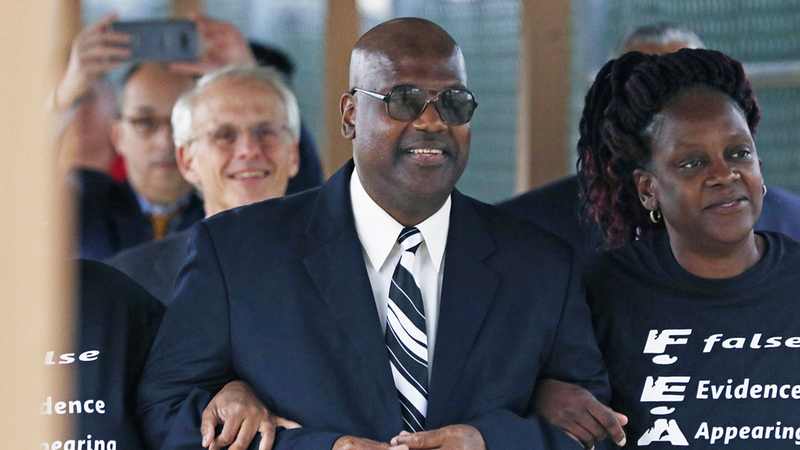
Curtis Flowers dies at 56, closing one of the most extraordinary legal sagas in modern American history. Flowers, the Mississippi man tried six times for the same four murders and held for more than two decades — most of it on death row — died Wednesday at his home in Winona, Mississippi, his family confirmed through attorney Rob McDuff to the Associated Press on Thursday. CBS News separately confirmed the death through McDuff. No cause of death was given.
What we know about his death
Flowers was 56. His family confirmed he died Wednesday, October 7, at his home in Winona — the same small town where, 30 years earlier, the crime that defined his life took place. Attorney Rob McDuff, a longtime member of Flowers' legal team, told the Associated Press on Thursday; CBS News also confirmed the death through McDuff and said it had reached out to the coroner. Neither outlet reported a cause of death, and McDuff did not provide one.
Why this matters
Curtis Flowers' name belongs in the small canon of American cases that changed the law itself. Flowers v. Mississippi (2019) is the Supreme Court's clearest modern statement that racial discrimination in jury selection will not survive appellate review — a 7–2 decision, written by Justice Brett Kavanaugh, that gave lower courts a working template for enforcing Batson v. Kentucky across retrials.
His death at 56, just six years after he walked free, forces an uncomfortable accounting: roughly 23 years taken, $500,000 returned — the maximum Mississippi law allows, about $21,700 for each year of a man's life, most of it spent on death row, for a crime the state could never fairly prove he committed.
There is a second tragedy inside this one: four people were murdered in Winona in July 1996, and no one has ever been convicted of killing them. The dismissal of the charges against Flowers closed the case without answering who did. His vindication and their families' unanswered grief are not competing truths — they are the same failure, seen from opposite sides.
How we got here: thirty years, six trials, one prosecutor
July 1996: four murders in Winona
On the morning of July 16, 1996, four people were shot and killed inside Tardy Furniture in Winona, Mississippi — the store's owner, a bookkeeper, a delivery man, and a 16-year-old employee. Nearly $300 was missing. Flowers, then 26, had briefly worked at the store that summer before being let go. He had no prior criminal record. He moved to Texas to live with his sister; police arrested him there in January 1997.

Six trials, one prosecutor
Montgomery County District Attorney Doug Evans prosecuted Curtis Flowers six times for the same murders, seeking the death penalty in five of the trials. Trials 1 and 2 ended in convictions the Mississippi Supreme Court threw out for prosecutorial misconduct — the court called the state's conduct in the first trial “egregious,” committed in “bad faith,” and “highly prejudicial.”
Trial 3 ended in a conviction overturned because Evans used all 15 of the state's peremptory strikes against Black prospective jurors — “as strong a case of racial discrimination as we have ever seen in the context of a Batson challenge.” Trials 4 and 5 ended in hung juries — the two trials in which Evans ran out of peremptory strikes and more than one Black juror sat on the panel.
Trial 6, held in June 2010 in Winona before Judge Joseph Loper, seated 11 white jurors and one Black juror after Evans struck five Black prospective jurors. The jury returned a guilty verdict after about 30 minutes of deliberation and a death sentence after roughly 90 minutes of penalty deliberation.
The Supreme Court intervenes
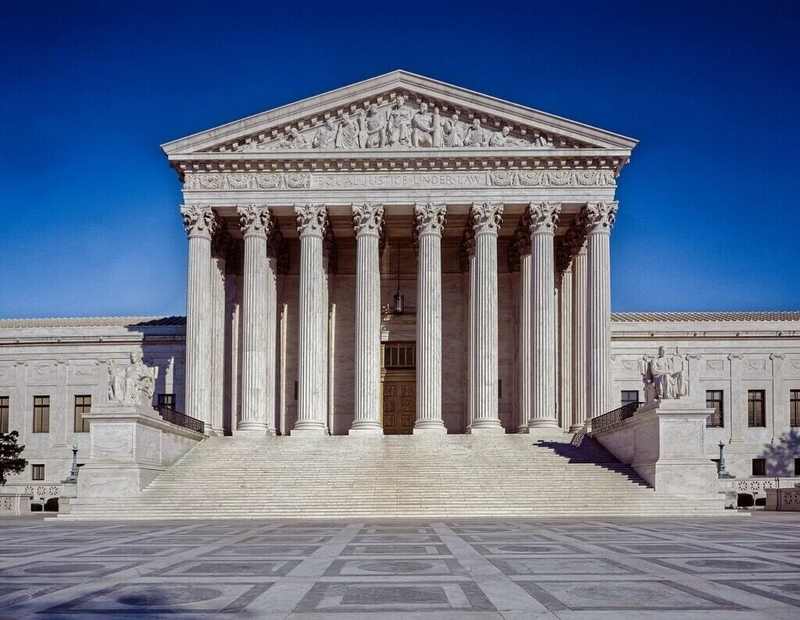
In June 2016 the U.S. Supreme Court sent the case back for review of racial bias in jury selection; Mississippi's high court upheld the conviction again in 2017. Then, on June 21, 2019, the U.S. Supreme Court vacated Flowers' conviction 7–2 in Flowers v. Mississippi. Writing for the majority, Justice Kavanaugh found “a relentless, determined effort to rid the jury of Black individuals,” noting that across all six trials Evans had used 41 of his 42 peremptory strikes against Black prospective jurors. “The numbers speak loudly,” Kavanaugh wrote. Justices Clarence Thomas and Neil Gorsuch dissented.
Freedom — and $500,000
Even after the Supreme Court ruling, Flowers spent six more months in prison because he remained under indictment. A judge set bond and he was released in December 2019. In September 2020, the state dismissed all charges. “Today, I am finally free from the injustice that left me locked in a box for nearly twenty three years,” Flowers said in a statement at the time. The state later awarded him $500,000 in compensation — the maximum Mississippi law permits.
What the numbers actually say
41 of 42 strikes (97.6%) were used against Black prospective jurors across six trials, in a majority-Black town — the statistic that decided the case. The only two trials that did not end in a death sentence were the ones where the prosecutor could not strike every Black juror; the system's own record contains the control group.
30 minutes was the trial-6 jury's guilt deliberation. $500,000 divided by 23 years is about $21,700 per year — versus federal law allowing up to $50,000 per year of wrongful imprisonment and $100,000 for death-row years. Mississippi's cap meant a man who spent most of his imprisonment on death row was compensated at less than half the federal amount for non-capital cases.
2018 was the year Season 2 of American Public Media's In the Dark podcast, reported by Madeleine Baran, dismantled the case against Flowers in public, including witnesses saying they had perjured themselves and questions about a missing gun.
Two sides of the same failure
For criminal-justice reformers, vindication was shadowed by grief: the system corrected itself only after 23 years, six trials, and four overturned death sentences, and the prosecutor was never disciplined. Critics of prosecutorial immunity point to that asymmetry.
Defenders of the system answer, fairly, that appellate courts overturned bad convictions four times, the Supreme Court set a national precedent, and the charges were ultimately dismissed. Both things are true, and the question is whether a system that takes 23 years to get the right answer is delivering justice at all.
For the families of the four people killed at Tardy Furniture, there is no vindication. The murders remain without a conviction, a loss no ruling can repair. The cause of Flowers' death remains unknown, and there is no indication the state will revisit the murders.
What happens next
Flowers v. Mississippi is now the citation defense lawyers reach for in a Batson challenge involving retrials — the precedent will outlive the man by decades. The In the Dark model of long-form investigative journalism as a second courtroom has already been copied, and Flowers' death will revive attention to the cases it inspired.
The compensation math is the live political issue: Mississippi's $500,000 cap is among the stingiest in the country; whether any legislature moves depends on whether stories like this keep the numbers in public view. And in Winona — a town of about 5,000 — the 1996 murders still have no convicted killer.
Related coverage
- Florida Executes Curtis Beasley, 77, After 38 Years on Death Row
- Supreme Court Hears Trump Administration Case on Transgender Federal Inmates
- Supreme Court Ruling and Voter Citizenship Requirements
Sources
- Associated Press
- CBS News
- Death Penalty Information Center
- NAACP Legal Defense Fund (2019 statement)
- NPR (2019)
- Wikipedia (case background)