Trump DOJ moves to strip citizenship

What the DOJ announced
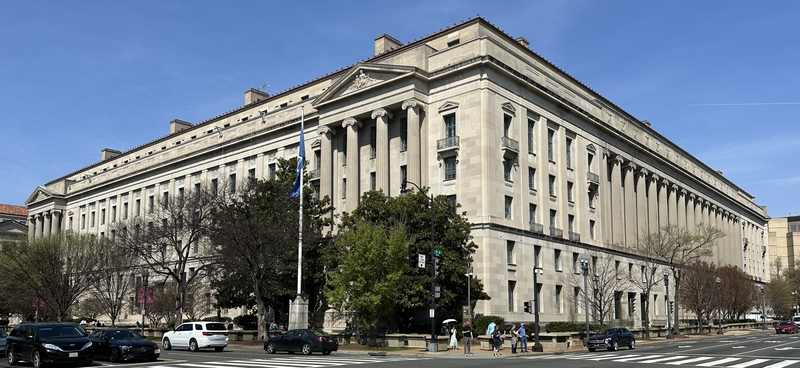
The Justice Department said Monday it has filed civil denaturalization actions in multiple U.S. district courts against 40 naturalized American citizens accused of serious offenses — from espionage and child sexual abuse to money laundering, visa fraud, and tax evasion. The complaints were filed between August 21 and October 2, 2026, which the department describes as the largest volume of denaturalization complaints submitted in a single period under the Trump administration.
The cases span federal courts in California, Texas, Florida, Virginia, New York, and Pennsylvania. The defendants range in age from 26 to 76 and come from 20 countries, including Mexico (11), China (4), and Pakistan (4), along with Egypt, Ghana, Nigeria, the Philippines, Cambodia, Cameroon, Colombia, Cuba, Haiti, India, Peru, Sierra Leone, the United Kingdom, and Venezuela.
Attorney General Todd Blanche framed the move in sweeping terms: “Today’s announcement marks the largest denaturalization effort in modern history. From an individual convicted of espionage to others convicted of sexual offenses against minors, these defendants concealed critical facts from the U.S. government.” He added: “Under President Trump’s leadership, the Department of Justice will continue to employ the denaturalization process to maintain our national security and protect the American people.”
Brett A. Shumate, Assistant Attorney General for the Civil Division, was blunter still: “Every single one of these individuals lied their way into U.S. citizenship… the United States will not tolerate deception in the naturalization process.”
How denaturalization works — and what the government must prove
The legal basis is the Immigration and Nationality Act: naturalized citizenship may be revoked — and the certificate of naturalization canceled — if the government proves naturalization was illegally procured, or obtained through concealment of a material fact or willful misrepresentation. The core allegation in these 40 cases, as the DOJ describes it, is not merely that the defendants committed crimes after becoming citizens. The government’s theory is that they were never lawfully entitled to citizenship in the first place because fraud or lies tainted the naturalization itself.
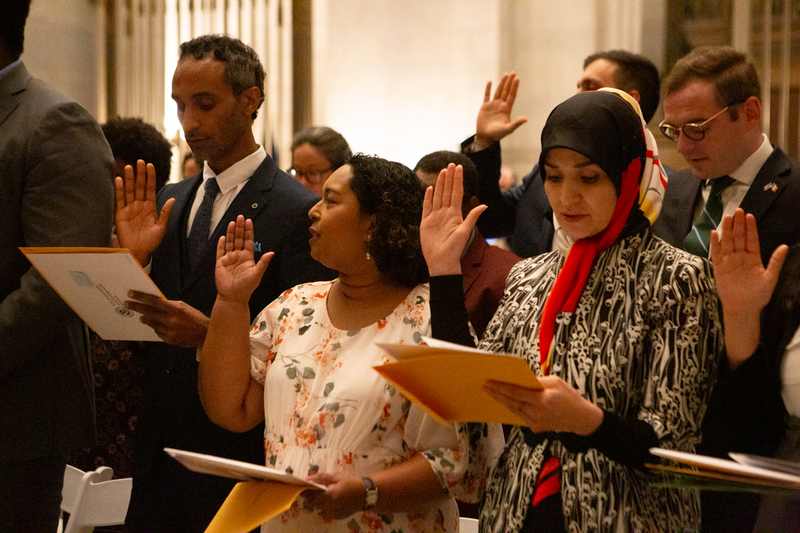
Two features of the process are central to the debate ahead. First, denaturalization is a civil proceeding, not a criminal prosecution: the cases are decided by federal judges, and defendants have the right to contest the government’s claims in court. Second, denaturalization can apply only to naturalized citizens — people born U.S. citizens cannot lose citizenship this way, a line that is absolute in the law.
The alleged underlying conduct, as described by the department, includes acting as an agent of a foreign government — including two China-linked espionage cases — voluntary manslaughter, aggravated sodomy against a special-needs man, child sexual abuse, money laundering, visa fraud, tax evasion, and sham marriages. These are allegations in civil complaints, and each defendant will have the opportunity to fight the government’s case.
Why this matters — and why it’s contested
Supporters of the move argue it restores integrity to the citizenship process. Their case is straightforward: citizenship obtained through fraud is citizenship obtained illegally, and a provision of federal law that is almost never used is still the law. From this view, the Trump administration is simply enforcing a statute that prior administrations left dormant.
Critics take the opposite view of the same facts. They argue that denaturalization was historically used only sparingly — and that scaling it into a mass tool risks creating two classes of American citizens: the naturalized, whose citizenship could in theory be revisited, and the native-born, whose citizenship is unquestioned. Civil-liberties advocates also raise due-process questions and warn of a chilling effect on the millions of law-abiding naturalized Americans who obtained citizenship honestly.
Both sides agree on one thing: the scale is new. “Largest denaturalization effort in modern history” is the department’s own description, and Google Trends suggests the public is paying close attention — searches for “revoke US citizenship” topped 20,000 in the United States as the announcement spread.
What happens next
The 40 cases now move through the federal district courts where they were filed. The Justice Department must prove its allegations case by case; defendants can contest them, and the rulings can be appealed. The department has given no timetable for resolution, and with 40 parallel cases across six states, the litigation could stretch for many months — each one a separate test of how far the government can go in unwinding citizenships it says were fraudulently obtained.
The broader question is whether these 40 complaints are a one-time surge or the start of a sustained campaign. “The Department of Justice will continue to employ the denaturalization process,” Blanche said Monday — language that suggests this is a beginning, not an end.
For related coverage, see our reporting on the Supreme Court’s mandatory immigration detention ruling, the proposed citizenship question on IRS tax returns, and Columbia’s response to Trump-era visa policies.