Florida executes Curtis Beasley
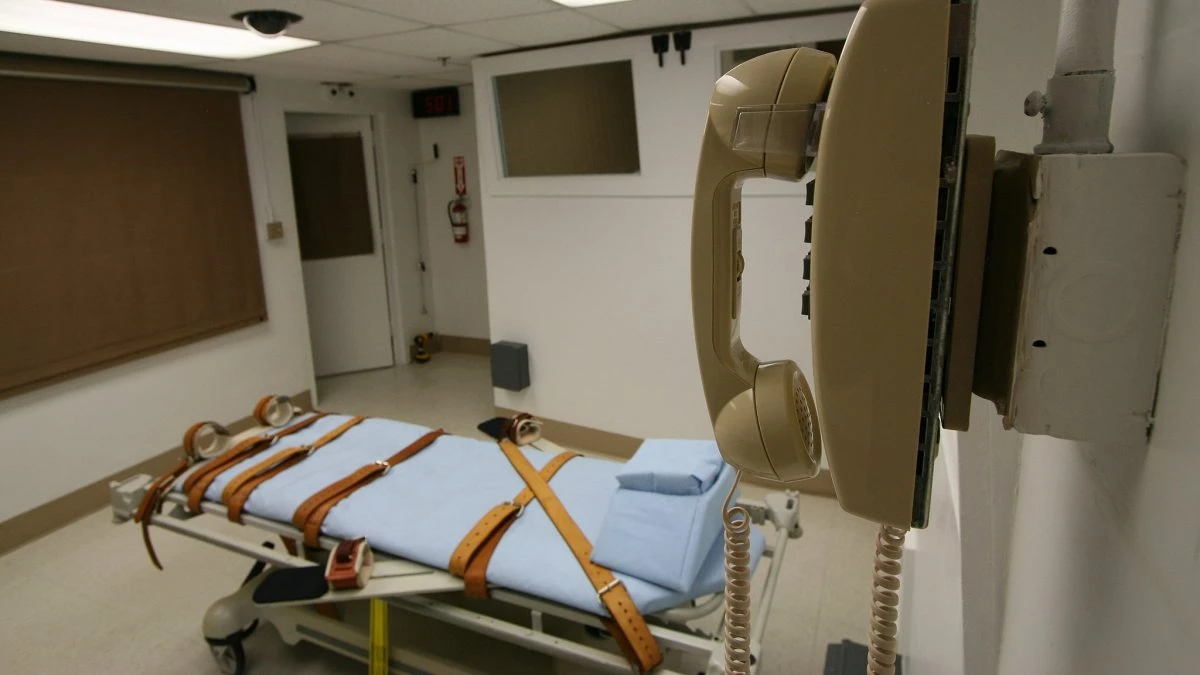
FLORIDA — Florida executes Curtis Beasley, 77, by lethal injection on Tuesday for the murder of Carolyn Monfort, marking the state's 16th execution of 2026 and its third in September. The execution was completed at 6:12 p.m. Eastern time, according to USA Today. In final words reported by the Associated Press, Beasley said: “I want to apologize for all the mistakes I made.”
The death closes the state's criminal case against Beasley, but it opens a wider policy question. Florida has now carried out more than half of all executions in the United States this year, and its most recent cases show a striking concentration among older prisoners. Those figures make the Curtis Beasley execution not only an individual punishment but also a measure of how rapidly Florida has separated itself from the rest of the country.
What happened in the Curtis Beasley execution
Beasley was convicted in the murder of Carolyn Monfort and remained under a death sentence until Tuesday. The state used lethal injection, the method at the center of Florida's current execution program. The two core facts are not in dispute: Florida carried out the sentence, and Beasley was pronounced dead at 6:12 p.m. Eastern.
His brief final statement was an apology for “all the mistakes I made.” The wording does not specify which acts he meant, and it should not be stretched into a broader claim about motive, remorse or legal responsibility. It is the statement he chose to make at the end of the process, as reported by the AP.
For Monfort's family and those who supported the sentence, the execution represents the completion of a judgment that had remained unresolved for years. For opponents of capital punishment, Beasley's age and the recent litigation over cognitive decline sharpen concerns about whether a death sentence remains constitutionally and ethically sound after decades on death row. Those positions are fundamentally different, and neither can be reduced to the evening's procedural timeline.
Florida death penalty 2026: the numbers set the state apart
Florida's 16th execution of 2026 is also its third this month. Nationally, 29 executions had been carried out this year by Tuesday, meaning Florida alone accounted for 16 of 29 — roughly 55%. Put another way, the state's total is larger than the combined count of every other execution state.
That is the clearest before-and-after comparison. Before Beasley's execution, Florida had carried out 15 of the country's 28 executions, about 54%. Afterward, both totals rose by one, and Florida's share edged above 55%. The arithmetic changed only slightly on Tuesday; the broader concentration did not. One state is carrying out executions at a pace unmatched by the rest of the country.
The age profile is just as significant. Ten of Florida's 16 people executed this year were older than 64. Looking across 2025 and 2026, 30 people aged 62 or older were executed nationwide, and 21 of those executions occurred in Florida — 70%. That cross-state context is important because it shows the pattern is not merely the result of an aging national death-row population. Florida's schedule is disproportionately driving the national total for elderly death row inmates.
What 16 of 29 U.S. executions in 2026 means
A majority share does not by itself prove that Florida's legal process is less reliable than another state's. It does show that decisions by Florida's governor, courts and corrections system now have an outsized effect on the national direction of capital punishment. A change in Florida's pace would materially change the U.S. total; a similar change in most other states would not.
The monthly count reinforces that point. Three executions in September compress punishment that is usually measured over years of appeals into a few weeks of administrative action. Supporters describe that pace as the state finally enforcing valid judgments. Critics argue that speed can make the system less able to respond to late-emerging evidence about health, competency or legal error.
Age and the death row cognitive decline appeal
Beasley's age made the September 22 denial of his cognitive-decline appeal especially consequential. The appeal asked the courts to consider whether deterioration associated with age altered the constitutional analysis of carrying out the sentence. Its denial allowed Tuesday's execution to proceed and signals that age-related decline, without a legal finding sufficient to stop an execution, may not be enough to interrupt Florida's current timetable.
This distinction matters. Advanced age is not itself a categorical constitutional bar to execution. Courts instead evaluate specific legal claims and evidence. The dispute is over where that threshold should sit, how cognitive impairment can be established after decades in custody and whether a person must understand more than the immediate mechanics of the punishment.
Supporters of the sentence emphasize the original conviction and the victim's life, arguing that the passage of time should not erase a lawful penalty. Opponents answer that long delay is partly produced by the complexity of capital litigation, and that the state should not treat age-related deterioration as an inconvenience created by a prisoner's appeals. The September 22 decision does not resolve that national debate; it shows how Florida courts are treating it in the present cycle.

Why this matters
The central issue is not simply whether Florida can execute people sentenced to death. The legal authority is established in state law and has repeatedly survived court review. The immediate issue is how the state is using that authority: frequently, on an accelerated schedule, and often against people who have reached old age after long periods under sentence.
Gov. Ron DeSantis has defended that approach with the phrase “justice delayed is justice denied.” The formulation speaks to victims' families who have waited through years of appeals and procedural review. It also frames delay as a failure to complete justice rather than as a safeguard against irreversible error. That framing benefits an administration seeking to demonstrate certainty and enforcement; it leaves less room for the argument that new medical evidence or evolving legal standards deserve additional time.
The concentration of executions in Florida also changes national accountability. Statistics about U.S. executions can make the practice appear broadly distributed, but this year's numbers are heavily shaped by one state's choices. Debate over the DeSantis death penalty record is therefore inseparable from debate over the national trajectory.
Who benefits from the accelerated schedule
Supporters of capital punishment gain visible evidence that old sentences can still be enforced. Prosecutors and elected officials who promised finality can point to completed cases rather than pending warrants. Some victims' relatives may experience the end of litigation as accountability, although families do not all describe closure in the same way and no single reaction should be assumed for Monfort's family.
The state also gains administrative predictability once a warrant survives review. A scheduled execution concentrates court deadlines, corrections planning and public attention into a defined period. That is an institutional benefit, not an argument that the underlying punishment is correct.
Who loses — and what critics say
The person facing execution bears an irreversible loss, while lawyers and medical experts have less time to investigate late-arising claims when warrants arrive in close succession. Critics say elderly prisoners are particularly vulnerable because dementia and other cognitive impairments can develop after the original trial and sentencing, long after a jury considered the person before it.
Capital-punishment opponents also challenge the idea that frequency demonstrates justice. They argue that geographical concentration exposes unequal outcomes: the same type of conviction can lead to execution in one state and life imprisonment in another. The 55% Florida share gives that criticism a concrete measure. Supporters respond that states retain different laws and political judgments, and that a national comparison does not invalidate an individual sentence.
There is also a public-cost question. Executions require intensive litigation, medical review, security and corrections staffing. The cited reports do not provide a full cost accounting for Beasley's case, so no precise savings or expense should be inferred from the speed of Florida's calendar.
What happens next
The national schedule moves immediately to Tennessee, where Clara Pike is scheduled to be executed Wednesday. If carried out, hers would be Tennessee's first execution of a woman in more than 200 years. The proximity of the two dates will keep attention on the age, gender and geography of capital punishment rather than on Florida in isolation.
In Florida, the September 22 appeal denial will be read closely in future cases involving alleged cognitive decline. It does not eliminate case-by-case litigation, but it indicates that courts may require highly specific proof before age-related impairment can halt a warrant. With ten of the state's 16 executed prisoners this year older than 64, that standard is likely to return quickly.
Politically, DeSantis has given no indication that he views the volume itself as a reason to slow down. His “justice delayed is justice denied” posture suggests the administration will continue treating unresolved death sentences as unfinished state business. Any change is more likely to come from a court ruling, a clemency decision or a shift in the warrant calendar than from the statistics alone.
Conclusion
The execution of Curtis Beasley ended one case but added to a pattern that is now impossible to describe as ordinary variation among states. Florida has carried out 16 of 29 U.S. executions this year, including three in September, and it accounts for 70% of the country's executions of people aged 62 or older since 2025. Those figures do not decide the moral or legal argument. They do establish where the country's capital-punishment policy is being made most aggressively — and where the consequences of age, delay and finality are being tested.
Sources and reporting notes
- USA Today: Florida executes Curtis Beasley, 77
- Associated Press via The Daytona Beach News-Journal: Curtis Beasley execution updates
Reporting basis: Execution time, the annual and age-related counts, the September 22 appeal decision and the Tennessee schedule are drawn from the cited reporting. Percentages are calculated from those reported totals. Analysis is labeled and does not imply a view from Monfort's family.