Health · World
The Congo Ebola outbreak death toll recorded by officials may be missing a large share of the dead in Bunia: satellite images of the city’s cemeteries point to more than 1,000 excess deaths by early November — over 50 percent above the official tally of 707.
Track it live: Live disease outbreak tracker — follow the Bundibugyo Ebola outbreak and other disease emergencies as case counts are updated.
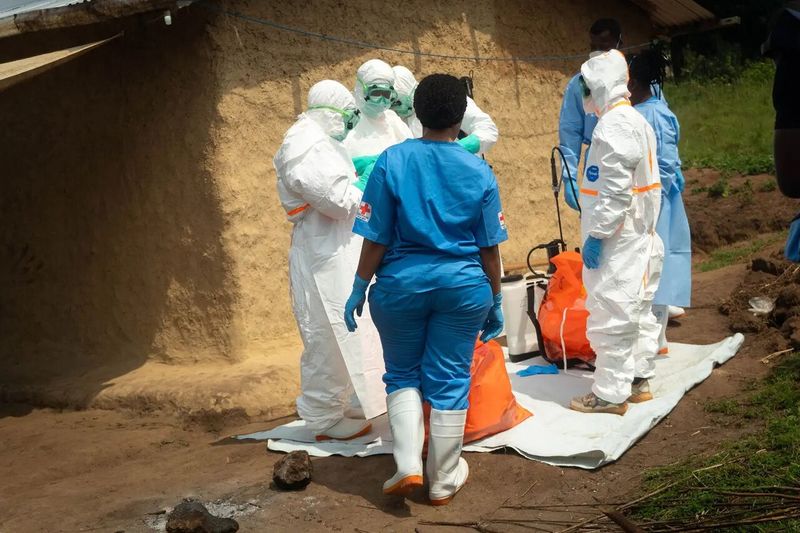
The Congo Ebola outbreak death toll in Bunia may be far higher than the official record shows. A Reuters investigation published on Monday, November 23, 2026, analysed satellite imagery of the city’s cemeteries and found that deaths in Bunia this year have run far above the level of the preceding epidemic-free year — by early November, more than 1,000 excess deaths, a figure still over 50 percent higher than the official Ebola tally of 707 for the city. The finding does not prove that every one of those additional deaths was caused by Ebola, and Reuters is explicit about that limit. But it is the strongest evidence yet that the Ebola undercount in one of the outbreak’s hardest-hit cities is not a rounding error. It is a gap measured in hundreds of graves.
The method matters because the official system is structurally blind to exactly the deaths the graves record. Ebola surveillance counts people who are tested, who reach a treatment centre, or whose deaths are reported and investigated. In Bunia, as across eastern Congo, many of the sick never reach that system at all. The World Health Organization’s latest update reported that of 720 deaths recorded nationally in the three weeks to November 17, 452 occurred in communities rather than treatment centres. Community deaths are where an outbreak hides: a person dies at home, is buried by family or neighbours, and never becomes a confirmed case. Counting graves from space is one of the few ways to see that hidden mortality whole — and in Bunia, what it shows is a city that buried far more people than its Ebola statistics can explain.
What Reuters counted in Bunia’s cemeteries
Reuters analysed satellite imagery of Nyamurongo cemetery and Bunia’s two other main cemeteries, together with the main burial site in Mongbwalu, the gold-mining town north of Bunia where health authorities believe the outbreak began. The comparison was between the graves appearing during the Ebola outbreak 2026 surge and the pattern in the preceding epidemic-free year. At Nyamurongo, the city’s largest cemetery, the change was visible from the ground long before it was visible from orbit. “We were doing 5, 10, 15 burials a day. It kept increasing,” Salomon Mugisa, a gravedigger at Nyamurongo, told Reuters.
The ground truth and the official record diverged early and sharply. When Reuters visited in July, about 600 people had been buried at Nyamurongo alone since the April surge began — while Congolese authorities had recorded fewer than 200 Ebola deaths in all of Bunia at that time. One cemetery, in other words, had already received roughly three times as many bodies as the official count attributed to Ebola across the entire city. That single comparison does not by itself establish how many of the 600 died of Ebola. But it established the question the satellite analysis then set out to answer with a baseline: how many more people were buried in 2026 than would have been expected in a normal year?
The baseline: from 2.4 graves a day to more than 9
The baseline Reuters derived from the imagery is precise. In the preceding epidemic-free year, Nyamurongo averaged 2.4 new graves per day. In June, as the outbreak surged, the rate rose to more than 9 new graves a day — close to four times the normal level, sustained across a month. By early November the rate had fallen to about 4.5 new graves a day: well down from the June peak, but still nearly double the pre-epidemic baseline. Read as a curve, the Ebola graves Bunia dug this year trace the shape of an epidemic wave that the official case data also show — a violent rise into the early summer, then a partial decline. Read as a total, they trace something the official data do not: the full weight of dying in the city, counted body by body.
The Mongbwalu burial site extends the picture beyond the city. Health authorities believe the outbreak began in that gold-mining town north of Bunia, and including its main burial ground allowed Reuters to test whether the excess mortality was a Bunia-only phenomenon or part of the wider Ituri pattern around the outbreak’s suspected origin. The investigation’s central numbers, however, concern Bunia itself, where the cemetery imagery, the gravediggers’ accounts and the official tally could be set directly against one another.
The arithmetic of Ebola excess deaths
Excess deaths are the difference between the deaths observed and the deaths expected in a comparable period without the emergency. Reuters applied that arithmetic to Bunia’s 2026 graves against the epidemic-free year, and then set the result beside the official Ebola tally at three points in time. By late June, Bunia had already recorded more than 580 excess deaths — seven times the official Ebola toll for the city at that point. By September, cumulative excess deaths stood at about 950, double the official tally. By early November, excess deaths had passed 1,000, and were still over 50 percent higher than the official Ebola tally of 707.
Two features of that sequence deserve emphasis. The first is the direction of the gap over time: it has narrowed. In late June the excess was seven times the official count; by September it was twice; by early November it was roughly one and a half times. A narrowing gap is consistent with a surveillance system that was overwhelmed early — when the outbreak was detected late and transmission was at its most intense — and that has since caught up with a larger share of the dying, even as burial rates fell from their June peak. The second feature is the gap’s persistence. Even in early November, after months of response, more than three excess deaths had occurred for every two deaths in the official tally. Whatever share of the excess Ebola ultimately explains, Bunia Ebola deaths in the official record remain a floor, not a total.
What excess deaths can — and cannot — prove
Precision matters here, and Reuters states its caveats plainly. Not all excess deaths can be directly attributed to Ebola. Some reflect the outbreak’s indirect effects: people with other illnesses avoiding hospitals for fear of infection, care disrupted, conditions that would ordinarily have been treated going untreated until they killed. An excess-death figure is therefore not a hidden Ebola toll waiting to be relabelled; it is the total additional mortality of a city living through an epidemic, of which direct Ebola deaths form an unknown — though plainly large — share.
Two further points cut in opposite directions, and both belong in the record. Reuters says its estimate is likely conservative, because the analysis did not capture smaller burial sites around the city; deaths buried outside the main cemeteries would add to the excess, not subtract from it. At the same time, excess-mortality analysis cannot assign a cause to any individual grave. The method is a standard public-health tool precisely for situations like this one, when death statistics are delayed or incomplete: it was used extensively during COVID-19 to measure the pandemic’s true toll in places where confirmed counts were known to fall short. Its strength is that it counts everyone. Its limit is that it cannot say, grave by grave, what killed them. Ebola hidden deaths, on this evidence, are real in aggregate even where they remain unattributed in detail.
Independent voices: plausible, logical — and unfinished
Reuters’ findings do not stand alone. The World Health Organization suggested in July that the outbreak was two to four times larger than available data suggested — an assessment that, applied to deaths, points in the same direction as the cemetery analysis. Yap Boum of the Africa CDC told Reuters the findings were broadly plausible, and noted that excess mortality is often highest early in an outbreak, which matches the Bunia pattern of a huge early gap that later narrowed. Jean-Jacques Muyembe, head of Congo’s National Institute for Biomedical Research, said an early discrepancy was “logical” because the outbreak was detected late, while cautioning that excess-mortality estimates should be confirmed by inquiries into precise causes of death. Congo’s health ministry did not respond to Reuters’ requests for comment.
That spread of reaction is itself informative. No institution with direct knowledge has dismissed the graves analysis as wrong. The cautions offered — Muyembe’s call for cause-of-death inquiries above all — are about converting an aggregate excess into attributed deaths, not about whether the excess exists. The satellite imagery is not in dispute; the burials happened. What remains genuinely open is the decomposition: how many of the more than 1,000 excess deaths were Ebola itself, how many were the outbreak’s indirect harvest among people who feared or could not reach care, and how many, if any, reflect other pressures on a city living with armed conflict as well as disease. Answering that would require the kind of death-by-death investigation that an insecure, overstretched response has so far been unable to run at scale.
Why this matters
An undercount of this size is not a statistical footnote; it changes what the outbreak is. Response planning runs on reported numbers: treatment beds, burial teams, laboratory capacity, contact tracers and funding appeals are all sized against the official Congo Ebola cases and deaths. If the true mortality in a major epicentre city has run at one and a half to seven times the recorded figure across the year, then at each stage the response was planned against a smaller emergency than the one actually unfolding. The dead who never entered the system also never triggered the system’s defences: an unreported community death means contacts unlisted, a household unvisited, a transmission chain left to run. The 452 community deaths in WHO’s latest three-week national count are the visible edge of that problem; Bunia’s graves suggest its full depth is greater.
There is also a matter of record. This is Congo’s deadliest Ebola outbreak and its 17th, and how it is counted will shape how it is remembered, funded and studied. Excess-death analysis cannot replace case surveillance, and nobody cited by Reuters proposes that it should. But when the two disagree by hundreds of deaths in a single city, the honest conclusion is that the official history of the Bundibugyo Ebola outbreak is, at minimum, incomplete — and that the families who buried people outside the count are part of the outbreak’s story whether the spreadsheets hold their names or not. For readers following DR Congo Ebola news, the graves are a reminder to treat every official toll in this epidemic as a confirmed minimum, not a measure of the whole.
The national picture behind the Bunia graves
Bunia is one front in a much larger emergency. The WHO Disease Outbreak News update of November 20, 2026, reported 11,613 confirmed cases and 5,678 deaths from Bundibugyo virus disease as of November 17 — a crude case fatality ratio of 48.9 percent — across 68 health zones in eight provinces, in an outbreak declared on May 15, 2026. Reuters reports more than 11,500 infected and over 5,500 dead nationally. Beni, Bunia and Mandima reported the highest recent cases and deaths, and on November 18 the WHO Director-General determined that the event continues to be a public health emergency of international concern. Signal Post News’ earlier reporting traced how the outbreak more than doubled past 11,000 cases, with children dying fastest; the Bunia graves now raise the question of how much larger even those record figures should be.
The biology offers no shortcut. There is no approved vaccine and no specific treatment for the Bundibugyo species of Ebola; vaccine candidates are in trials, but nothing licensed exists to ring-fence a city the way Zaire-species vaccines have in past outbreaks. Care remains supportive, which makes early arrival at a treatment centre the single strongest determinant of survival — and makes the pattern WHO documented, of most recent deaths occurring in communities rather than treatment centres, the outbreak’s deadliest feature. Late detection, insecurity and deaths outside surveillance are not side issues in this epidemic. On the evidence of Bunia’s cemeteries, they are the mechanism by which the official toll and the real toll came apart.
A response under fire
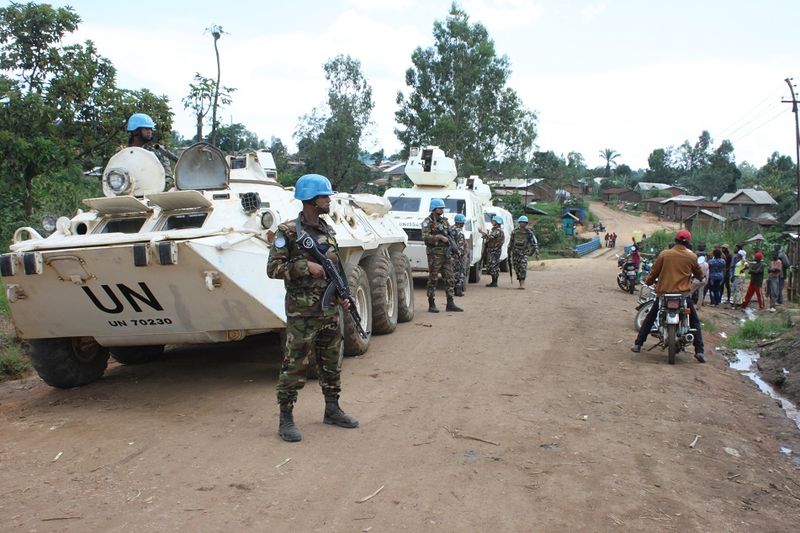
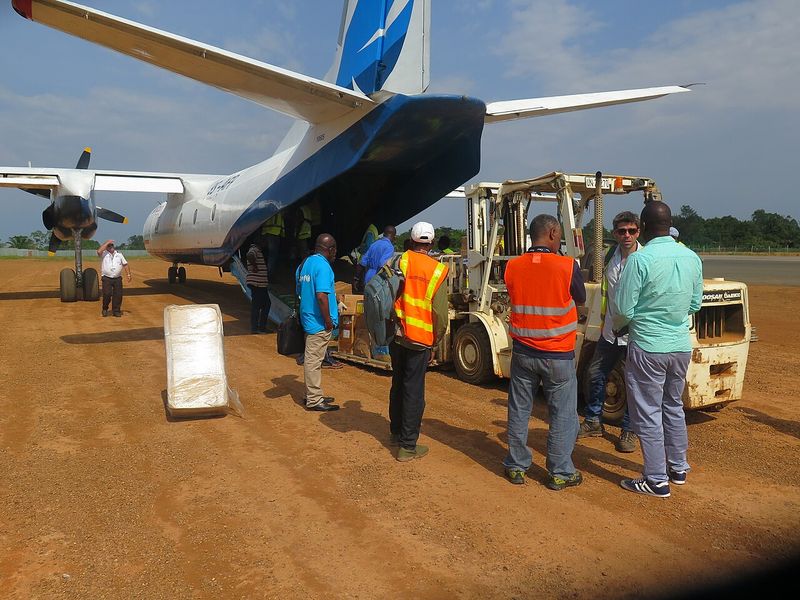
Even the response that exists is being fought over, literally. WHO chief Tedros Adhanom Ghebreyesus said on Sunday, in remarks reported by Reuters on November 22, that heavy fighting near a hospital in Ituri province had disrupted the Ebola response and forced health workers and partners to shelter inside a maternity ward for more than 24 hours. Attacks across eastern Congo have increased since late October. A response that must shelter from gunfire cannot trace contacts, cannot staff burial teams, and cannot persuade frightened families that a treatment centre is safer than home. The connection to the graves is direct: every day of disrupted operations in Ituri is a day in which more of the dying happens out of sight of the count.
What happens next
Three developments will determine whether Bunia’s two tolls — the buried and the recorded — converge. First, whether cause-of-death inquiries of the kind Muyembe described are actually carried out in Ituri, converting the excess into attributed numbers that planners and historians can use. Second, whether security around Bunia, Beni and Mandima holds long enough for community-death surveillance to improve: the share of deaths occurring outside treatment centres, 452 of 720 in WHO’s latest three-week count, is the single best real-time gauge of whether the hidden toll is shrinking. Third, whether burial rates at Nyamurongo continue their fall from more than 9 new graves a day in June toward the 2.4-a-day baseline — the point at which the cemetery curve, and presumably the epidemic behind it, returns to normal.
Until then, the most defensible reading of the evidence is the one Reuters’ own caveats support: Bunia has buried more than 1,000 more people this year than a normal year would have taken, the official Ebola tally for the city stands at 707, and the distance between those numbers is the size of what this outbreak has done beyond the reach of its own statistics. The graves do not exaggerate. If anything, on Reuters’ account of the smaller burial sites it could not capture, they understate. The official count will keep rising as surveillance improves. The question the investigation leaves behind is whether it will ever rise far enough to meet the ground truth already dug into Bunia’s cemeteries.
Related coverage: Congo’s Ebola Outbreak Has More Than Doubled to 11,000 Cases — and Children Are Dying Fastest · Congo Ebola Death Toll Passes 5,000 in Country’s Deadliest Outbreak
Sources
- Reuters investigation, November 23, 2026 — satellite-imagery analysis of Nyamurongo cemetery, Bunia’s two other main cemeteries and the main burial site in Mongbwalu: more than 1,000 excess deaths in Bunia by early November against an official Ebola tally of 707, with gravedigger Salomon Mugisa’s account, baseline burial rates, and responses from the Africa CDC’s Yap Boum and Congo’s Jean-Jacques Muyembe; Congo’s health ministry did not respond to requests for comment.
- WHO Disease Outbreak News, November 20, 2026 — Bundibugyo virus disease update: 11,613 confirmed cases and 5,678 deaths as of November 17 (crude case fatality ratio 48.9 percent) across 68 health zones in eight provinces; 452 of 720 deaths in the three weeks to November 17 occurred in communities; Beni, Bunia and Mandima reported the highest recent cases and deaths; the Director-General determined on November 18 that the event continues to be a public health emergency of international concern.
- Reuters, November 22, 2026 — WHO Director-General Tedros Adhanom Ghebreyesus says heavy fighting near a hospital in Ituri province disrupted the Ebola response and forced health workers and partners to shelter inside a maternity ward for more than 24 hours, with attacks across eastern Congo increasing since late October.