Coast Guard suspends Nantucket search
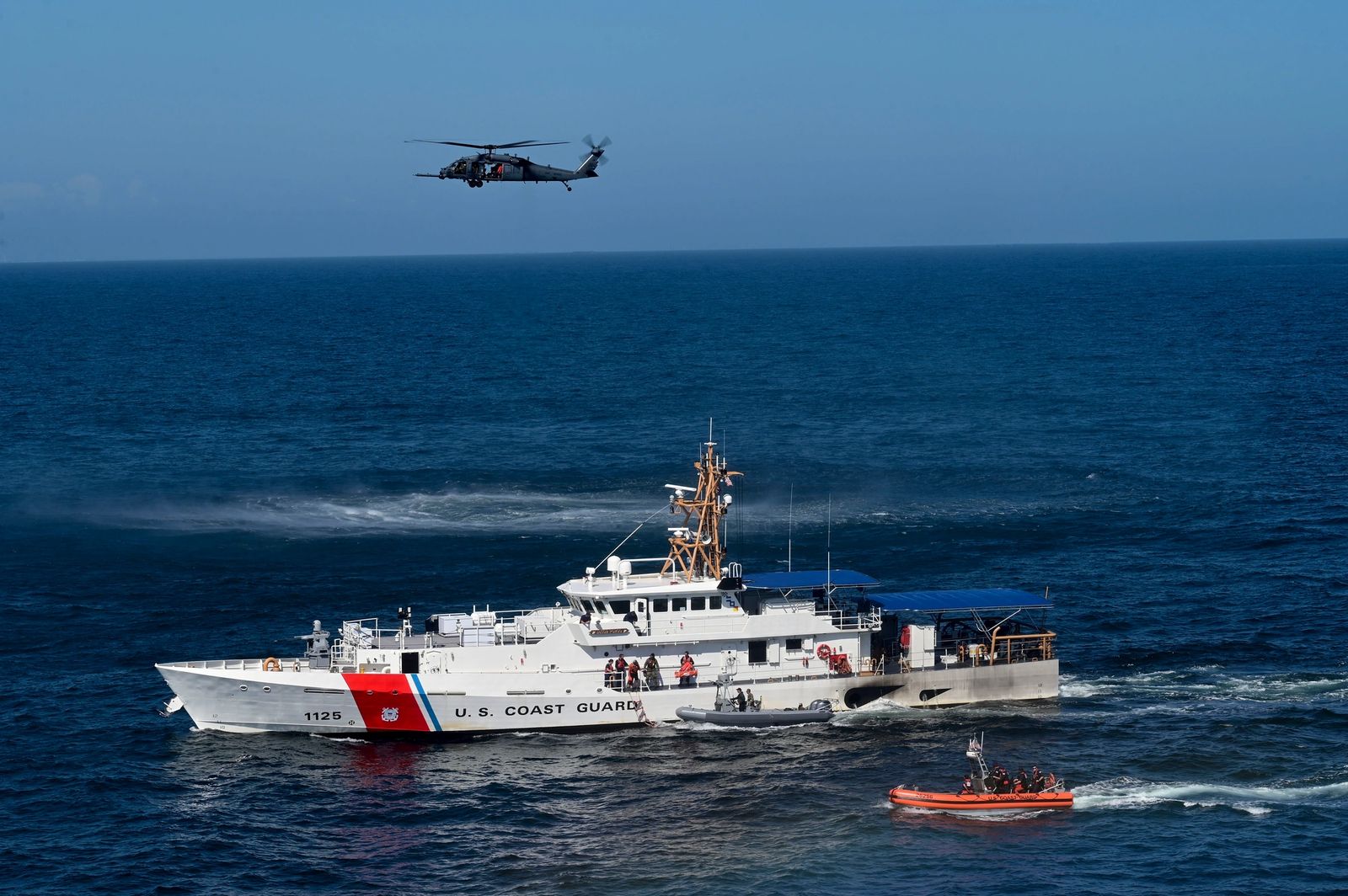
The Coast Guard suspended the Nantucket search Sunday evening, ending an extraordinary 66-hour air-and-sea operation after crews covered a reported 4,445 miles looking for a Canadian air ambulance and the six people aboard. The turn from rescue to recovery is the new fact at the center of this tragedy: Latitude Air Ambulance now says its four team members, its patient and the patient's family escort aboard Heartbeat 104 are presumed to have died.
Rear Adm. Matthew Lake, commander of the Coast Guard's Northeast District, said suspending a search was “not an easy decision,” offered condolences to the families and thanked the partner agencies involved. Next of kin were notified before the announcement, according to reports from Reuters, CNN and USA Today.
This is not yet a story with a known cause. It is a story with an established route, a steep and partly disputed final descent, reports of electrical trouble, a confirmed debris field and a rescue calculation that finally ran out of favorable variables. The evidence supports a crash; it does not yet explain why the aircraft went down.
What happened: from Bermuda departure to a suspended search
The aircraft was a Gulfstream G100, Canadian registration C-GRJP, operated by Ontario-based Latitude Air Ambulance under the flight designation Heartbeat 104. It left L.F. Wade International Airport in Bermuda at about 12:41 a.m. Saturday, October 3, bound for Boston Logan International Airport. FlightAware reporting placed the departure at 0301 GMT.
On board were two pilots and two medical staff members, all Canadian, plus a Bermudian patient and the patient's Bermudian family escort. Canadian Transport Minister Steven MacKinnon said Canada was working with authorities, while Bermuda airport operator Skyport confirmed the manifest as four crew and two passengers.
The Federal Aviation Administration issued a search-and-rescue alert at about 1:20 a.m. EDT; contact was reported lost at roughly 2 a.m. local time. Those timestamps reflect different points in the alert and communications chain rather than a single clean moment of disappearance. Readers can see our earlier report on the disappearance for the initial search-underway phase.
Late Saturday, the Coast Guard confirmed that debris associated with the aircraft had been found south of Nantucket. Reports describe the field as about 20 miles south of the island, or roughly 13 nautical miles offshore, in water estimated at 80 to 90 feet deep. The different distance descriptions can both be broadly true because statute miles and nautical miles are not interchangeable and reports may use different reference points.
Aircrews and surface vessels continued searching through Sunday. USA Today reported approximately 66 hours and 4,445 miles covered; other accounts described more than 4,400 square miles. On Sunday evening, the Coast Guard suspended the active search. Latitude's statement followed with the conclusion families had dreaded: “the four members of our Latitude team, our patient and the patient's family escort, who were aboard Heartbeat 104, are presumed to have died.”
The descent data: what 13,000 feet in two minutes actually tells us
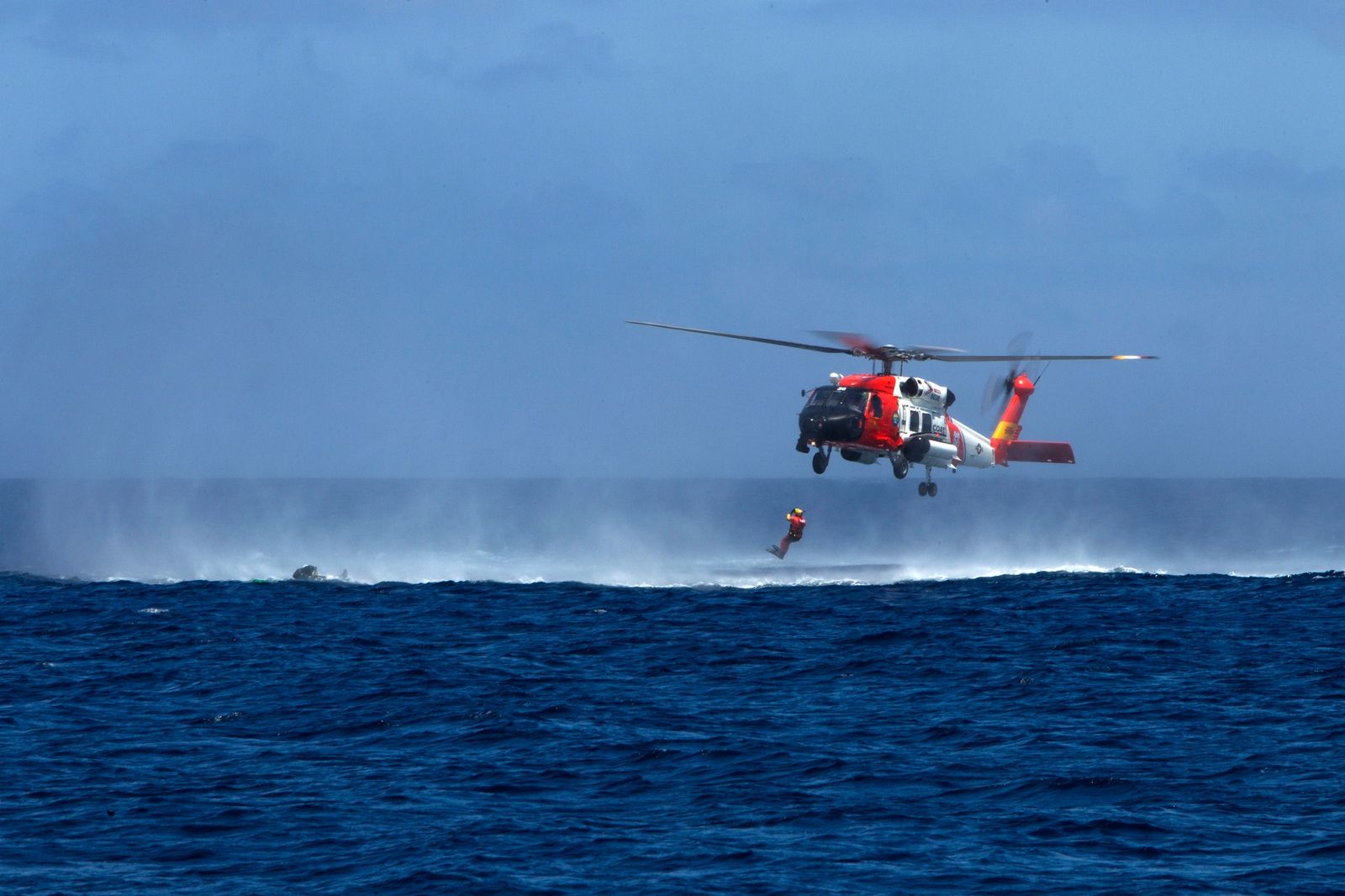
Publicly reported FlightAware data show C-GRJP cruising at about 24,000 feet for more than an hour before a rapid descent of roughly 13,000 feet over about two minutes. An Associated Press account carried by NPR affiliate WAMC described a drop of at least 9,000 feet in two minutes, followed by several minutes at a lower altitude before the aircraft disappeared.
Those accounts agree on the essential point — the descent was fast and abnormal — but not on every number. Public flight-tracking services assemble data that can contain gaps, rounded points or differing update intervals. Investigators will compare the public track against certified radar, ADS-B records, controller audio and any recoverable avionics. Until that work is complete, “13,000 feet in two minutes” is an important lead, not a finished accident reconstruction.
The communications evidence adds urgency without supplying a cause. Boston 25 reported air-traffic-control audio in which a Logan controller asked, “You're coming in blind?” and whether the pilot was declaring an emergency; no answer was heard on the excerpt. Nantucket Memorial Airport said the pilot had declared an emergency. The Boston Globe, reviewing Broadcastify audio, reported a fire-and-rescue dispatcher warning local crews that an aircraft about 15 minutes away was “suffering from electrical issues” after losing radio and radar contact.
Electrical trouble can affect radios, navigation displays, transponders and other systems, but the phrase does not establish which components failed, whether power was restored or whether another emergency came first. A steep descent can be commanded in response to several kinds of crisis. The known evidence supports an in-flight emergency and loss of communications; it does not support naming mechanical failure, weather, crew action or any other factor as the cause of the Gulfstream G100 crash.
Why this matters: a rescue mission was carrying another rescue mission
Every aviation loss is personal. A medevac loss carries an additional moral weight because the aircraft itself is part of an emergency response. Heartbeat 104 was not transporting travelers on an ordinary itinerary. Its pilots and clinicians were moving a patient across borders for care, accompanied by a family member. The people running that mission were first responders in the air.
That is why the route matters. A Canadian operator launched from Bermuda toward a U.S. medical center, and the response immediately became a three-country undertaking. Bermuda handled the departure, passengers and family coordination. Canada supported the operator, its four citizens and the aircraft's registration records. U.S. agencies controlled the final airspace, launched the maritime search and will lead key parts of the wreckage investigation.
Latitude says it has flown thousands of medevac missions since 2009 and had advertised a “flawless safety record,” according to the WAMC/AP report. That history will be tested against the records from this flight, but it should not be used in either direction: a past safety claim cannot explain this accident, and one tragedy by itself does not reveal a pattern.
The Coast Guard's decision matrix: suspension is not abandonment
Search suspension can sound like a withdrawal of effort. Operationally, it is a judgment that continued active searching is no longer likely to find a survivor after the highest-probability areas have been covered with the available aircraft, boats and partner resources. The command considers the last known position, drift, sea and weather conditions, water exposure, signs of flotation or survival equipment, confirmed debris and the amount of time elapsed.
Here, the calculus changed as the evidence accumulated. Crews searched for roughly 66 hours across thousands of miles. They were no longer looking only from a last radar point; they had a debris field tied to the aircraft. With no survivors located and the survival window narrowing over open Atlantic water, commanders moved from an active rescue posture to a suspended search.
That is standard search-and-rescue protocol, not a declaration that evidence recovery ends or that the case is closed. A suspended search can be reopened if credible new information changes the probability assessment. Separate recovery and accident-investigation operations can continue even when rescue assets are released.
Lake put the human cost ahead of the procedure: “Suspending a search is not an easy decision. We express our deepest condolences to the families and loved ones affected by the tragedy and our gratitude for our partner agencies who helped support search efforts.”

Who was aboard Heartbeat 104
The confirmed manifest is precise about roles and nationalities but not names. The four Canadians were two pilots and two medical staff members employed by Latitude Air Ambulance. The two Bermudians were a patient and the patient's family escort. No names or private medical details have been released in the cited reporting, and none should be inferred.
The nationalities explain the breadth of the official response, but the roles explain the mission's stakes. Two pilots were managing a nighttime international flight; two clinicians were responsible for continuity of care in the cabin; a patient was being transferred for treatment; and a family member was accompanying that patient. Six people, three jurisdictions and one chain of care were lost together.
What happens next: recovery, recorders and two-country oversight
The search now gives way to a technically demanding recovery. Water reported at 80 to 90 feet is within the reach of specialized divers and remotely operated equipment, but an ocean debris field can be dispersed by current and weather. Recovery teams will first map the field, identify major sections and preserve the location and condition of components before movement whenever possible.
Latitude said it would work with the U.S. National Transportation Safety Board, the Transportation Safety Board of Canada and other authorities. The NTSB will be central because the aircraft went down near Massachusetts; Canada's TSB has a direct interest because C-GRJP was Canadian-registered and operated. Bermuda can contribute departure, fuel, load, airport and medical-transfer records.
Investigators will establish what cockpit recording equipment or nonvolatile avionics memory the G100 carried and what survived. If recorders or memory units are recovered, they may help reconstruct altitude, speed, heading, warnings and crew actions. The investigation will also examine maintenance history, electrical systems, emergency power, weather, air-traffic communications, crew qualifications, fatigue and the operator's dispatch procedures.
The regulatory question is larger than one component. Cross-border medevac work crosses aviation rules, medical accreditation, customs and duty-time systems. Investigators will ask whether those systems aligned as intended and whether this flight exposes a gap in communications or equipment redundancy. Those are questions, not findings. Cause remains undetermined.
For context on how investigators combine cockpit evidence with operational records, see our aviation investigation explainer and our report on Northeast aviation-system redundancy.
What to watch now
The next meaningful developments will be physical, not rhetorical: whether crews recover the main wreckage; whether any recorder or avionics memory is intact; whether certified radar confirms the public descent profile; whether the electrical-failure report matches cockpit evidence; and whether investigators find a single initiating event or a cascade of failures.
Latitude's future will depend on more than the first preliminary statement. Regulators may review the aircraft's maintenance and the operator's procedures while investigators preserve evidence. Families will face a longer process still: formal identification, repatriation and answers that aviation investigations often take months to produce.
The search ended because the Coast Guard judged that 66 hours, 4,445 miles and a confirmed debris field had exhausted the reasonable rescue case. The investigation begins because those same facts are not an explanation. The central question has changed from where is Heartbeat 104? to what happened in its final minutes? That answer must come from recovered evidence, not from the speed of the news cycle.
Sources and reporting notes
- Reuters: Coast Guard suspension, Latitude statement and international response, October 4, 2026
- AP via WAMC: debris, timeline and reported flight profile, October 3, 2026
- CNN: search suspension and operator response, October 4, 2026
- USA Today: 66-hour search and 4,445-mile coverage, October 4, 2026
- Reuters via 943 Jack FM: debris confirmation and early search details, October 3, 2026
Reporting note: Public accounts differ on the precise descent — roughly 9,000 to 13,000 feet in about two minutes — and on distance to the debris field. Those differences are identified rather than reconciled without certified investigation data. The cause remains undetermined. All three photographs are clearly labeled context images and do not depict Heartbeat 104 or the October 2026 search.