What happened
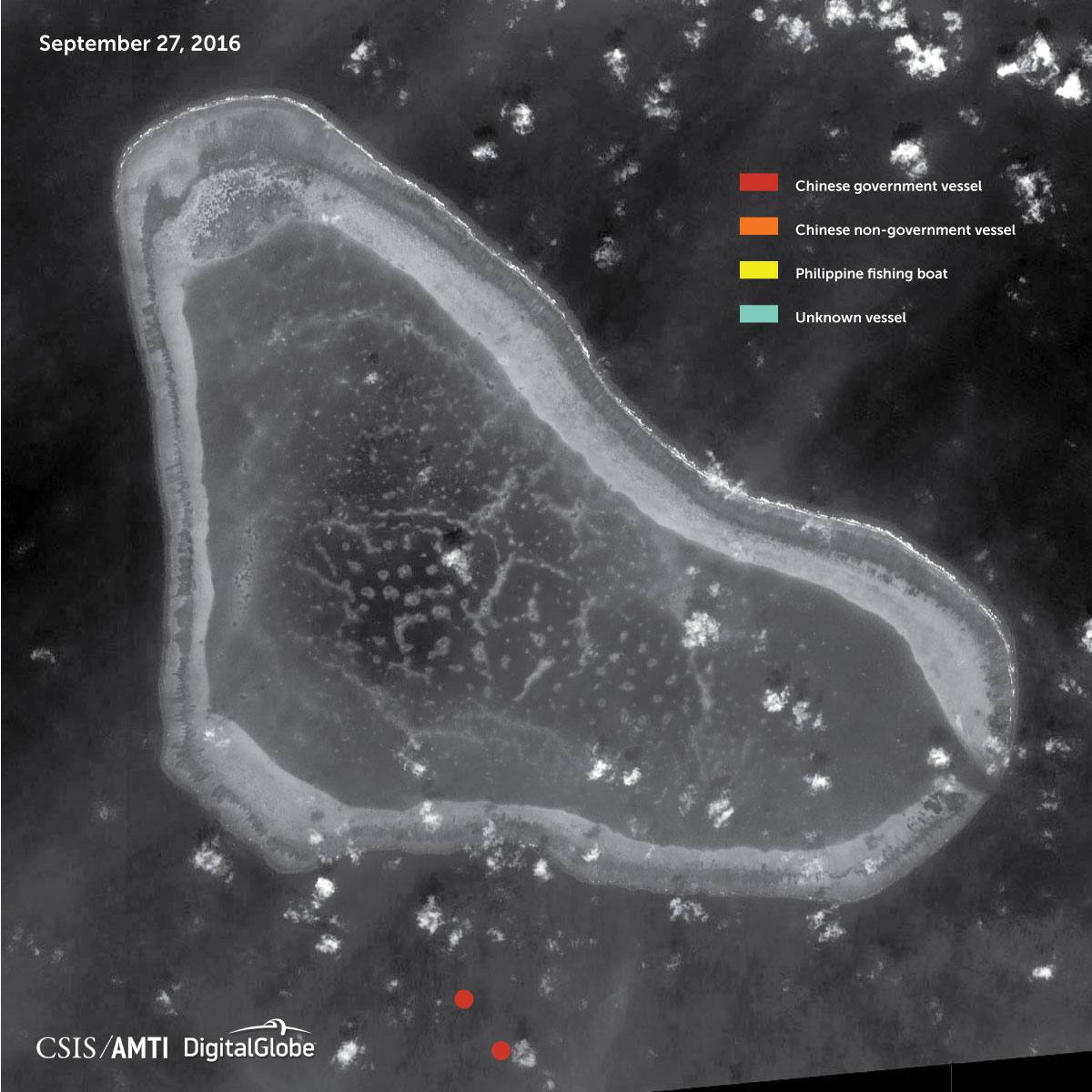
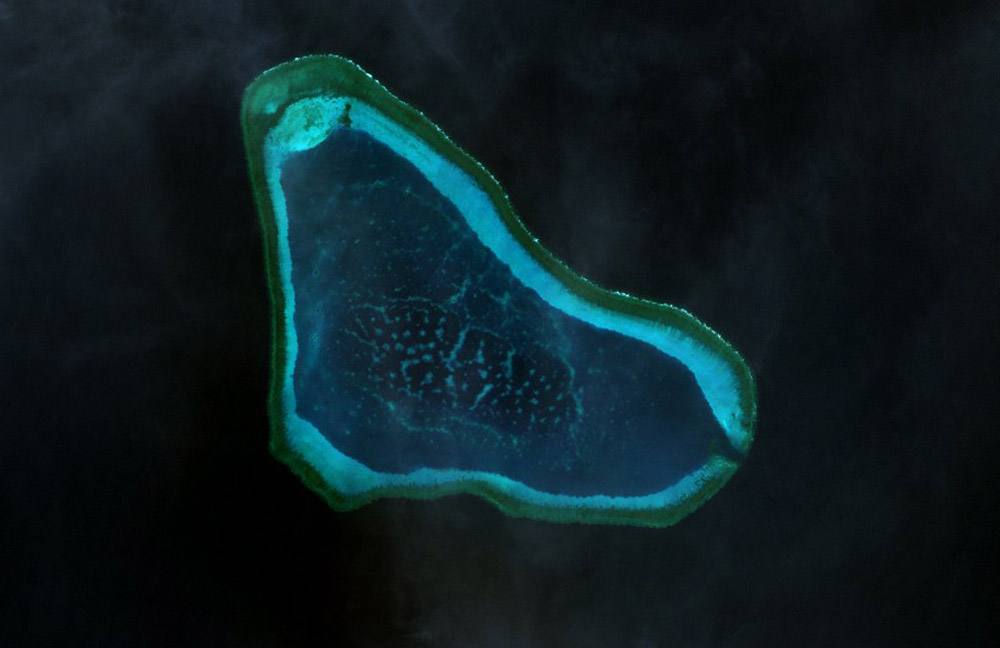
On Sunday, China's military announced a joint naval and air training exercise in the waters and airspace around Scarborough Shoal, the triangular coral atoll it calls Huangyan Dao and the Philippines calls Bajo de Masinloc. The People's Liberation Army Southern Theater Command disclosed the drills in a statement on WeChat, Reuters reported, describing the operation as a "necessary response" to actions by "certain countries" it accused of undermining regional peace and stability. The command said the training aimed to "test and enhance combat capabilities in safeguarding China's territorial sovereignty and maritime rights and interests." The Philippine embassy in Beijing did not immediately respond to Reuters' request for comment.
The language is standard PLA theater-command boilerplate — but the timing is not. The drills were announced barely 48 hours after Chinese President Xi Jinping wrapped up his first visit to Washington in 11 years, and in the same news cycle as a direct American condemnation of Chinese maneuvers at another Philippine-claimed shoal 600 kilometers to the south.
A two-front week
Sunday's exercise lands at the end of one of the busiest weeks the South China Sea has seen in 2026. On September 24, China Coast Guard and People's Liberation Army Navy vessels hindered a Philippine rotation and resupply (RORE) mission toward Ayungin Shoal — better known internationally as Second Thomas Shoal — where a small contingent of Philippine marines is stationed aboard the grounded BRP Sierra Madre. The Armed Forces of the Philippines and the National Task Force for the West Philippine Sea said the interference put Filipino personnel at risk.
Manila did not back down. On Saturday, Defense Secretary Gilberto Teodoro Jr. told the Saturday News Forum that the resupply missions "will go on" despite the temporary setback, according to the Philippine News Agency. And on Sunday, U.S. Ambassador to the Philippines Lee Lipton publicly condemned the Ayungin blocking maneuvers as "dangerous" and "irresponsible," GMA News reported — Washington treating the week's gray-zone activity as a single pressure pattern rather than isolated incidents.
Staging combat-oriented naval-air drills at Scarborough while Ayungin remains contested is a classic simultaneous-pressure play: it forces Manila to split its attention — and its ships — between Bajo de Masinloc's fishing grounds and the Sierra Madre outpost farther south, while signaling to Washington that Beijing can escalate on more than one front at once.
How we got here
Scarborough Shoal sits about 124 nautical miles off Masinloc, Zambales — well inside the Philippines' 200-nautical-mile exclusive economic zone under the UN Convention on the Law of the Sea. China seized effective control of the atoll in a 2012 standoff and has kept Philippine government vessels and, at times, Filipino fishermen at bay ever since. In 2016, the Permanent Court of Arbitration in The Hague ruled that the features at the shoal were rocks that generate no exclusive economic zone of their own, and found that China had unlawfully prevented Filipino fishermen from exercising their traditional fishing rights. Beijing rejected the ruling outright; Manila continues to treat Bajo de Masinloc as a core West Philippine Sea interest.
The pattern of 2026 has been escalation by accumulation. In July, Manila accused Beijing of firing water cannon at government vessels near Scarborough Shoal and of striking a Philippine Navy staff member with a wooden baton during an encounter at Second Thomas Shoal. On September 8, the Armed Forces of the Philippines said a Chinese J-10 fighter had placed a Philippine patrol aircraft in its gunsight during a maritime domain awareness flight near Bajo de Masinloc. On September 18, a China Coast Guard vessel rammed the Philippine fisheries ship BRP Datu Magat Salamat near Sabina Shoal. On September 24 came the blocked Ayungin resupply. Now, September 27: announced naval-air drills at Scarborough. Six qualitatively different forms of pressure in under three months — whatever Beijing's long-term objective, the tempo reads as a campaign being intensified, not a string of misunderstandings, though China would dispute that characterization as it disputes the Philippine account of each individual encounter.
There is also a summit-shaped shadow over the week. Xi's three-day Washington visit ended Friday with 21-gun salutes, talk of trade and artificial intelligence, and a pair of pandas promised to Zoo Atlanta — while details of the talks are due to be released Monday. The Scarborough drills, announced before those details are public, serve as a reminder that Beijing's diplomatic calendar and its military calendar run on separate tracks.
Why this matters
A drill announcement is not a clash — nobody was rammed, nobody's gunsights were photographed this time. But that is precisely what makes it significant: it normalizes a military presence around a feature inside the Philippine exclusive economic zone as routine "training," shifting the baseline of what counts as an incident. The PLA has now announced major drills at Scarborough twice in a month — the September 2 live-fire exercise, which featured JL-10 trainer jets armed with live PL-5 missiles driving away Philippine aircraft, and now this.
The deliberate ambiguity of the Southern Theater Command's statement matters too. "Certain countries" is a phrase that can mean the Philippines alone, the United States, or the entire constellation of allies — Japan, Australia, the European Union — that have flagged South China Sea coercion. Ambiguity lets Beijing address all of them at once without the diplomatic cost of naming any.
And the two-front sequencing should be read as doctrine, not coincidence. Pressuring Ayungin and Scarborough simultaneously stretches the Philippine Coast Guard and Navy across hundreds of nautical miles, tests Manila's political will to sustain both fronts, and forces Washington to decide how many flashpoints it can credibly watch at once.
Who gains, who loses
Beijing's calculation appears to be that sustained, deniable pressure will eventually exhaust Manila's willingness to contest these waters — that the Philippines will quietly reduce its presence rather than absorb an endless series of collisions, blockades and drills. The risk in that calculation is that each episode strengthens Philippine public support for confrontation, deepens U.S.-Philippine military cooperation, and pushes Southeast Asian neighbors toward harder positions. It also gives Washington's hawks fresh evidence precisely when trade talks are supposed to be warming relations.
Manila gains international sympathy and alliance solidarity with every documented incident, but pays in hull damage, crew risk and the slow erosion of its practical control over waters a Hague tribunal says are its own. The people who lose most directly are the Filipino fishermen of Zambales and Pangasinan, whose traditional fishing grounds have become a geopolitical theater where their boats are outnumbered by warships.
The United States, which was not party to Sunday's drills, is nevertheless central to their meaning. Lipton's unusually blunt condemnation of the Ayungin maneuvers suggests Washington is done treating each incident as a bilateral Manila-Beijing affair. But condemnation is cheap; the concrete test is whether the U.S. conducts a freedom-of-navigation operation near Scarborough in the coming weeks — the measure by which Beijing will judge whether the words have weight.
What the numbers tell us
One hundred twenty-four nautical miles: the distance from the Luzon coast to Scarborough Shoal, comfortably inside the 200-nautical-mile exclusive economic zone. Under the law of the sea, there is no ambiguity about whose waters these are — which is why Beijing's operations there depend on rejecting the legal framework entirely rather than arguing within it.
Eleven warships from eight countries: the ADMM-Plus exercise that sailed within 45 nautical miles of the shoal just days ago — the Philippines, the United States, Australia, Japan, New Zealand, India, Singapore and Brunei drilling together in the West Philippine Sea, with a Chinese warship shadowing the formation at about 10 nautical miles. That is the balance of forces in miniature: one claimant against a loose coalition, each side performing resolve for the other's cameras.
And the calendar: 2012, the seizure; 2016, the ruling Beijing ignored; July, the water cannon and the baton; September 8, the gunsight; September 18, the ramming; September 24, the blocked resupply; September 27, the drills. The intervals are shrinking. Whatever one calls the pattern, it is accelerating.
What happens next
Watch four things. First, whether Teodoro follows through on his pledge and Manila attempts another Ayungin resupply — and whether China blocks it again. Second, whether Filipino fishers or the Philippine Coast Guard report disruptions around Scarborough during or after the announced training window; drills have a way of becoming de facto exclusion zones. Third, whether allied statements follow Lipton's — Japan, Australia and the European Union have all flagged South China Sea coercion before, and their silence or speech will tell. Fourth, whether Monday's release of the Xi-Trump summit details cools or hardens the temperature: the drills were announced before the world knows what was actually agreed in Washington, which may be the point.
Related coverage
- Chinese Ship Rams Philippine Government Vessel in South China Sea, Coastguard Says (Sept 18 ramming near Sabina Shoal)
- US and China Open High-Level Talks Before Trump-Xi Summit (Xi's Washington visit)
Sources
Reuters, "China conducts naval, air exercise around disputed shoal in South China Sea," September 27, 2026: Read the report
The Philippines Web, "China Stages Naval-Air Drills Around Scarborough as West Philippine Sea Flashpoints Multiply," September 27, 2026: Read the report
X Files News, "China warship shadows multinational naval drill in West PH Sea," September 25, 2026: Read the report