
Lead
A Kazakhstan naval exercise left 14 servicemen dead after personnel disembarking from a patrol boat in rough weather were swept into the Caspian Sea on Thursday, September 24. Three others were rescued. By Friday, five Defence Ministry officials—including the navy’s first deputy commander—had been detained as investigators examined suspected negligence and violations of navigation rules.
President Kassym-Jomart Tokayev declared September 25 a national day of mourning. The immediate facts describe a maritime accident; the wider significance lies in the speed with which it became a command-accountability case. For a navy of about 3,000 personnel, the deaths are not only a national tragedy but a substantial institutional shock.
What happened
The incident occurred during the Khazar Qorgany 2026 exercise in Kazakhstan’s western Mangystau Region. According to the available reports, personnel were leaving a patrol boat when rough conditions swept them into the water. Search-and-rescue efforts initially produced a toll of nine dead while others remained missing. That figure was later revised to 14 fatalities, with three people reported rescued.
The chronology matters because early casualty totals during water searches are provisional. The change from nine confirmed deaths to 14 reflected the recovery and accounting process, not a separate incident. Authorities have not publicly released a complete minute-by-minute sequence, the precise sea state at the point of disembarkation, or the individual orders given on the vessel.
Those gaps are central to the investigation. Investigators are examining command decisions, compliance with safety requirements, the assessment of weather conditions and the patrol boat’s technical state. Each question addresses a different possible failure: whether the operation should have proceeded, whether protective procedures were followed, whether forecasts and conditions were interpreted properly, and whether equipment contributed to the loss.
Five officers in custody
On Friday, five Defence Ministry officials were detained on suspicion of negligence and navigation-rule violations. The group includes the navy’s first deputy commander, making the case more than a review of actions by junior personnel at sea. Detention is not a finding of guilt, and the precise role of each official has not yet been established publicly.
The arrests nevertheless signal that investigators are looking up the chain of command. Maritime training depends on layered decisions: exercise planners set objectives, commanders decide whether conditions are acceptable, vessel officers control movement and disembarkation, and safety teams prepare rescue capacity. Responsibility can therefore be distributed rather than confined to one person or one moment.
The legal process will need to separate operational misjudgment from criminal negligence. It will also need to show whether navigation rules were breached in a way that caused or materially worsened the loss. A rapid arrest can demonstrate seriousness, but durable accountability depends on evidence, transparent procedure and findings that explain the failure rather than merely identify defendants.
A nation in mourning
Tokayev’s declaration made September 25 a national day of mourning, placing the servicemen’s deaths within a public ritual usually reserved for disasters of exceptional gravity. Flags are lowered and entertainment programming is curtailed during such commemorations, while officials and institutions acknowledge the victims collectively.
The response also recalls the August 2021 explosions at an ammunition depot in Kazakhstan’s Zhambyl Region. Fourteen people died in that disaster, and a national day of mourning followed. The identical fatality count does not make the events equivalent: one involved a depot blast, the other a naval training operation. But the parallel reinforces a public question that follows military accidents—whether hazardous institutions learn from earlier losses and make safety lessons durable.
Why this matters
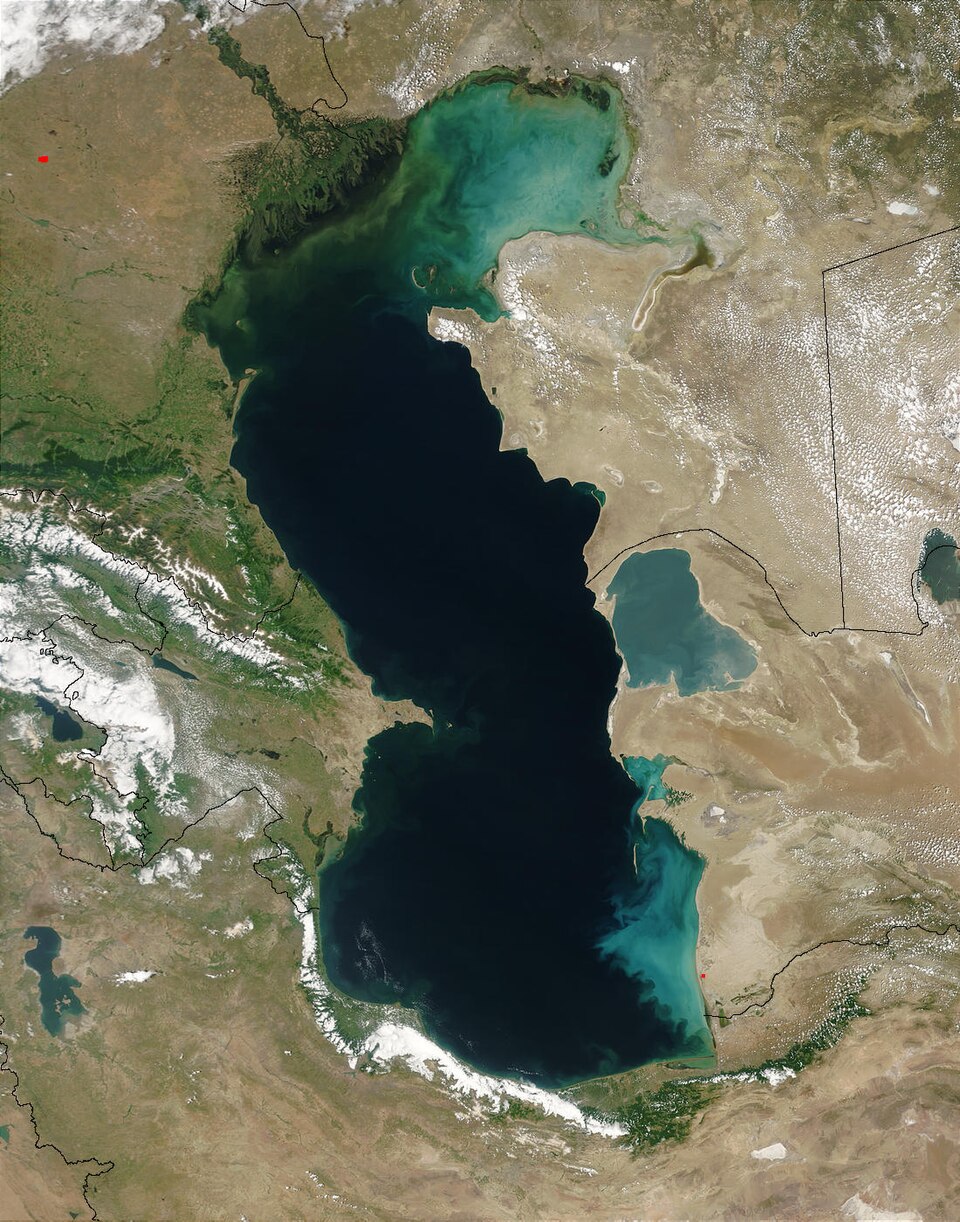
Kazakhstan’s navy is small, but its mission is strategically outsized. The force protects maritime borders and offshore energy infrastructure in the Caspian, a basin where security, shipping and petroleum production overlap. Training is therefore not ceremonial: crews must be able to operate around ports, platforms and long stretches of exposed coastline under difficult conditions.
That strategic role raises the standard for safe preparation. A navy cannot eliminate risk from rough water, but it can define when risk is acceptable, how personnel are equipped, what rescue assets must be present and who has authority to stop an evolution. A mass-casualty event during training suggests that one or more of those controls may have failed. The investigation must establish which.
The disaster may also affect public confidence in the military’s internal oversight. Kazakhstan’s decision to detain senior personnel quickly could strengthen confidence if the inquiry is evidence-led and its conclusions are published. It could have the opposite effect if the process appears designed to close the case before technical causes and institutional weaknesses are fully examined.
How we got here
Kazakhstan emerged from the Soviet Union’s dissolution in 1991 without a ready-made independent navy in the modern sense. It gradually built a Caspian force to patrol its maritime frontier, safeguard ports and protect offshore installations. The service developed alongside the country’s growing importance as an oil and gas producer, particularly around the northeastern Caspian.
The Caspian is landlocked but not strategically quiet. Five states—Kazakhstan, Russia, Azerbaijan, Iran and Turkmenistan—share its shores. Questions of maritime boundaries, fishing, shipping lanes, energy fields and military presence have shaped regional planning for decades. Kazakhstan’s fleet is not designed for global operations; it is a specialized force whose value comes from familiarity with local waters and the infrastructure concentrated along them.
That history explains why a training accident carries consequences beyond the exercise itself. Kazakhstan has invested in an institution intended to make its Caspian interests safer. If routine command and navigation safeguards did not hold during a planned drill, policymakers must ask whether the same weaknesses could surface during an emergency around an offshore platform, border incident or search-and-rescue mission.
Who gains, who loses
No responsible actor “gains” from the deaths. The direct losses fall first on the families, colleagues and communities of the 14 servicemen. The navy loses experienced personnel and training capacity. Kazakhstan’s government bears the political burden of explaining how a controlled exercise became a national disaster.
Institutionally, an independent investigation could create one limited form of public value: it may reveal preventable weaknesses and force reforms in weather thresholds, life-saving equipment, manifests, communications and rescue readiness. That is not a benefit that offsets the deaths; it is the minimum obligation that follows them.
Regional rivals gain little in a conventional military sense from a one-off accident, but perceptions matter. A prolonged or opaque inquiry could invite doubts about Kazakhstan’s readiness to protect critical Caspian assets. Conversely, transparent findings and enforceable reforms could limit reputational damage by showing that the state can identify and correct failures.
What the numbers imply
Kazakhstan’s Caspian-based navy has about 3,000 personnel. Fourteen deaths equal approximately 0.47% of that total—nearly half a percent of the entire force. This comparison is not a claim that every sailor has the same role or that the service lost half a percent of its operational capacity. It is a scale indicator: a single training event killed a share of personnel that would be institutionally significant in any compact military branch.
The rescue ratio also deserves examination. Reports say three people were rescued while 14 died among those swept into the sea. Without a verified manifest and sequence, the figure cannot by itself prove inadequate equipment or response. It does, however, show why investigators must reconstruct flotation use, water temperature, rescue timing, crew positioning and whether the patrol boat and supporting units had sufficient recovery capacity.
The movement from an initial toll of nine to a final reported 14 illustrates another lesson: early numbers in a maritime emergency are incomplete by nature. Newsrooms and officials should label them as provisional until search operations and personnel lists are reconciled. That distinction protects accuracy and respects families awaiting confirmation.
What happens next
The criminal inquiry will determine whether prosecutors bring formal charges against the five detained officials and what evidence supports each allegation. A parallel technical review should establish the patrol boat’s condition, the forecast and observed weather, the exercise plan, personal protective equipment, rescue arrangements and the chain of orders before the disembarkation.
The most important outcome will be whether Kazakhstan publishes enough detail to prevent recurrence. Credible reform would include specific findings, assigned responsibility, changes to operating procedures and a mechanism for verifying that those changes reach crews. Families also need timely information about the investigation and the support available to them.
The case sits within a broader problem shared by armed forces worldwide: operational pressure can normalize risk until a training event exposes the cost. Recent scrutiny of mental-health capacity aboard the USS Abraham Lincoln strike group shows how command climate and readiness can become inseparable. In a different context, the renewed Ethiopia–Tigray conflict demonstrates why military institutions under pressure need verifiable command structures and civilian accountability.
For Kazakhstan, the next test is not whether officials can describe the tragedy as exceptional. It is whether investigators can explain, with evidence, how a planned drill became fatal and whether the navy can turn those findings into safer practice without weakening its capacity to operate in difficult Caspian conditions.
Sources
- Reuters — Kazakhstan arrests five military officers after 14 die during naval exercise (September 25, 2026)
- Reuters — Nine Kazakh military personnel dead after being washed out to sea during exercises (September 24, 2026)
- Open Chronicle — Kazakhstan naval exercise leaves nine dead after Caspian Sea accident
- Sweden Herald — 14 killed in Kazakhstan naval exercise accident
Reporting basis: Fixed September 25, 2026 snapshot. Detention is not a finding of guilt; the investigation remains open, and technical causes have not been finally established.