Caleb Flynn guilty verdict
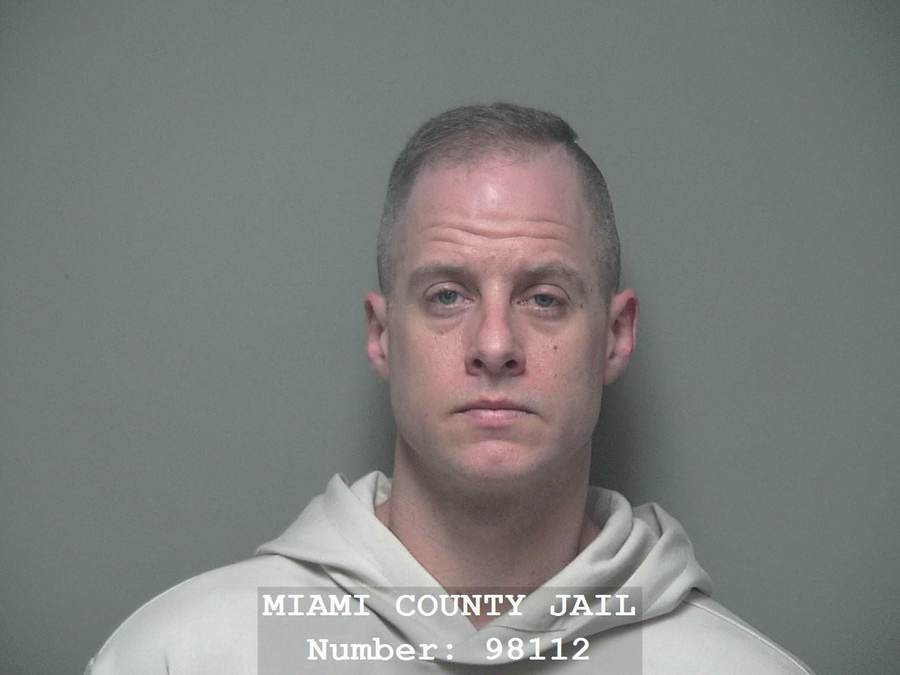
TROY, Ohio — Caleb Flynn, the former "American Idol" contestant and ex-church worship leader accused of shooting his wife to death and staging the scene to look like a home invasion, was found guilty Tuesday of murdering Ashley Flynn.
After about two hours of deliberations — a strikingly fast verdict following eight days of testimony, and a sharp contrast with the Massachusetts murder trial that ended in an 11-1 hung jury this month — the Miami County jury convicted Flynn, 40, on all nine counts: aggravated murder, three counts of murder, two counts of felonious assault and three counts of tampering with evidence. As Judge Jeannine Pratt read the verdicts in the Miami County Court of Common Pleas, Flynn shook his head, sobbed and wiped his nose and eyes. He was then handcuffed and escorted from the courtroom.
Sentencing is set for 3 p.m. Monday, October 5. Flynn faces life in prison without the possibility of parole.
The case began in the early-morning hours of February 16, when Flynn called 911 to report that an unknown intruder had fatally shot his 37-year-old wife at their home in Tipp City, Ohio. Prosecutors argued Flynn shot Ashley — reportedly twice in the back of the head as she slept — then staged the house to look like a burglary. He was arrested three days later, on February 19, and pleaded not guilty. A grand jury ultimately indicted him on 11 counts; two intimidation counts were dismissed during the trial.
A staged break-in that never happened
The prosecution's forensic case centered on the door Flynn said an intruder had forced open. An FBI agent testified that she found no pry, kick or ram marks on the outside of the door — only gouge marks on the inside of the frame, which she said was not consistent with a forced entry. The 9mm pistol used in the shooting has never been recovered; Flynn's own 9mm pistol was missing from his truck, where he normally kept it.
Jurors visited the family's home during the trial and watched police body-camera footage from the night of Ashley's death, walking the same rooms where prosecutors said the staging took place.
The affair and the texts
Much of the trial centered on Flynn's affair with Alleigha Botner, 24, whom he met when she was an intern at his church and who also served as a worship leader. Botner testified over two days about the roughly 18-month affair and the tens of thousands of messages the pair exchanged.
In messages read aloud in court, Flynn repeatedly wrote that he wanted his wife dead. In August 2025, he wrote: "I was up until 4 a.m. last night crying, literally thinking of ways to kill her and not go to jail." In February 2025 — almost exactly a year before the killing — he wrote: "I need her to die, to cheat again, to leave." Other messages showed him discussing his desire to kill his wife and "not go to Hell for it."
Prosecutors said the motive was Flynn's desire to start a new life with his much younger mistress while keeping his worship-leader position and avoiding a divorce. In closing arguments Tuesday, prosecutor Paul Watkins told jurors: "He made a choice. Ashley lost her life." The prosecution's closing ran about 16 minutes; the defense took about 40.
The defense countered that the prosecution had not proved its case and offered no real evidence linking Flynn to the murder, maintaining that an intruder killed Ashley. The jury rejected that account in about the time it takes to watch a film.
Who the Flynns were
Caleb Flynn, 40, was a contestant on Season 12 of "American Idol" in 2013, auditioning with "Lean on Me" and earning a Golden Ticket to Hollywood Week, though he did not advance to the final 20. On the show he spoke about his faith and his wife: "I love my wife more than anything," he said. He later served as a music pastor at the Christian Life Center in Butler Township.
Ashley Flynn, 37, was a substitute teacher and seventh-grade girls volleyball coach who taught at a local Bible-based academy. The couple shared two daughters, both preteens, who were in the home the night of the killing.
Why this matters
The verdict closes a case that drew national attention for its collision of reality-television fame, church leadership and a killing prosecutors described as coldly premeditated. The jury's speed — about two hours after eight days of testimony — signals how decisively the state's paper trail answered the case's central question. When a defendant writes, a year in advance, "I need her to die," and the forensics dismantle his intruder story door by door, there is little left for deliberation to resolve.
The Flynn case also shows how staged crime scenes unravel. Intimate-partner homicides disguised as break-ins depend on investigators accepting the scene at face value; here, a single door examined by an FBI agent collapsed the entire defense. And the missing murder weapon — never found despite searches of the home and storm drains — demonstrates that a conviction does not require one when the surrounding evidence is overwhelming.
The case also lands hard on the church world Flynn inhabited. A worship leader — a figure congregations trust with their most vulnerable moments — stood accused of planning his wife's murder for more than a year. That betrayal of a specific kind of trust is part of why the story traveled so far beyond Ohio: it scrambles the categories audiences use to decide who is capable of what.
For the public, the case joins a grim modern canon of spouse-murder trials in which the killer's own digital footprint becomes the star witness — the latest high-profile case of a wife's killing to grip national attention this month. For Tipp City, it answers who killed Ashley Flynn — but leaves two young daughters growing up with that answer.
What happens next
Flynn will return to court on October 5, when Judge Pratt is expected to impose life in prison without parole — the maximum available, since prosecutors did not pursue this as a capital case, a contrast with Florida's accelerating use of the death penalty this year. Gun specifications attached to several counts could add further prison time. His legal team is widely expected to appeal, which would move the case to Ohio's appellate courts and stretch its final resolution into next year and beyond.
The conviction ends the public chapter of a case that began with a 911 call about an intruder and ended with a jury's near-instantaneous rejection of that story — and with a former worship leader facing the rest of his life behind bars.
Sources: USA Today; New York Post