WAR · SUDAN
War / Sudan
Sudan US Ceasefire Partition Warning: Adviser Fears Libya-Style Split
Amjad Farid says Washington's proposed 90-day pause could freeze rival authorities in place. The US approach is meant to stop the fighting and restart civilian politics; the dispute is over sequencing, enforcement and who retains arms.

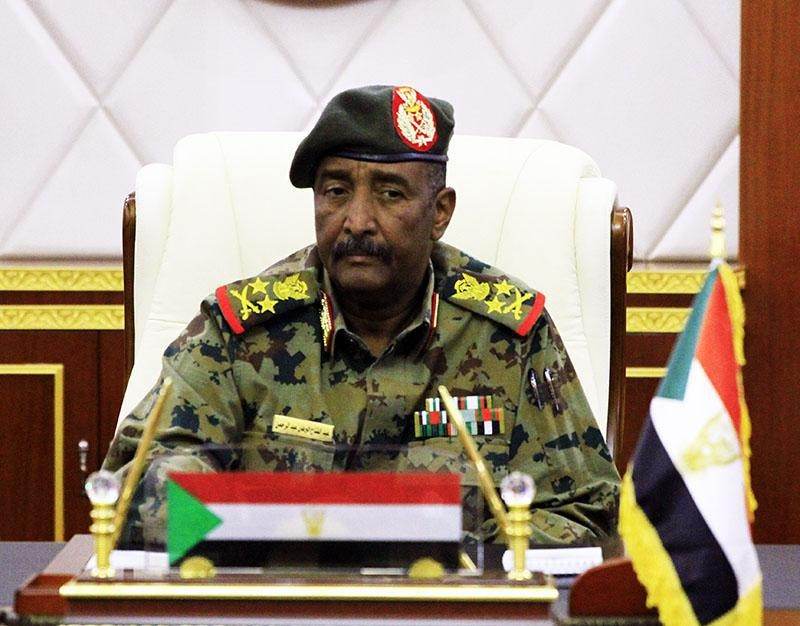
NEW YORK — The Sudan US ceasefire partition warning sharpened on Wednesday when Amjad Farid, an adviser to army leader Abdel Fattah al-Burhan, said Washington's proposed 90-day truce could push the country toward a division resembling Libya's. The warning does not establish that partition is the plan's purpose or inevitable outcome. It does expose the central problem facing mediators: a pause in combat can save lives immediately, yet a ceasefire that leaves two armed administrations intact may also harden the map of the war.
Farid, who advises Burhan on political and international affairs, told Reuters that the army-aligned authorities had submitted changes to the proposal from Massad Boulos, the US senior adviser for Arab and African affairs. The principal demand, Farid said, was an internationally monitored withdrawal of the Rapid Support Forces from urban areas. He argued that the version being advanced by Boulos would preserve the RSF as an armed political actor and create what he called a de facto Libya-style partition.
The US concept, as reported by Reuters, calls for a 90-day ceasefire followed by negotiations aimed at ending the war and returning Sudan to civilian rule. That is a materially different objective from partition. Washington has also said that neither the Sudanese Armed Forces nor the RSF represents legitimate constitutional government. The unresolved question is whether the ceasefire's monitoring, withdrawal and political clauses can convert a battlefield pause into a national transition rather than a durable military stalemate.
Why this matters
Ceasefire diplomacy often depends on sequencing. Washington's apparent logic is that stopping fire first creates room for humanitarian access and political talks. Burhan's camp argues the reverse: unless the RSF first leaves captured cities, a ceasefire rewards territorial control and lets a parallel authority consolidate. Both arguments describe real risks. Delaying a pause costs civilian lives; freezing lines without enforceable security arrangements can turn an emergency measure into an informal border.
The Libya comparison is therefore more than rhetoric, but it is not a prediction. Libya has had rival eastern and western administrations for more than a decade. Sudan's geography, institutions and armed networks differ. Still, the RSF has tried to establish a parallel government in Nyala, in western Darfur, where ministers and some police have been appointed. Reuters reported that the administration had not established a full network of public services such as schools, hospitals and courts. That makes it an attempted governing project rather than a fully functioning state, but it gives the partition warning a concrete political basis.
The immediate humanitarian trade-off is severe. A ceasefire that reduced shelling, drone strikes and displacement would have value even if the political settlement remained incomplete. Yet civilians also need clarity on who polices neighborhoods, whether displaced families can return, who controls checkpoints and whether aid agencies can cross front lines. A document that pauses combat without answering those questions may redistribute coercive power rather than remove it.
Background: the visa dispute moved the fight to Washington
The current argument follows a diplomatic breakdown at the UN General Assembly. Reuters reported that the United States withheld Burhan's visa as acceptance of the 90-day plan became a point of pressure. Sudan's UN ambassador asked Secretary-General António Guterres to intervene, while a planned Washington meeting between a Sudanese delegation and Boulos was cancelled. Burhan then publicly rejected outside directives and vowed the army would defeat the RSF, a confrontation examined in Signal Post News's report on his response to the visa pressure.
The visa issue matters because it changed the negotiating atmosphere. A tool intended to create leverage also allowed army-aligned officials to frame the ceasefire as an external ultimatum. The United States, for its part, has reason to resist treating either belligerent as Sudan's rightful government: Burhan and RSF commander Mohamed Hamdan Dagalo, known as Hemedti, jointly overthrew Sudan's civilian leadership in 2021 before their partnership collapsed into war in April 2023.
SAF's strategic angle: sovereignty, cities and recognition
For the Sudanese Armed Forces and the authorities based in Port Sudan, the demand for RSF withdrawal is both military and political. Removing paramilitary units from cities would improve SAF's bargaining position, make the army the default national security institution and weaken the RSF's claim to govern territory. It would also reduce the chance that a ceasefire legitimizes the Nyala-based parallel administration.
That does not make SAF's position synonymous with civilian rule. The US State Department's statement that neither armed side represents constitutional governance is a reminder that a victory by one military coalition would not, by itself, restore the civilian transition derailed in 2021. The US has accused the RSF of genocide and accused the army of war crimes, including chemical-weapons use. Those allegations mean credible monitoring must cover both sides, not only RSF withdrawals.
SAF's strongest argument is operational: a force cannot credibly withdraw on paper unless monitors can identify locations, verify departures and investigate violations. Its weakest point is political: demanding that the opponent surrender the leverage it holds before talks begin can look less like ceasefire design than a precondition for negotiated defeat.
RSF's strategic angle: survival and a political future
The RSF has not recently set out a detailed public response to the US proposal, according to Reuters. Its leader has said the force intends to continue the war. That absence of a current position limits what can be stated. Farid's claim that the Boulos plan accommodates the RSF is the army camp's interpretation, not an independently demonstrated term of the agreement.
From the RSF's likely bargaining perspective, a monitored pullback from all urban areas before political guarantees would remove its main leverage and could expose its fighters to attack. From the perspective of residents who have endured occupation, abuse or forced displacement, allowing armed RSF structures to remain embedded in cities would be unacceptable. A workable agreement would have to separate combatants from civilians without assuming that either side will trust the other's security promises.
The US angle: stop the killing, then contest legitimacy
Boulos's framework reflects a conventional mediation sequence: a time-limited cessation, monitored access and then political negotiations. The advantage is speed. A 90-day window could allow aid deliveries, repair of infrastructure and exchanges or releases, while giving mediators time to develop a larger settlement.
The risk is that “temporary” lines become institutions. Oversight matters most at three points: who certifies violations; whether forces withdraw from civilian infrastructure; and what happens when a party refuses an order. Without public benchmarks and consequences, monitoring can document a partition without preventing it. Conversely, loading a ceasefire with every final-status question could make it impossible to sign.
The State Department did not immediately answer Reuters's request for comment on Farid's criticism. That silence should not be treated as agreement. Washington's previously stated position is that the ceasefire should lead to talks and civilian government, and its broader mediation runs through a Quad that includes Egypt, Saudi Arabia and the United Arab Emirates.
Regional dynamics: one table, different interests
The Quad contains states with influence over Sudan but not identical priorities. Egypt's security ties with SAF and concern about instability along the Nile make institutional continuity in Khartoum especially important to Cairo. Saudi Arabia has hosted the Jeddah talks and has a direct interest in Red Sea security and keeping a diplomatic channel open. The UAE has faced repeated allegations that networks linked to it support the RSF; Abu Dhabi denies supplying the force. Qatar, outside the Quad, has maintained its own Sudan relationships and is frequently aligned with calls for Sudan's unity while competing for influence across the region.
These relationships do not divide neatly into a pro-army bloc and a pro-RSF bloc. States can back mediation while maintaining security, commercial or political relationships that give belligerents reasons to wait for a better battlefield position. The key test for regional diplomacy is whether sponsors are willing to condition support on compliance with the same ceasefire rules.
For Egypt, the danger of a western rival authority is strategic fragmentation on its southern flank. For Saudi Arabia, a prolonged war threatens Red Sea trade and undermines the Jeddah process. For the UAE, a settlement that directly attributes support or imposes enforcement mechanisms could carry reputational and diplomatic costs, while its denial of arming the RSF must be represented alongside the allegations. For Qatar, exclusion from the formal Quad may limit direct leverage even as its political and humanitarian networks remain relevant.
Data: the human cost behind the ceasefire argument
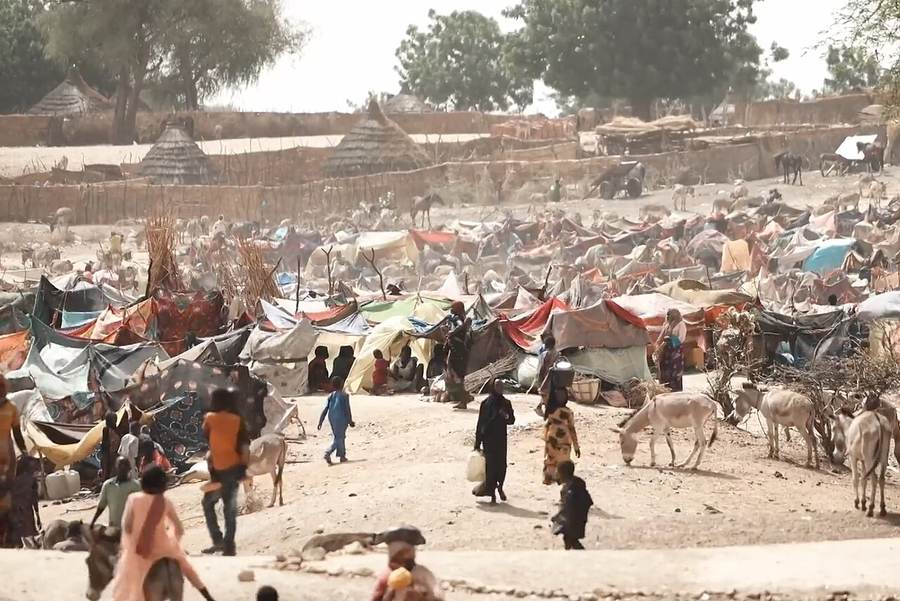
Displacement figures have shifted as people flee, return, move again and cross borders, so snapshots from different dates should not be added together. A November 2025 situation report from International Medical Corps, citing UN data, put the total forcibly displaced population at about 11.7 million. A December 2025 compilation of UN figures by Al Jazeera counted 9.5 million internally displaced people and about 4.35 million people who had fled Sudan. Different cut-off dates and categories explain why those figures cannot be treated as one continuous total.
The latest UN humanitarian warning reviewed for this report, published in September 2026, said 8.6 million people remained internally displaced and 19.5 million faced crisis levels of food insecurity. The same UN update said the shared aid pipeline had reached 2.84 million people since July 2023, the World Food Programme was reaching 4 million to 5 million people monthly, and WFP's Sudan operation was only about one-third funded.
Al Jazeera's December 2025 UN-based snapshot listed 21.2 million people facing high acute food insecurity, including 6.3 million in emergency conditions and 375,000 at famine-level hunger. It also reported 10 million children out of school and fewer than 25 percent of hospitals operational. Those numbers are dated, but they show what a ceasefire is supposed to change: access to food, classrooms, clinics and safe return—not simply the position of military units.
On September 25, 2026, Reuters reported UNHCR figures showing more than 400 people a day crossing into eastern Chad, roughly 20 times the recent rate, while only 18 percent of the agency's $1.6 billion regional appeal had been funded. Nearly 1 million refugees had entered Chad since the conflict began, including more than 55,000 in 2026. The trend makes the humanitarian case for an immediate pause unusually strong even as the political design remains contested.
Who gains and who loses under the competing sequences
If the ceasefire comes first, civilians in active combat zones could gain immediate relief, aid agencies could move more safely and the US would gain diplomatic momentum. The RSF would preserve more of its current bargaining power. SAF would fear that battlefield lines and the Nyala project become normalized.
If RSF withdrawal comes first, SAF would gain strategic depth and a stronger claim to national authority, while residents in occupied urban areas could see armed units removed. The RSF would face a major loss of leverage and might refuse the agreement entirely, extending the war. Civilians in places where fighting continues would bear the cost of delay.
If political guarantees come first, civilian groups could gain a clearer route back into governance. But armed leaders might use negotiations to seek immunity, office or control of security institutions before making verifiable concessions. A ceasefire architecture that treats Sudanese civilians as an audience rather than participants risks reproducing the exclusion that helped derail earlier transitions.
What happens next
Scenario one: a revised monitored truce. The most constructive path would pair an immediate nationwide cessation with phased RSF withdrawal from specified civilian sites, reciprocal SAF limits, named monitoring bodies and public deadlines. This does not require resolving every political issue before firing stops, but it does require a map, verification access and consequences for violations.
Scenario two: talks resume without a signed ceasefire. Washington and Sudan's delegation could restore the cancelled channel and narrow the dispute to sequencing. That would reduce the symbolism of the visa fight, though it would not guarantee compliance on the ground. The Quad's role would be to align pressure rather than allow each belligerent to seek a more favorable sponsor.
Scenario three: diplomatic rupture and harder front lines. If Burhan's camp treats the US plan as recognition of partition and the RSF sees no reason to accept withdrawal, both can return to military logic. The Nyala administration could deepen its structures while Port Sudan strengthens its own claim to national government. This is the route by which Farid's warning could become self-fulfilling.
Scenario four: a humanitarian pause without a political bargain. Even a limited agreement on aid corridors, medical evacuation and protection of water and power systems would be narrower than the US plan, but it could be more achievable. It would not end the war. It could still prevent deaths while mediators negotiate the harder security questions.
The test is not whether either side can attach the word “unity” to its position. It is whether the next proposal contains enforceable steps that reduce armed control over civilians and creates a credible path to representative government. Sudan can be territorially whole on paper while functionally divided by checkpoints, rival institutions and inaccessible aid routes. A ceasefire that closes those gaps would answer the partition warning; one that merely freezes them would intensify it.
Sources: Reporting and official data reviewed from Reuters, UN News, UNHCR-linked reporting and Al Jazeera's compilation of UN figures. Claims by the Sudanese Armed Forces, the RSF and foreign governments are attributed and are not presented as independently established facts.
Disclosure: Signal Post News may earn a commission from qualifying purchases made through links on this page, at no extra cost to you. Learn more.