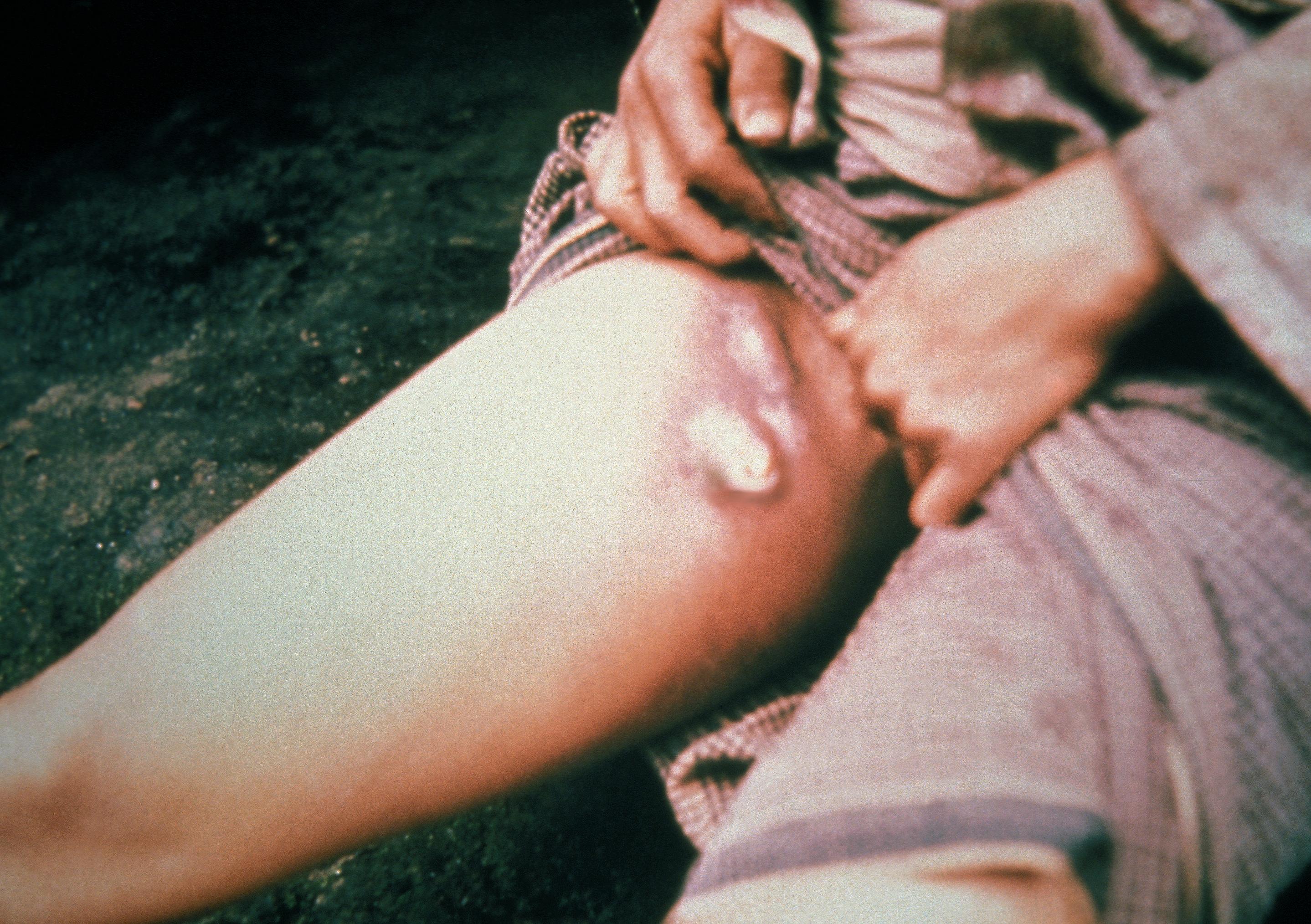
Bubonic plague symptoms begin the way many bad infections begin: with a sudden fever, shaking chills, a pounding headache, and a weakness that makes getting out of bed feel impossible. For a day or two, it can pass for influenza. Then the disease reveals its signature — a lymph node swells into a hot, exquisitely tender lump called a bubo, most often in the groin, the armpit, or the neck. That swelling is the calling card of the most common form of plague, the same disease that caused the Black Death, and it remains the form physicians encounter most often in the small number of plague cases diagnosed in the United States each year.
This guide walks through every stage of bubonic plague symptoms: the 2-to-6-day incubation after an infected flea bite, the flu-like opening act, how buboes form and what they feel like, the warning signs that the infection is spreading into the bloodstream, and how bubonic plague differs from its deadlier cousin, pneumonic plague. The details come from the U.S. Centers for Disease Control and Prevention and the World Health Organization. If you take one thing from this article, let it be this: bubonic plague is curable with antibiotics, but the clock matters — and recognizing a bubo early is how you beat that clock.
What bubonic plague is — and why it is still the most common form
Plague is caused by the bacterium Yersinia pestis, which lives in rodents and the fleas that feed on them. Of plague's three main forms — bubonic, septicemic, and pneumonic — bubonic is by far the most common, accounting for roughly 80 to 90 percent of cases worldwide. It develops when an infected flea bites a person and injects the bacteria into the skin. From there, Y. pestis travels through the lymphatic vessels to the nearest lymph node, where it multiplies aggressively.
The name itself tells the story: "bubonic" comes from the Greek boubon, meaning groin, a reference to where the swellings most often appear. The Black Death that killed an estimated 25 to 50 million people in 14th-century Europe was overwhelmingly bubonic plague, spread by fleas on black rats. Today the disease is rare but not gone — the CDC records an average of about seven U.S. cases per year, mostly in the rural Southwest, and the WHO logs several thousand cases globally, concentrated in Madagascar, the Democratic Republic of Congo, and Peru.
The incubation period: 2 to 6 days of silence
After an infected flea bite, bubonic plague symptoms do not appear immediately. The CDC places the incubation period at 2 to 8 days, with most patients falling ill 2 to 6 days after exposure. During this window, the bacteria are migrating from the bite site through the lymphatic system and colonizing the nearest lymph node. The bitten person feels entirely normal — there is usually no mark at the bite site dramatic enough to notice, though some patients later recall a small flea bite.
This silent period is one reason plague can catch people off guard. A camper bitten by fleas in northern Arizona or a villager in Madagascar's highlands may have no reason to connect a minor bite to the fever that arrives nearly a week later. Public health guidance in endemic areas stresses that anyone who develops sudden fever within a week or two of possible flea exposure — especially after handling sick or dead rodents — should mention plague to a clinician explicitly.
The opening act: sudden fever, chills, and crushing weakness
When bubonic plague symptoms begin, they begin abruptly. The CDC lists the classic opening cluster: sudden onset of fever, chills, headache, and weakness. Temperatures often spike to 102°F (39°C) or higher. Patients describe the onset as being "hit by a truck" — one hour fine, the next hour flattened. Muscle aches, nausea, and vomiting can accompany the fever.
At this stage, nothing yet distinguishes plague from influenza, COVID-19, or a dozen other febrile illnesses — which is precisely why plague is sometimes diagnosed late. The differentiator arrives within hours to a couple of days: the bubo. Any patient with sudden high fever plus a rapidly swelling, painful lymph node — particularly with a recent history of flea bites, rodent contact, or travel to a plague-endemic area — should be evaluated for plague without delay.
Buboes: the hallmark symptom, up close
A bubo is a lymph node overwhelmed by infection. As Yersinia pestis multiplies inside the node, the node swells dramatically — from its normal pea-size to the size of a hen's egg or larger, sometimes reaching 10 centimeters across. The overlying skin grows hot, red, and stretched taut. The swelling is exquisitely tender: patients often cannot bear the weight of clothing or bedsheets on it, and they instinctively contort their bodies to protect it — a posture medieval observers called the "plague sprawl."
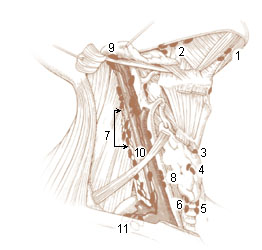
Where buboes appear
Buboes develop in the lymph nodes closest to where the infected flea bit. Because fleas often bite the legs and lower body, the inguinal nodes of the groin are the single most common site. Bites on the arms or torso drain to the axillary nodes of the armpit, the second most common location. Bites on the head or neck — less common — produce cervical buboes in the neck. Occasionally multiple nodes swell in a chain. The location of the bubo can therefore hint at where the bite occurred, though by the time the bubo appears the bite itself is usually forgotten.
What a bubo feels like — and how it evolves
Early on, the bubo is a firm, acutely painful lump under hot, reddened skin. Over several days without treatment, it may soften as the node fills with pus and necrotic tissue; in the pre-antibiotic era, buboes sometimes ruptured and drained on their own — a development medieval physicians took, not always correctly, as a hopeful sign. With modern antibiotics, buboes typically begin to shrink within days of treatment starting, though a large bubo can take weeks to resolve fully and may require drainage by a surgeon if it becomes an abscess.
One critical point: never lance or squeeze a suspected bubo yourself. The fluid inside teems with Yersinia pestis, and breaking the skin creates an entry point for secondary infection. Diagnosis requires a clinician to aspirate the node under sterile conditions and send the sample for culture and testing.
How buboes form: the biology in plain language
Understanding the bubo helps explain why bubonic plague behaves the way it does. When an infected flea feeds, it regurgitates bacteria into the bite wound along with its saliva. Yersinia pestis is an expert at evading the immune system's first responders — it produces proteins that paralyze the signaling of immune cells, allowing it to hitch a ride inside the very white blood cells meant to destroy it.
Carried through lymphatic vessels, the bacteria reach the nearest lymph node — a filtering station packed with immune cells. There, instead of being destroyed, Y. pestis multiplies explosively, overwhelming the node. The node swells as immune cells flood in and die, blood vessels leak, and tissue breaks down. The bubo is, in essence, a battlefield where the immune system is losing. If antibiotics arrive in time, they tip the battle; the swelling subsides as the bacteria die. If they do not, the bacteria eventually spill past the node into the bloodstream — and bubonic plague becomes something worse.
The danger point: when bubonic plague turns septicemic
Untreated bubonic plague kills 30 to 60 percent of its victims, according to the CDC — and most of those deaths occur when the infection escapes the lymph nodes and floods the bloodstream, a condition called septicemic plague. Warning signs of this progression include a sudden worsening after initial symptoms: plummeting blood pressure, rapid breathing, confusion or delirium, abdominal pain, and bleeding into the skin and organs.
One of septicemia's most feared manifestations is tissue death in the extremities. As blood clotting runs out of control, fingers, toes, and the tip of the nose can blacken with gangrene — the origin of the name "Black Death." This is a late, ominous sign of plague gone systemic.
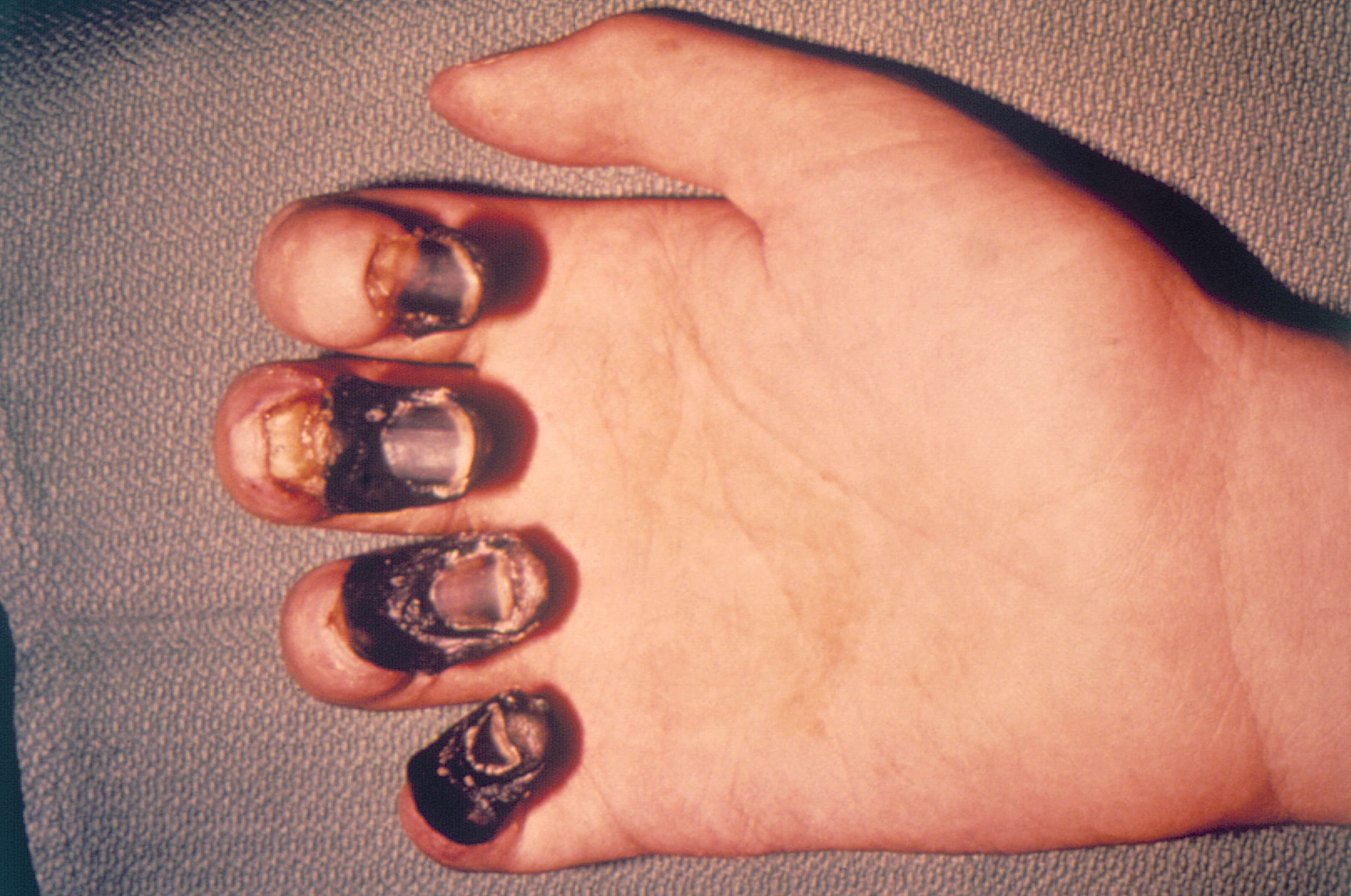
Septicemic plague can also arise on its own, without any bubo ever appearing — so-called primary septicemic plague, when flea-borne bacteria enter the bloodstream directly. And if the bacteria reach the lungs, either through the blood or — far more dangerously — through inhaled droplets from another patient, the result is pneumonic plague, the form that can spread person to person. This cascade is why clinicians treat suspected bubonic plague as an emergency: antibiotics given early stop the progression cold.
Bubonic vs. pneumonic plague: how to tell them apart
The two forms share the same bacterium but behave very differently, and the distinction matters enormously:
Bubonic plague
Spread by flea bite, not from person to person. Hallmark is the bubo — swollen, painful lymph nodes. Incubation 2 to 6 days. It does not typically spread between people, so household contacts are not at high risk of catching it from the patient (though they share the same flea exposure risk). With prompt antibiotics, the vast majority of patients recover fully.
Pneumonic plague
Either develops when bubonic or septicemic plague spreads to the lungs, or starts directly when someone inhales infectious droplets from a coughing pneumonic patient. Hallmarks are severe pneumonia — cough (sometimes bloody), chest pain, shortness of breath — with an incubation of just 1 to 3 days. It is contagious person to person and is nearly always fatal within 24 to 72 hours of symptom onset without treatment. This is the form that triggers quarantines and the most urgent public health responses.
The practical rule: a painful swollen lymph node points to bubonic; severe rapidly worsening pneumonia with a plague exposure points to pneumonic. Either way, the response is the same — immediate medical evaluation and antibiotics.
Diagnosis: how doctors confirm it
Clinicians diagnose bubonic plague by culturing Yersinia pestis from a sample of bubo fluid (obtained by needle aspiration), blood, or sputum. Rapid diagnostic tests exist but definitive confirmation comes from the laboratory. Because plague is rare, the CDC urges doctors to consider it in any patient with compatible symptoms plus an epidemiologic link — recent flea bites, contact with wild rodents (especially prairie dogs, ground squirrels, or marmots), or travel to endemic regions.
Time pressure shapes the protocol: doctors do not wait for lab confirmation to start treatment. If plague is strongly suspected, antibiotics begin immediately and samples are drawn first. Every hour of delay gives the bacteria more time to breach the lymph nodes.
When to seek care — and what to tell the doctor
Seek emergency care immediately if you develop sudden high fever with a rapidly swelling, painful lump in the groin, armpit, or neck — especially within two weeks of a flea bite, handling a sick or dead wild rodent, or visiting a plague-endemic area. Do not wait to see whether the swelling improves on its own; buboes do not resolve without treatment, and the window in which antibiotics are most effective narrows with every day.
When you arrive, say the word "plague" and explain the exposure: "I was bitten by fleas while camping," or "I handled a dead prairie dog," or "I recently returned from rural Madagascar." Because most clinicians will never see a plague case in their careers, naming the suspicion directly can shave critical hours off the diagnosis. Bring a list of any medications you take, and expect the team to draw blood, aspirate the node, and start antibiotics — typically gentamicin or doxycycline — right away.
For close contacts of a bubonic plague patient, the risk of catching the disease from the patient is very low — bubonic plague does not spread through casual contact. Public health follow-up focuses instead on shared exposures: the fleas and rodents that bit the patient may bite others nearby. Preventive antibiotics are generally reserved for contacts of pneumonic plague cases, not bubonic ones.
The bottom line
Bubonic plague symptoms follow a recognizable arc: a silent 2-to-6-day incubation after an infected flea bite, then sudden fever, chills, headache, and weakness — and then the unmistakable bubo, a swollen, red-hot, agonizingly tender lymph node in the groin, armpit, or neck. It is the most common form of plague and, caught early, one of the most curable: prompt antibiotics cut the fatality rate from 30–60 percent to well under 15 percent, and most treated patients recover completely.
The danger lies in delay — in mistaking the opening fever for flu, in waiting out a swelling that will not resolve on its own, in not connecting a week-old flea bite to today's crisis. If a painful swollen lymph node follows sudden fever and a plausible exposure, treat it as an emergency, name plague to the doctor, and let antibiotics do what they have done reliably for eighty years: stop the Black Death's signature disease in its tracks.
Sources
- U.S. Centers for Disease Control and Prevention: Signs and Symptoms of Plague — symptom clusters, clinical forms and incubation guidance.
- U.S. Centers for Disease Control and Prevention: About Plague — transmission, epidemiology and U.S. case counts.
- World Health Organization: Plague fact sheet — global burden, clinical forms and case fatality rates.