septicemic plague
This guide explains what septicemic plague does to the human body, how it develops, and why doctors describe its treatment window in hours rather than days — based on guidance from the U.S. Centers for Disease Control and Prevention (CDC) and the World Health Organization (WHO). It is an explainer, not a diagnostic tool: early symptoms are nonspecific, and plague is confirmed only through laboratory testing of blood, sputum or lymph node samples.
What septicemic plague actually is
Plague in the bloodstream
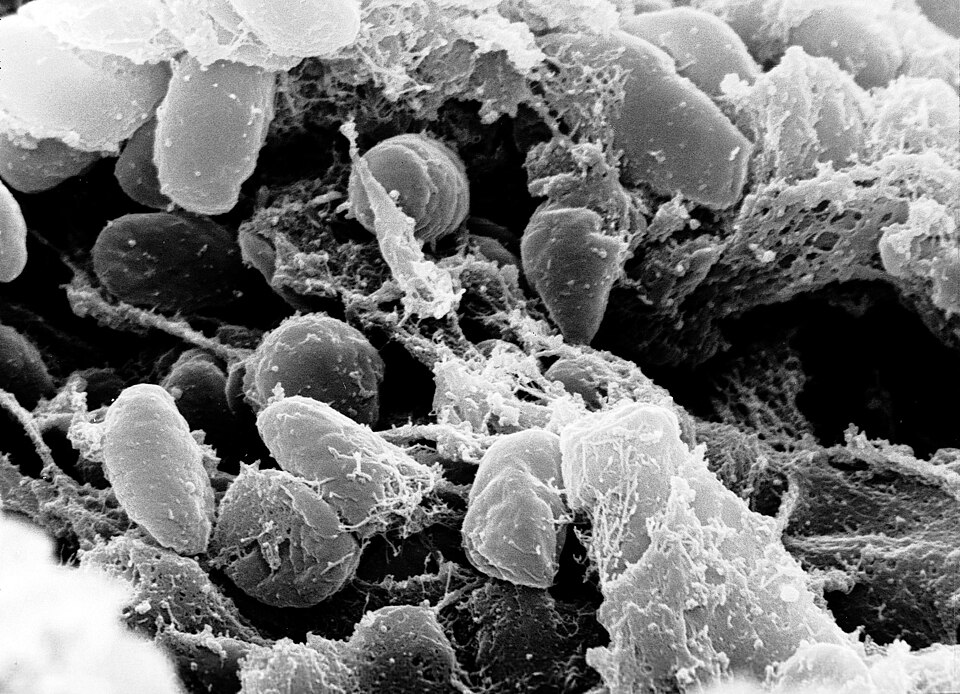
Plague is caused by Yersinia pestis, a bacterium that takes three principal clinical forms. Bubonic plague infects the lymphatic system, producing the painful swollen lymph nodes called buboes. Pneumonic plague infects the lungs. Septicemic plague is the form in which the bacteria multiply directly in the bloodstream — a condition doctors call bacteremia, and in its most severe state, sepsis.
Once Y. pestis is circulating freely in the blood, it can reach every organ. The bacteria release toxins that trigger a catastrophic immune overreaction. Blood vessels leak, blood pressure collapses, and the clotting system misfires throughout the body at once. This is why septicemic plague can kill even before the more familiar signs of plague — the buboes — ever appear. A patient can die of septicemic plague without ever developing a single swollen lymph node, which is one reason the form is so dangerous: there may be nothing visibly "plague-like" about the early illness at all.
Why this matters right now
The suspected plague death at Russia's Irkutsk Anti-Plague Institute has put every form of the disease under scrutiny. Russian authorities placed around 200 contacts under medical observation — a wide safety net designed to catch any secondary cases at the earliest moment. Our main report on the Siberia outbreak tracks the investigation as it develops. Understanding septicemic plague matters because it is the form most likely to kill before anyone realizes what the patient has: its early symptoms mimic countless other severe infections, and its late symptoms arrive with terrifying speed.
How septicemic plague develops: three routes into the blood
Route 1: Untreated bubonic plague spreads inward
The most common path begins with an infected flea bite. Bacteria deposited in the skin travel to the nearest lymph node, which swells into a bubo. If antibiotics are not started, the bacteria can break out of the lymphatic system and spill into the bloodstream — converting bubonic plague into secondary septicemic plague. This is the classic progression the CDC warns about: bubonic plague that is not treated promptly can become septicemic, and once it does, the prognosis darkens sharply.
Route 2: Untreated pneumonic plague spreads outward
Similarly, pneumonic plague — infection of the lungs — can seed the bloodstream when untreated, producing septicemic plague alongside the lung infection. Patients with advanced pneumonic disease frequently have bacteria in both the lungs and the blood, which is part of why pneumonic plague deteriorates so fast. Our guide to pneumonic plague symptoms covers that form's warning signs in detail.
Route 3: Primary septicemic plague — straight through the skin
The third route needs no bubo and no lung infection first. In primary septicemic plague, bacteria enter the body through a break in the skin — a cut, a scratch, a flea bite — and go directly into the bloodstream. This form is strongly associated with handling infected animals: hunters and trappers skinning wild rodents or rabbits, veterinarians, and laboratory workers can all be exposed this way. The CDC notes that primary septicemic plague can follow contact with infected tissue when the bacteria find even a minor skin opening. Because there is no bubo to point a doctor toward plague, primary septicemic plague is among the hardest forms to recognize in time.
Septicemic plague symptoms, stage by stage
Early stage: fever, chills, and pain that could be anything
Septicemic plague typically announces itself with sudden fever, chills, extreme weakness and headache — the same opening act as bubonic plague, minus the telltale bubo. Abdominal pain, nausea, vomiting and diarrhea are common, and the CDC specifically lists abdominal pain among septicemic plague's symptoms. At this stage, nothing distinguishes the illness from severe gastroenteritis, a bad influenza, or the early phase of sepsis from any other bacterium. The incubation period is short — generally 2 to 8 days after a flea bite or direct exposure, sometimes faster.
This is the stage where treatment works best and where diagnosis is hardest. The decisive clues are circumstantial: a recent flea bite in a plague-endemic area, handling of sick or dead wild rodents or rabbits, work with Y. pestis in a laboratory, or illness during a recognized outbreak. Anyone with a sudden severe febrile illness plus one of those exposures should seek care immediately and mention the exposure explicitly — doctors cannot test for what they do not suspect.
Late stage: bleeding, blackening, and shock
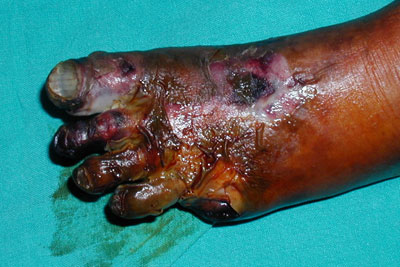
As the bacteria overwhelm the bloodstream, the disease turns unmistakable — and far harder to survive. The CDC describes the late signs of septicemic plague: bleeding into the skin and other organs, and skin and other tissues turning black and dying, especially on the fingers, toes and nose. Blood pressure falls as septic shock sets in. The patient may become confused or lose consciousness as organs begin to fail. This cascade can unfold over hours, not days.
What makes this stage so lethal is that several organ systems are failing simultaneously: the clotting system, the circulation, the kidneys, the lungs. Even with modern intensive care, pulling a patient back from this point is difficult. Antibiotics can kill the bacteria, but they cannot instantly undo the organ damage the toxins have already caused.
Why the skin turns black: the "Black Death" explained
Disseminated intravascular coagulation
The blackening is not the bacteria staining the skin — it is the body's own clotting system destroying it. In severe bloodstream infections, the immune response triggers disseminated intravascular coagulation (DIC): clots form in small blood vessels throughout the body, choking off blood supply to the extremities. Starved of oxygen, the tissue dies — first turning dark purple, then black. Fingers, toes, ears and the tip of the nose, the farthest outposts of the circulation, go first.
Medieval observers, watching plague victims' extremities darken before death, named the pandemic for exactly this sign: the Black Death. Modern medicine understands the mechanism, but DIC remains one of the most dangerous complications in critical care, and in septicemic plague it can progress with exceptional speed.

Gangrene and amputation
When tissue dies from lost blood supply, it becomes gangrenous. In survivors of severe septicemic plague, gangrenous fingers or toes sometimes require amputation — a permanent reminder of how close the infection came to killing them. Historical accounts of plague epidemics describe survivors missing digits, and modern case reports document the same outcome. The blackening, in other words, is not cosmetic: it marks tissue that is already dead.
How deadly is septicemic plague?
Near-100% fatal without treatment
Septicemic plague is widely described as the deadliest clinical form of plague. Without antibiotics, it is fatal in the overwhelming majority of cases — the bacteria in the bloodstream trigger a collapse too rapid and too total for the immune system to reverse alone. Death can come within 24 hours of the first severe symptoms, and in fulminant cases even faster.
Still dangerous even with treatment
Antibiotics change the odds dramatically, but septicemic plague remains the form with the worst prognosis even when treated. Published clinical data put the fatality rate for treated septicemic plague at roughly 40% — far higher than treated bubonic plague, where prompt antibiotics bring mortality below 5%. The gap exists because treatment for septicemic plague so often starts late: the early symptoms give no hint of plague, and by the time the diagnosis is clear, organ damage may be irreversible. Everything about septicemic plague rewards speed — recognition, testing, and the first antibiotic dose.
Diagnosis: why it is so often late
Blood cultures take time the patient may not have
The definitive test for septicemic plague is a blood culture that grows Yersinia pestis — but cultures take 24 to 48 hours to turn positive, and septicemic plague can kill in less time than that. Faster tests exist, including PCR assays that detect bacterial DNA, but they are not available in every hospital and are rarely the first test a doctor orders for an undifferentiated fever.
Clinical suspicion is the real diagnostic tool
In practice, the diagnosis of septicemic plague begins with suspicion, not technology. CDC guidance emphasizes that plague should be considered in any patient with compatible symptoms and a plausible exposure — flea bites, contact with wild rodents, laboratory work with Y. pestis, or illness during an outbreak. When suspicion is high, the correct move is to start antibiotics immediately and confirm with laboratory testing afterward, not to wait for the lab. A delayed first dose is the single most correctable cause of death in plague.
Treatment: the same drugs, a narrower window
Antibiotics that work
Septicemic plague is treated with the same antibiotics as the other forms: gentamicin and doxycycline are the CDC's first-line choices, with alternatives including ciprofloxacin, levofloxacin and chloramphenicol in certain situations. Our guide to plague treatment covers the drug regimens, dosing principles and survival data in full. The drugs are highly effective against Y. pestis — the problem is never the medicine, it is the clock.
Hours, not days — plus intensive care
For bubonic plague, doctors speak of a 24-hour window for the best outcomes. For septicemic plague, the window is effectively even narrower, because the patient is often already in the early stages of septic shock by the time plague enters the differential diagnosis. Beyond antibiotics, severe cases need full intensive care: intravenous fluids, vasopressors to support blood pressure, oxygen, and management of DIC and organ failure. Survival in septicemic plague is a race between bacterial killing and organ rescue — and the organ rescue is the harder half.
Is septicemic plague contagious?
Not through the air — but blood demands respect
Unlike pneumonic plague, septicemic plague does not spread from person to person through coughing — the bacteria are in the blood, not the lungs. Standard infection-control precautions for blood and body fluids apply in healthcare settings, and laboratory workers handle Y. pestis cultures under strict biosafety protocols. The greater contagion risk is indirect: a septicemic patient whose infection spreads to the lungs can develop secondary pneumonic plague, which is transmissible through respiratory droplets. This is one more reason isolation and rapid treatment matter.
What this means for the Siberia situation
The Irkutsk case — a young lab worker dead after a suspected accident at an anti-plague institute — is exactly the kind of exposure where septicemic plague belongs in the differential. Laboratory accidents involving Y. pestis can introduce bacteria directly through skin breaks or mucous membranes, the classic setup for primary septicemic plague: no flea bite, no bubo, just a sudden severe febrile illness that can deteriorate with shocking speed. Russian authorities have not publicly confirmed the clinical form involved, and the White House has said it is monitoring the reports. Whatever the form proves to be, the 200 people under observation are being watched precisely so that if anyone develops fever or other early symptoms, antibiotics can start within hours — the one intervention that changes everything in septicemic plague.