Health · World · Ebola
British healthcare worker Ebola evacuated from the Democratic Republic of Congo to Britain for specialist treatment — the first British case in the current Bundibugyo outbreak, in a patient officials describe as stable, and a case the UK government insists leaves the risk to the British public low.
Track it live: Ebola and outbreak tracker — live cases, deaths and response updates
LONDON — The British healthcare worker Ebola evacuated from the Democratic Republic of Congo is being flown to Britain for specialist treatment after testing positive for the virus while supporting the response to the largest Ebola outbreak in Congolese history, according to an official document seen by Reuters and a confirmation from the UK government carried by Reuters, The Guardian and PA reporting. The patient is in a stable condition and was expected to arrive in Britain on Wednesday, November 4, or Thursday, November 5, before transfer by specialist ambulance to a high-consequence infectious disease unit. At the time of publication, the arrival had not been confirmed and the exact timing of the flight remained unclear — this is an Ebola case UK November 2026 is still watching land, not one it has already absorbed.
The confirmation itself was deliberately unadorned. “A British citizen currently in the DRC has tested positive for Ebola,” a UK government spokesperson told Reuters in an emailed statement, adding that Britain’s well-established procedures for such cases had been activated. “The risk to the UK public from Ebola remains low.” The document seen by Reuters quoted British authorities saying they did not expect the case to have a serious public health impact in Britain, and anticipated no disruption to international travel or trade.
The first British case in the Congo Ebola outbreak
The patient’s identity has not been disclosed. What is known is the shape of the deployment: the worker had been sent to Congo by a humanitarian organisation to support the outbreak response — one of the international clinicians, logisticians and infection-control specialists who rotate through Ebola treatment centres in the country’s east. It is the first case involving a British national in the current outbreak, though not the first European one. Several other Europeans have been infected during this epidemic: Switzerland medically evacuated an Ebola patient from Nigeria last month, and France reported its first case tied to the outbreak in June, a doctor returning from a humanitarian mission in DR Congo.
That sequence matters for how this case should be read. The Congo Ebola outbreak British healthcare worker infection is not a traveller carrying the virus home unnoticed; it is an occupational infection in the highest-risk job in the response, detected inside a surveillance system built to find exactly this, and moved through a medical-evacuation pathway that Britain, France and Switzerland have each now used during this single epidemic.
“Deeply concerning, but not entirely unexpected”
Dr Damien Tully, an associate professor at the Medical Research Council/Uganda Virus Research Institute and London School of Hygiene & Tropical Medicine Uganda Research Unit, called the news “deeply concerning, but not entirely unexpected” — a formulation that captures the expert consensus: healthcare workers in Ebola treatment units face concentrated exposure to the bodily fluids through which the virus spreads, and across an outbreak of this scale, infections among responders are a matter of probability as much as of any single failure. Dr Tully noted that the risk to the British public from a controlled medical evacuation is extremely low, because Ebola is transmitted primarily through direct contact with infected bodily fluids and is not airborne in ordinary settings.
Why this matters
Analysis, labelled as such. Start with what this case is not: it is not evidence that Ebola is spreading in Britain, and every official signal points the other way — the UK Ebola risk low assessment rests on how the patient is travelling (a controlled medical evacuation), where the patient is going (a sealed high-level isolation unit), and how the virus moves (close contact with bodily fluids, overwhelmingly in care settings). The four-cases-since-1976 record, set out below, is the empirical version of the same point: Britain has imported Ebola before, through exactly this channel, without onward transmission to the public.
What the case actually measures is the outbreak itself. An epidemic that has passed 10,000 confirmed cases in DR Congo — the Africa CDC’s latest count puts confirmed cases at 10,444, with more than 5,300 deaths — is now generating a steady export of its most exposed workers to European isolation units: a French doctor in June, a Swiss evacuation from Nigeria last month, and now the first British national. Each evacuation is, on its own terms, a success story of detection and retrieval. Collectively, they are a gauge held up to the response in Congo: the virus is reaching the people sent to stop it, at a rate that tracks the outbreak’s own growth. That is the context in which our earlier reporting on the outbreak passing 10,000 cases and its death toll passing 5,000 should be read alongside this evacuation.
Evacuation versus treatment in-country: what each side says
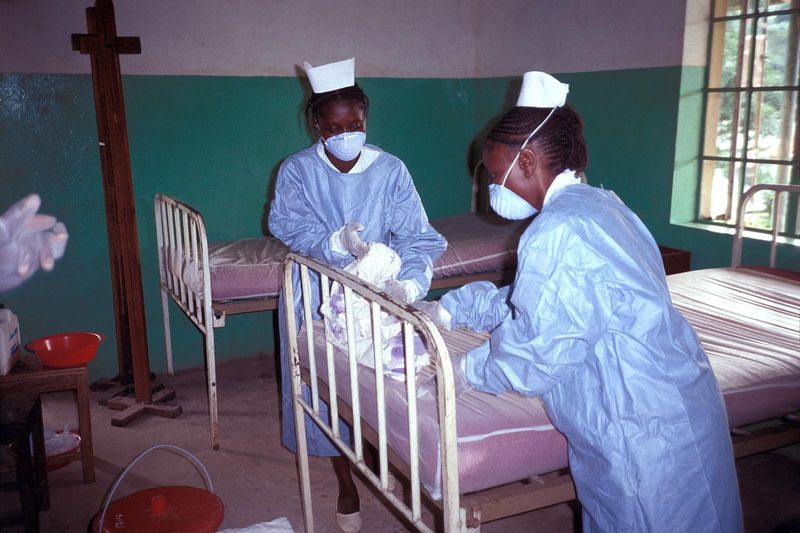
Supporters of medical evacuation make a duty-of-care argument and a practical one. The duty-of-care argument: organisations that send staff into Ebola treatment units owe them the best available care when they are infected, and the prospect of evacuation is part of what makes it possible to recruit experienced clinicians into the most dangerous postings at all. The practical argument: high-level isolation units in London or Newcastle offer intensive care inside containment that few treatment centres in an outbreak zone can match, and survival in Ebola correlates with the quality of supportive care — fluids, organ support, treatment of secondary infections. On this view, an Ebola patient evacuated to UK treatment is not a risk imported but a standard of care honoured.
Critics of evacuation-led policy answer on two levels. The first is equity: Congolese healthcare workers infected in the same wards are treated in-country, and an evacuation system that flies out foreign nationals while local staff — who form the overwhelming majority of the response and of its casualties — remain can corrode the trust the response depends on. The second is strategic: every evacuation is also an admission that in-country capacity is insufficient, and some public-health specialists argue the money and attention each retrieval attracts would prevent more infections if spent on protective equipment, staffing depth and treatment capacity inside Congo. Both critiques have force; neither, in the expert reaction reported so far, is directed at this individual decision, which follows protocols agreed long before this patient fell ill. The honest summary is that evacuation and in-country investment are usually presented as alternatives and are, in practice, both under-provided — the losses fall on responders either way.
How a high-consequence infectious disease unit works
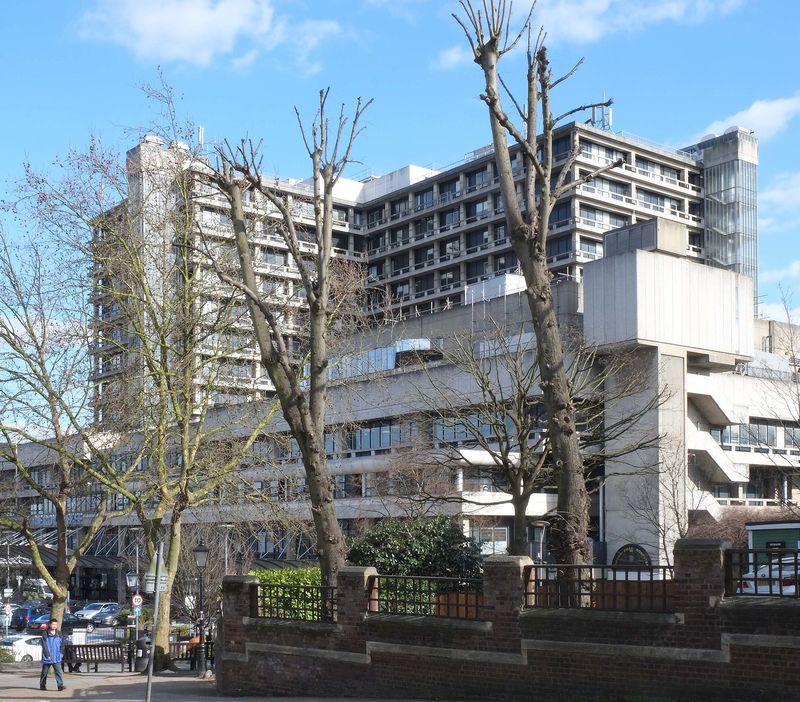
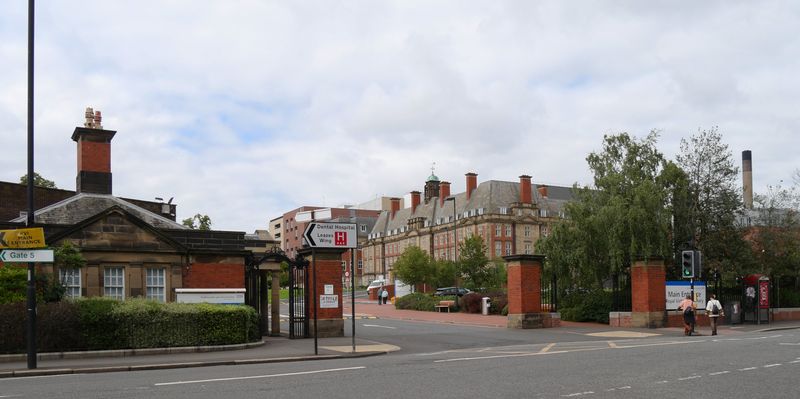
Britain maintains two high-level isolation units for cases of this kind: the Royal Free Hospital in London — the Royal Free Ebola isolation unit that treated the British cases of 2014–2015 — and the Royal Victoria Infirmary in Newcastle, with Liverpool also named in some reporting as a centre able to support such care. Reporting on this case has not confirmed which hospital will treat the patient, and Signal Post News does not present any of them as the destination. What the units share is the model: a self-contained isolation facility with specialist isolation systems, negative-pressure rooms, dedicated waste and laboratory pathways, and small, highly trained infectious-disease teams who drill for exactly this admission.
The journey is engineered to the same standard. A medical evacuation of a confirmed Ebola patient typically moves in a sealed chain: isolation at the point of care in Congo, a flight in a biocontainment system or under strict infection-control protocol, a handover to a specialist ambulance on arrival, and admission directly into the isolation unit without passing through a general ward. The document seen by Reuters described exactly that final leg — a specialist ambulance to a high-consequence infectious disease unit. Contact monitoring follows the same logic: anyone identified as a contact is followed through the virus’s incubation window, so that a secondary case, if one ever arose, would be isolated at the first symptom rather than discovered in the community.
The precedent: four UK cases since 1976, and the Cafferkey era
Imported Ebola is rare enough in Britain to have a complete public history. Only four confirmed cases have been recorded in the country since the virus was identified in 1976, according to the UK Health Security Agency — and three of the four were health workers infected during the 2014–2015 West Africa outbreak, the epidemic that killed more than 11,000 people across Guinea, Sierra Leone and Liberia. That outbreak produced the cases Britons remember: aid workers flown home to the Royal Free, and the Scottish nurse Pauline Cafferkey, whose infection, recovery, and serious relapses made her case a landmark in understanding how long Ebola’s consequences can follow a patient.
The parallels and the differences both instruct. The parallel: then as now, Britain’s Ebola cases arrived as evacuated responders, were treated in the same isolation infrastructure, and produced no onward public transmission — the factual backbone of today’s UK Ebola risk low assessment. The difference is the virus itself. The West Africa epidemic was caused by the Zaire species of Ebola, for which vaccines and antibody treatments were later developed. The Congo outbreak is driven by the Bundibugyo species — a different branch of the virus, against which there is no approved vaccine, one reason the fatality picture and the vaccine trials below matter so much.
The outbreak the patient came from, in numbers
Hold the attributed totals in their proper frame: they are the background to this article, not its news. DR Congo’s health ministry declared the outbreak on May 15, 2026. By the Africa CDC’s latest counts, it has grown to 10,444 confirmed cases and more than 5,300 deaths — the largest Ebola outbreak in DR Congo’s history and, in other reporting, the second-largest Ebola epidemic on record anywhere. The World Health Organization puts Ebola’s average case fatality at about half of those infected, and this outbreak is tracking close to that grim benchmark: roughly one death for every two confirmed cases.
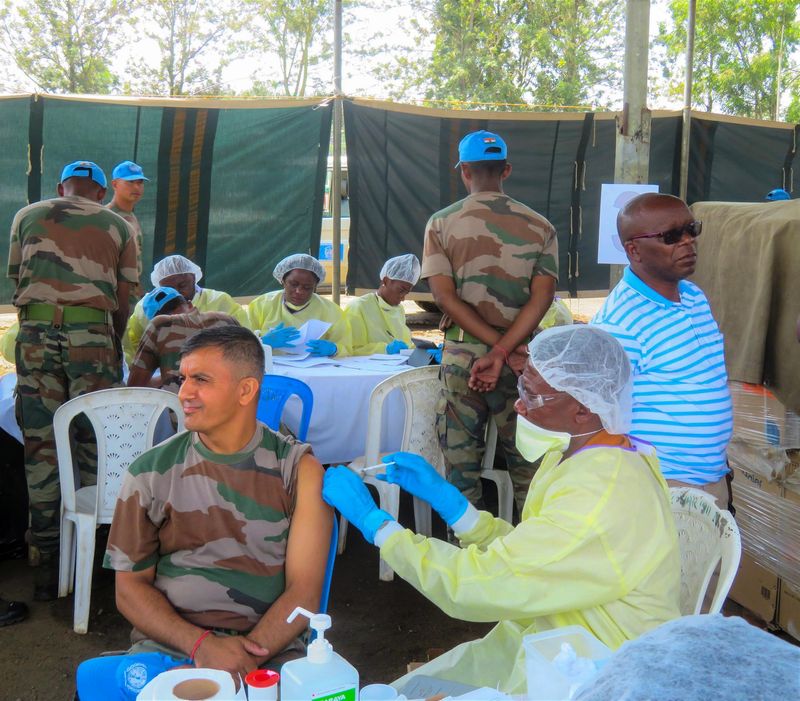
Set against those numbers, the British figures invert the scale. Four UK cases in half a century; more than ten thousand Congolese cases in under six months. Healthcare workers sit at the sharp end of that asymmetry: they meet the virus at its most infectious, in wards and treatment centres, across repeated exposures, in protective equipment that reduces but cannot abolish risk — a reality our coverage of the $270 million US deal to stockpile a Bundibugyo Ebola treatment explored from the supply side. Who benefits from the current arrangements is therefore double-edged: evacuated responders gain world-class care; the responders who cannot be evacuated gain only what the in-country system can give them, and it is their exposure that produces most of the outbreak’s healthcare-worker infections.
What happens next
The immediate sequence is procedural, and each step is checkable. The patient’s arrival in Britain — expected Wednesday or Thursday, unconfirmed at publication — will be followed by the specialist-ambulance transfer and admission to a high-consequence infectious disease unit. Treatment will be supportive and intensive: there is no Bundibugyo-specific approved therapy, so care means sustaining the body through the illness while the immune system fights the virus. Contacts identified around the patient’s care and travel will be monitored through the incubation period. Officials expect no disruption to travel or trade, and no change to the public risk assessment unless the facts change.
The longer horizon is scientific. On November 4, the World Health Organization and partners reported that two new vaccine candidates aimed at the Bundibugyo species — Oxford’s ChAdOx1 BDBV and Moderna’s mRNA-1469 — are joining the WHO-backed Tumaini trial, the study that began enrolling in Bunia in October to generate the first human evidence for a Bundibugyo vaccine during the outbreak it targets. If either candidate proves safe and effective, the equation behind this evacuation changes: responders could be protected before exposure rather than retrieved after it, and the occupational risk that produced the French, Swiss and now British cases would fall. Until then, the system that this week is flying one stable patient home remains what it was in 2014 — excellent care, offered late, to the few who can be flown to it. What would change this story is confirmation of the arrival and treating unit, any update on the patient’s condition, and the Tumaini trial’s first safety data; Signal Post News will update this article as those facts are confirmed.
Related coverage
Congo Ebola Cases Pass 10,000 in Fastest-Growing Outbreak Ever Recorded, With 4,887 Dead
Congo Ebola Death Toll Passes 5,000 in Country’s Deadliest Outbreak
Sources
Reuters, November 4, 2026 (Emma Farge, Geneva) — the official document describing the medical evacuation, the patient’s stable condition, the expected Wednesday–Thursday arrival and specialist-ambulance transfer, and the UK government spokesperson’s emailed confirmation: “A British citizen currently in the DRC has tested positive for Ebola” and “The risk to the UK public from Ebola remains low.” The Guardian, November 4, 2026 — confirmation of the evacuation and the first British case in the current outbreak, and the Royal Free, Newcastle and Liverpool isolation centres. PA Media, November 4–5, 2026, via The Oldham Times and The Glasgow Times — Dr Damien Tully’s reaction (“deeply concerning, but not entirely unexpected”), the two high-level isolation units at the Royal Free Hospital and the Royal Victoria Infirmary, and the UK Health Security Agency figure of four confirmed UK cases since 1976. Africa CDC outbreak counts (10,444 confirmed cases; more than 5,300 deaths) and World Health Organization material on Ebola fatality and the Tumaini trial’s Bundibugyo vaccine candidates, as reported November 4, 2026.