ISRAEL-GAZA WAR
Asset freezes, director disqualifications and a warning delivered days before the E1 tender review: London's first penalties under its reset with Israel target the companies building the settlements — and the group it says blocks Gaza's aid.
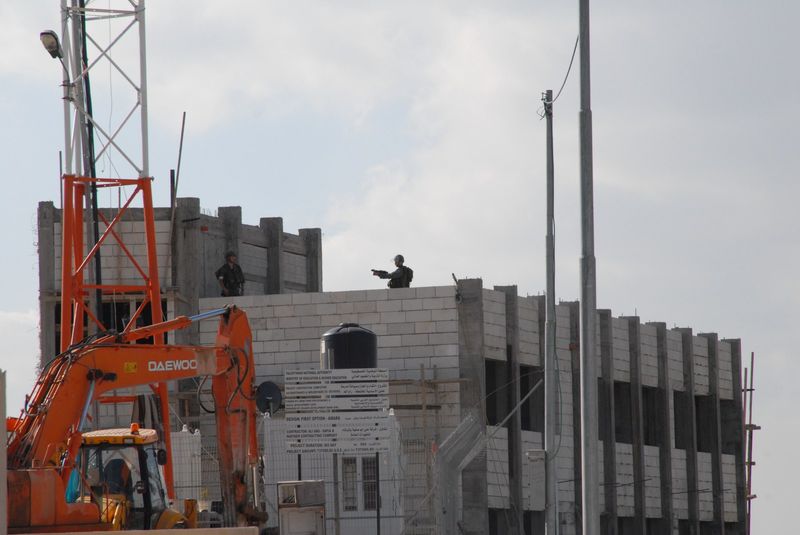
LONDON — Britain on Tuesday sanctioned eight Israeli construction companies involved in building settlements in the occupied West Bank, together with Tzav 9, the group the government said regularly blocks humanitarian aid to Gaza. The package — asset freezes and director disqualifications — was announced shortly before the final deadlines for the E1 settlement tender, whose review begins on Thursday, November 19.
Track it live: Israel war map · Wars tracker
What the sanctions do
The measures freeze the companies' UK assets and disqualify their directors. Three of the eight firms were named in both reports of the package: Har Hevron Development Company Ltd, Hemdat Shomron Ltd, and S.A.G. (Velvel) Construction and Development Ltd. The companies are described by the Foreign Office as settlement builders; the sanctions are civil penalties, not criminal findings against any individual.
The geography of E1
E1 is the piece of land that gives this package its timing. Building there would bisect the occupied West Bank and cut it off from East Jerusalem, fragmenting the territory Palestinians hope will form the heart of a future state. That is why a tender deadline for construction contracts has become a diplomatic event: whoever bids, and whoever builds, decides whether the map of a two-state solution remains drawable at all.
Tzav 9 and the aid argument
Tzav 9's inclusion rests on London's accusation — stated as the government's position, and reported here as such — that the group has prevented aid convoys from entering Gaza as recently as October, and, in Reuters' summary, regularly blocked trucks delivering food, water and fuel. The sanctions were announced against the backdrop of a Gaza ceasefire in place since October 2025 that has not ended the territory's humanitarian emergency — see today's reporting from Gaza.

"Do not bid, do not build"
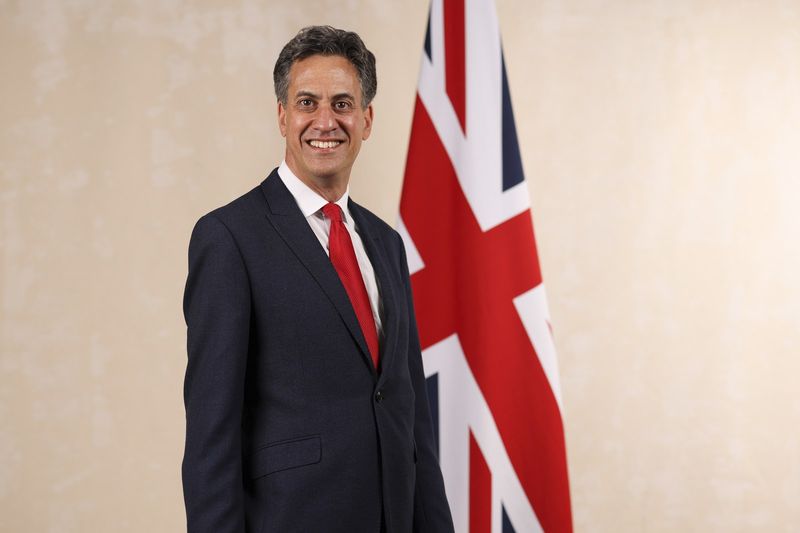
Foreign Secretary Ed Miliband set out the doctrine behind the package: "Protecting the two-state solution is the North Star of this Government's approach... my message on E1 is clear: do not bid, do not build, and do not profit from the destruction of the two-state solution." He added: "We will not stand by while those blocking desperately needed aid deepen the intolerable suffering of civilians in Gaza. The status quo in the West Bank and Gaza is unacceptable." The penalties are the first since the government's policy shift, following Miliband's September 8 pledge that imports from illegal settlements would be banned and that individuals and firms serving settlers would face sanctions — the same minister's wider sanctions portfolio is covered in Miliband's sanctions work. London now says the occupation as a whole is unlawful, going beyond its previous position that the settlements alone are illegal. Miliband has said more settlements were approved under four years of Prime Minister Benjamin Netanyahu's government than in the previous 20 years, and has described settler violence as "rampant". Prime Minister Andy Burnham changed Britain's approach after taking office in July, a reset that drew backlash from both the White House and Netanyahu's government.
A rupture measured in consulates
Reuters put the package in the context of a relationship that has deteriorated significantly over three years, over Israel's conduct of the Gaza war and the pace of settlement expansion. In September, Israel threatened to close the British Consulate in East Jerusalem over London's trade sanctions on settlements; diplomats reached a last-minute agreement last month to avoid the closure. That a consulate's survival required emergency diplomacy is the measure of where the relationship now stands — and of why a sanctions list aimed at construction firms carries weight beyond its financial reach.
Why this matters
Targeting companies rather than only individuals is the precedent here. Settlement expansion is built, literally, by firms that bid, borrow and build; asset freezes and director disqualifications are designed to raise the cost of the E1 tender itself, before a single new foundation is poured. Whether they can deter bidding is the open question: the tender is run by the Israeli government, and the measures bite hardest where firms touch the UK financial system. Critics of sanctions-led pressure argue that without broader trade measures the effect is largely symbolic; supporters answer that symbolism aimed at a specific tender, days before its deadline, is precisely the point — a named cost attached to a named project.
What has not been said
Neither report of Tuesday's package carried an Israeli government response to it, and none is invented here. The Israeli government's general position — that settlements are lawful and that the West Bank is disputed rather than occupied territory — is long-standing and was not restated in response to this package in the reporting available at publication.
What happens next
The E1 tender review opens on Thursday, November 19, and will show whether London's warning changes the bidding. Watch, too, for an Israeli response — including any revival of the consulate dispute — and for whether other European states follow Britain in sanctioning the builders rather than only the settlers. Signal Post News will update this story as responses arrive.
Sources
Reuters, November 17 — https://www.reuters.com/world/uk/britain-sanctions-israeli-settlement-builders-gaza-aid-blocking-activists-2026-11-17. PA Media via the Gazette & Herald, November 17 — gazetteherald.co.uk.