The arrests put an explosive allegation of state capture at the center of President Rodrigo Paz's turn toward the United States — while Mariaca's camp says the operation is political retaliation designed to bury a separate investigation.
What happened — and what remains an allegation
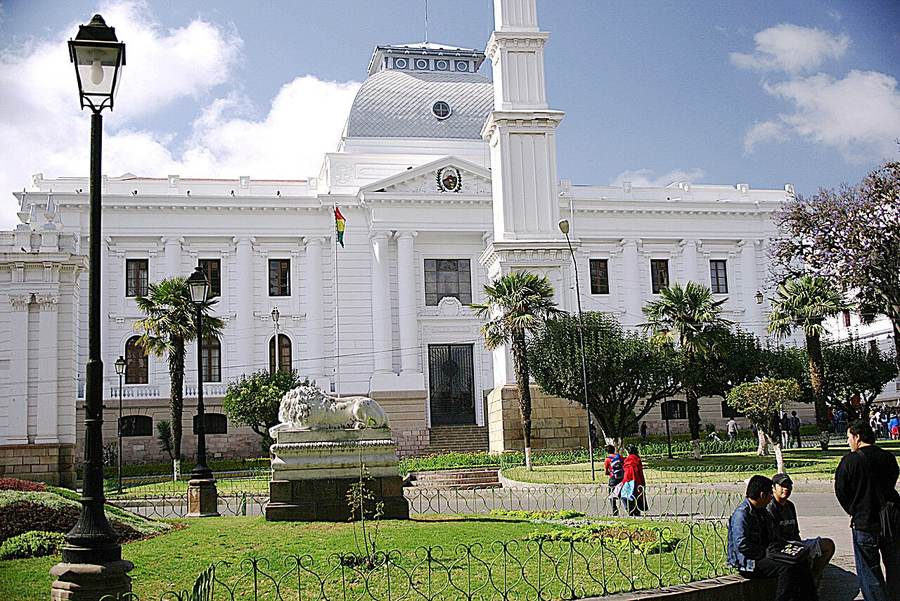
Interior Minister Marco Antonio Oviedo said authorities detained Mariaca and 13 other people on Wednesday night, September 30, in an operation aimed at what the government described as a “criminal organization” entrenched in Bolivia's judiciary and Public Prosecutor's Office. The arrests were announced Thursday. Santa Cruz departmental prosecutor Alberto Zeballos was among those detained, and prosecutors' offices in Sucre were raided during a live broadcast.
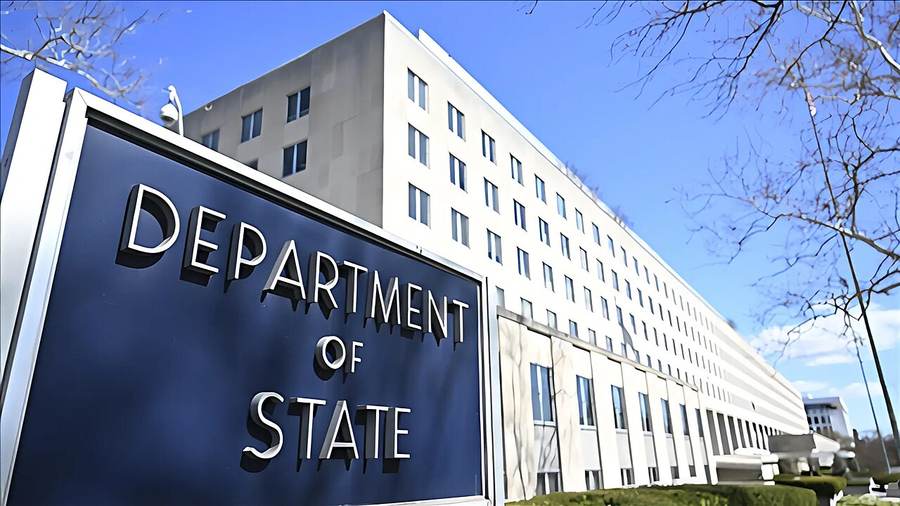
The sequence was unusually compressed. On Monday, September 28, the U.S. State Department revoked Mariaca's visa and accused him of soliciting and accepting bribes to facilitate narcotrafficking and help violent criminals escape justice. Then came audio and video attributed to captured Uruguayan trafficker Sebastián Marset, who called Mariaca a “friend” and claimed he had paid the prosecutor $500,000 so he could remain in Bolivia and keep operating.
Those are grave allegations, not a verdict. Marset's recording is an accusation by an alleged drug lord now in U.S. custody awaiting trial; Washington has not publicly released the evidence behind its designation; and Bolivia's government has not yet proved its case in court. Mariaca has denied wrongdoing and described the U.S. action as “interference” and “political pressure” connected to investigations his office pursued.
The raid itself is disputed. Claudia Pardo, the prosecutor's office communications chief, called it an “illegal intervention” as masked police surrounded staff. Mariaca's supporters say he had been investigating Fernando Cerimedo, a political operative linked to Trump circles, and allege that the intervention was intended to make evidence “disappear.” That counter-claim is also unproven. Its existence, however, means the government's legitimacy will depend on preserving evidence, disclosing a lawful chain of custody and giving the accused due process — not merely on the shock value of the arrests.
Why this matters: the prosecutor became the prosecution
Arresting a sitting attorney general on alleged narco-corruption charges is not a routine anti-graft case. The attorney general sits atop the institution that decides which cases advance, which warrants are sought and how evidence is handled. If the government's account is supported, traffickers did not simply bribe an official at the edge of the system; they may have purchased protection at its command center.
That is the meaning of state capture in a cocaine corridor. Bolivia, Peru and Colombia occupy different positions in the regional drug economy, but all face the same strategic problem: trafficking groups become most durable when they can influence police, prosecutors, judges, customs officials and politicians across borders. A compromised prosecutor can be more valuable to a network than a convoy of gunmen because legal protection turns criminal revenue into institutional staying power.
The case also sends a signal beyond the courthouse. President Rodrigo Paz took office in November 2025 promising to rebuild relations with Washington after years of distance. A rapid move against officials named by the United States tells the Trump administration that La Paz is prepared to act on shared counter-narcotics priorities. Secretary of State Marco Rubio praised what he called “bold and decisive actions.” For Paz, that approval can unlock cooperation; it can also create the perception that Bolivia's justice agenda is being set from abroad.
Bolivia's cocaine trade and the rise of Sebastián Marset
Bolivia is one of the world's principal coca-growing countries, alongside Peru and Colombia. Coca leaf has lawful cultural and traditional uses in the Andes, but part of the crop is diverted into cocaine production. Geography makes Bolivia a pivotal node: it borders Peru, the continent's other major coca source, and Brazil, a vast consumer market and Atlantic gateway for shipments to Europe and Africa.
Traffickers thrive in the spaces between legal jurisdictions. Coca may be grown in one country, refined or stored in another, moved through a third and sold on another continent. That is why the alleged corruption of a prosecutor matters more than the nationality of any one trafficker. A protected network can shift routes while preserving the institutional cover that keeps money and people moving.
Marset embodies that transnational model. The Uruguayan trafficker became one of South America's most wanted men after escaping a police operation in Paraguay in 2023 and spending years moving through a regional web of aliases, businesses and protection. His capture in Bolivia in March 2026 and transfer to U.S. custody changed his role: from fugitive operator to potential source of evidence against the officials and intermediaries he says enabled him.
That does not make every Marset assertion true. A defendant may cooperate, exaggerate, settle scores or mix accurate details with self-serving claims. The test is corroboration: financial records, travel data, communications, witnesses and evidence that can survive cross-examination. His U.S. case could become an evidence fountain, but only if prosecutors distinguish intelligence leads from courtroom proof.
From a six-year mandate to a handcuffed institution
Mariaca was appointed in 2024 under Bolivia's previous socialist government to a six-year term that was supposed to run through 2030. His detention potentially cuts that mandate short by roughly four years. It also gives Paz's administration an opportunity to break with an old judicial order — and gives critics a reason to scrutinize whether an anti-corruption cleanup is becoming a political purge.
Paz's November 2025 accession reshaped the country's external orientation. His government has sought closer U.S. cooperation while pursuing a $1.9 billion International Monetary Fund program approved by Bolivia's congress. Those projects are not the same thing, but they converge around a common demand: institutions that lenders and security partners believe can enforce rules, track money and resist capture.
The danger is circular. If prosecutors are removed without transparent cases, the crackdown can weaken the rule of law it claims to defend. If credible allegations are ignored because the accused calls them political, capture becomes self-protecting. The way through is slower and less theatrical than a raid: independent judges, documented warrants, public charges, access to counsel and evidence tested in court.
Winners, losers and critics
Paz wins an immediate diplomatic dividend. The arrests align his government with Washington's regional anti-narcotics agenda and show that he is willing to confront officials associated with the prior political era. For a president rebuilding U.S. ties and seeking international financial confidence, that is a powerful message.
Washington's anti-narcotics hawks gain proof of leverage. Visa restrictions are usually dismissed as symbolic. Here, a U.S. designation was followed within 48 hours by a major Bolivian operation. Rubio can argue that pressure and partnership produced action without a return to the rancorous relationship of earlier years.
Traffickers who relied on institutional protection stand to lose. If investigators follow money and communications rather than stopping at headline arrests, networks that bought delay, impunity or advance warning may be exposed. The detention of Zeballos suggests the inquiry is not limited to one office.
The old prosecutorial hierarchy loses control. A raid on the institution's Sucre offices and the detention of its chief fracture internal authority immediately. Honest career prosecutors could gain room to act, or they could become collateral damage in a politicized reorganization. The difference will be visible in who replaces the detained officials and which cases survive the transition.
Critics gain a serious due-process argument. The government's use of the language of a “criminal organization” before a trial, the live-television raid and the timing after a foreign designation all invite skepticism. Mariaca's Cerimedo defense may be self-serving, but it cannot be answered by erasing or mishandling the files he says were under investigation. Those materials should be inventoried and secured under judicial oversight.
The numbers in context
Fourteen arrests: Mariaca plus 13 others is a small number beside the thousands of people who move cocaine through South America's production and transit chain. Institutionally, however, one top prosecutor can influence more cases than hundreds of street-level arrests. The sweep's importance lies in rank, not volume.
A $500,000 alleged bribe: Marset's claimed payment is large enough to represent life-changing money for an individual, but small beside the revenues of transnational trafficking. It illustrates the economic asymmetry at the heart of corruption: a network may buy protection cheaply compared with the value of the shipments that protection enables. The payment remains an allegation until traced and proven.
Roughly 20 visa restrictions: Washington's action spans Bolivia, Colombia and Ecuador, countries that occupy different points from cultivation and processing to transit and export. The cross-country scope matters because enforcement in one jurisdiction can simply displace routes unless neighboring systems act too.
A six-year term, interrupted: Mariaca's 2024–2030 mandate was designed to outlast a presidential cycle. Detention roughly two years in — about four years before the scheduled end — shows how abruptly institutional independence can collide with criminal allegations and political change.
A $1.9 billion IMF program: That sum is 3,800 times the alleged $500,000 bribe. The comparison is not evidence that the cases are connected. It shows the vastly different scales on which Bolivia's institutional credibility now operates: an alleged private payoff on one side, and a national financing program whose success depends partly on trust in public administration on the other.
What happens next
The first scenario is a documented prosecution. Prosecutors file specific charges, courts test the legality of the detentions, and investigators publish enough of the evidentiary chain to show that the operation was built on more than Marset's recordings and U.S. pressure. That path could produce further arrests if bank records, messages or witnesses identify a wider protection network.
The second is institutional blowback. Mariaca's allies challenge the raids, argue that the attorney general can be removed only through constitutional procedures and frame the case as Paz using Washington to purge the previous order. If courts split or evidence handling is compromised, the case could become a legitimacy crisis rather than a clean anti-corruption victory.
The third is an expanding regional case. Marset's trial in the United States may generate testimony, communications and financial material touching officials beyond Bolivia. Cooperation agreements could turn the U.S. proceeding into a map of how protection was allegedly purchased across borders. Defense lawyers will attack the credibility and incentives of any cooperating trafficker, making corroboration decisive.
Paz must also balance audiences that want incompatible things: Washington wants speed and visible cooperation; Bolivians wary of foreign influence want sovereignty and due process; reformers want the old networks dismantled; and his own political coalition will want control over what comes next. A fair trial is not a brake on the crackdown. It is the only way the crackdown can become institutional reform rather than a change of patrons.
The trajectory of U.S.–Bolivia relations will turn on that distinction. If the case produces verifiable evidence, lawful convictions and deeper intelligence cooperation, it could anchor a durable reset. If it produces opaque detentions, vanished files and replacement loyalists, the immediate applause from Washington will age badly. The arrest is the dramatic part. The audit trail is the real test.
Related coverage
Sources and reporting notes
- Reuters, October 1, 2026 — the arrests, Oviedo's press conference, Marset recordings, Paz's U.S. reset and the IMF program.
- Associated Press reporting republished by LA Post, September 29, 2026 — the visa action, Mariaca's six-year term and his response.
- AFP reporting, October 1, 2026 — the Sucre raid, Alberto Zeballos's detention and Claudia Pardo's objection.
- U.S. Department of State press statement, September 28, 2026 — the regional visa-restriction policy and named Bolivian officials.
- Drop Site News, October 1, 2026 — the disputed Cerimedo-related counter-claim. Signal Post News has not independently verified that allegation.
Reporting cutoff: October 1, 2026 at 11:38 a.m. PDT. The arrests and public statements are confirmed by multiple reports. The bribery, drug-trafficking and evidence-tampering claims remain allegations; no court had ruled on them by the cutoff. Analysis about institutional incentives, regional cooperation and likely scenarios is Signal Post News's assessment, not a statement of proven fact.