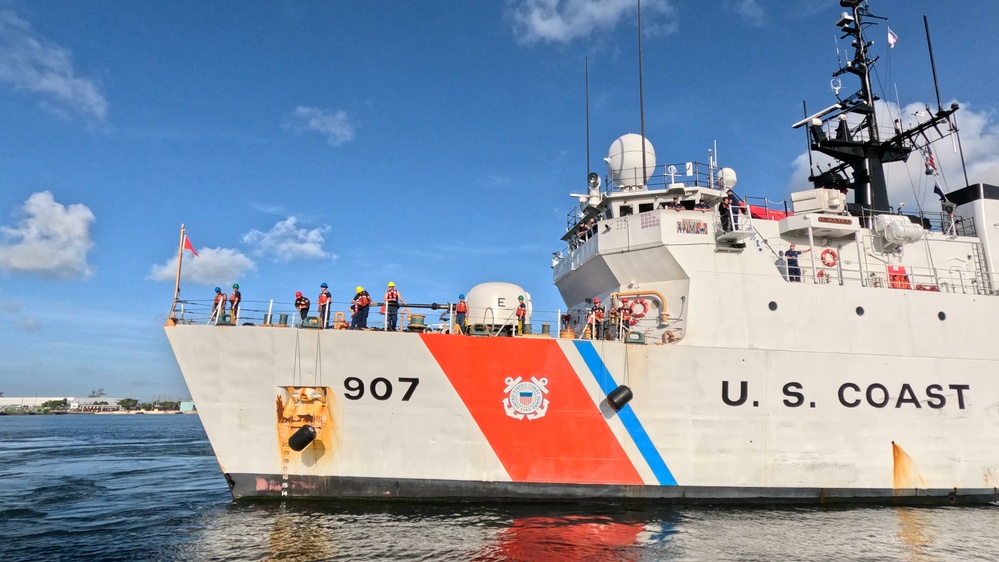
What is known
U.S. Southern Command said American forces struck a vessel in the eastern Pacific that authorities suspected of carrying illegal drugs. Three people aboard were killed. The command did not immediately release the vessel’s precise location, the evidence used to identify its cargo or the legal basis for using lethal force instead of conducting an interdiction.
The operation matters because the eastern Pacific is a major maritime corridor for cocaine shipments moving north from South America. For decades, the U.S. Coast Guard and partner governments have generally relied on surveillance, boarding, seizure and prosecution. A strike that destroys a suspect vessel changes both the tactical risk and the accountability threshold.
Why the eastern Pacific matters
The ocean corridor is vast, with traffickers using low-profile boats and semi-submersibles designed to evade detection. That geography makes enforcement difficult, but it also makes independent verification difficult after a lethal operation. When a vessel is destroyed, investigators may lose cargo, navigation data and physical evidence that could establish who was aboard and what the boat was carrying.
Supporters of a more forceful approach argue that maritime trafficking networks finance organized crime and that crews who refuse lawful orders can create immediate danger. Critics counter that suspicion of drug trafficking is not itself proof of an imminent threat and that international waters are governed by legal rules intended to prevent arbitrary force.
Evidence and legal questions
The central unanswered questions are what intelligence supported the target identification, whether the crew received warnings, whether the vessel attempted to flee or threatened U.S. personnel, and which authority was invoked for the strike. Those facts determine whether the episode is treated as a law-enforcement action, a military operation or something between the two.
The deaths also raise a proportionality issue. A government can have a legitimate objective in disrupting narcotics flows while still carrying a duty to minimize loss of life and distinguish suspects from civilians. Transparency about the chain of command and after-action review will be essential if Washington expects regional partners to accept the policy.
Who gains and who bears the risk
A successful strike can remove a shipment and disrupt a trafficking organization at low immediate risk to U.S. personnel. It may also deter some maritime operators. The costs fall first on those killed and their families, but the wider risk is institutional: a weakly explained strike could erode cooperation with governments whose waters, ports and courts are central to counter-narcotics enforcement.
Trafficking groups may adapt by using smaller loads, more routes or crews with even less information. That can make the network harder to map and move greater danger onto low-level mariners while organizers remain insulated.
What happens next
Southern Command should face requests to release the strike location, surveillance record, warning sequence, legal assessment and any evidence recovered. Congress also has a role in determining whether existing counter-narcotics authorities were meant to cover deliberate lethal strikes on suspected smuggling vessels.
The durable test is not only whether one shipment was stopped. It is whether the operation produces a lawful, repeatable policy that improves regional security without replacing evidence-based interdiction with an opaque kill-first model.
Sources
DVIDS, U.S. Coast Guard Eastern Pacific interdiction footage and context: View the source