Sports · NFL · Chicago Bears · Tennessee Titans
The Jeffery Simmons trade is the kind of deal the NFL almost never makes. The Chicago Bears have agreed to acquire the All-Pro defensive tackle from the Tennessee Titans for first-round picks in 2027 and 2028 plus a 2027 fourth-rounder — a quarterback’s price for an interior lineman — in a deal both teams confirmed on Thursday, October 29, pending a physical, 12 days before the November 10 trade deadline. Chicago, 5-2 and second in the NFC North, is buying the present. Tennessee, 1-6 and deep into a rebuild, is selling its best player — and insisting, in the same breath, that this is not a fire sale.
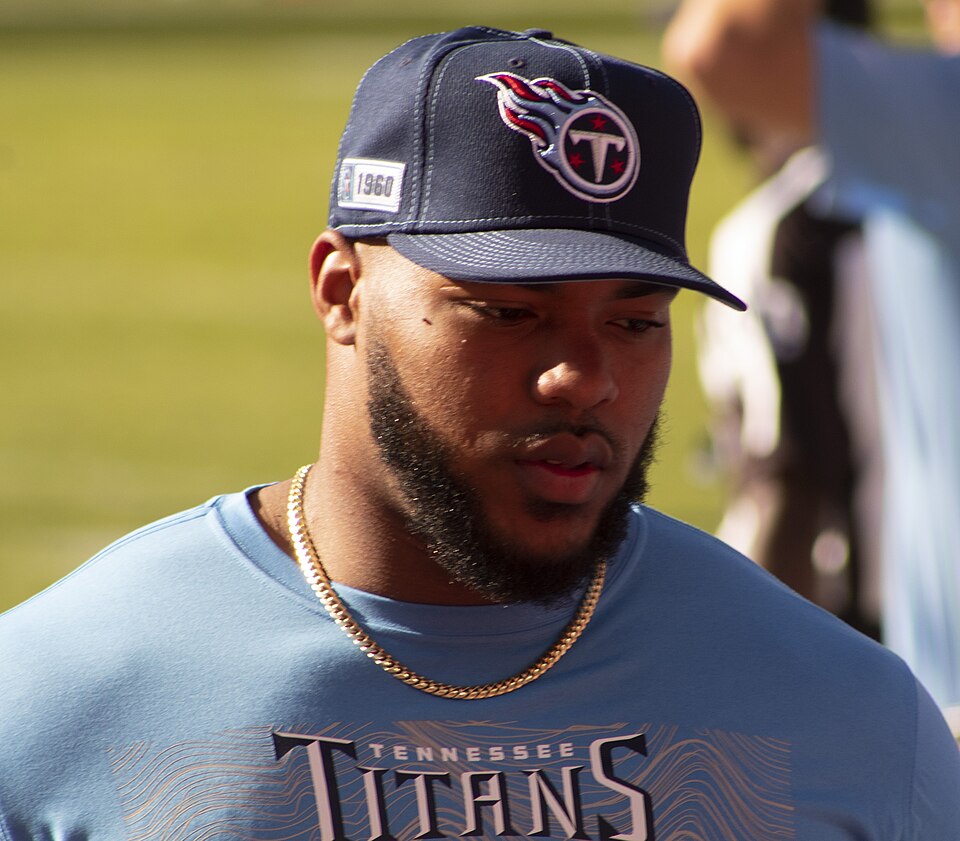
The Jeffery Simmons trade redraws both franchises at once. On Thursday, ahead of the November 10 NFL trade deadline, the Bears agreed to acquire Simmons — a 29-year-old, four-time Pro Bowl defensive tackle who was a first-team All-Pro last season — from the Titans, in the rarest transaction in modern football: an interior defensive lineman moving for multiple first-round draft picks. USA Today notes that Simmons is the first defensive tackle in the common draft era, which dates to 1967, to be traded for multiple first-round picks. Not for a quarterback. Not for an edge rusher who collects sacks by the dozen. For a defensive tackle — the position the league’s trade market has always valued a tier below the glamour spots, until now.
The speed of it is part of the story. Titans general manager Mike Borgonzi said Tennessee was not actively shopping Simmons and had not considered offers for him until Bears general manager Ryan Poles called on Wednesday night, October 28. Borgonzi consulted head coach Robert Saleh and controlling owner Amy Adams Strunk, and within roughly a day the face of the Titans’ defense for eight seasons was a Chicago Bear. Simmons himself had said on October 28 that he had no interest in leaving and, as far as he knew, would stay in Tennessee. Borgonzi said the player was surprised by the decision. The deal is now agreed and confirmed by both clubs, pending Simmons passing a physical in Chicago.
The deal: what Chicago gets, what Tennessee gets
The Jeffery Simmons trade picks break down as follows:
- Chicago receives: defensive tackle Jeffery Simmons, and Tennessee’s 2028 fifth-round pick.
- Tennessee receives: Chicago’s 2027 first-round pick, Chicago’s 2027 fourth-round pick, and Chicago’s 2028 first-round pick.
Two features of the structure matter. First, neither first-rounder is Chicago’s 2026 pick — the Bears keep their upcoming first intact and pay entirely out of future drafts, which is how a team in a contention window prefers to pay: the cost lands after the current core has had its say. Second, Tennessee’s return is pure draft capital. No player comes back to Nashville in this deal. The Titans are converting one great, expensive, 29-year-old player into three picks, two of them firsts, and betting that the conversion — spread over the 2027 and 2028 drafts — is worth more to a 1-6 team than the player himself.
Simmons arrives with his contract. He signed a three-year extension worth a reported $105.8 million in July, a deal that keeps him under contract through 2030 — so this is not a rental. Chicago is acquiring his prime and post-prime years together, at a premium rate, and Tennessee is exiting that commitment barely three months after signing it, a reversal examined below.
Why Chicago paid a quarterback price for a defensive tackle
Start with the standings, because the standings explain everything. Chicago is 5-2 and second in the NFC North, with a quarterback on a rookie contract, a defense that NBC Sports reports ranks eighth in yards allowed and ninth in points allowed, and a fan base that has waited since the 1985 team for another Super Bowl title. Teams in that exact position — good now, cheap at quarterback now, not guaranteed to be either for long — are supposed to overpay for the one piece that can tilt January games. Poles decided that piece was an interior wrecking ball, and the recent evidence says his offense gives him margin to spend on defense: in Caleb Williams’ return from injury this month, Chicago put up 31 points in Atlanta in the Bears’ 31-23 win over the Falcons, the kind of performance that tells a front office its window is not theoretical.
Jeffery Simmons stats: the player Chicago is buying
The résumé is the argument. Simmons was drafted 19th overall by Tennessee out of Mississippi State in 2019 and has played eight seasons for the Titans: 106 games, 414 tackles, 72 tackles for loss, 46.5 sacks, 96 quarterback hits and nine forced fumbles. He has been a five-time team captain and a four-time Pro Bowler, and he was a first-team All-Pro last season — not a reputation honor from years ago, but the league’s verdict on his most recent full season. He has not slowed in 2026, either: his four sacks so far this year led Tennessee. Interior pressure is the scarcest commodity in defensive football because it cannot be schemed around the way edge pressure can — a tackle who collapses the pocket from the middle shortens every quarterback’s clock on every snap, and it travels to every stadium and every weather condition Chicago will face in December and January.
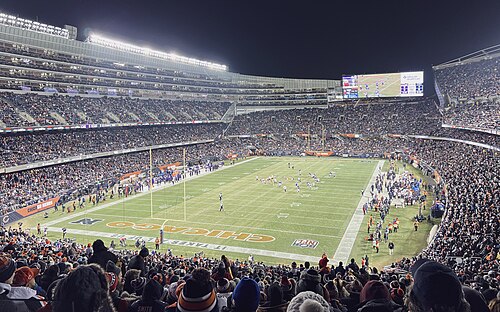
There is also a franchise memory at work. Chicago’s identity, from the 1985 champions coached by Mike Ditka — whose death this month Signal Post News covered in its obituary of the Bears’ Super Bowl-winning coach — has always run through defensive linemen who owned the middle of the field. Simmons is the first Chicago defender in years who fits that lineage on merit rather than nostalgia. Poles is not buying a system piece; he is buying the player opposing offensive coordinators will now have to name first in every meeting, and paying the league’s highest-ever price for the position to do it.
Why Tennessee sold its best player
Tennessee’s side of this deal starts with a number that has nothing to do with Simmons: 7-34, the Titans’ record over the past three seasons. They are 1-6 this year, and 4-20 since Borgonzi was hired as general manager in 2025. A team on that trajectory does not have a contention window to protect; it has a timeline to fix. Simmons, for all his greatness, is 29, expensive, and playing the best football of his career right now — which is another way of saying his trade value will never be higher than it was on the night Poles called. Borgonzi’s account of the process was notably unadorned: the Titans were not shopping their captain, had not considered offers, and then a call came in on Wednesday night with a price — two first-round picks — that a rebuilding team, in his judgment, could not refuse. Strunk, the controlling owner, signed off, and thanked Simmons for his service to the club and to the Nashville community.
Saleh, the head coach who has to field the defense Simmons leaves behind, gave the deal its epitaph. Trading Simmons, he said, “sucks” — but is “necessary.” That pairing is the whole Titans argument in two words: nobody in Nashville pretends the team is better this Sunday without its best defensive player; the claim is that the franchise is better across the next five years because of the picks.
The rebuild timeline and the Cam Ward era
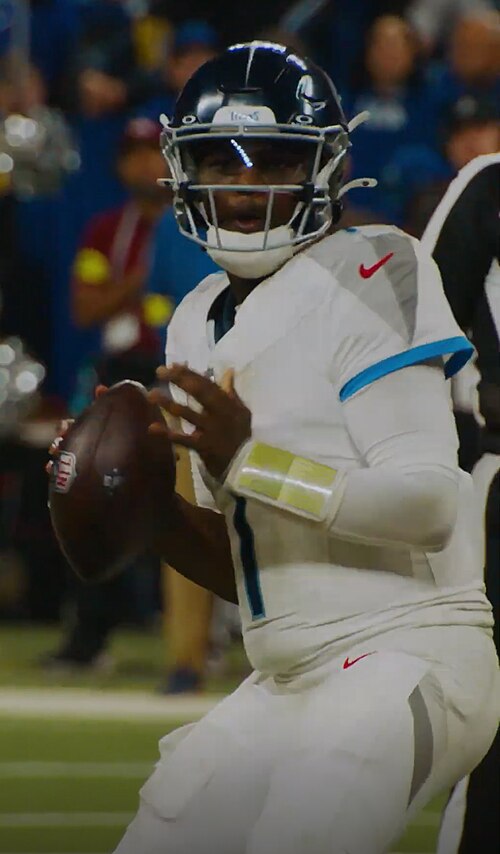
The rebuild runs through quarterback Cam Ward, and everything Tennessee does now is measured against his development curve. The Titans’ season has offered just enough evidence of life to make the plan legible — including their first win of the year, the 26-20 comeback against the Colts in which Simmons himself forced and recovered a fumble and recorded two sacks. That game is the paradox Borgonzi chose to resolve in favor of the future: Simmons was still deciding games for Tennessee, and Tennessee traded him anyway, because a defense led by a 29-year-old tackle cannot carry a team whose offense is being rebuilt around a young quarterback. Two extra first-round picks — one in each of the next two drafts after this one — give the Titans repeated chances to surround Ward with tackles, receivers and defenders on rookie contracts that align with his own.
The Jeffery Simmons contract Bears math: $25 million for seven games
Then there is the money, which is where Tennessee’s decision looks strangest — and, on a longer view, most disciplined. In July, the Titans signed Simmons to a three-year extension worth a reported $105.8 million, keeping him under contract through 2030. Three months later they have traded him. The Tennessean, citing Over The Cap, reports that Tennessee will ultimately have paid Simmons $25 million for the seven games he played this year. That is a staggering cost per snap, and critics of the trade will quote it all winter. The front-office counter is the sunk-cost argument: the $25 million is spent either way, and the question on Wednesday night was never “how do we justify July?” but “what is Simmons worth to us from today forward?” Measured that way, Tennessee chose two first-round picks over the remaining years of a contract it had just written — an admission about July, perhaps, but a clear-eyed one about October.
What Tennessee did not do matters as much. Borgonzi dismissed talk of a fire sale and named safety Amani Hooker and running back Tony Pollard — both established locker-room leaders — as players staying put. The Titans’ position is that this was a single, price-driven exception: one call, one offer too large to decline, not the first domino of a teardown.
A price the league has never paid at this position
To feel how unusual this is, line the deal up against the blockbuster defensive trades it will now be ranked with. When Chicago acquired edge rusher Khalil Mack from Oakland in 2018, the price was two first-round picks — for a pass rusher who bends the edge. When the Rams acquired cornerback Jalen Ramsey from Jacksonville in 2019, the price was two firsts and a fourth — for a shutdown corner. When Green Bay acquired edge rusher Micah Parsons from Dallas in 2025, the price was two firsts and a defensive starter. Every previous multi-first defensive trade bought a player who either rushes from the edge or erases a receiver. The Jeffery Simmons trade is the first to pay that price for a defensive tackle, a position whose best players are traditionally acquired for a single first-rounder at most, precisely because interior linemen rarely lead a team in sacks and their dominance is measured in double-teams drawn rather than stats posted. USA Today’s note — first defensive tackle in the common draft era, since 1967, traded for multiple first-round picks — is not a trivia item. It is the market repricing a position in real time.
The honest counterweight is what those picks are likely to become. Neither selection is in the 2026 draft, and both come from a team built to keep winning: if Chicago remains a playoff team through 2027 and 2028, Tennessee will be picking in the 20s, where first-rounders yield good starters far more often than stars. The Titans are therefore betting on volume and flexibility — two picks in the 20s can be packaged to move up, spread across two drafts to fill two classes of holes, or held as insurance against a bad season of their own. Chicago, conversely, is betting that a known All-Pro in hand is worth more than two rolls of the dice in the back half of future first rounds. Both bets are coherent. Only one of them can be right.
Bears Titans trade grades: who wins, who loses — and what critics say
Chicago’s win is immediate and obvious: the Bears add a first-team All-Pro to a top-10 defense in the middle of a 5-2 season, keep their 2026 first-rounder, and hold Simmons under contract through 2030. If this roster reaches a Super Bowl during Caleb Williams’ rookie contract — the cheapest championship window a franchise ever gets — the picks will be remembered as the cost of doing business, and cheap at the price. The risks are just as clear. Simmons turns 30 next year. Interior linemen absorb contact on every snap, and the history of the position is unkind to players asked to carry a defense into their early thirties. Chicago has paid a quarterback’s price — two firsts and a fourth — for a player whose peak may be measured in the next two seasons, and if he declines or breaks down, the Bears will watch Tennessee spend their picks while paying out a $105.8 million contract. There is no hedge in this deal for Chicago. That is what makes it a genuine all-in move rather than the appearance of one.
Tennessee’s win is structural: three extra picks, two of them firsts, cap relief on the Simmons extension going forward, and a clear timeline pointed at the Ward era. The risks are human and positional. The picks may land late and yield ordinary starters for an extraordinary player. And there is a locker-room cost that no spreadsheet captures: the Titans have told a young quarterback’s team, in the middle of his formative seasons, that its captain — a player who said publicly, one day before the trade, that he did not want to leave — can be gone by Thursday. Simmons was, by Borgonzi’s own account, surprised. How the players who remain read that surprise will shape whether “necessary,” in Saleh’s word, reads as honesty or as warning. Critics of the deal from Tennessee’s side make one further point that deserves an answer rather than a shrug: a franchise that is 7-34 over three seasons is asking its fans to trust its drafting with the proceeds of its best player — and its recent record is the reason the picks were needed in the first place.
On balance, the fairest grade is the one deadline deals usually earn: Chicago wins the winter if it wins in January; Tennessee wins the argument in 2028, if the picks become the core Chicago paid to avoid waiting for. Both outcomes are still available. That is rarer than the price tag, and it is why the league will be citing this trade in every negotiation until November 10 and beyond.
Why this matters
Three consequences reach beyond the two teams. First, the Bears’ window: a franchise with a talented young quarterback on a rookie deal has a short period in which money and picks can be thrown at everything except the quarterback. Chicago has now thrown both at its defense, and the clock on that window — not Simmons’ age — is the deadline that actually governs this trade. Second, Tennessee’s reset is now unmistakable. Whatever the Titans call it, a 1-6 team that trades its captain and best player for future firsts has chosen its timeline, and every remaining decision in Nashville will be judged against the Ward era it has chosen. Third, the market signal: with 12 days left before the November 10 NFL trade deadline 2026, the Simmons deal sets a ceiling and a reference point for every contending team’s phone call and every rebuilding team’s asking price. A defensive tackle just fetched two first-round picks. Every general manager holding a star defender on a losing team noticed, and every contender that hesitates now knows what hesitation costs.
What happens next
When does Jeffery Simmons debut for the Bears?
The immediate steps are procedural and then suddenly very concrete. The trade is pending Simmons’ physical in Chicago; once he passes it, he joins a 5-2 team mid-preparation. USA Today reports Chicago’s next game is at the Seattle Seahawks on Monday, November 2 — which makes Seattle the earliest realistic answer to when Jeffery Simmons debuts for the Bears, in one of the loudest road environments in the league, against a contender, in prime time. Whether he plays a full snap share after days — not weeks — in a new scheme is a coaching decision still to come, but the structure of the week, with the extra day before a Monday game, works in Chicago’s favor.
Tennessee’s next chapter starts sooner and shorthanded: the Titans play at the Cincinnati Bengals on Sunday, November 1, without the defensive captain who led them in sacks. It will be the first evidence of what the post-Simmons defense is, and the first test of Borgonzi’s no-fire-sale pledge — which names Hooker and Pollard as staying, and which every contender with a phone will spend the next 12 days testing anyway. Around the league, the remaining deadline candidates now move against a repriced market: sellers can point to two first-round picks for a defensive tackle; buyers can point to the same number and walk away. The deadline is November 10. The Simmons deal just became its benchmark.
Signal Post News will update this story when Simmons’ physical is completed, when his debut is confirmed, and as the rest of the deadline market takes shape.
Sources
- Tennessee Titans official announcement — the trade’s confirmation and terms: Simmons and a 2028 fifth-round pick to Chicago for the Bears’ 2027 first-round pick, 2027 fourth-round pick and 2028 first-round pick, pending a physical; Borgonzi on Poles’ Wednesday-night call, the consultations with Saleh and Strunk, and the no-fire-sale position on Hooker and Pollard.
- USA Today — Simmons as the first defensive tackle in the common draft era (since 1967) traded for multiple first-round picks; Chicago’s next game at Seattle on Monday, November 2, as his possible debut.
- NBC Sports (Pro Football Talk) — the agreed trade and Chicago’s defensive rankings: eighth in yards allowed and ninth in points allowed.
- The Tennessean — the contract math: Tennessee will ultimately have paid Simmons $25 million for the seven games he played this year, citing Over The Cap; Simmons’ October 28 comments that he had no interest in leaving, and Saleh’s assessment that trading him “sucks” but is “necessary.”