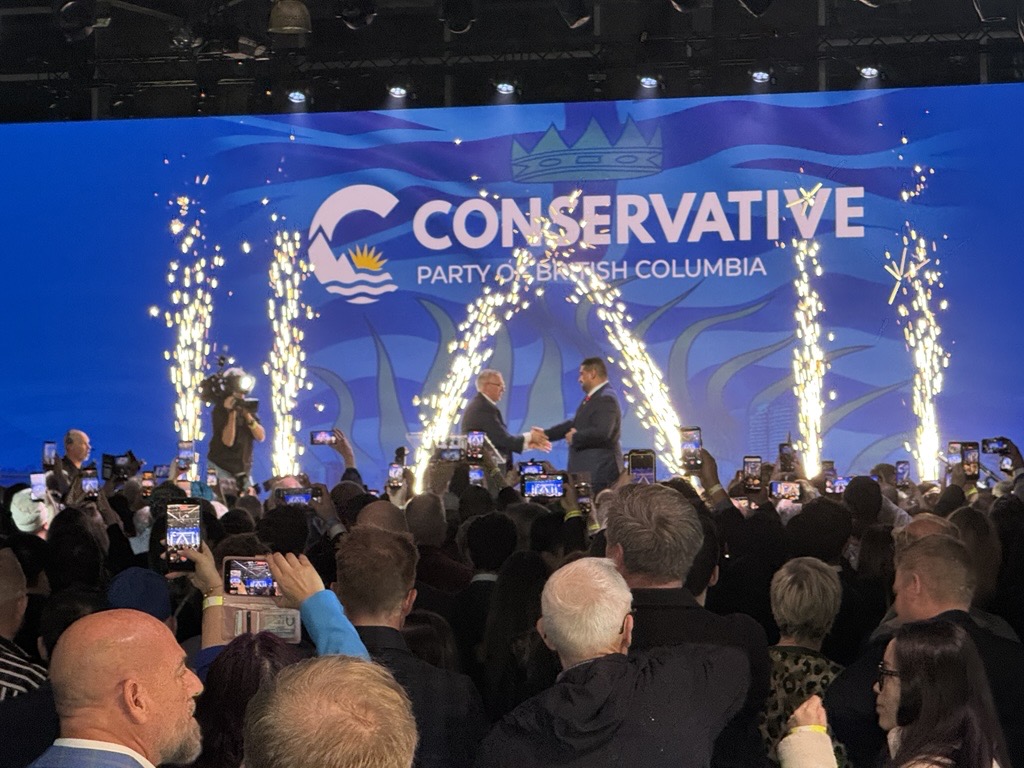
The British Columbia election results 2026 delivered the kind of night Canadian politics produces once in a generation. The Conservative Party of British Columbia — a party that won less than two per cent of the vote six years ago and had not won a provincial election since 1928 — has toppled the New Democrats after nine years in power, according to provisional results reported by Reuters on Sunday. Interim leader Lorne Doerkson, a former newspaper publisher and rodeo rider who took over a fractured party barely five weeks ago, is set to become premier. David Eby, who called the snap election two years early in search of a stronger mandate to confront Donald Trump's tariffs, conceded in Vancouver and announced he is resigning as NDP leader. It was, by any measure, one of the great self-inflicted defeats in Canadian provincial history — and the government it produced intends to remake British Columbia as an energy province.
The result, in numbers
Reuters, citing provisional results on Sunday, put the Conservatives at 64 of the legislature's 93 seats and the New Democrats at 27, with the Greens holding their two seats — a commanding majority in a chamber where 47 seats are enough to govern. Elections BC figures, summarised from the official count with 99.49 per cent of polls reporting in the early hours of Sunday, showed 61 seats formally won by the Conservatives at that stage against 26 for the NDP and two for the Greens, with the remaining ridings still being declared; the difference between the two tallies is the familiar election-night gap between seats declared and seats where a party is elected or leading. The final count is scheduled for November 6 to 10, but no plausible recount path changes who governs.
The popular vote was not close. Of 3,738,182 registered voters, the Conservatives took about 48.1 per cent (860,565 votes in the Elections BC summary), the NDP about 37.4 per cent (669,257) and the Greens about 11.0 per cent (196,555). Compare that with the last election, in 2024, when the NDP won 47 seats on 44.86 per cent and the Conservatives 44 seats on 43.28 per cent: in two years the Conservatives have added roughly five points of vote share while the NDP has shed more than seven. CBC News projected the Conservative majority, and the Canadian Press decision desk called the result, roughly an hour after polls closed on Saturday night — a speed that itself told the story of how one-sided the evening became. Doerkson is projected to win a third term as the member for Cariboo-Chilcotin; Eby held his own Vancouver-Point Grey seat even as his government fell around him.
How a snap election backfired
Thirty-two days ago, this result seemed implausible, as CityNews' election-night report put it. Eby called the election a full two years before the next scheduled vote, despite holding only a one-seat majority, arguing first that he needed a strong mandate to deal with the economic uncertainty created by Trump and U.S. tariffs, and later that the vote was needed to end a "stalled out" legislature. The gamble was predicated on chaos opposite him: the Conservatives had spent the year tearing at themselves, cycling through leaders, expelling and losing MLAs, and watching splinter parties — OneBC and CentreBC — peel off pieces of their caucus.
Then the premise collapsed. Kerry-Lynne Findlay, the Conservative leader Eby expected to face, resigned on September 20 after just 113 days, following a caucus revolt. The remaining Conservative MLAs recommended Doerkson — who hurried back from a trip to Africa — and he immediately brought defectors back into the fold, reuniting most of the right-of-centre vote days before Eby called the vote. Political analyst Hamish Telford told CityNews that once Findlay resigned, Eby "shouldn't have gone through with the election… he put the trains in motion and he couldn't stop them. And he never really had a message track after that." Both splinter experiments were wiped out on the night: OneBC interim leader Dallas Brodie lost Vancouver-Quilchena to Conservative Carson Binda, and CentreBC leader Elenore Sturko lost Surrey South to Conservative Megan Knight, according to the Canadian Press decision desk. Green leader Emily Lowan, in her first election, won Saanich North and the Islands.
Who is Lorne Doerkson, British Columbia's next premier?
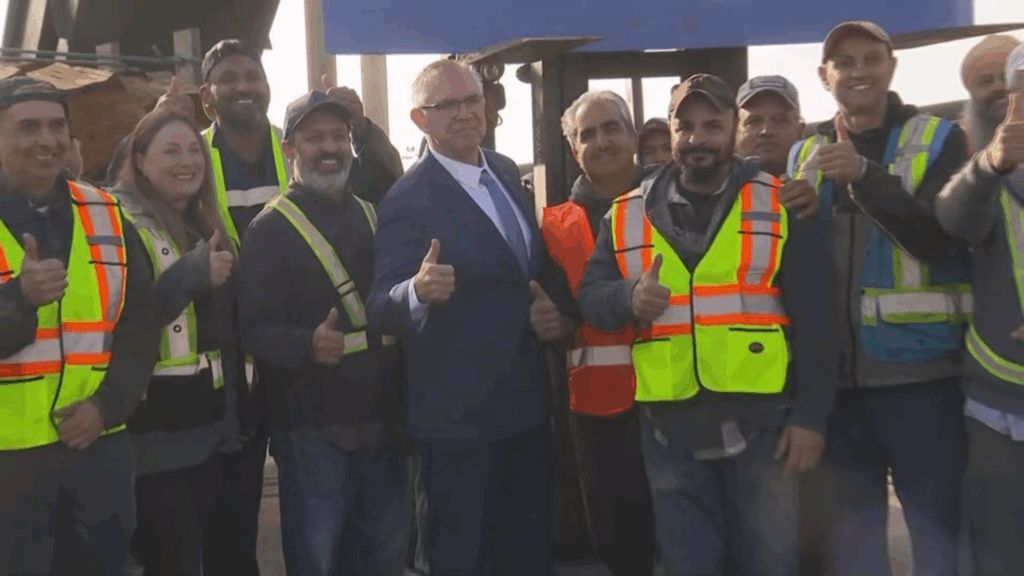
Doerkson, 58, was first elected in 2020 for Cariboo-Chilcotin — a vast rural riding in the province's interior — as a BC Liberal, crossed to the Conservatives in 2024 as BC United imploded, and spent most of his legislative career focused on a region beset by wildfires and hospital emergency-room closures. His background is unusual for a premier: he published the local newspaper, worked as a financial consultant, and rode rodeo. "I have watched a lot of people get thrown at a rodeo, and I'll say I've been thrown a few times myself," he told supporters on Saturday night. "But what I've learned from that is that you pick yourself up, dust yourself off, and you get back on." His ascent — from little-known MLA to board-appointed interim leader to premier-elect by way of a general election in under five weeks — is one of the fastest in Canadian history. One formal wrinkle remains: he is still the party's interim leader, and the Conservative board has said he will be made permanent leader if he becomes premier, though reporting on the party's constitution notes the board may not itself have the authority to make that change — a housekeeping fight for the coming weeks, not an obstacle to forming a government.
Why this matters
Start with energy, because the new government does. "I believe in energy… We will cut red tape like it's never been cut before," Doerkson said in his victory speech, and the platform behind the rhetoric is specific: double British Columbia's natural gas production by 2032 and more than triple it by 2035, end emissions limits, replace the province's carbon tax framework, and reach out to energy companies that left the province's LNG sector after 2018 — Reuters named ExxonMobil, Chevron and Woodside. His victory speech mapped the province as an engine room: "It happens in Kitimat, where B.C. natural gas leaves to power the world. In Fort St. John, where the gas comes out of the ground." That is a direct reversal of nine years of NDP government, which opposed new oil pipelines and supported a ban on tankers along the northern coast. For Asian buyers of Canadian LNG, for the Montney gas fields, and for Washington — where British Columbia is both a trading partner and a front line in the tariff fight — this is the most consequential provincial result in Canada in years.
Then there is the fiscal reality waiting in Victoria. The province's September financial update forecast a $13.8-billion deficit for 2026–27. The Conservative platform promises more than $11 billion in tax relief and new revenue from stronger growth, no cuts to front-line services, and a deficit shrunk to about $10.8 billion by 2030 — which is to say, no balanced budget within the four-year outlook, a point the party's critics made throughout the campaign and will keep making. Angus Reid Institute polling in the final week (October 15–19, 793 adults) showed why the campaign was nevertheless winnable: voters were split almost evenly on who would make the best premier (Doerkson 36 per cent, Eby 34 per cent, neither 30 per cent), and the Conservatives' signature social-policy promise — repealing the Declaration on the Rights of Indigenous Peoples Act (DRIPA) — drew 44 per cent support for the Conservative approach against 24 per cent who would maintain it and 11 per cent who would expand it. Reuters' summary of the polls identified the actual ballot questions: cost of living, health care, and the trade war with Trump.
Winners, losers, and the fights already queued up
The winners are plain: the gas sector and the resource towns of the interior and north; voters in Surrey and the Vancouver suburbs, the battlegrounds that flipped the map; and Prime Minister Mark Carney, who gains a provincial partner publicly committed to energy development — Carney congratulated Doerkson on X, writing that he looked forward to working with him "to get more homes built, unleash our full potential as an energy superpower, and build a stronger British Columbia and a stronger Canada for all." The losers are equally plain: an NDP reduced to opposition for the first time since 2017, now leaderless; the splinter parties of the right, extinguished in a single night; and the climate framework built over nine years, which the incoming government has promised to dismantle piece by piece.
The hardest fight will be over DRIPA. The Conservatives made repeal a top legislative priority and campaigned on ending SOGI 123 learning resources in schools and cracking down on public drug use. First Nations leaders warned during the campaign — Xeni Gwet'in Chief Roger William among them, in campaign reporting — that repeal would damage government-to-government relations and complicate the land-title and tenure arrangements that underpin resource development itself. That is the central paradox of the Doerkson agenda: the LNG expansion he promises runs through Indigenous territories and title law, and the reconciliation framework he wants to repeal is part of the legal machinery that has made projects negotiable. Supporters of repeal argue the current framework creates uncertainty and a de facto veto; opponents argue repeal creates far more uncertainty, in courtrooms. Both cases were put to voters, and voters chose — but the courts, not the legislature alone, will have a say in what happens next.
What happens next in British Columbia
The transition begins immediately. Doerkson posted his own thanks on X on election night — "Tonight, you voted for change… To those who didn't vote for us: I will work just as hard for you. This is your government too. The work starts now" — and Eby posted his congratulations and farewell in the same hour. A new cabinet, a business summit in Vancouver promised for next year, and a first legislative session built around the platform's restraint-not-austerity pitch will follow; the final election count runs November 6 to 10, and the Conservative Party must also settle Doerkson's permanent leadership under its own rules. Watch three things: how quickly the government moves on LNG approvals and the carbon framework, whether the $10.8-billion-by-2030 deficit path survives contact with actual budgets, and whether the DRIPA repeal is introduced early — when the government's mandate is freshest — or sequenced after the energy files. A party that won less than two per cent of the vote in 2020, won 44 seats in 2024, tore itself apart in 2025, and won a majority in 2026 has earned the right to be judged on delivery rather than durability predictions. British Columbia has chosen an energy government. Now it has to build one.
Read more on Signal Post News: Alberta's referendum result and the vote to stay in Canada and Trump lifting Canada tariffs and the Maine exemptions.
Sources
Reporting based on Reuters, "Conservative party wins first election in nearly a century in British Columbia" (Oct 25, 2026, provisional results: Conservatives 64 seats, NDP 27; gas production pledges; Doerkson victory-speech quotes; voter-issue polling summary); CityNews Vancouver election-night report, syndicated Oct 24–25, 2026 (victory and concession speeches in full, platform detail including the $10.8-billion deficit target, Hamish Telford analysis, Carney X post, "first since 1928 / less than two per cent in 2020 / 44 seats in 2024" history; photo credits Sarah Jones, CityNews, and Broadcast Pool); The Canadian Press via Fraser Valley News Network, Oct 24, 2026 (CBC News projection, Canadian Press decision desk calls in Vancouver-Quilchena and Surrey South, Doerkson and Eby X posts); Elections BC results as summarised in the 2026 British Columbia general election results table (99.49 per cent reporting at 12:57 a.m. Oct 25: Conservatives 61 seats won / 860,565 votes / 48.06 per cent, NDP 26 / 669,257 / 37.37 per cent, Greens 2 / 196,555 / 10.98 per cent; 3,738,182 registered voters; 2024 comparison: NDP 47 seats / 44.86 per cent, Conservatives 44 / 43.28 per cent, Greens 2 / 8.24 per cent; final count scheduled November 6–10); Angus Reid Institute, B.C. Election 2026 survey, Oct 15–19, 2026 (best-premier split and DRIPA policy preferences). Seat totals remain provisional until the final count; where tallies differ, the body attributes each figure to its source.