Published October 1, 2026 at 1:45 p.m. PDT
Bangladesh MP Mishti resigns
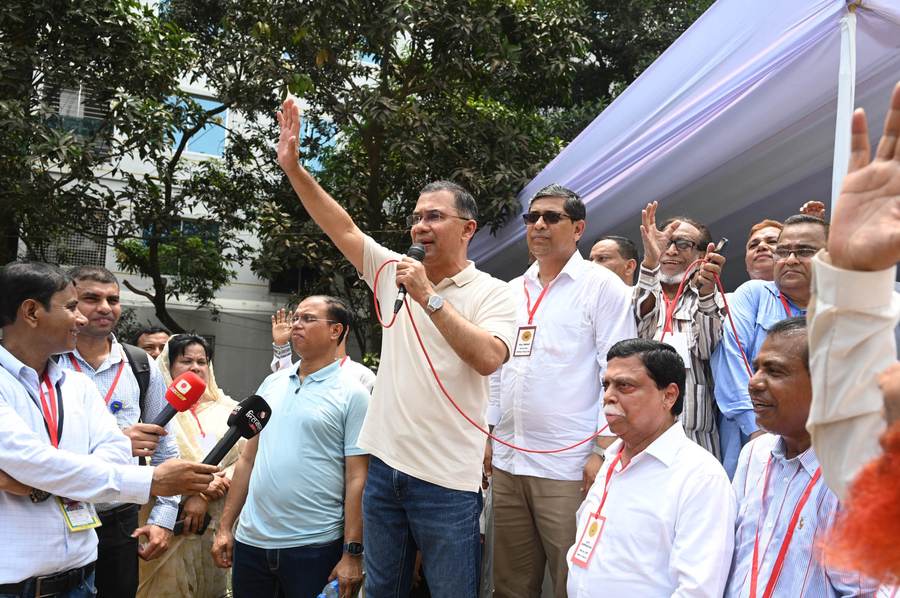
Bangladesh MP Mishti resigns after an extraordinary intervention by Prime Minister Tarique Rahman over allegations surrounding the destruction of a maternal and child health center in Dhaka. Ferdousy Ahmed Mishti submitted her written resignation from reserved seat 23 to Speaker Maj. (retd.) Hafiz Uddin Ahmad at about 1:30 p.m. Thursday, October 1, a day after the prime minister ordered her to leave parliament and the Bangladesh Nationalist Party.
The Speaker said the seat became vacant immediately under the Constitution. A gazette notification is to be issued and the Election Commission informed. Parliamentary rules did not require Mishti to state a reason, and she declined to discuss the resignation with reporters after leaving the Speaker's office.
The resignation followed scrutiny over the September 24 attack on the Radda MCH-FP Centre in Mirpur-1. Reporting cited in this article says 200 to 250 masked people looted equipment, medicines, government documents and cash before an excavator demolished the building. The operation continued into the early hours of September 25. Mishti denies any involvement and has said she does not know how her name became associated with the incident.
Why the Ferdousy Ahmed Mishti resignation matters
Prime ministers often promise that political connections will not shield wrongdoing. Far fewer force a member of their own parliamentary bloc to surrender a seat before a criminal investigation has reached a public conclusion. That makes the Ferdousy Ahmed Mishti resignation politically significant beyond one legislator or one disputed plot.
The immediate reading is a zero-tolerance signal from the top of the government. Rahman's press secretary, Abu Abdullah M. Saleh, confirmed the instruction, and additional press secretary Atiqur Rahman Rumon also confirmed it. Party and government sources said the prime minister had summoned Mishti two days earlier, found her response unsatisfactory and, after reviewing intelligence reports, verbally directed her on September 30 to step down.
The less flattering interpretation is damage control: removing an MP can stop a scandal from spreading through a governing party without resolving who organized the attack, who expected to gain from it or why such a large operation could proceed. Both interpretations may contain truth. A decisive resignation can be an act of accountability and a way to contain political cost. The investigation will determine which meaning lasts.
Radda clinic attack Dhaka: what is established
The core facts of the Radda clinic attack Dhaka reporting are stark. The Radda MCH-FP Centre had provided maternal and child healthcare from the Mirpur site since 1976. Around midnight on September 24, a large masked group entered, looted the premises and demolished the structure with an excavator.
Nasrin Akhter, Radda's executive director, filed a case at Shah Ali Police Station. Local BNP leader Hanif Mia, identified in the reporting as a cousin of Mishti's late husband, Saidur Rahman Newton, was named alongside roughly 250 unidentified people. Naming a suspect in a complaint is not a finding of guilt, and the size of the unidentified group underlines how much investigative work remains.
Home Minister Salahuddin Ahmed said on September 30 that a local MP's name appeared in an intelligence report connected to the incident. He also said no one would be spared if the investigation found evidence. That formulation matters: an intelligence reference may justify scrutiny, but criminal responsibility must rest on evidence that can be tested.
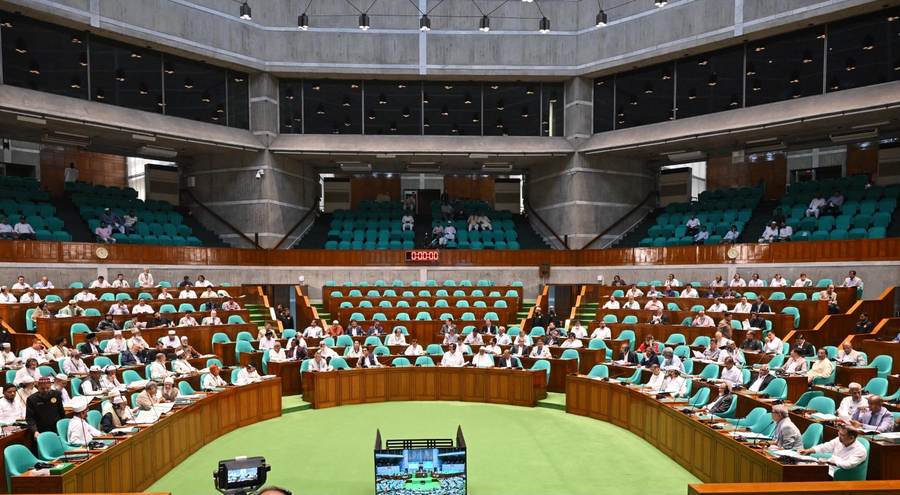
Radda MCH-FP Centre demolition turns a land dispute into a public test
The reported motive was a long-running struggle for control of the 10-katha plot on which the clinic stood, with two local BNP factions allegedly seeking the land. That context turns the Radda MCH-FP Centre demolition into more than a vandalism case. It is a test of whether political networks can convert influence into control over valuable urban property.
In a dense city, land is power. A 10-katha parcel can represent commercial value, local patronage and leverage over future development. A health facility operating for roughly half a century, by contrast, represents continuity, records, equipment and public trust. The attackers did not merely damage walls; according to the reports, they removed medicines, equipment, documents and cash before the demolition. That sequence suggests an organized operation rather than an impulsive clash.
For patients, the political argument is secondary to the loss of care. Maternal and child services depend on proximity and familiarity, particularly for families with limited transport choices. Even if services are eventually relocated, interruption carries costs that do not appear in a land title: missed appointments, disrupted records and greater travel time.
Mirpur clinic attack September 2026 by the numbers
Four figures explain the scale of the Mirpur clinic attack September 2026: 200 to 250 alleged attackers, one excavator, a 10-katha plot and about 50 years of healthcare operations. Each number points to a different institutional question.
A crowd of as many as 250 people requires mobilization. An excavator requires access, an operator and time. A valuable plot supplies a possible incentive. A facility dating to 1976 shows the public asset displaced by the violence. None of those numbers proves who commissioned the operation, but together they make a spontaneous misunderstanding difficult to accept as a complete explanation.
The data also suggest why the resignation alone cannot close the case. One parliamentary seat is visible; hundreds of participants and any organizers behind them are not. If authorities pursue only the most prominent political name while leaving the operational chain unexamined, accountability will be symbolic rather than structural.
Salahuddin Ahmed intelligence report raises due-process questions
The Salahuddin Ahmed intelligence report reference placed a parliamentarian at the center of public attention before investigators announced a completed evidentiary case. The prime minister was entitled to make a political judgment about confidence in a member of his party. A criminal judgment is different.
Mishti's denial must therefore remain part of the record. She has said she was not responsible and did not know why her name was linked to the attack. Her resignation demonstrates that she lost the political confidence needed to remain in the seat; it does not establish that she directed, financed or knew of the violence.
For the government, respecting that distinction is not softness. It is the strongest way to make the resignation credible. Evidence-based prosecution of anyone involved would show that the action was more than public theater. A transparent finding that clears someone would be equally important, because intelligence should lead to inquiry, not substitute for it.
Tarique Rahman Bangladesh PM: discipline or damage control?
The stakes for Tarique Rahman Bangladesh PM are unusually high because the case arrives early in the 13th parliament. The BNP won the February 2026 election, and Rahman was sworn in as the country's 11th prime minister on February 17 at the South Plaza of the Jatiya Sangsad Bhaban.
Ordering a ruling-party MP out can strengthen his claim that the BNP will police itself. It also creates a precedent. If future intelligence reports name other well-connected figures, critics will compare the response with Mishti's rapid exit. Selective firmness would weaken the message; consistent standards would make it durable.
The opposition has an obvious counterargument. An 11-party alliance that includes the National Citizen Party and Jamaat is already pressing an anti-government campaign, and NCP chief coordinator Nasiruddin Patwary issued a one-point demand for Rahman's resignation on September 19. Opponents can portray the clinic scandal not as proof of reform, but as evidence that factional capture flourished inside the governing party until public pressure forced intervention.
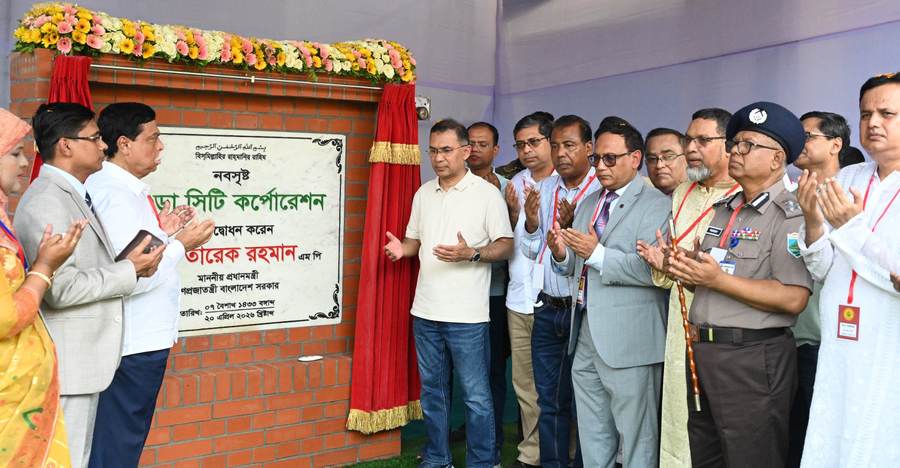
Bangladesh BNP MP resigns as party machinery also shifts
The headline that a Bangladesh BNP MP resigns coincides with another consequential move: the BNP's Dhaka North committee was dissolved on the night of September 30. Mishti had served as a joint convener of that unit until its dissolution.
The timing invites political interpretation, but it should not be made to carry more than the verified facts. Dissolving a committee can disrupt local patronage networks and signal a broader cleanup. It can also redistribute power without proving culpability. What matters is whether the party explains the standards it applied and whether disciplinary action tracks the investigation rather than factional convenience.
For BNP reformers, the episode offers an opportunity to show that proximity to power is not immunity. For local rivals, it offers an opening to replace the dissolved leadership. For Mishti and her supporters, the speed of the decision raises a fair question about whether she had a meaningful opportunity to challenge the allegations inside the party.
Reserved seat 23 Bangladesh parliament: what happens now
The constitutional consequence was immediate for reserved seat 23 Bangladesh parliament: the Speaker declared the seat vacant upon receiving the written resignation. He said a gazette notification would follow and the Election Commission would be informed.
The vacancy belongs to a system of 50 seats reserved for women and allocated among parties in proportion to their directly elected MPs. That means the political process for filling seat 23 differs from a conventional territorial constituency contest. The next institutional steps from parliament and the Election Commission will show how quickly representation is restored.
The broader significance of the Bangladesh reserved women seats system should not be lost in the scandal. These seats are designed to expand women's representation in a legislature still shaped by party allocation. Treating the vacancy as merely a personnel swap would miss the need for transparent selection and meaningful accountability within the party.
Dhaka North BNP committee dissolved: who benefits and who loses
The Dhaka North BNP committee dissolved decision and Mishti's departure produce clear political winners and losers, at least in the short term. Rahman and the BNP leadership gain the chance to claim swift internal discipline. Opposition parties gain a vivid example for arguing that alleged land capture reached the governing party's parliamentary ranks.
Local figures outside Mishti's network may benefit from the organizational vacuum. That is precisely why the investigation must look beyond a single faction: a change in who controls a committee does not protect public land or health services if the incentives remain intact.
The clinic and its patients are the clearest losers. They lost a functioning facility while political institutions decide what the resignation means. Mishti also loses office and party standing before any court finding, which makes due process essential. The public loses if the spectacle of resignation replaces recovery of assets, reconstruction of care and identification of all responsible actors.
What happens next
First, the criminal investigation must establish the chain of command behind the attack: who assembled the crowd, who secured the excavator, who entered the clinic, who removed property and who expected to control the land afterward. The Shah Ali Police Station case gives investigators a starting point, not a conclusion.
Second, authorities and the clinic's management will face practical questions about recovering equipment, medicines, documents and cash, and restoring maternal and child health services. Accountability that stops at a resignation does not repair a demolished facility.
Third, parliament and the Election Commission will process the vacancy. The speed and transparency of the replacement process will matter for confidence in reserved-seat representation.
Finally, Rahman's precedent will be tested by the next allegation involving a politically connected figure. Bangladesh's politics is not short of statements against corruption or land grabbing. The measure of this episode will be whether one dramatic order becomes a consistent rule.
The bottom line
The resignation is consequential because it imposes an immediate political cost on a ruling-party MP. It is incomplete because the largest questions remain unanswered: who planned the assault, who stood to gain the 10-katha property, and whether the clinic and its patients will be made whole.
Rahman has chosen visible discipline. Mishti has denied wrongdoing. Investigators now have to separate allegation from proof while following responsibility through every level of the operation. If they do, the case could mark a real break with impunity. If they do not, the empty seat will be the only durable result.
Sources and reporting notes
- The Business Standard: PM orders MP Ferdousy Ahmed Mishti to resign
- The Business Standard: MP Mishti resigns following PM's order
- GreenWatchBD: MP Mishti resigns; seat declared vacant
- Dhaka Stream: PM orders MP Mishti to resign over Radda Centre attack
- Countryman News: PM asks MP Ferdousi Ahmed Misty to resign
Reporting note: Facts about the directive, resignation, attack, land dispute and investigation come from the cited reports. Assessments of political incentives, institutional risk, winners, losers and next steps are Signal Post News analysis. Mishti denies involvement, and no criminal finding against her is reported here.